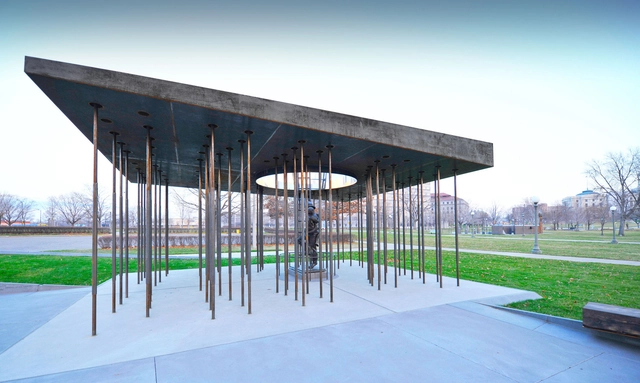
Daniel Libeskind has been selected among two other renowned artists to design the Ohio Statehouse Holocaust Memorial in Columbus. The 18-foot tall memorial brushed stainless-steel memorial will be punctuated by the six-pointed Star of David and accompanied by a 40-foot walkway with words etched in limestone.
The Dwight D. Eisenhower Memorial saga continues, as Rep. Rob Bishop (R-Utah) proposed legislation that would forego Frank Gehry’s controversial design and eliminate federal funding. Although Bishop’s radical bill would save $100 million in future funding, it ignores any possibility of compromise.
This text was provided by San Francisco-based writer Kenneth Caldwell.
One friend said, “It looks a bit austere.” At first glance, it probably is. But like so many great minimal environments, it asks for patience and generosity. You give, and in turn it gives back.
This is also what the artists Mark Rothko, Richard Serra, Donald Judd, and, more recently, Olafur Eliasson ask. Trust them with your time and you may be rewarded with a small measure of serenity—perhaps even with the connection between art and the divine that Dominique de Menil was so focused on.
Designed by Louis Kahn, the Franklin D. Roosevelt Four Freedoms Park is an outdoor sanctuary at the southern tip of what is now called Roosevelt Island, created as a memorial to FDR. The park opened last fall. Kahn’s gift took 40 years to be realized, but it presents a path for human beings to treat each other to peace.
Daniel Libeskind is among three semi-finalists competing to design the Ohio Statehouse Holocaust Memorial in Columbus. The privately funded memorial will be built south of the Ohio Statehouse on the grassy 10 acre Capitol Square, just east of the Scioto River.
Designed by architect Eli Gotman, the proposal for the “Yad Labanim” (“A Memorial to the Sons”) is dedicated to commemorating the fallen soldiers in Israel’s wars and helping the bereaved families. The Yad Labanim building in Ramat Yishay, is in itself a monument, which begins with the wall buried in the ground carrying the names of the fallen perforated in it, continues to emerge out of the ground as a building, and ending as an illuminated library hovering over the square. More images and Gotman’s description after the break.
Designed by Mateo Arquitectura, the purpose of the Leipzig Freedom and Unity Memorial is to commemorate the “Peaceful Revolution” of 1989 that made Leipzig a decisive place for the fall of the Berlin wall with the construction of this monument. The memory they aim to commemorate is that of a peaceful mass change, with no hierarchies, that we see in historic photos as points of light, changing like a surging sea. Formally and conceptually, the architects decided that their intervention here should address surface rather than volume; it should be horizontal rather than vertical. More images and architects’ description after the break.
United Airlines Flight 93 was one of the four planes hijacked during the September 11, 2001, attacks in the United States. It was on this flight that 40 passengers and crew members courageously gave their lives to thwart a planned attack on the Nation’s Capital. Tragically, the plane crashed in Western Pennsylvania with no survivors.
To honor these heroes, Congress passed the Flight 93 National Memorial Act in 2002 and launched a two-stage, international design competition in 2005. A Jury of planners, landscape architects, architects, designers, government representatives, family members and community representatives chose Paul and Milena Murdoch’s proposal, which treated the 2,200 acre former coalmine as a memorialized national park where visitors embark on a sequence of experiences that leads them towards the crash site of Flight 93.
Designed by Aleph Zero + Juliano Monteiro, the dobrar Memorial is a space composed by reflective elements which is therefore a cloudy limited space: in, out, far and near, front, back, unique, multiple, real reflection. An important element of the project is one that activates and gives meaning to the objects: the user / observer. Unlike a mere passive spectator, is the observer who composes the piece through its position and its motion in space. Such movement is yet ‘reflected’ by objects that “dance” as the passage of passersby and accuses them of being they, too, actors in a multiple reality, dynamic and interconnected. More images and architects’ description after the break.
The first prize winning proposal for the Halide Edip Adivar Mosque and Social Complex is an objection to the continuing entegrist attitude-action which is mostly validated on mosque design and kept popular in media of Turkey. Designed by Kolektif Mimarlar, one of the main ideas of the design is to produce a well integrated structure with its surrounding and the nearby dwellers, where additional functions to the mosque can take place. More images and architects’ description after the break.
Located along the Loire riverfront in the center of the city of Nantes, this memorial, designed by Wodiczko + Bonder, is a metaphorical and emotional evocation of the struggle for the abolition of slavery. With the aim of being above all historic, the project still continues into the present and proposes a physical transformation and symbolic reinforcement of 350 meters of the coast of the Loire along Quai de la Fosse. This working memorial includes the adaptation of a pre-existing underground residual space, a product of the construction of the Loire embankments and port during the XVIII, XIX, and XX Centuries. It provides space and means for remembering and thinking about slavery and the slave trade; commemorating resistance and the abolitionist struggle; celebrating the historic act of abolition; and for bringing the visitor closer to the continuing struggle against present-day forms of slavery. More images and architects’ description after the break.
Ziya Imren, Barış Ekmekçi, and Münire Sagat shared with us their second prize winning proposal for the Gallipoli Agadere Memorial & Hospital Museum. One of the main ideas of the project is the purpose of bringing a modern approach to the concept of preservation. The result is a solution that is respectful to the martyrs and the land, but at the same time one in which the historical memory is protected via exposing the historic and cultural potential. More images and architects’ description after the break.
Designed by Libor Šenekel, Vaclav Havel´s Monument is a symbol of human determination, legacy, and that even one person can change the course of history. Vaclav Havel became unforgettable for many as a symbol of defiance and human determination, which reminds us that even one person is capable of great deeds. Just as today the monument stands against the enormous power of water, that is trying to devour it, stood Vaclav Havel and many others against the oppressive power of communism. The memorial is supposed to fascinate being watched from the waterfront, to inspire fear as well as courage being entered into the masses of water, to lure to step into the unknown. More images and architects‘ description after the break.
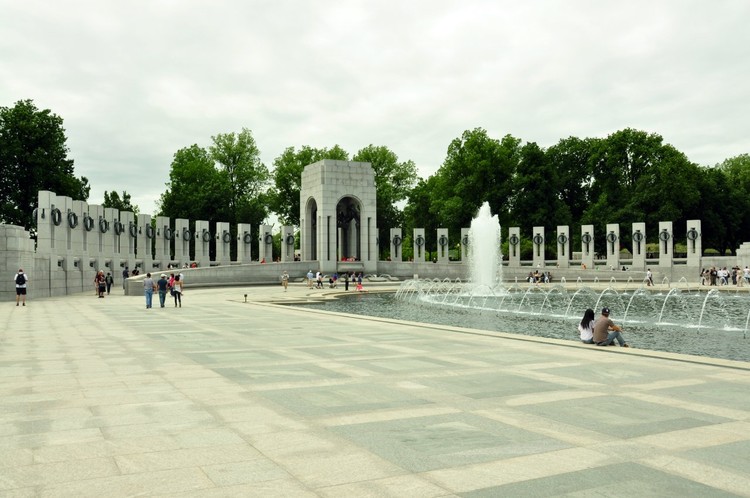
Partially cloudy with a high in the mid-seventies, this was weather we couldn’t say no to on the Sunday after the 2012 National Convention. Therefore we took advantage of the Washington D.C.Capital Bikeshare and set off on a self-guided tour of the National Mall. Although the National Mall was packed with graduates and tourists, we managed to weave in and out of pedestrian traffic quick enough to visit many of the historic buildings and memorials before heading off to Eero Saarinen’s beautiful Dulles International Airport. What a perfect way to wrap up an eventful week in the nation’s capital.
Armin Valter and Joel Kopli shared with us their competition winning proposal for the Memorial of Victims of Communism in Estonia. Situated on/in northern coastal limestone cliff near town Paldiski, which was a closed military nuclear submarine base in soviet times, their design attempts to revitalize the place and bring more awareness to people of the region. More images and architects’ description after the break.
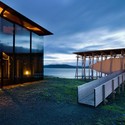
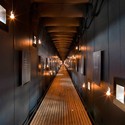
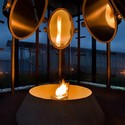
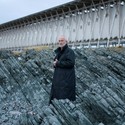
In memory of those persecuted in the seventeenth-century Finnmark Witchcraft Trials, the Steilneset Memorial rests along the jagged coastline of the Barents Sea in Vardø, Norway. Photographer Andrew Meredith has shared with us his photo series documenting this masterpiece created by a unique collaboration between the world-famous Swiss architect Peter Zumthor (Basel, 1943) and the influential contemporary artist Louise Bourgeois (Paris, 1911-2010).
Zumthor simply describes his collaboration with Bourgeois in an interview with ArtInfo as the following, “I had my idea, I sent it to her, she liked it, and she came up with her idea, reacted to my idea, then I offered to abandon my idea and to do only hers, and she said, ‘No, please stay.’ So, the result is really about two things — there is a line, which is mine, and a dot, which is hers… Louise’s installation is more about the burning and the aggression, and my installation is more about the life and the emotions .”
Continue reading to view the photographs and learn more about the Steilneset Memorial.
ArchDaily previously ran an article about the Manufacturers Trust Company Bank Branch at 510 Fifth Avenue in Manhattan designed by Gordon Bunshaft of Skidmore, Owings & Merrill and interior designer Eleanor H. Le Maire, a building designated as protected under the Landmarks Preservation Commission with first the exterior in 1997 and later the interior in early 2011. But as recently as October 2011, the building was already listed under the 2012 World Monuments Fund in the 2012 World Monuments Watch as the current owners, Vornado Realty Trust, began compromising the landmarked conditions of the interior of the building as it was being adapted for reuse. With preservationists in an uproar, support for the protection of the building was enough to bring Vornado Realty Trust to New York State Supreme Court where a settlement was reached.
Read on for more details on the settlement and continuing efforts to protect endangered monuments.






![[DES]dobrar Memorial / Aleph Zero + Juliano Monteiro - Image 19 of 4](https://images.adsttc.com/media/images/55e8/9690/6c9d/b5b8/8400/007d/medium_jpg/desdobrar10.jpg?1441306238)