Videos
Courtesy of The World War I Centennial Commission
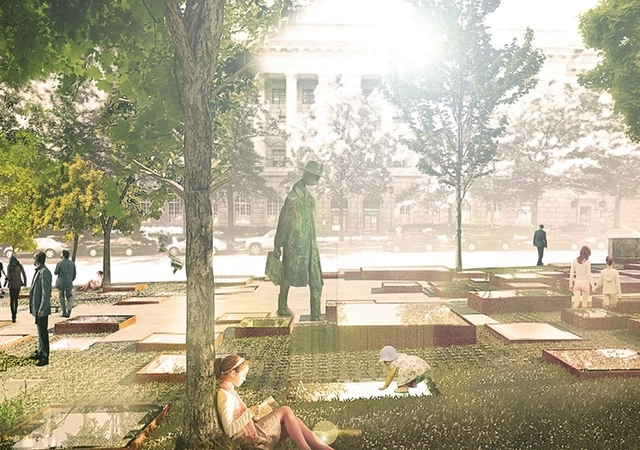
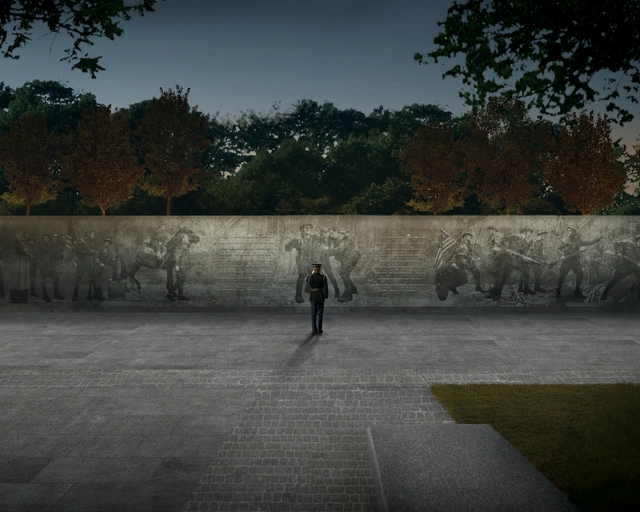
After announcing five finalists in August of 2015, the World War I Centennial Commission has announced the winner of its National World War I Memorial competition: The Weight of Sacrifice by 25-year-old architect Joe Weishaar and sculptor Sabin Howard. The design focuses on the sacrificial cost of war through relief sculpture, quotations of soldiers, and a freestanding sculpture. Visitors are guided through the memorial’s changing elevations by quotation walls that describe the war from the point of view of generals, politicians, and soldiers.
For the first time in history, a John Hejduk structure has been permanently installed in a public space. The American architect's Jan Palach Memorial has officially opened last week at Jan Palach Square (formerly Red Army Square) on the Alšovo Riverbank in Prague after 25 years in the making.
"The work, entitled House of the Suicide and House of the Mother of the Suicide, which was originally built in Atlanta in 1990, then Prague in 1991, honors the Czech dissident Jan Palach, whose self-immolation in protest of the Soviet invasion of 1968 served as a galvanizing force against the communist government in Czechoslovakia. A plaque at the base of the monument displays the poem The Funeral of Jan Palach, by former School of Architecture Professor David Shapiro," says The Cooper Union.
On September 10, the Flight 93 National Memorial opened the doors to its new visitor center complex. Designed by Paul Murdoch Architects, the memorial honors the victims of United Airlines Flight 93, which was one of the four hijacked planes during the September 11, 2001 attacks.
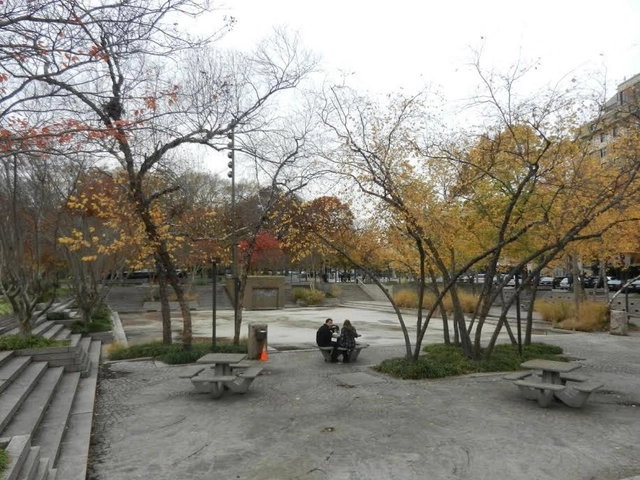
Earlier this month, after viewing the contenders in the US World War I Centennial Commission’s competition to redesign the National World War I Memorial in Washington DC, organizations like The Cultural Landscape Foundation began to began to voice their opinion regarding the reach of the competition. With the cultural importance of the site in mind, such organizations had hoped that the redesign would maintain the existing Pershing Park, but were disappointed to discover that the majority of the competition’s design proposals seek to demolish the existing landscape.
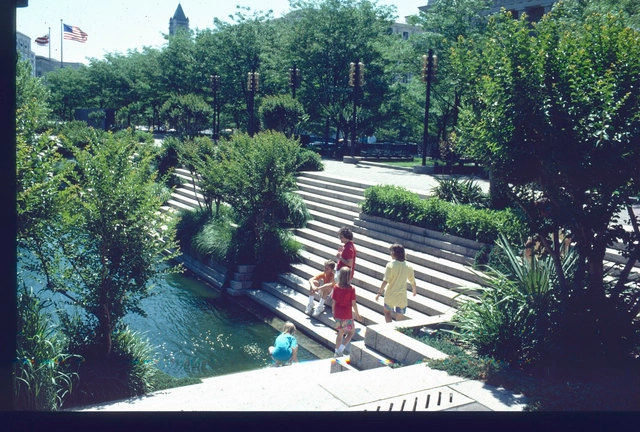
Although left off of the competition’s shortlist, KAMJZ Architects’ proposal for the World War I memorial addresses these concerns by leaving Pershing Park almost completely intact. Leaving alone the park’s seating areas, agora, and landscaping, the design proposal unifies the park by adding an outer ring of trees “along the borders of the site [to] provide an acoustic barrier from the noisy adjacent streets.”
On March 11, 2011, a massive earthquake and tsunami hit the coast of Japan at Sendai, damaging the Fukushima nuclear power plant, and taking over 10,000 lives. Over the past three years, only temporary memorial observances have been utilized to honor these victims in Sendai. To address this deficiency, MIT graduate student Beomki Lee has created a concept design for an innovative new memorial space called [ME]morial.
One of the five finalists: "An American Family Portrait" by STL Architects, Chicago. Image Courtesy of The US World War I Centennial Commission
In May, the US World War I Centennial Commission launched its design competition for the redesign of the National World War I Memorial, located in Washing DC. Though some concerns about the fate of Pershing Park, which currently occupies the site, have been voiced, the competition will continue nonetheless, aiming to fulfill the Commission's stated aim "to transform Pershing Park from a park that happens to contain a memorial to a site that is primarily a national World War I memorial, within a revitalized urban park setting with a distinct sense of place."
After cycling through a first stage of entries, the competition has reached its second stage, which entails a public viewing and commentary of the top five designs, before a winner is selected in January 2016.
The competition, hosted by the United States Federation for the Commemoration of the World Wars and sponsored by the World War I Centennial Commission, received over 350 entries. While these entries did generally follow the guidelines they were given, most of the designs incorporated the complete demolition of the park.
Now, because the park is one of the most significant works of Modernist landscape architect M. Paul Friedberg, with planting plan designs by Oehme, van Sweden & Associates, landscape architecture organizations like The Cultural Landscape Foundation are speaking up against the possibility of demolition.
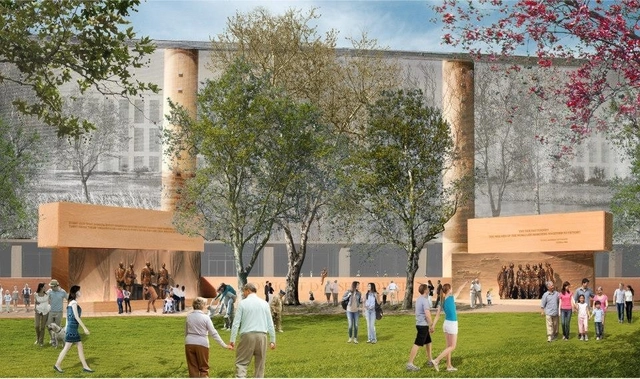
"The resulting Dwight D. Eisenhower Memorial design satisfies the goals of the seven design principles established for this site in 2006 by the NCPC to preserve and enhance the unique character of this site and establish a new green space within the context of L’Enfant’s plan for Washington D.C.," said the NCPC in their final report. You can read the report in full, here.
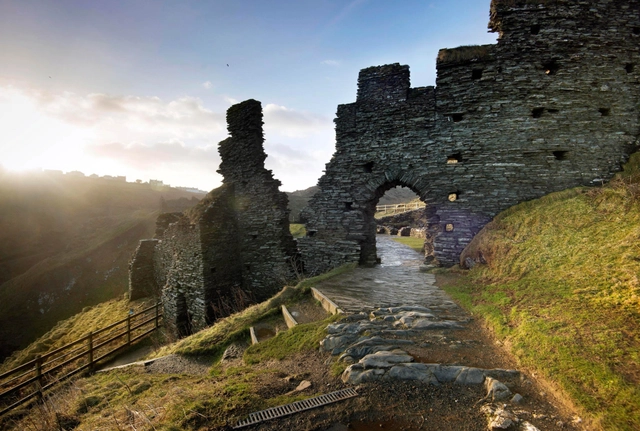
The ruins of Tintagel Castle, one of English Heritage's most visited sites, has been announced as the site for a new two-stage international ideas competition. The castle, which is linked to the legend of King Arthur, is located in north Cornwall (in the south of the UK) and is built on a rocky outcrop connected to the mainland by a narrow, now eroded, land-bridge. English Heritage require a new footbridge which will be 28 metres higher than the current one, spanning a total distance of 72 metres, with an estimated budget of around £4million (around $6.3million).
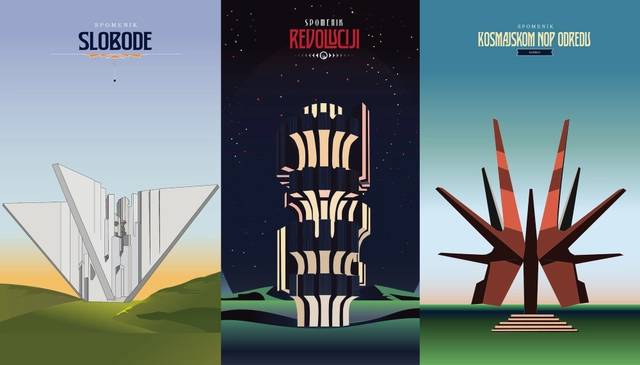
The act of remembering looms large in national cultures. Shared national memories act as a foundation for national identity, a unifying collective interpretation of history that can define what it means to belong in a certain place. Monuments loom even larger - define a national memory in concrete and stone, and you can help define your vision of the nation. That's why Nevena Katalina, a graphic design masters student at the University of Novi Sad in Serbia, has taken the famous abstract war memorials in the former Yugoslavia and translated them into posters, attempting to reconcile the imposing concrete forms with the impact they've had on culture and memory in countries around the former Yugoslavia.
Project Site. Image Courtesy of U.S. World War One Centennial Commission
The US World War I Centennial Commission has launched a design competition for the National World War I Memorial in Washington DC. The competition will be a two-stage design competition, and is open internationally to any professionals, university-level students, and all other interested participants. "The objective is to transform Pershing Park from a park that happens to contain a memorial to a site that is primarily a national World War I memorial, within a revitalized urban park setting with a distinct sense of place that complements the memorial purpose while attracting visitors, workers, and residents of the District of Columbia," says the Commission.
First Place: William Smith, Hiroshi Kaneko (US, Team 749421). Image Courtesy of matterbetter
The winners of matterbetter’s international Malaysia Airlines Flight 17 (MH17) Memorial and Park ideas competition have been announced. Attracting 293 submissions worldwide, the competition hoped to inspire a new memorial park and public space, free from the political overtone, at the Marine Establissement site in the center of Amsterdam that could be used as a place for remembrance, ceremonies, recreation, and private gatherings in honor of MH17’s victims.
MH17 was a scheduled international passenger flight from Amsterdam to Kuala Lumpur that was shot down near the Ukraine–Russia border on July 17, 2014, killing all 283 passengers and 15 crew members on board. You can view all 10 winning proposals, after the break.
ArchDaily is continuing our partnership with The Architectural Review, bringing you short introductions to the themes of the magazine’s monthly editions. In this editorial from AR’s December 2014 issue, AR Editor Catherine Slessor ruminates on the contemporary approach to memorials, arguing that “as architecture can rarely truly grasp the notion of absence, memorial culture lapses into comforting banality.”
Always uneasy bedfellows, this year the relationship between building and memory has had a particularly charged resonance. The centenary of the outbreak of the First World War has been framed by the familiar narratives of slaughter and sacrifice, while the 25th anniversary of the fall of the Berlin Wall marked the moment when Communism in Europe finally faltered and collapsed. No doubt that these are profound, epoch-defining events, but how they are memorialised in built form is frequently problematic.
ABSTRAKT Studio Architecture has won a nation-wide competition to design Canada’s national memorial to the victims of communism in Ottawa. Select from six finalists, ABSTRAKT’s provocative design superimposes 100 million singular pixel-like memory squares, each representing the fingertip of the lives lost, on a folded triangular concrete plane.
“As the most prolific communist murderer Joseph Stalin famously said: 'One death is a tragedy; one million is a statistic’… This 'statistic' takes main stage in our design by realizing its sheer enormity, thus raising awareness that every human life is unique and precious,” stated ABSTRAKT.
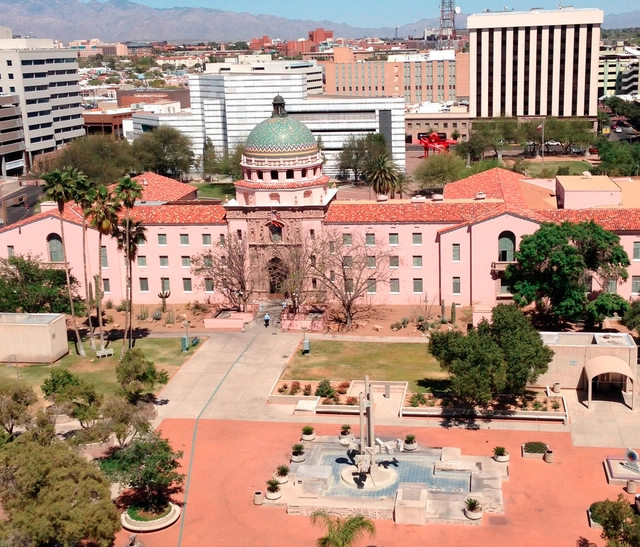
Future site of the memorial. Image Courtesy of January 8th Memorial Foundation
The January 8th Memorial Foundation has selected four finalists out of the 60 practices and artists, both national and international, who submitted applications to create a permanent memorial and master plan concept for the El Presidio Park in Tucson, Arizona. The permanent memorial would commemorate the January 8, 2011, mass shooting that wounded Congresswoman Gabrielle Giffords, killed six people and injured 12 others. The memorial is also intended to honor the spirit of the Tucson community in its responses to the tragedy and to inspire future generations to work together on community issues. The four finalists are:
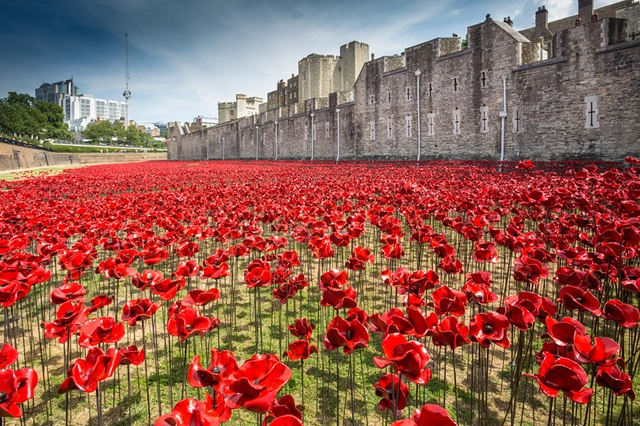
The Observer'sRowan Moore "accidentally got swept into a tide of humanity at the weekend, or to put it another way, couldn’t move for crowds." In memorial of the start of the centenary of World War One, of which today marks the anniversary of the armistice (11.11.1918), the Tower of London have installed a sea of 888,246 ceramic poppies in the former moat. The artwork, created by Paul Cummins and Tom Piper, and entitled Blood Swept Lands and Seas of Red, "has caught the national imagination." For Moore, however, "it is deeply disturbing that a hundred years on from 1914, [the UK] can only mark this terrible war as a national tragedy." He argues that "the spectacle of all these red poppies is emptier than that. [...] It is a deeply aestheticised, prettified and toothless war memorial." Read the article in full here.
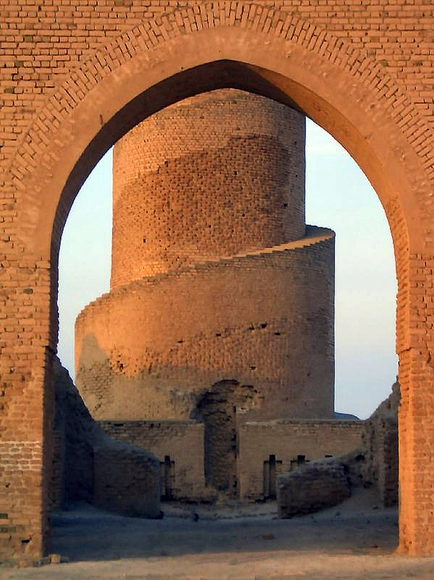
One of the most important Islamic architectural monuments, the Great Mosque of Samarra in Iraq is one of many priceless monuments that has been “lost in conflict.” Paying homage to the architectural masterpieces that have been victims of war, CNN has put together a list of 19 of the world’s “greatest buildings you’ll never see.” View them all, here.
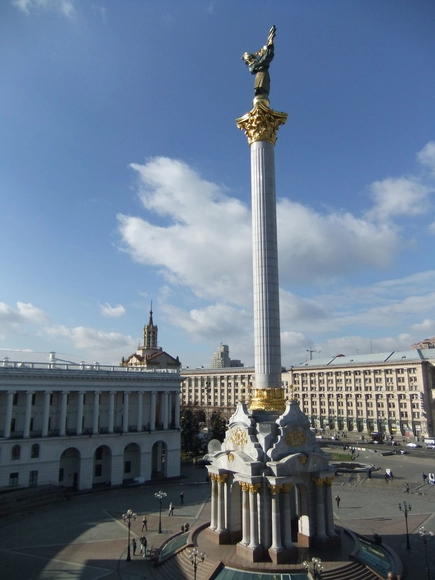
The City of Kyiv has launched an international design competition aiming to commemorate the lives lost in Ukraine's Maidan Revolution, both through a memorial to their memory and through implementing the ideals of the revolution in the urban space surrounding Maidan Nezalezhnosti. The competition, honed through months of public discussions and consultations, is being organized by the Kyiv City State Administration and Ukraine's Ministry of Culture. More details after the break.



.jpg?1440147285&format=webp&width=640&height=580)
.jpg?1440147381 "Courtesy of KAMJZ Architects")
.jpg?1440147272 "Courtesy of KAMJZ Architects")
.jpg?1440147333 "Courtesy of KAMJZ Architects")
.jpg?1440147355 "Courtesy of KAMJZ Architects")
.jpg?1440147285)
![[ME]morial Thesis Honors 2011 Japan Earthquake Victims - Community](https://snoopy.archdaily.com/images/archdaily/media/images/55d2/f541/e58e/cebd/6200/0139/slideshow/03__ME_morial_Air-1.jpg?1439888700&format=webp&width=640&height=580)
![[ME]morial Thesis Honors 2011 Japan Earthquake Victims - Community](https://images.adsttc.com/media/images/55d2/f572/e58e/cebd/6200/013c/thumb_jpg/09__ME_morial_Earth-3.jpg?1439888749 "[ME]morial #2: Earth. Image Courtesy of Beomki Lee")
![[ME]morial Thesis Honors 2011 Japan Earthquake Victims - Community , Garden](https://images.adsttc.com/media/images/55d2/f596/e58e/ceab/8c00/0152/thumb_jpg/13__ME_morial_Water-3.jpg?1439888785 "[ME]morial #3: Water. Image Courtesy of Beomki Lee")
![[ME]morial Thesis Honors 2011 Japan Earthquake Victims - Community](https://images.adsttc.com/media/images/55d2/f582/e58e/cebd/6200/013d/thumb_jpg/11__ME_morial_Water-1.jpg?1439888765 "[ME]morial #3: Water. Image Courtesy of Beomki Lee")
![[ME]morial Thesis Honors 2011 Japan Earthquake Victims - Community , Stairs, Facade, Handrail](https://images.adsttc.com/media/images/55d2/f551/e58e/cebd/6200/013a/thumb_jpg/05__ME_morial_Air-3.jpg?1439888716 "[ME]morial #1: Air. Image Courtesy of Beomki Lee")
![[ME]morial Thesis Honors 2011 Japan Earthquake Victims - More Images](https://images.adsttc.com/media/images/55d2/f541/e58e/cebd/6200/0139/newsletter/03__ME_morial_Air-1.jpg?1439888700)