Mixed Use: The Latest Architecture and News



'Eurorennes Ilot Féval' Winning Proposal / Jean-Paul Viguier et Associés
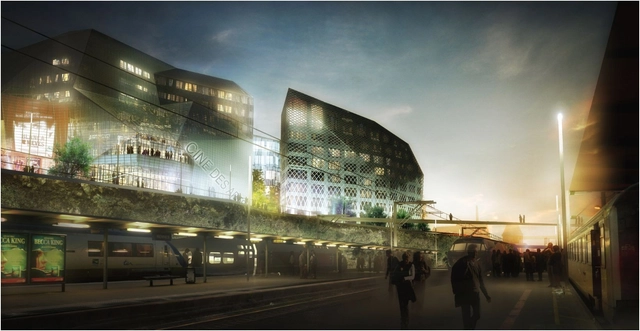
Designed by Jean-Paul Viguier et Associés, in collaboration with Yves-Marie Maurer Architecture and the Atelier Blanchard Marsault Pondevie, their 'Eurorennes Ilot Féval' winning proposal consists of an approximately 22,000m2 office and commercial space, which also includes a theatre arthouse cinema. Located on the south bank of the train station in Rennes, France, the project will be serviced by the TGV (bullet train) with an expected completion date in 2017. More images after the break.
https://www.archdaily.com/404175/eurorennes-ilot-feval-winning-proposal-jean-paul-viguier-et-associesAlison Furuto
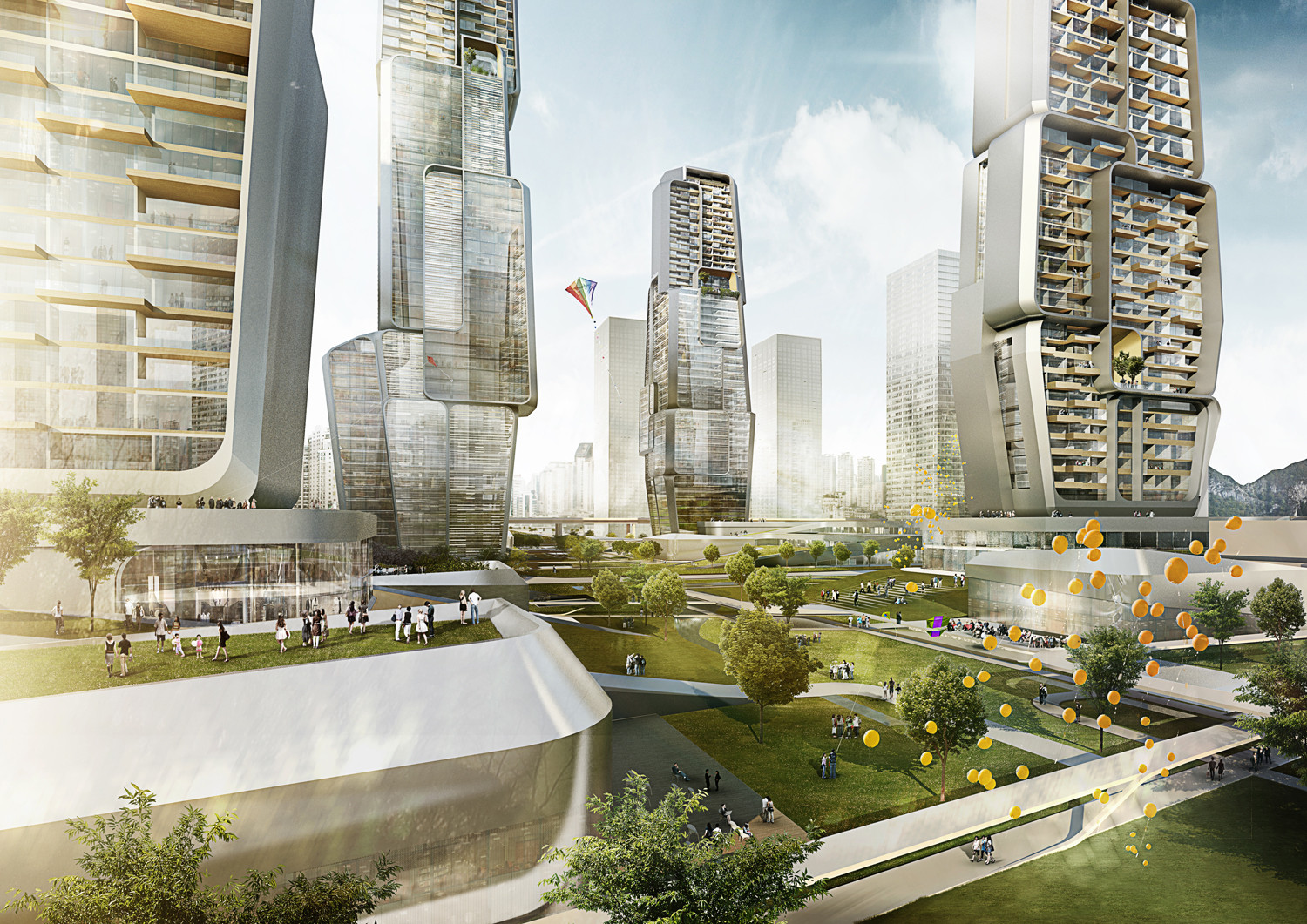
Yongjia World Trade Centre / UNStudio
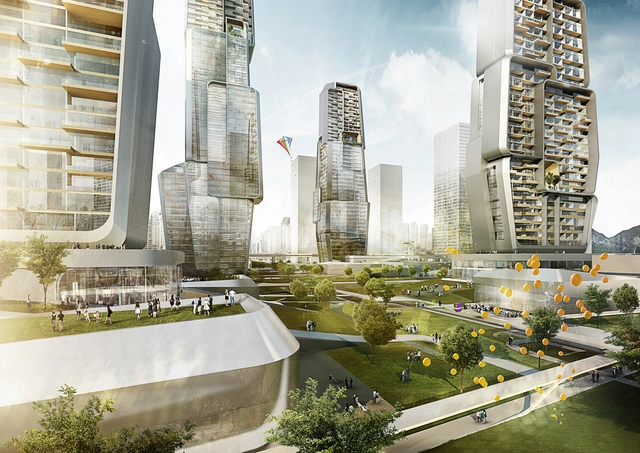

Architects
Location
Wenzhou, ChinaArchitects in Charge
Ben van Berkel, Astrid PiberDesign Team
Hannes Pfau, Ger Gijzen, Juliane Maier, Martin Zangerl and Sontaya Bluangtook, Amanda Chan, Albert Gnodde, Jan Kokol, Patrik Noome, Mo Lai, Jan Rehders, René Rijkers, Stefano Rocchetti, Shuang ZhangProject Year
2013Photographs
Courtesy of UNStudioLocation
Wenzhou, ChinaProject Year
2013Photographs
https://www.archdaily.com/404458/yongjia-world-trade-centre-unstudioBecky Quintal
The World’s Largest Building Opens in China
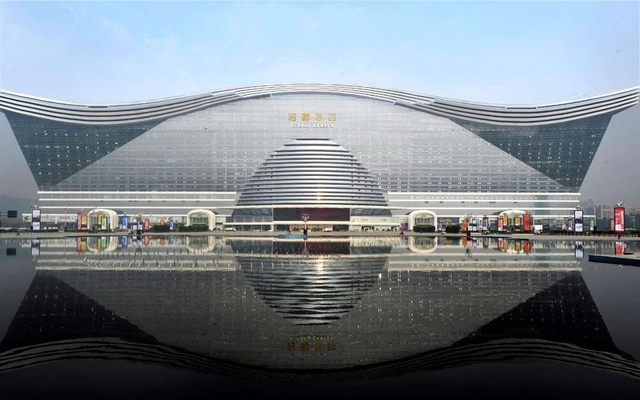
Although Dubai has held claim to the world’s tallest building for a few years, China is now claiming to now have the worlds largest building. Measuring at 500 meters long, 400 meters wide and 100 meters high, the newly constructed Century Global Center in Chengdu is reportedly capable of housing 20 Sydney Opera Houses in its 1.7 million square meter interior.
https://www.archdaily.com/398969/the-world-s-largest-building-opens-in-chinaKarissa Rosenfield
Greenland Group Chengdu East Village CBED Plots Proposal / Aedas

Located inside Chengdu East village, Aedas recently unveiled their ice mountain-inspired design for the Greenland Group Chengdu East Village CBED Plots. Comprised of office, retail, residential spaces and a 486-meter-high tower, the design stayed in line with the ice mountain concept, which expands to the continuity of the mountain range and landscape terrain with fissures located on the foot of the mountain. More images and architects’ description after the break.
https://www.archdaily.com/398576/greenland-group-chengdu-east-village-cbed-plots-proposal-aedasAlison Furuto
Updated Renderings Released for Mirvish+Gehry Toronto
.jpg?1373142317&format=webp&width=640&height=580)
David Mirvish, founder of Mirvish Productions, and Toronto-born starchitect Frank Gehry have released updated renderings of their massive, mixed-used project planned to transform Toronto's downtown arts and entertainment district. The Mirvish+Gehry vision will include a triad of residential towers perched on top a six-story, wooden podium inspired by the site’s industrial past and covered in a ‘cloud-like’ sculptural skin.
The towers, rising over 80 stories each, will house condos, a new OCADU campus, and a gallery space to house the Mirvish's collection of modern art.
More renderings after the break...
https://www.archdaily.com/398833/updated-renderings-released-for-mirvish-gehry-torontoKarissa Rosenfield
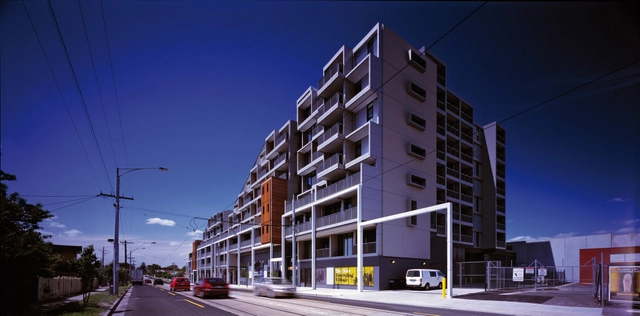
The Nicholson / DesignInc
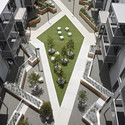
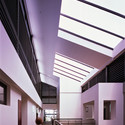
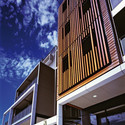

-
Architects: DesignInc
- Year: 2011
-
Professionals: Afrodite Moulatsiotis, Hickory, Unitise Building, Robert Bird Group, NJM Design Pty Ltd, +6
https://www.archdaily.com/395196/the-nicholson-designincSebastian Jordana
Bass and Flinders Gateway Project Proposal / Spark Architects
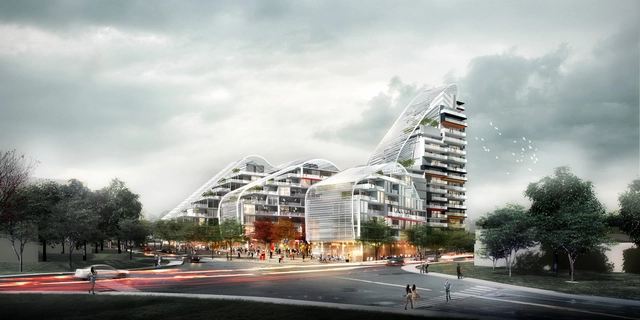
Located at the threshold of one of New South Wales’ most beautiful cities, Wollongong, the Bass and Flinders Gateway Project marks the first project in Australia by Spark Architects. The project consists of a 300 unit residential development supported by a modicum of commercial space. The project currently is going through the planning process and is scheduled to start construction in 2015. More images and architects' description after the break.
https://www.archdaily.com/396290/bass-and-flinders-gateway-project-proposal-spark-architectsAlison Furuto
Mixed-Use Building in Paris Winning Proposal / SOA Architectes
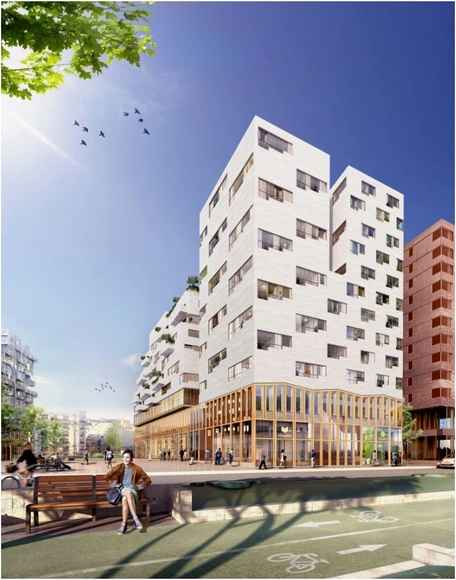
Constructing on such a vast area in the very heart of Paris, where nothing has been built yet, calls for an encounter between the remote and the present. With the challenge to produce architectural continuity and convergence to determine the new architectural style of the site, this winning proposal by SOA Architectes aims to establish familiar ties with its environment. It is not only about unveiling what is already present in the urban unconscious of the Tolbiac district but also about inventing a new way of telling its story. More images and architects' description after the break.
https://www.archdaily.com/390949/mixed-use-building-in-paris-winning-proposal-soa-architectesAlison Furuto
'Redesigning Detroit: A New Vision for an Iconic Site' Competition Entry / Various Architects
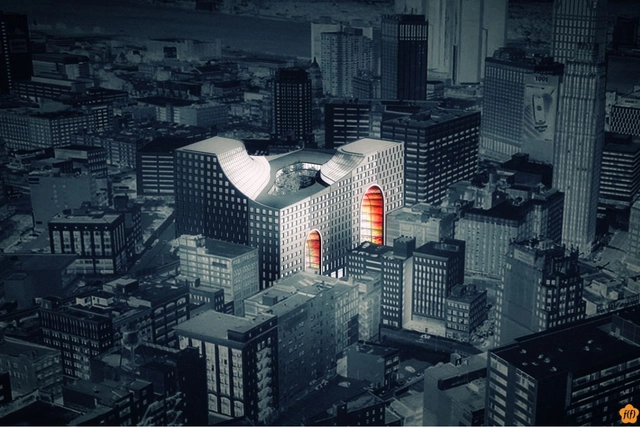
The mission in the proposal, titled ‘The Grand Opening,’ for the Redesigning Detroit: A New Vision for an Iconic Site competition is to create a vision for a 24/7 timeless, vibrant and walk-able urban neighborhood in downtown Detroit with a catalytic impact on the retail activities of Woodward Avenue Corridor. Designed by Chung Whan Park, Terry Park, Jeong Jun Song, Hyuntek Yoon and Kyung Jae Yu, The Grand Opening will connect the different contexts of the existing urban settings and bring every hour of excitement, crowd and memorable identity to the street life of downtown Detroit. More images and architects’ description after the break.
https://www.archdaily.com/388137/redesigning-detroit-a-new-vision-for-an-iconic-site-competition-entry-various-architectsAlison Furuto
Krrish Square / Maison Edouard François
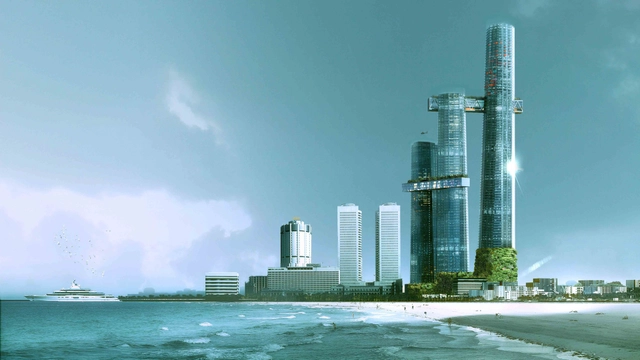
In the heart of Colombo, Sri Lanka, a lot surrounds a historic British-colonial building. In this country, density is not limited and the program quickly takes on an exceptional scale. Designed by Maison Edouard François, the 450,000m² Heritage Building is planned for offices, apartments, a hotel, a cinema, and a commercial center. As two spectacular bridges unite the three towers, the challenge becomes how to successfully create such a massive program adjacent to a historic monument. More images and architects’ description after the break.
https://www.archdaily.com/383667/heritage-building-proposal-maison-edouard-francoisAlison Furuto
Who Should Win the OMA vs. BIG Miami Showdown?
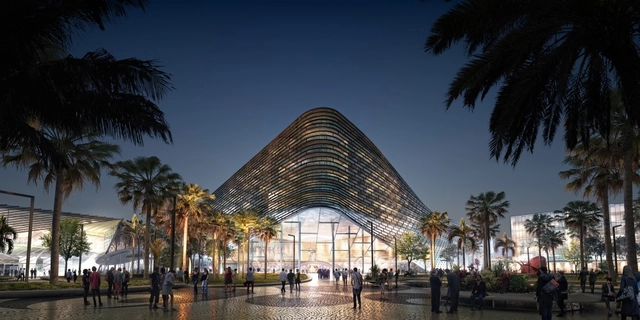
The Miami Beach Convention Center, a giant box of a building constructed in 1957, is in desperate need of a makeover and two design teams have bravely accepted the challenge. Team 1 is dubbed South Beach ACE (Arts, Culture, Entertainment District) and is a collaboration between Rem Koolhaas's OMA firm, Tishman, UIA, MVVA, Raymond Jungles and TVS. Team 2 goes by the name of Miami Beach Square and includes BIG, West 8, Fentress, JPA and Portman CMC. Both proposals completely re-imagine 52 acres of prime beach real estate and cost over a billion dollars in public and private funds. So, who does it better?
Vote for your favorite after the break...
https://www.archdaily.com/379542/who-should-win-the-oma-vs-big-miami-showdownBarbara Porada
Farrells to Masterplan £1bn Business District in London

London-based practice Farrells will be teaming up with UK developer Stanhope and commercial developer ABP China (Holding) to regenerate London’s historic docklands into a thriving, mixed-use business district. The deal, which represents one of the first direct investment by a Chinese developer in London’s property market, will act as a platform for financial, high-tech and knowledge driven industries looking to establish their business in UK and European markets.
More on the Farrells' masterplan after the break...
https://www.archdaily.com/380178/farrells-to-masterplan-1bn-business-district-in-londonKarissa Rosenfield
Xuzhou Suning Plaza Proposal / Aedas

Connecting time and space with the ‘lucky cloud’, the Aedas designed Xuzhou Suning Plaza is interpreted as magical and delightful, bringing history to life in Xuzhou. Located in the ‘Imperial Emperor’s Town’ of China, the changing of forms inspires reverie and the oval buildings reflect the union of masculine and feminine qualities as well as power and gentleness. More images and architects’ description after the break.
https://www.archdaily.com/372795/xuzhou-suning-plaza-proposal-aedasAlison Furuto
Snailtower / Künnapu & Padrik Architects

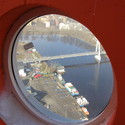
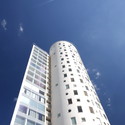

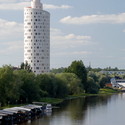

https://www.archdaily.com/373745/snailtower-kunnapu-and-padrik-architectsJavier Gaete
Tel-Aviv White City Forum Winning Proposal / Kimmel Eshkolot Architects

The Tel-Aviv White City Forum winning proposal by Kimmel Eshkolot Architects is an exhibition center, part of the huge Tel- Aviv wholesale market project currently under construction. Comprising thousands of apartment units, a mall, a school and a sports complex, the Forum will be a platform for genuine urban celebration. More images and architects’ description after the break.
https://www.archdaily.com/373792/tel-aviv-white-city-forum-winning-proposal-kimmel-eshkolot-architectsAlison Furuto
Construction begins on OMA’s Bryghusprojektet in Copenhagen
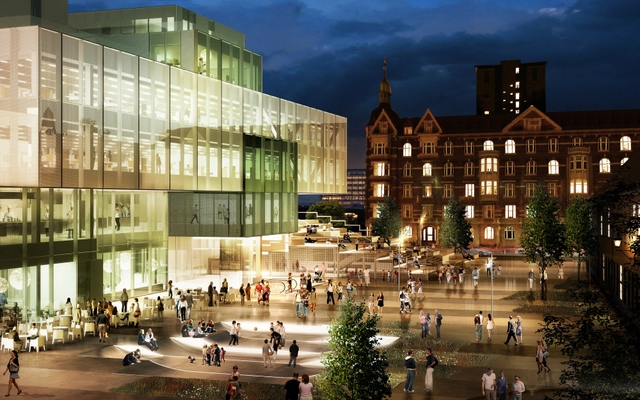
OMA has broke ground on a 27,000 square meter, mixed-use development on the banks of Copenhagen’s historic waterfront in the culturally rich Slotsholmen district. Upon its completion in early 2017, Bryghusprojektet will become the new headquarters for the Danish Architecture Centre (DAC), while also providing housing, offices, retail, a restaurant, and an urban park. These programs will be stacked over and under the busy Christians Brygge, providing city dwellers direct and uninterrupted access to the water’s edge.
OMA Partner-in-charge Ellen van Loon explained: “Instead of stacking a mixed-use program in a traditional way, we positioned the DAC in the centre of the volume, surrounded by and embedded within its objects of study: housing, offices and parking. The urban routes reach into the heart of the building and create a broad range of interactions between the different program parts and the urban environment.”
More images and the architects' description after the break...
https://www.archdaily.com/374768/construction-begins-on-oma-s-bryghusprojektet-in-copenhagenKarissa Rosenfield
OMA Proposes Radical Redevelopment Plan for the Miami Beach Convention Center
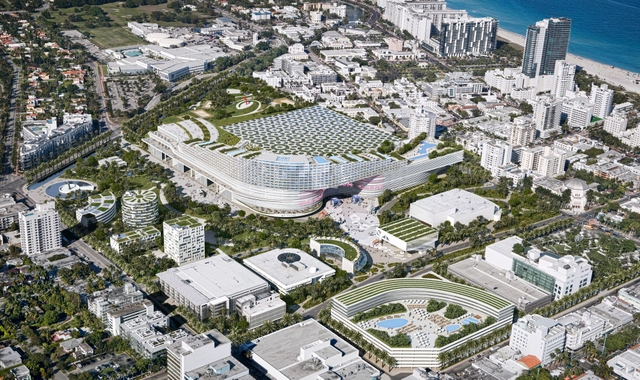
South Beach ACE just unveiled their master plan for the redevelopment of the Miami Beach Convention Center site. Currently in a battle with BIG and Portman CMC for the right to overhaul the 52-acre site, national developer Tishman, international architecture firm OMA, international firm TVS, and Miami Beach developer UIA Management comprise the South Beach ACE team. The vision involves bringing to life one of Miami Beach’s most underutilized public sites with a fully-revamped convention center capable of luring major events from around the world, an iconic hotel, inviting green spaces, low-density retail uses, and cultural venues.
More images and the team's description after the break...
https://www.archdaily.com/353885/redevelopment-of-miami-beach-convention-center-proposal-south-beach-aceAlison Furuto