.jpg?1421977432)
-
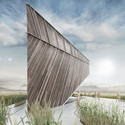
Architects: Kengo Kuma & Associates
- Area: 52 m²
- Year: 2014



When first commissioned by Miuccia Prada and Patrizio Bertelli to design Fondazione Prada’s new space in Largo Asarco, OMA set out to “expand the repertoire of spatial typologies in which art can be exhibited and shared with the public.” The result, an “unusually diverse environment” staged within a historic 20th-century distillery south of Milan’s city center that goes beyond the traditional white museum box.
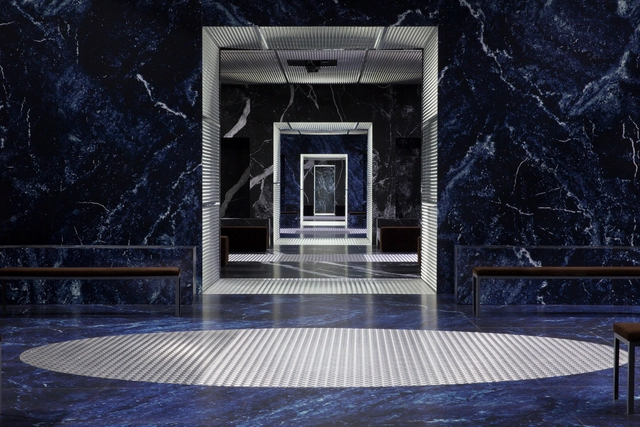
On Sunday, Prada ditched the classic runway to kickoff their 2015 Fall/Winter menswear line in a “disorienting landscape” designed by OMA’s research counterpart AMO. The partitioned catwalk transformed an exiting room inside the Fondazione Prada at Via Fogazzaro 36 in Milan into an intimate series of interconnected spaces affectionately referred to as “The Infinite Palace.”
“The existing room is disguised into a classic enfilade of rooms, gradually changing proportions as in an abstract mannerist perspective. As opposed to a single stage, the new sequence of spaces multiplies and fragments the show into a series of intimate moments,” described AMO.

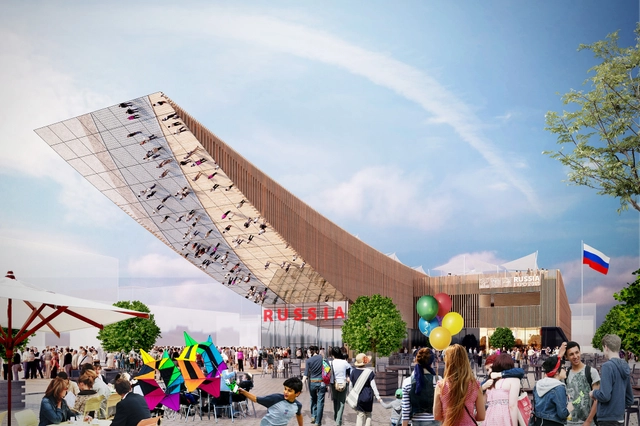
Russia has released designs for their participation at Milan Expo 2015. Taking in consideration Russia’s most successful world EXPO pavilions, of which the country has been producing since 1851, and the importance of “green technologies,” SPEECH has designed an expansive 4000-square-meter timber structure with a pronounced roofline that features a mirrored canopy extending 30-meters over the pavilion’s main entrance.

Azerbaijan has recently unveiled the design of “Treasure of Biodiversity,” its dedicated pavilion for Expo Milano 2015, marking the first time the country has participated at a Universal Exposition. Designed by Italian firm Simmetrico Network, the pavilion aims to reflect the unique cultures and landscapes of Azerbaijan while acting as a model of sustainable design. Complete with biospheres and undulating walls, the pavilion’s unique form takes cues from the central Expo theme of “Feeding the Planet, Energy for Life,” and hopes to engage visitors with the values of protected biodiversity.

It seems as though the complex case of architectural copyright has been a major talking point of 2014. As the year begins to draw to a close, a fresh tension has risen between two European offices. British practice Wilkinson Eyre have claimed that a central structure at the site of the 2015 Milan Expo is direct plagiarism of their Cooled Conservatories at Gardens by the Bay project in Singapore, completed in 2012. According to an article in The Telegraph, the 'Tree of Life' will "form the centre-piece of the Italian pavilion" in Milan.
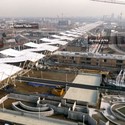
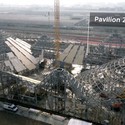
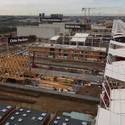
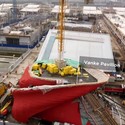
The 2015 Milan Expo has been keeping architecture fans in the loop with "Belvedere in Città," its continuing series of videos filmed with the help of a drone. Since our update last month, two new videos have been released - and now that the recognizable forms of the pavilions are starting to emerge, the videos include labels for each feature of the expo site. With the help of these new videos it is easy to see the forms of highly-touted pavilions such as Libeskind's Vanke Pavilion, or Nemesi & Partners' smog-eating pavilion for Italy, gradually taking shape around the twin axes of the "cardo" and "decumanus," an ancient Roman planning tool borrowed for the site's masterplan by Jacques Herzog, Mark Rylander, Ricky Burdett, Stefano Boeri, and William McDonough. Read on after the break for the second video, and screenshots of the construction works.
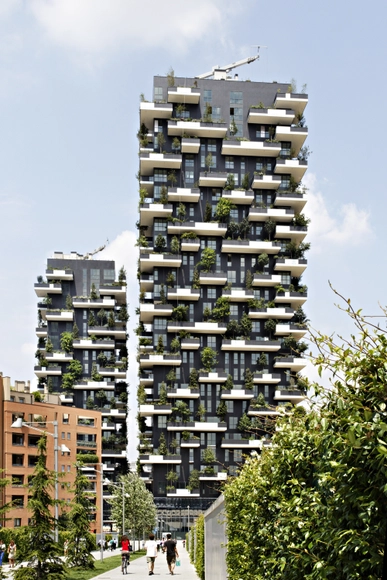
Bosco Verticale by Boeri Studio has won the 2014 International Highrise Award, deeming it to be the “most beautiful and innovative highrise in the world." Selected from a competitive shortlist of towers by Rem Koolhass, Steven Holl and Jean Nouvel, the forested highrise was praised by the jury for bringing 800 trees and 14 thousand plants to the Milan skyline.
“The Vertical Forest is an expression of the human need for contact with nature,” stated jury president Christoph Ingenhoven. “It is a radical and daring idea for the cities of tomorrow, and without a doubt represents a model for the development of densely populated urban areas in other European countries.”
Construction is entering into the final stages for Expo Milan 2015, with just over six months left in the five-year build. A quick fly through shows the centrepiece Italian Pavilion nearing structural completion, with national and corporate pavilions making steady progress. The video is the fifth in a series of drone-led tours of the site, created in partnership between Expo Milan and Telecom Italia.
Find out more and watch the remaining four videos after the break
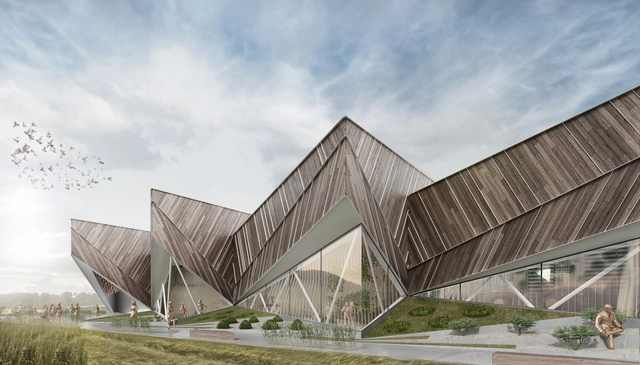
SoNo Arhitekti’s design for the Slovenian Pavilion has been chosen to represent the country at the 2015 Milan Expo. One of 142 participants, Slovenia’s pavilion will be based on the slogan, "I FEEL SLOVENIA. Green. Active. Healthy.”
The common thread in the exhibition manifests itself through a series of interactive and architectural elements throughout the pavilion. As the architects describe, “Five prismatical structures, positioned on the geometrically and dynamically designed surface, whose shape is reminiscent of a cultivated field, will represent Slovenian diverse geographical landscape and symbolize fundamental ideas of sustainable development.”
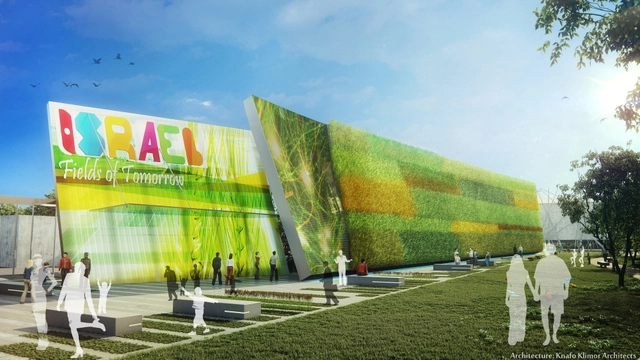
Knafo Klimor Architects have been chosen to represent Israel at the 2015 Milan Expo with their “Fields of Tomorrow” pavilion. The elongated pavilion, stretching 70 meters across and rising 12 meters high, will act as a “living” billboard revealing Israel’s past and present successes in modern agriculture.
More images and video, after the break.
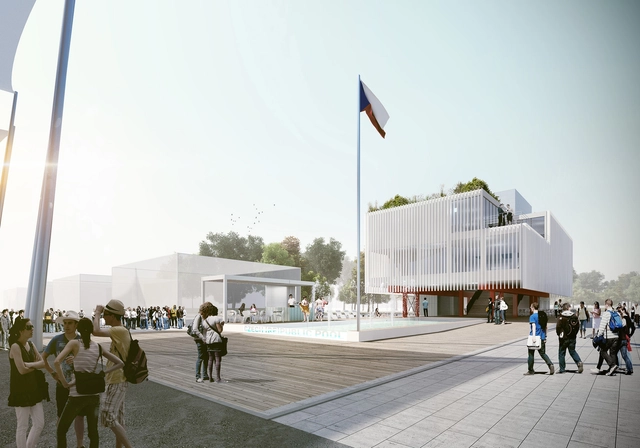
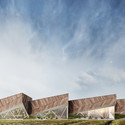
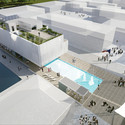
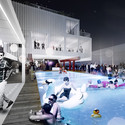
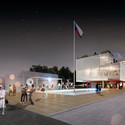
Chybik + Kristof have revealed their winning design for the Pavilion of the Czech Republic at the 2015 Milan Expo. Responding to the Expo's food theme, the pavilion is centered around the Czech Republic's unique relationship to water, featuring a public swimming pool at the center of the design and presenting the latest progress in nanotechnology for water purification.
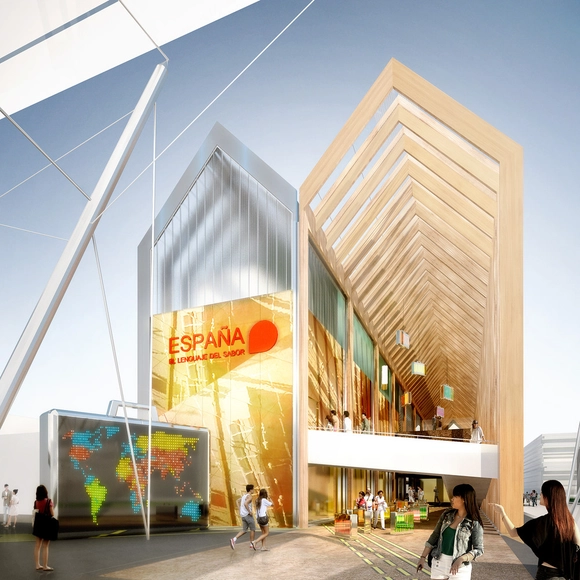
Barcelona’s b720 arquitectos has designed a greenhouse-inspired pavilion to represent Spain at the 2015 Milan Expo. Representing a “fusion” of Spain’s gastronomic tradition and innovation, the portico-like structure will be divided into two halves and united by a repetitious form.
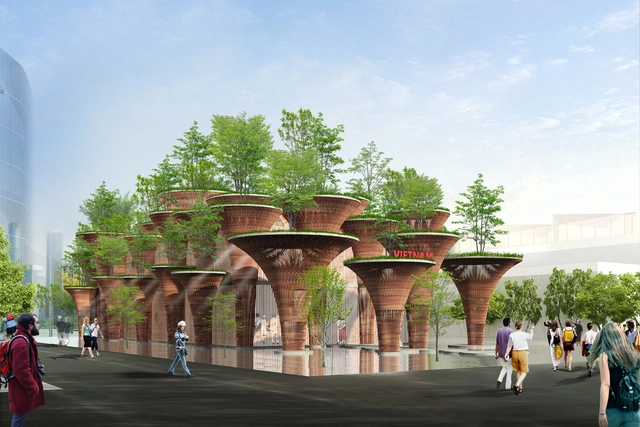
Vo Trong Nghia has unveiled designs for the Vietnamese pavilion at the 2015 Milan Expo. Inspired by the lotus, the pavilion features a number of bamboo clad, umbrella-like structures supporting trees above a pool of water, in a composition reminiscent of their Kontum Indochine Cafe.
"The Lotus is Vietnam’s national flower, a symbol of purity, commitment and optimism for the future," say the architects. "Growing from the muddy ponds it rises above the surface to bloom with remarkable beauty. The flower is proof that patience can turn difficulties into advantages."
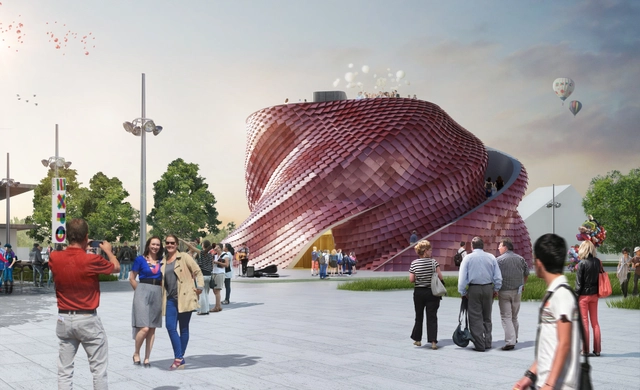
Daniel Libeskind has unveiled designs for Vanke’s first ever overseas pavilion for the 2015 Milan Expo. Clad in a self-cleaning, air purifying, metalized tile, which was designed by Libeskind in collaboration with the Italian company Casalgrande Padan, the “red serpentine-like” structure reinterprets the traditional Chinese Shitang (dining hall).
_(141_1).jpg?1421977737 "© Zeno Zotti")
.jpg?1421977759 "© Zeno Zotti")
.jpg?1421977570 "© Zeno Zotti")
.jpg?1421977647 "© Zeno Zotti")
.jpg?1421977432)










.jpg?1401639706 "© Andrea Martiradonna")

