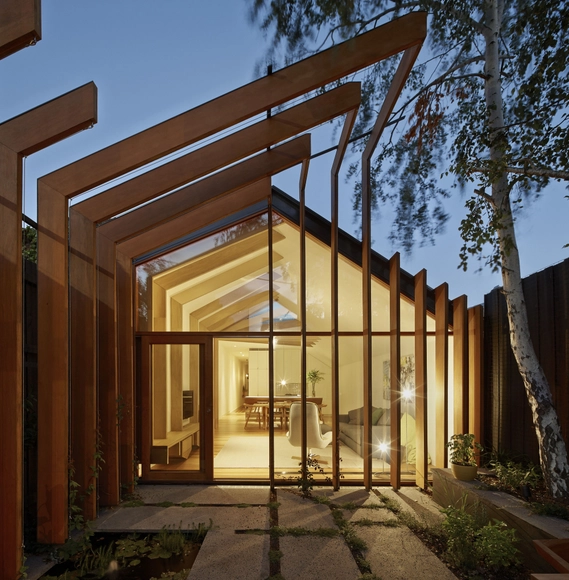
In the following interview, presented by ArchDaily Materials and originally published by Sixty7 Architecture Road, Canadian firm Campos Leckie Studio defines their process for designing site-specific, beautiful architecture that speaks for itself. Enjoy the firm's stunning projects and read the full interview after the break.
In our technology-obsessed age we tend to forget where materialsactually come from. But in their first exhibition on materials, WOOD, the Het Nieuwe Instituut in Rotterdam not only overviews wood's uses from World War I trenches to daily tools, but also reminds us where wood comes from, tracking wood's manmade and natural "cycles" of destruction and reconstruction. WOOD is curated by Dan Handel, in cooperation with exhibition designers Jannetje in ‘t Veld and Toon Koehorst and is showing until October 8th of this year - learn more at the website here.
Material Minds, presented by ArchDaily Materials, is our new series of short interviews with architects, designers, scientists, and others who use architectural materials in innovative ways. Enjoy!
Material Minds, presented by ArchDaily Materials, is our new series of short interviews with architects, designers, scientists, and others who use architectural materials in innovative ways. Enjoy!
Arthur Andersson of Andersson-Wise Architects wants to build ruins. He wants things to be timeless - to look good now and 2000 years from now. He wants buildings to fit within a place and time. To do that he has a various set of philosophies, processes and some great influences. Read our full in-depth interview with Mr. Andersson, another revolutionary "Material Mind," after the break.
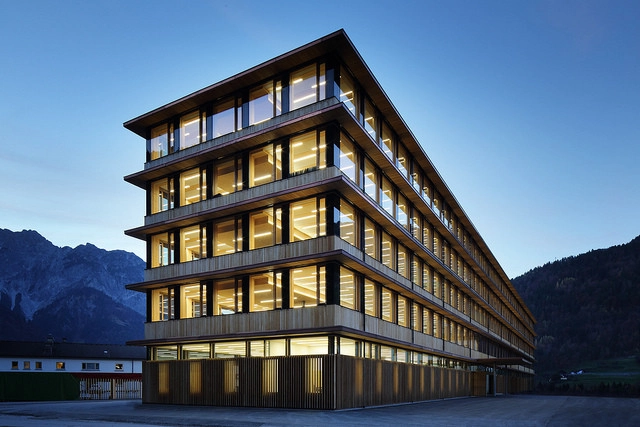
Wood is the ultimate material - it's renewable, sequesters carbon and more importantly, it's buildable. Nevertheless wood is rarely used in tall, vertical construction. Now reThink wood has come out with their Tall Wood Survey (available in full on their website), which surveyed over 50 wood experts to explore three main areas in which wood is usually questioned: financing, insurance and performance. But beyond discussing the pros and cons of wood, the survey also highlights 10 projects that show how wood products are being used in ways you never thought existed. See all ten innovative projects, after the break.
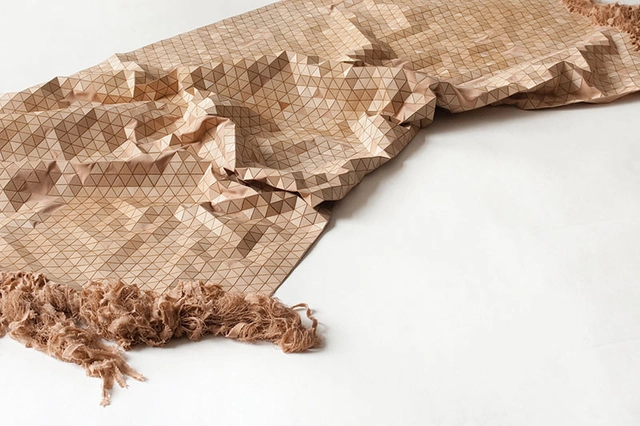
Wooden Textiles - A Mixture Of Of Materials That Makes Wood Feel Soft. Image Courtesy of Interiors & Sources
The following post is presented by ArchDaily Materials, our new US product catalog.
Recently, Interiors & Sources featured fourteen of the coolest materials they've come across in their 30-year history; the following post lists the five that most tickled our fancy. Enjoy!
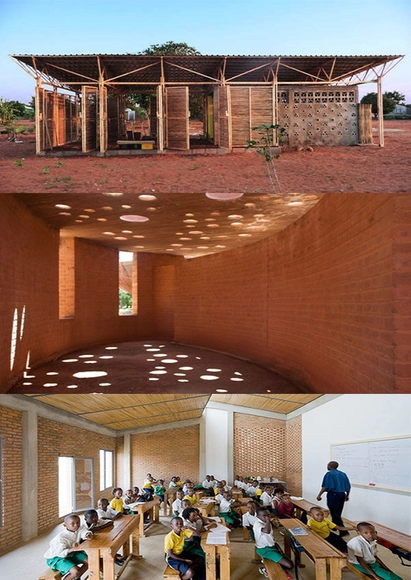
Top: Educational Building In Mozambique / Bergen School of Architecture Students. Middle: School Library Gando / Kere Architecture. Bottom: Umubano Primary School / MASS Design Group
The following article is presented by Materials, ArchDaily's new US product catalog.
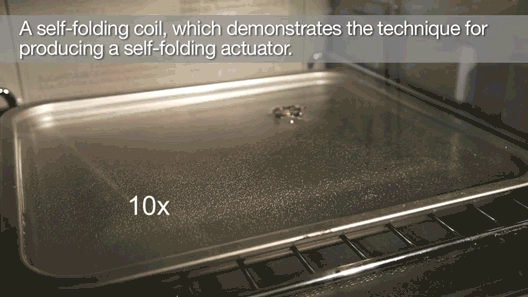
MIT has developed a way to 3D print sheets of material that self-assemble when baked. With inspiration from Japanese origami, researchers have developed -- among other objects -- robots. Head researcher Daniela Rus is already looking for potential applications saying, "I want a robot that will play with my cat." Check out the full article at HNGN to learn more and watch a video of the assembly in action.
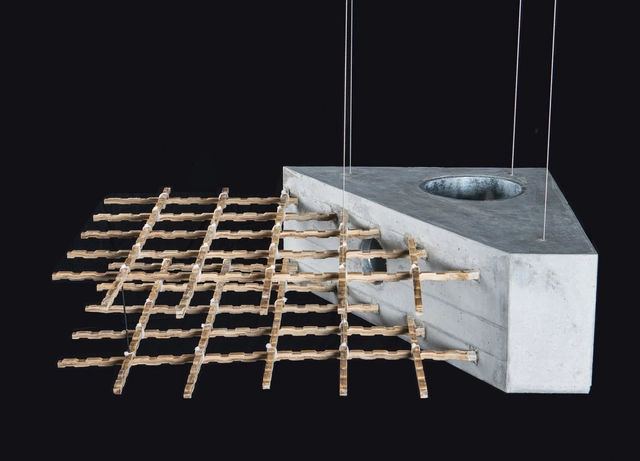
Developing countries have the highest demand for steel-reinforced concrete, but often do not have the means to produce the steel to meet that demand. Rather than put themselves at the mercy of a global market dominated by developed countries, Singapore’s Future Cities Laboratorysuggests an alternative to this manufactured rarity: bamboo. Abundant, sustainable, and extremely resilient, bamboo has potential in the future to become an ideal replacement in places where steel cannot easily be produced.
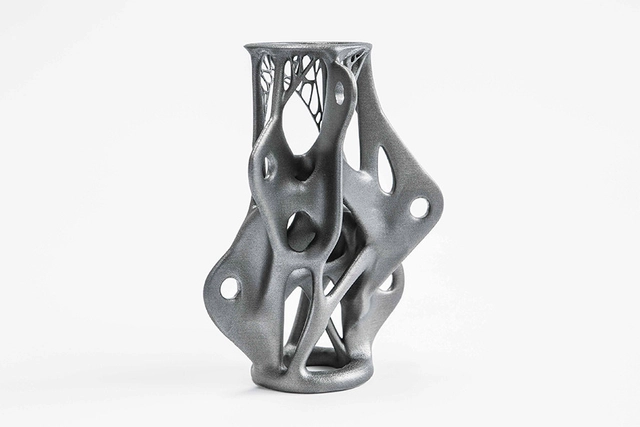
A team lead by Arup has developed a method of designing and 3D Printing steel joints which will significantly reduce the time and cost needed to make complex nodes in tensile structures. Their research is being touted as "a whole new direction for the use of additive manufacturing" which provides a way of taking 3D printing "firmly into the realm of real-world, hard hat construction."
Material Minds, presented by ArchDaily Materials, is our new series of short interviews with architects, designers, scientists, and others who use architectural materials in innovative ways. Enjoy!
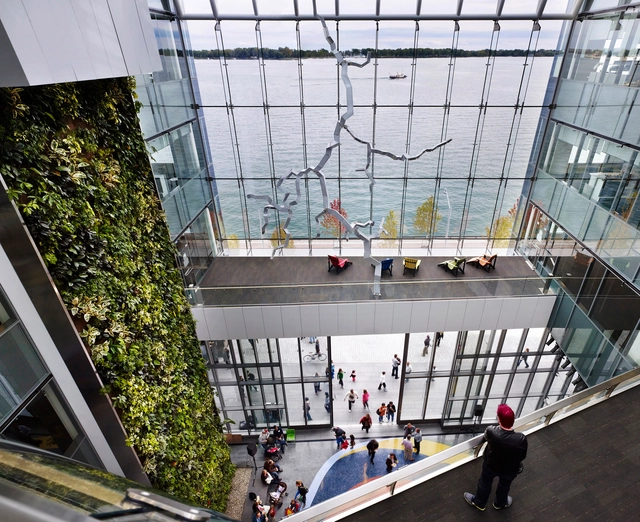
Green, or living, walls have begun popping up and growing across commercial interiors everywhere over the last decade. To understand how a living wall functions, and how to design one, we went straight to a pioneer in the profession: Ms. Birgit Siber of Diamond Schmitt Architects in Toronto. The synthesis of natural systems and building systems had been in her mind since her days as a student, but the major break came in 2000, when her team constructed a massive living wall for The University of Guelph-Humbar. To understand how architects are closing the gap between interior and exterior via the living wall, read the full interview after the break.
The Brooklyn based firm The Principals are known for their interactive design, industrial design and installation work. The video above hi-lights their latest "bionic" installation, which actually responds and reacts to human movement thanks to myoelectric sensors that pick up voltage increases on the skin when a muscle contracts. To learn more head over to their website - and make sure to check out all of The Principals other installations featured on ArchDaily.
Ned Thomas, dean of the George R. Brown School of Engineering at Rice and a materials scientist, holds a polyurethane disk with the bullets it stopped and sealed inside. Image Courtesy of Tommy LaVergne
The following six "miracle" materials could be headed straight into your home, office, car and more. Dina Spector at Business Insider recently rounded up the six most promising materials. As of now, their potential applications have just scratched the surface, but the possibilities are endless. Presented by AD Materials.
https://www.archdaily.com/508576/six-miracle-materials-that-will-change-their-industriesDina Spector, Business Insider
Material Minds, presented by ArchDaily Materials, is our new series of short interviews with architects, designers, scientists, and others who use architectural materials in innovative ways. Enjoy!
Although office design has dramatically and drastically changed over the course of the 20th century, we aren't finished yet. San Francisco firmO+A is actively searching for today's optimal office design, designing work spaces to encourage both concentration and collaboration by merging elements from the cubicle-style office with those popularized by Steve Jobs. In this article, originally published by Metropolis Magazine as “Noises Off,” Eva Hagberg takes a look at some of their built works.
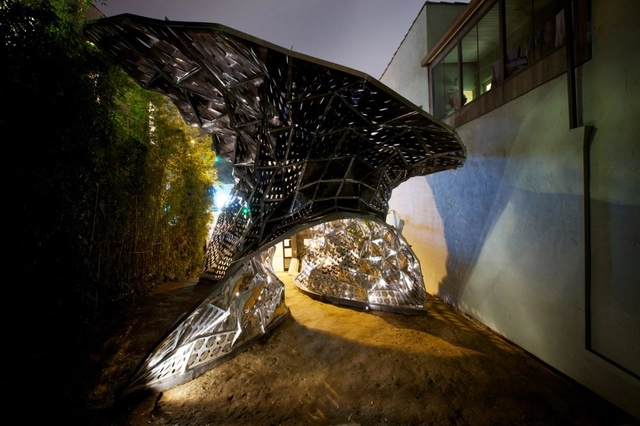
The following article is presented by ArchDaily Materials. In this article, originally published by Metropolis Magazine, Lara Kristin Herndon and Derrick Mead explore seven innovative architectural materials and the designers behind them. Some materials are byproducts, some will help buildings breathe and one is making the leap from 3D printing to 4D printing.
Andrew Carnegie once said, “Aim for the highest.” He followed his own advice. The powerful 19th century steel magnate had the foresight to build a bridge spanning the Mississippi river, a total of 6442 feet. In 1874, the primary structural material was iron — steel was the new kid on the block. People were wary of steel, scared of it even. It was an unproven alloy.
Latrobe City Council is pushing an initiative that would put “wood first.” If implemented, the “Wood Encouragement Policy” would educate architects and industry professionals about the structural and environmental benefits of wood in an effort to promote the local timber industry and use of sustainable building materials. Following the lead of the United States and New Zealand, both of which recently established “wood encouragement” policies, the council hopes that this will set a precedent that can be applied throughout the rest of Australia.
https://www.archdaily.com/499157/wood-encouragement-policy-coming-to-australiaStephen Stanley