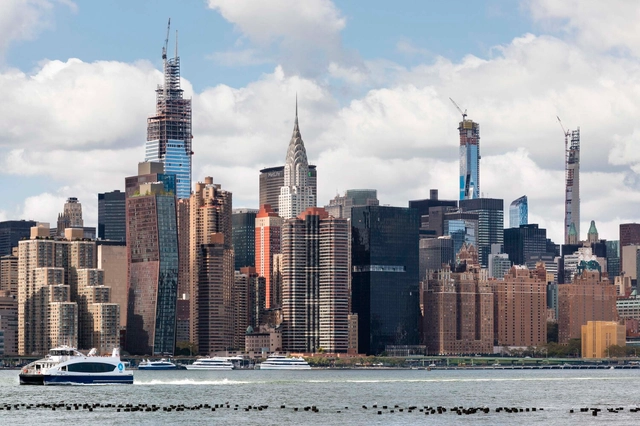
Transforming urban buildings into clean energy plants is a bold and powerful strategy to combat the climate crisis, reduce dependence on centralized grids, and promote more resilient, sustainable cities. Since 2010, cities have been responsible for over 75% of global electricity use, a demand historically met by fossil fuels as urbanization has increased since the Industrial Revolution. By the late 19th century, hydroelectric power began gaining relevance as a renewable alternative. However, with rapid advancements in solar technology, urban buildings now have the unprecedented potential to become self-sufficient power hubs.
Chinese architect and educator Liu Jiakun has been announced as the laureate of the 2025 Pritzker Architecture Prize, the highest honor in the architecture field. This prestigious award recognizes Jiakun, founder of Jiakun Architects (established 1999), for his ability to blend traditional Chinese elements with contemporary design and for his commitment to social equity in the built environment. Born in Chengdu, China, where he continues to live and work, he becomes the second Chinese architect to receive the accolade, following Wang Shu (2012). Jiakun joins a distinguished list of previous laureates including Riken Yamamoto in 2024, David Chipperfield in 2023, and Francis Kéré in 2022. The award ceremony will be held this spring at the Jean Nouvel-designed Louvre Abu Dhabi, with a global video release of the presentation this fall, followed by the 2025 Laureates' Lecture and Symposium in May.
The Jewish Museum in Berlin, designed by Daniel Libeskind, employs synesthesia to evoke feelings of disorientation, loss, and memory through fragmented geometry, contrasting lighting, and material choices. Inspired by a shattered Star of David, the building guides visitors through slanted and narrow corridors, creating instability and discomfort. Light, either filtered through slits or almost entirely absent in certain areas, reinforces the oppressive atmosphere. The raw concrete, with its cold and rigid texture, intensifies this experience, while the void resonates with echoes and silence. In the Shalekhet (Fallen Leaves) space, metal plates shaped like faces emit unsettling sounds when stepped on, creating a disturbing auditory experience. The museum transcends its function as an exhibition space and becomes an immersive architectural experience, where light, sound, texture, and form combine to convey the pain and memory of the Holocaust.
Architecture is a discipline that evolves through progressive stages, with each phase building upon the previous one. Schematic design, for example, begins with broad concepts and initial explorations, followed by site analysis, sketches, and 3D models, with adjustments made along the way. The true challenge lies not just in following this sequence but in balancing speed, quality, and efficiency to navigate the trade-off between time and quality. In this context, the integration of generative artificial intelligence in the built environment reshapes architectural dynamics by assisting architects and creating space for more experimentation and exploration. Its impact is especially significant in rendering, which was previously a constraint at different project stages—particularly during concept development. Today, however, AI-powered architectural rendering operates smoothly, allowing more focus on creative problem-solving through innovative tools and strategies.
https://www.archdaily.com/1027260/how-ai-powered-rendering-crushes-bottlenecks-in-architecture-and-interior-designEnrique Tovar
Humanity's fascination with the unknown is a timeless impulse, rooted in curiosity and the desire to push boundaries, uncover mysteries, and open doors to new frontiers. What were once represented by voyages and the discovery of new islands and continents are now pursued in the vastness of the Universe. As we seek answers, provoke new questions, and open doors to endless possibilities, this drive continues to inspire. It has shaped countless literary and cinematic works, transforming interstellar exploration from a science fiction concept into a vision increasingly grounded in reality.
One such visionary project is Project Hyperion, spearheaded by the Initiative for Interstellar Studies (i4is), which challenges humanity to develop practical solutions for interstellar travel through a design competition. By envisioning generation ships—vast, self-sustaining habitats capable of supporting multigenerational societies on journeys spanning centuries—the project not only pushes the boundaries of technology but also sparks social innovation, stretching the limits of our collective imagination. There is still time to submit your design by March 9th, with Phase 2 starting on May 4th.
Guardrails and windscreens play an essential role in contemporary architecture, combining safety, functionality, and aesthetic appeal. These systems are crucial for protecting elevated spaces like balconies, terraces, and staircases, incorporating materials such as tempered laminated glass, stainless steel, aluminum and innovative fastening systems. This allows for transparency and unobstructed views without compromising safety. They also feature customizable options, including top caps, handrails and integrated lighting, enabling architects to create unique, visually striking spaces that meet both practical and aesthetic goals.
Serpentine Gallery Pavilion 2011, designed by Peter Zumthor. Photo by Walter Herfst
In 1902, physicist Philipp Lenard discovered that the breaking of water droplets in waves, waterfalls, rain, or mist releases negative ions into the air. This occurs because, upon breaking, the droplets separate their electrical charges: electrons, which are smaller and lighter, adhere to suspended particles in the air, while positive charges remain in the water or dissipate quickly. This phenomenon increases the concentration of negative ions in the environment, which can directly influence our body and mind, interacting with neurotransmitters and essential cellular functions. It is no coincidence that many people report feelings of well-being, energy, and mental clarity after spending time at beaches, waterfalls, or forests. In Japan, this connection with nature is explored in the practice of Shinrin-Yoku, or "forest bathing," which promotes relaxation and revitalization simply through contact with the natural environment.
In the heart of Chiang Mai, a city rich in history and the cultural heritage of northern Thailand, the Panyaden Hall, completed in 2017, carries a story of technical innovation and reverence for tradition, brought to life through bamboo. Combining centuries-old Thai craftsmanship with modern design solutions, the project reflects the ethos of Chiangmai Life Architects, a firm devoted to elevating natural materials to their highest potential. In this article, we will explore some of the contemporary structural solutions applied to this iconic project, further revealing bamboo's true potential and inviting a fresh perspective on sustainable architecture and bamboo engineering.
Caleb Whiting dogbear869, CC0, via Wikimedia Commons
Dubai has evolved from a humble trading port into a global metropolis renowned for its futuristic skyline and pioneering architectural feats. In the early 20th century, its landscape was shaped by traditional Arab homes featuring internal courtyards and wind towers, designed to endure the harsh arid climate. The discovery of oil in the 1960s marked a turning point, triggering rapid urbanization. Throughout the 1970s and 1980s, a surge in construction, fueled by oil revenues, led to the rise of concrete tower blocks and low-rise apartment complexes, accommodating an influx of expatriates drawn to UAE's booming economy. By the 21st century, the UAE witnessed unparalleled architectural advancements. Landmark projects like the Burj Khalifa—the world's tallest building—and the Palm Jumeirah—an artificial archipelago—transformed the country's skyline, solidifying the UAE's reputation as a global hub of architectural ambition and innovation.
Doors are part of our daily routine, opening and closing so naturally that we rarely consider how they work. That is why, when discussing innovations in their design, many might think, "If it ain't broke, don't fix it." However, just because something functions well doesn't mean it can't be improved. Doors are no exception—their components can be optimized for better performance without changing their fundamental nature. Instead of sticking to the familiar, why not open the door for enhancement? Pivot doors are a clear example. In addition to offering aesthetic versatility and nearly endless design possibilities, their opening system on a central axis allows for fluid and controlled movement, especially indoors. However, a challenge remains in their design: making them hold steady at different angles.
https://www.archdaily.com/1026629/and-yet-it-holds-a-pivot-hinge-system-that-keeps-doors-at-every-90-degrees-angleEnrique Tovar
Cladding is an essential element in architecture, combining functionality, technology, and aesthetics to protect and enhance buildings. Among the various materials available, such as stone, wood, and composites, metal cladding stands out for its durability, low maintenance, and design flexibility. In addition to offering weather resistance and fire safety, its recyclability makes it a sustainable and cost-effective solution for projects of all sizes. To meet these demands with efficiency and sophistication, Parallel Architectural Products offers a range of metal claddings and other innovative products designed to optimize installation, reduce labor costs, and ensure high-quality finishes.
Wars, decolonization, economic crises, civil movements, and industrial-technological revolutions: the 20th century was a period of radical and far-reaching transformations. These upheavals reshaped societies and redefined how people expressed their evolving aspirations, with architecture leading the way. Machines and industrialization promised technological progress and modernization, advocating for a clean break from the ornamented, historically rooted styles of the past while embracing a vision focused on functionality, efficiency, and innovation. This shift, embodied by modernism, introduced new concepts, methods, and material uses—all shaped through experimentation.
https://www.archdaily.com/1026242/formal-and-material-experimentation-key-lessons-from-modernist-architecture-pioneersEnrique Tovar
Disciplines such as architecture, interior design, product design, and fashion rely on awards to celebrate innovation, set industry benchmarks, and inspire excellence. Beyond mere recognition, these accolades validate creative achievements, strengthen reputations, and expand the visibility of ideas that challenge conventions. They also foster interdisciplinary collaboration, encourage professional growth, and highlight the transformative impact of design on everyday life.
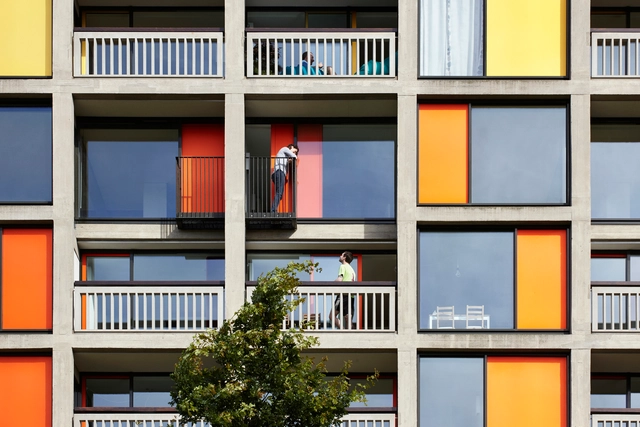
Park Hill, a large social housing complex in Sheffield, stands out as one of the most ambitious examples of modernist architecture in post-war Britain. Designed in 1961 by Jack Lynn and Ivor Smith, its innovative concept of "streets in the sky" aimed to combine high-density housing with the community spirit of traditional neighborhoods. By the late 20th century, the complex had fallen into severe neglect, marked by social problems and structural degradation that undermined both its functionality and reputation. Gradually, Park Hill became synonymous with the failure of modernism, carrying a heavy social stigma and marginalizing its residents.
As people take greater control over the rituals surrounding their deaths, cremation has become an increasingly popular option worldwide. This shift has prompted the thoughtful design of spaces that address the profound emotions tied to cremation, life and death, and stillness. Architects are increasingly grappling with the question of what role architecture plays in these rituals.
https://www.archdaily.com/933355/the-architecture-of-the-crematorium-in-10-projectsNiall Patrick Walsh
On the shores of serene lakes, where water reflects the harmony between architecture and nature, homes emerge as true retreats. Designed to offer comfort and a deep connection with the surroundings, these residences stand out worldwide for their diverse materials and scales, adapting to different landscapes and lifestyles. From remote woodencabins to sophisticated concrete and glass mansions in urban areas, each project takes advantage of natural resources and the unique characteristics of its setting.
Eden Pod System - Reed Green. Image Courtesy of Boss Design
Winston Churchill once wisely stated, "We shape our buildings, and in turn, our buildings shape us," a reflection that highlights how architecture, in its dynamic nature, responds to functional needs and molds the experiences of its users. Workplaces have been no exception, evolving with the social and technological changes that have redefined our understanding of organizational interactions. Almost in the blink of an eye, the once-restrictive cubicles and closed offices have made way for open layouts, while hybrid models have transformed offices into destination spaces. Furniture elements like office pods are at the forefront of this change—balancing collaboration and privacy. Designed to adapt, they have continually evolved alongside the shifting demands of modern workspaces and their inhabitants.
https://www.archdaily.com/1025776/an-eden-within-the-workplace-flexible-pods-with-biophilic-and-human-centered-designEnrique Tovar
Polyurethane (PU) started as a solution to a 1930s shortage, but today it's a key material in industries from insulation to cushioning. Invented in 1937 by Otto Bayer and his team in Germany, PU was originally designed as a cheap, versatile alternative to rubber. It quickly became popular in coatings and adhesives for its strong bonding and protective properties. PU is made by reacting polyols and isocyanates, which generates heat and, in the presence of expansion agents such as water or gases, creates bubbles that cause the material to expand, resulting in a foam with adjustable density and structure. Its flexibility allowed PU to revolutionize industries with products like insulation and padding. However, its durability and non-biodegradability have raised environmental concerns. To address this, companies like Purman are leading the charge in recycling PU waste, helping to reduce its environmental impact while promoting more sustainable alternatives.