What defines a space first when entering: the sound or the visual impression? Architecture is often communicated through structure and surfaces, yet one of its most essential components moves unseen through the air: sound. It shapes how a space feels long before a wall or ceiling is noticed. Computational design brings these dimensions together, allowing architects and designers to create unique structures where acoustics and aesthetics inform one another rather than exist in parallel. By leveraging advanced algorithms, complex design processes transform into intuitive, accessible solutions that shape bespoke acoustic and visual highlights for every project. This approach combines parametric logic with material innovation, balancing efficiency, sustainability, and expressive design in equal measure.
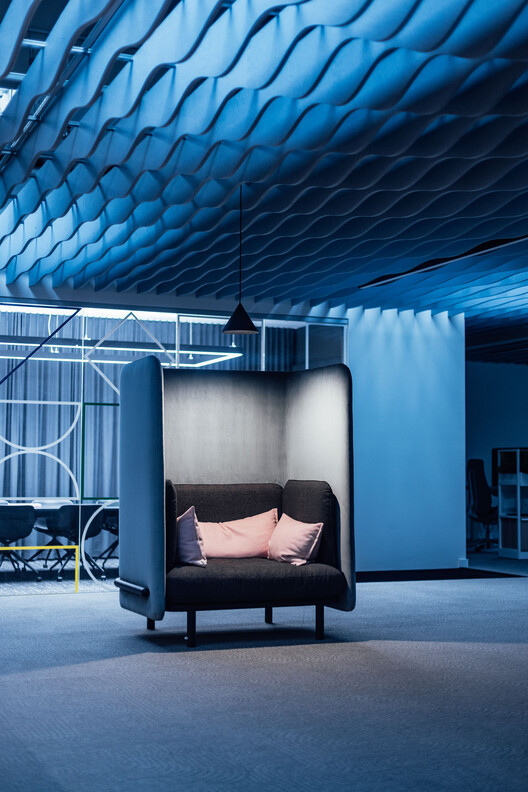
Translating Nature's Patterns Into Acoustic Solutions
Computational design allows architects to tune sound through patterns that feel both organic and meticulously engineered. The arcs of a flock, the movement of a wave, the rhythm of organic systems: these natural patterns increasingly translate acoustic solutions into functional art. Architects and designers, such as the team at the Swiss-based manufacturing company Impact Acoustic and its Impact Lab led by Arch and Design Manager Mariusz Polski, MSc. Arch, demonstrate how algorithmic thinking expands what is possible beyond sketches or physical models, intersecting materials with computational logic. And what happens when digital tools help clients, architects, designers, and manufacturers sculpt their vision within this invisible dimension?
Instead of manually drafting outcomes, rules are defined to allow systems to adapt, evolve, and remain materially efficient while responding to real architectural conditions. This approach explores how raw data, spatial constraints, and aesthetic intent can be translated into bespoke acoustic systems through parametric methodologies, embedding performance, efficiency, and expression into a single design gesture. As Mariusz Polski notes, parametric design empowers architects to define rules rather than static forms:
You can't draw a flock of birds, but you can design the parameters that create it.
Materials That Absorb, Sculpt, and Define
The need for thoughtful acoustic design is especially evident in offices, hospitality venues, retail environments, educational spaces, and public buildings—contexts where reverberation, poor speech intelligibility, or intrusive noise can decrease concentration, impair communication, raise stress levels, and affect well-being. Architectural acoustics focuses on these challenges by shaping the auditory experience through four core principles: absorption, reflection, transmission, and diffusion. Together, these determine whether a space feels calm, balanced, echoing, intimate, or chaotic. Yet, despite this influence, acoustics often remains secondary to visual and material considerations in the design process.
Sound-absorbing materials—most of them porous—are produced in a wide variety of shapes, sizes, and colors. These include mineral wool, plant-based fibers, recycled PET felt, textiles, bio-grown polymers, and many more. However, their properties and sustainability credentials vary significantly. Manufacturers such as Impact Acoustic are at the forefront of circular material research, setting new standards for acoustic performance and environmental responsibility. Beyond their signature ARCHISONIC® Felt and ARCHISONIC® Textile, they have introduced ARCHISONIC® Cotton and ARCHISONIC® Mycelium. Such material solutions do more than absorb and diffuse sound: they also ensure spaces feel balanced and acoustically comfortable, while maintaining a refined design expression and advancing circular sustainability.
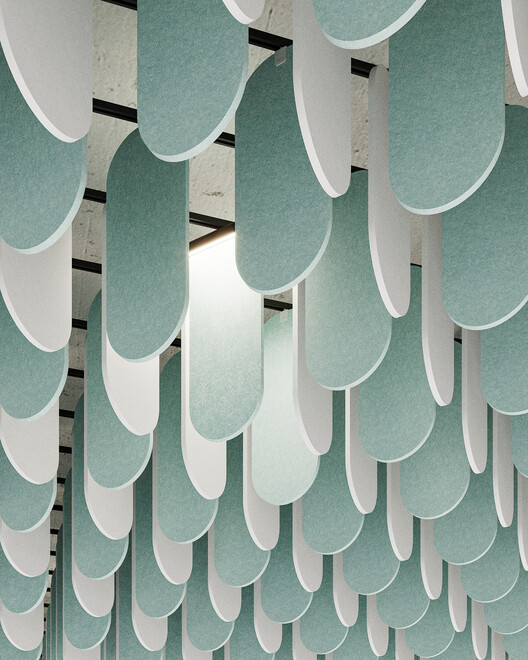
Architects combine these strategies to craft environments that are both acoustically effective and spatially coherent. Restaurants offer a clear example: hard surfaces, high ceilings, and dense occupancy often create disruptive soundscapes. When wall and ceiling panels are made of high-performance absorptive materials such as ARCHISONIC® Felt, reverberation decreases, speech becomes clearer, and the overall atmosphere becomes more comfortable. At the same time, the elements themselves introduce a sculptural presence that shapes the room visually.
Parametric Logic: Rules That Generate Adaptability and Efficiency
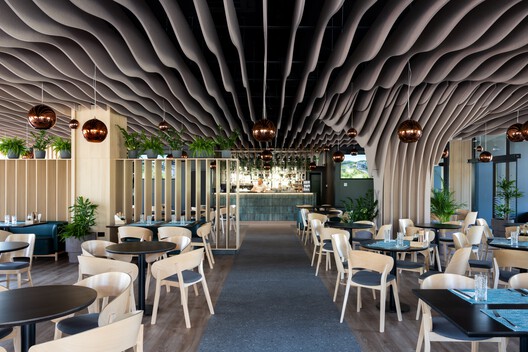
When implemented through computational workflows, conceptual ideas—from sketches to natural patterns—can be converted into manufacturable geometries with precision. Vertically integrated processes that combine generative scripting, material research, and digital fabrication enable solutions tailored to specific rooms, constraints, and design ambitions. One result of this experimentation is the all-new Impact Acoustic's Flock, an acoustic ceiling system inspired by the murmuration of birds.
Rather than drawing a static pattern, the design team developed a parametric logic that generates flowing, modular geometries whose density, rhythm, and orientation adapt to each project. Fabricated from 12 mm ARCHISONIC® Felt, the system transforms ceilings into dynamic topographies. With the addition of Flock Lighting, a refined form and wall-wash LED system, the installation becomes a sculptural surface that captures motion, plays with light, and absorbs sound.
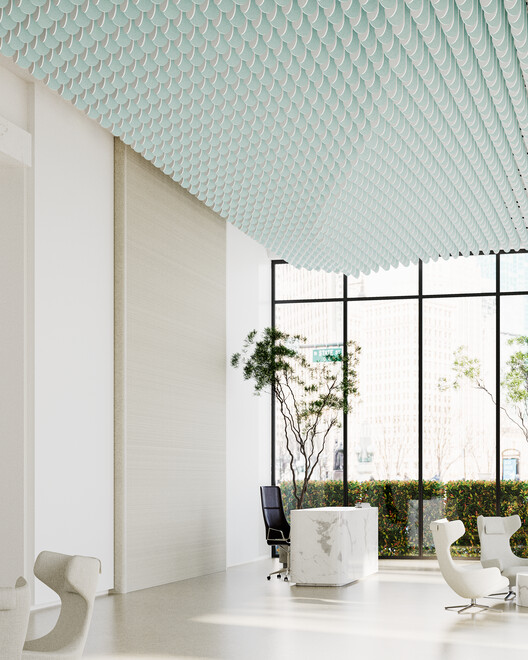
Tools such as Impact Acoustic's Canvas extend this relationship between computation and materiality. Developed for ARCHISONIC® Cotton MOSAIC tiles, Canvas generates custom mosaic layouts based on wall dimensions. With a palette of 24 colors and multiple-tone combinations per design, the tool demonstrates how algorithmic logic can be intuitive, playful, and accessible.
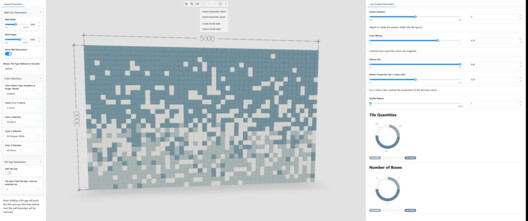

Across multiple application forms, computational design enables creative minds, such as Impact Acoustic, to optimize material use through genetic algorithms, adapt geometries to architectural features such as lighting or openings, and iterate rapidly during early design stages. The result is a process that is efficient, sustainable, and highly adaptable—one that supports creative exploration while maintaining manufacturing precision. In practice, this means every element, from a single ceiling baffle system to a mosaic wall, can be calibrated in scale, density, patterning, or color to respond meaningfully to its context, empowering architects and designers to shape future-ready spaces.