.jpg?1607385552 "© Fernando Guerra | FG+SG")
.jpg?1607382369 "© Fernando Guerra | FG+SG")
.jpg?1607382663 "© Fernando Guerra | FG+SG")
.jpg?1607382845 "© Fernando Guerra | FG+SG")

-
Architects: Diana radomysler, Elisa Friedmann, Mariana ruzante, Samanta Cafardo, Studio MK27 - Marcio Kogan
- Area: 10763 ft²
- Year: 2018


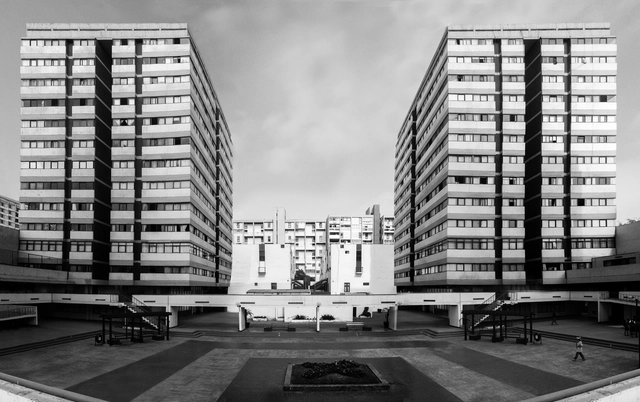
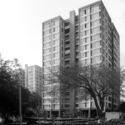
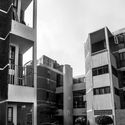
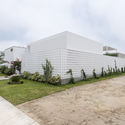
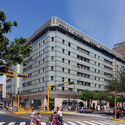
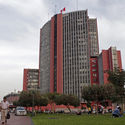
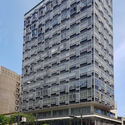
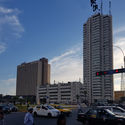
The San Felipe residential complex (Residencial San Felipe), designed and built by a team of architects from the National Housing Board between 1962-1969, is nestled on a 27 hectare lot in the Jesús María District in Lima, Peru. Dubbed as one of the most important infrastructure projects under President Fernando Belaúnde Terry, the housing complex is representative of the modernist ideology of the time that looked to traditional urban concepts to address the country's contemporary housing needs.
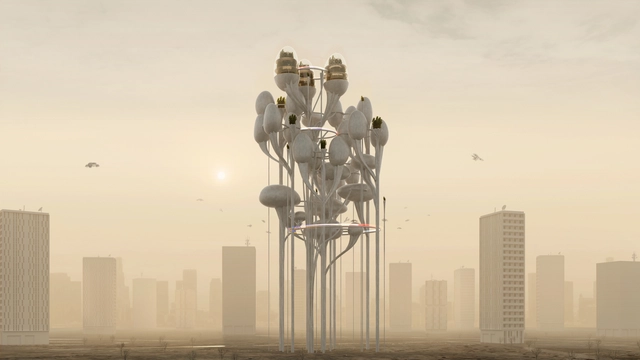
Putting together competition entries from all around the world, this week’s curated feature for Best Unbuilt Architecture showcases inspiring approaches and concepts. Submitted by our readers, the selection highlights uncommon proposals, part of international contests. While some are winning projects, others received honorable mentions.
Serie imagines stacked timber pavilion-like offices, Schlaich Bergermann Partner, LAVA, and Latz + Partner design new pedestrian and cycle bridge over the Neckar River in Heidelberg, Germany and Aidia Studio create an Oculus in the Emirati desert. Other competition entries include a landscaped avenue by ZXD Architects in Hangzhou, a community school in Egypt by Hand Over, a winning pavilion for the Singapore’s Archifest 2020 by ADDP Architects and OWIU Design Studio; and a Baha’i House of Worship by SpaceMatters in India.
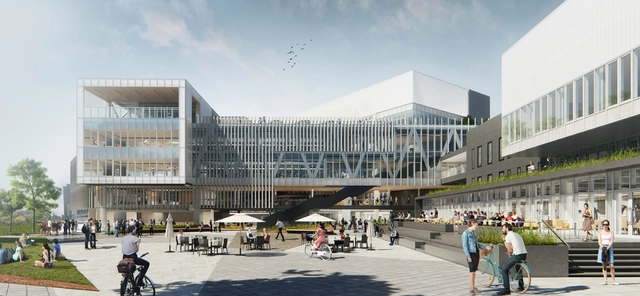
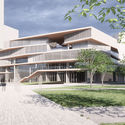
The Universidad de Lima, the most influential institution in Peru, is expanding its campus, in the heart of the capital, to offer a new learning experience, a never seen before novelty amongst the schools in Latin America.
The project’s main purpose is to create the whole college town, usually found abroad, in its central location in Lima. This innovative approach comes from the understanding of the importance of the concept of “university-cities” as a key economic driver. In fact, the master plan suggests making the campus as inclusive as possible, by putting in place all the facilities needed for students to actually linger.
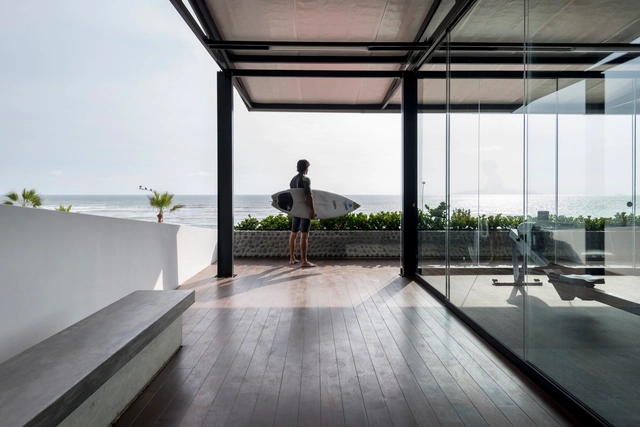
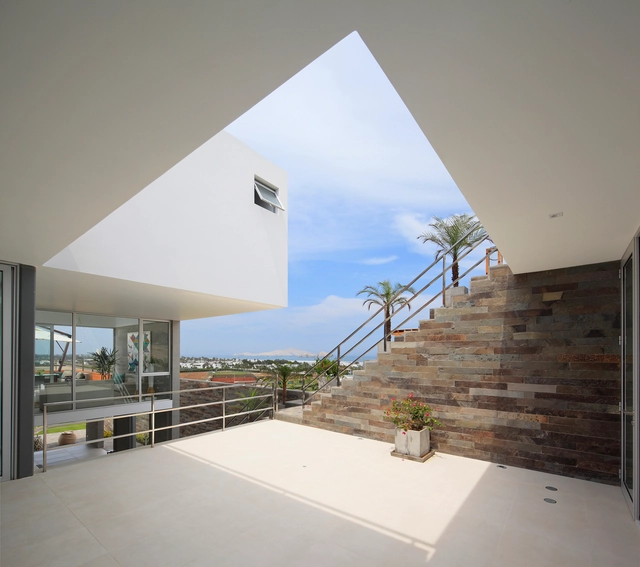
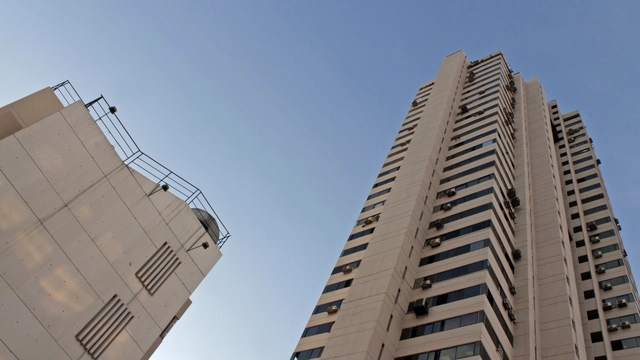
As tends to occur in various Latin American capitals, the historical center of Lima —also known as Cercado de Lima— faces simultaneous processes of deterioration, conservation and transformation. Wandering through its streets, its neo-colonial and republican architecture mixes with some major architectural projects which came about during Peru's modernist movement: "golden age" of public architecture during the mid 20th century.
In 1947, the invasion of Agrupación Espacio, the remodeling Lima's Plaza de Armas and the widening of streets such as Tacna Avenue and Wilson Avenue kickstarted Peru's entrance into the modern movement. In Lima's historic center the works of Enrique Seoane Ros and Walter Weberhofer introduced a new formal and structural language to the streets, with projects that reveal the city's structural elements, functional designs, windows, terraces and commercial buildings, exemplified by an optimistic vision of the future. Despite initial reluctance, all of these projects were backed by a state that enthusiastically focused on planning for over two decades in the design of its cities and the construction of large neighborhood units, such as PREVI and the San Felipe Residential.
Architects Alejandra Acevedo and Michelle Llona explain that despite its undisputed legacy, the modernist movement in Peru is not legally protected. As authors of the important text CAMMP, the two aforementioned architects authored a book that informed the approach of this article. In this new addition to our Spanish-language guides of modern Latin American architecture, we present 16 historical projects from the historic center of Lima, complete with a map and suggestion for a 3-hour walking tour.
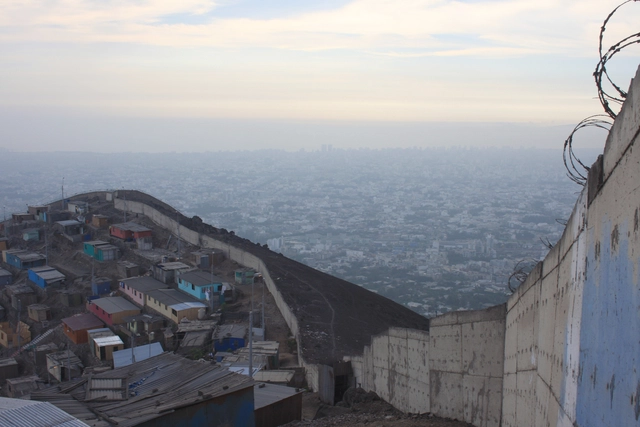
Warning: this article proposes a narrative according to the route taken from one side to the other of the wall, from the predictable to the most unpredictable. To better situate ourselves, the narrative will be told through my personal experience.
"Do you know the wall that divides the rich from the poor?," asked three Greek travelers who, after visiting the "pretty" side of Lima, suspected that something was hiding behind appearances. But, "how is it that from, even though you're from the other side of the world, you knew about the wall?" Well, news travels. And "why is this wall something that has to be seen in our city?" if it's not a cause for pride. I knew exactly what they were talking about. I spelled it out: the wall of shame. Certainly, I wasn't familiar with it in situ either, since I hadn't left my urban bubble, like many of those who live in these parts, so with the same curiosity, as a tourist of my own city, we made our way.


The architectural model: a tool, a sculptural artifact, a prized possession, and yet in the digital age of BIM and Virtual Reality, perhaps becoming an enigma, a relic for settling dust. And yet, we are still making them. If you imagine that famous photo of earth from space, of every model ever made in a single image, it raises the question - where are they all? Where does the architectural model go to die?

Cities across the world are full of white elephants – something which ArchDaily has recently explored. In the latest episode of Section D, Monocle 24's weekly review of design, architecture and craft, the team examine similar cases from the unfinished Palestinian Parliament to redundant projects in Belgrade. This edition also looks at the RIBA's new International Prize, which was awarded this year to Grafton Architects for their University of Engineering and Technology building in Lima.

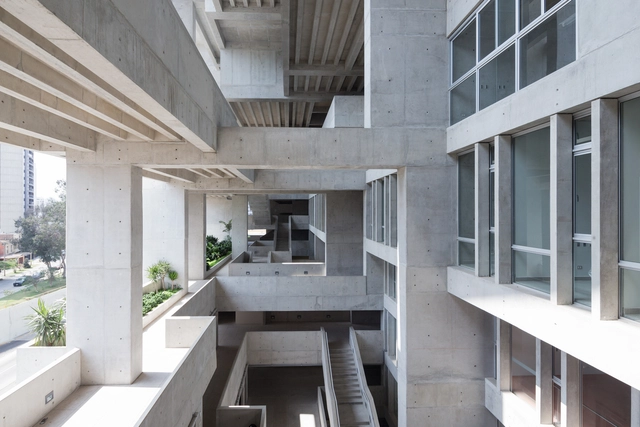
The Royal Institute of British Architects (RIBA) have revealed the Universidad de Ingeniería y Tecnología (UTEC), located in Lima and designed by Dublin-based practice Grafton Architects, as the winner of the inaugural RIBA International Prize. A longlist of thirty projects, published in May of this year, was narrowed down to six in October before a grand jury—chaired by Richard Rogers—selected the scheme as "an exceptional example of civil architecture."