Today, 20 February, the United Nations marks World Day of Social Justice under the theme "Renewed Commitment to Social Development and Social Justice." This year's observance takes place in the aftermath of the Second World Summit for Social Development in Doha and the adoption of the Doha Political Declaration, renewing the commitments first articulated in the 1995 Copenhagen Declaration: poverty eradication, full and productive employment, decent work for all, and social inclusion as interdependent pillars of development. At a moment defined by widening inequalities and accelerating environmental and technological transitions, the 2026 commemoration calls for translating political affirmation into measurable, cross-sectoral implementation.
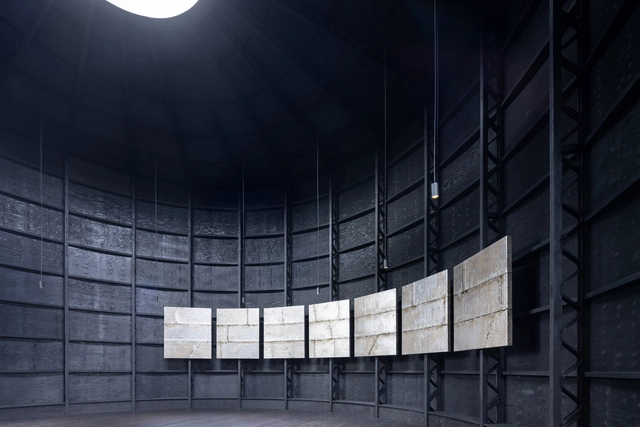
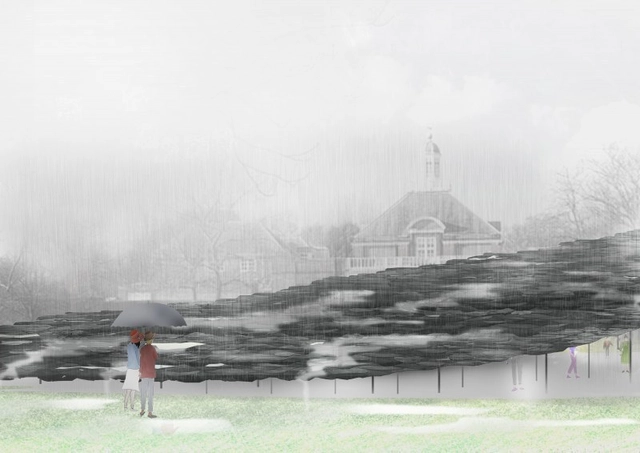
When he was invited to design the 21st Serpentine Pavilion in London’s Kensington Gardens public park, Chicago-based artist Theaster Gates envisioned a calm space to offer respite and a subtle exploration into the power of sound and music in architecture. Created out of lightweight stained wood, the “Black Chapel” demonstrates more than just artistic and architectural sensibilities. In addition to the use of sustainable materials, the project also pays close attention to how the building materials are sourced, bringing visibility to the problem of modern slavery in the construction materials supply chain.
Ethical practice spans all parts of architecture. From intersectionality and labor to the climate crisis, a designer must work with a range of conditions and contexts that inform the built environment and the process of its creation. Across cultures, policies and climates, architecture is as much functional and aesthetic as it is political, social, economic, and ecological. By addressing the ethics of practice, designers can reimagine the discipline's impact and who it serves.
If you attended architecture or design school, there’s probably something you noticed about your fellow classmates- a majority of them were female. And if you have been working in the world of design for a few years, there’s probably something else you’ve noticed as well- that there are fewer women in leadership positions than men. There’s a crisis that architecture has been facing ever since the profession has existed, and it’s that women in leave architecture in high numbers. But what is causing this, and what steps are being taken to ensure that some of design’s best champions positioned to become future industry leaders?
Most of the practicing architecture is drudgery, and this is rather unfair. As students, architects are given thoughtful prompts about the built environment and its big questions, as well as sole creative reign to answer those questions. That is the only time in the architect’s life when this is the case, and in many ways, this does not adequately prepare the architecture student for the world of architecture, which is a world of drudgery. In reality, architects are not heroes.
The relationship between the business of architecture and the nature of architectural work is fraught. Many celebrated firms have been built on the backs of young and often unpaid labor. To call this practice an open secret would be inaccurate. It isn’t a secret at all; for some firms, it’s standard operating practice. The Architecture Lobby, founded in 2013 by Peggy Deamer, has begun the long and laborious process of addressing these issues. Today, the group has 16 chapters and 450 dues-paying members. (Yearly dues amount to 0.2% of total income, or about $100 for a $50,000 salary.) Recently, I spoke with the Lobby’s national organizer, Dexter Walcott, about the group’s recent efforts, its campaign to unionize the field, the Green New Deal, and the future of work.
Labor gives rise to design. As the aggregate of physical and mental effort used in the creation of goods and services, labor is tied to both what we create and our process. In a field shaped by production, architecture and design depend on labor from a broad range of professionals. But as workers increasingly put in longer hours and traditional measures of security change, questions of labor practices have arisen amid broader conditions of contemporary work culture.
In late October, the Guardian’s architecture critic Oliver Wainwright reported that the United Kingdom’s first architecture union had been formed. The Section of Architecture Workers (UVW-SAW) is a section of the United Voices of the World, a new model of grassroots trade union that supports the expansion of union ideals to professions and sectors which traditionally did not have such representation. The launch of the union, and the reasons behind it, serve as the latest episode in long-running concern over the working conditions faced by architects in the UK and across the world.
https://www.archdaily.com/928339/is-it-time-for-architects-to-unionize-the-uk-says-yesNiall Patrick Walsh
Following a controversy surrounding unpaid internships at the office of Serpentine Pavilion architects Junya Ishigami + Associates, the Serpentine Gallery has ordered the firm to pay all staff who will work on the design of the 2019 pavilion. Criticism of the working conditions of interns at the firm followed an email reportedly seen by The Architects’ Journal, with a prospective intern highlighting a lack of pay, six-day work weeks, and long office hours.
https://www.archdaily.com/913982/serpentine-bans-use-of-unpaid-interns-for-2019-pavilion-design-teamNiall Patrick Walsh
Late last month Current Affairs published an essay by Brianna Rennix and Nathan J. Robinson titled “Why You Hate Contemporary Architecture: And if you don’t, why you should.” The piece, written in a pseudo-funny Internet lexicon wherein all objects of criticism are “garbage,” is so laden with irony—the poorest of substitutes for analysis—that it is difficult to discern a core argument. Still, I’d like to question the central premise of the piece: that what the authors term “contemporary architecture” is ugly and oppressive, and that liking it is nothing shy of immoral.
Nearly three weeks ago, the editors at ArchDaily reached out to our readers to help us investigate one of the most difficult challenges of architecture education: what do students and teachers think of the 24-hour studio culture that has come to pervade the architecture profession? As we mentioned in our original post, the idea that all-nighters are simply an unavoidable part of an education in architecture has come under fire recently, with some schools attempting to combat them by closing their studios overnight. Is this the right approach to reducing the hours that students are (over)working? If not, what should be done instead? Perhaps there are some people that still think a 24-hour culture can be beneficial to young architects?
The response we got to our question was astonishing, with 141 comments on the article itself and over 100 more on our Facebook post. From this discussion, two overriding themes emerged: firstly, many commenters seemed to believe that architecture students have too much work in the first place; secondly, there was almost complete consensus that closing the studios achieves nothing but moving the problem of all-nighters from the studio to students' homes. For the sake of brevity we've chosen not to include the many responses that mention these themes ideas in this post, but for anyone interested in seeing the evidence of these opinions, we encourage you to visit the original article.
As for the remainder of the comments, we've rounded up some of the most interesting contributions. Find out what 15 commenters had to say about the 24-hour studio culture - taking in arguments for and against it as well as discussing its wider consequences and ways to avoid it - after the break.