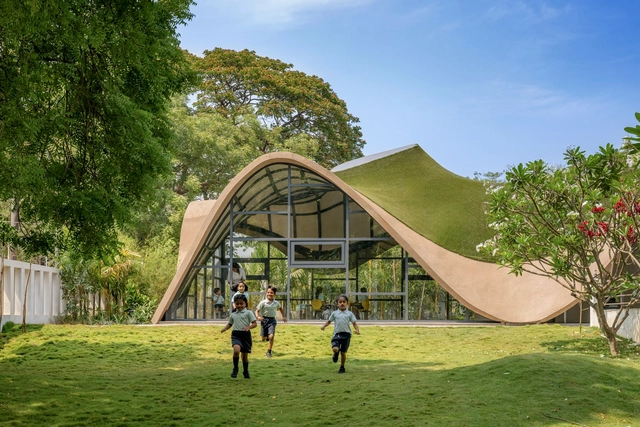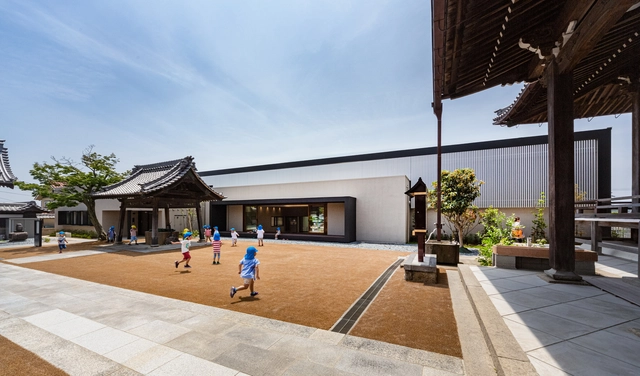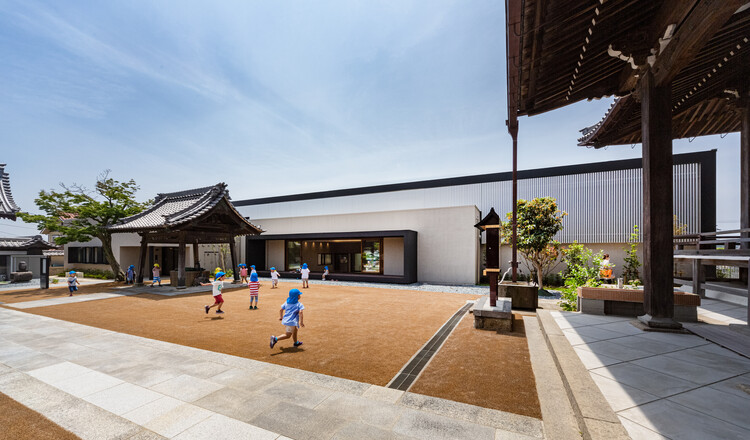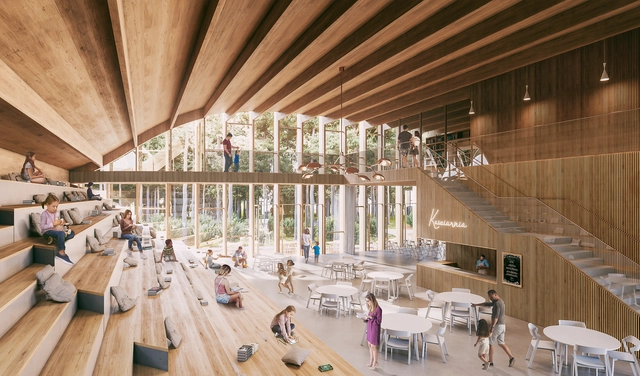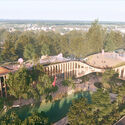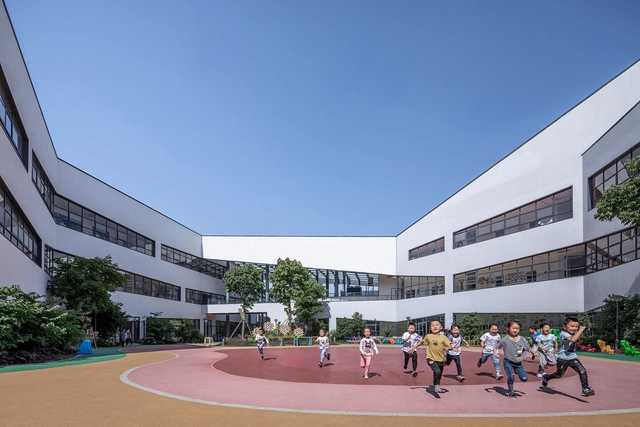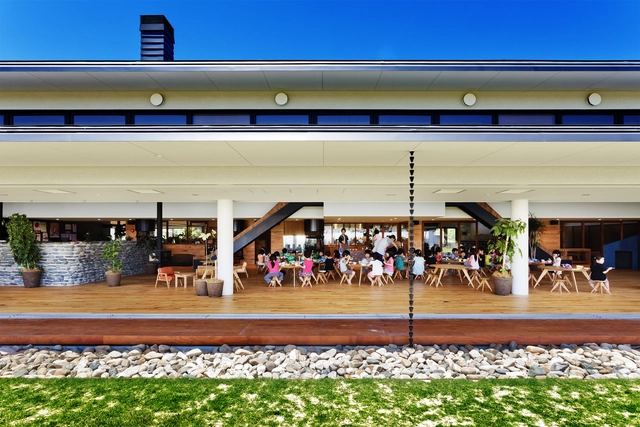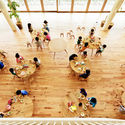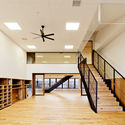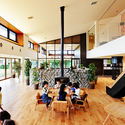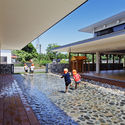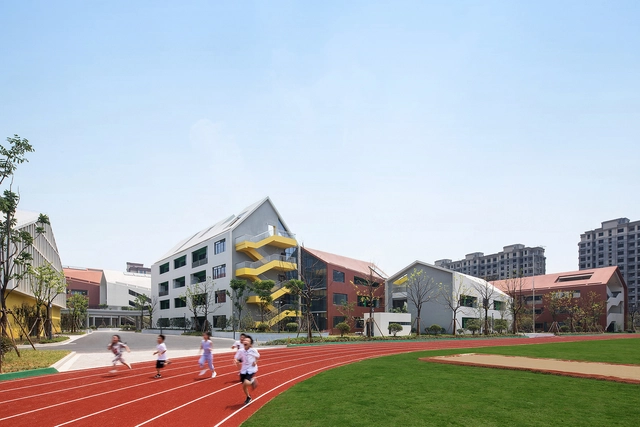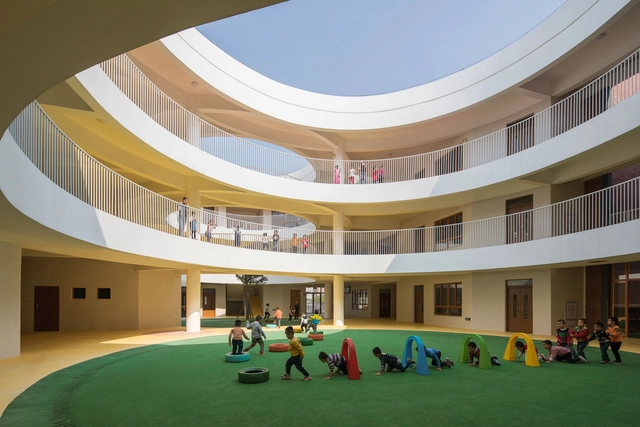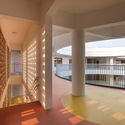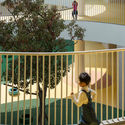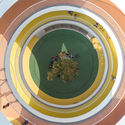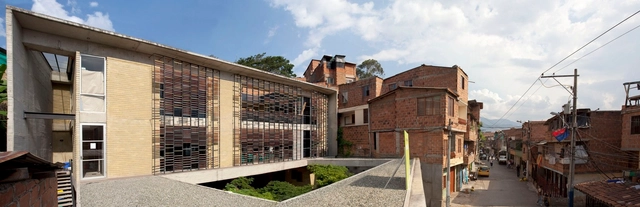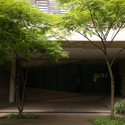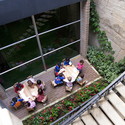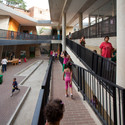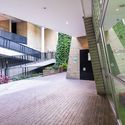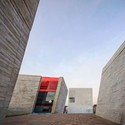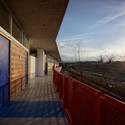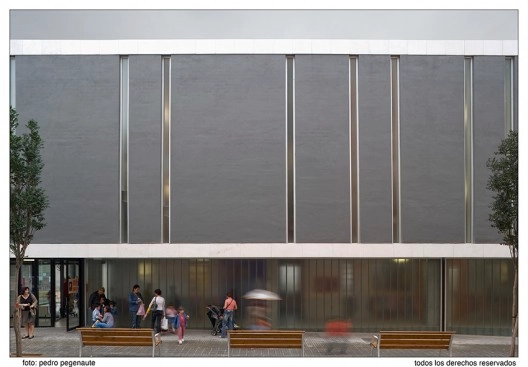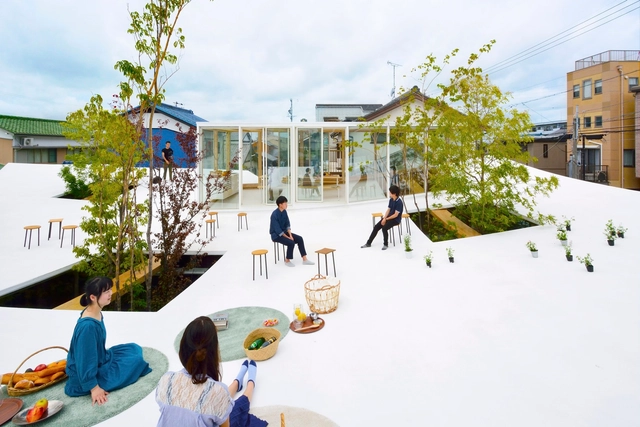
Office in Sanno / Studio Velocity. Image Courtesy of Studio Velocity
Historically, architecture and the built environment have insisted on creating flat, hard surfaces. In earlier eras, walking without paved ground meant mud-caked shoes, uneven footing, tripping hazards, standing water after rain, and high maintenance. Hence, as we shaped cities, we prioritized a smooth, continuous, solid horizontal datum. The benefits are real: easier walking, simpler cleaning, and straightforward programming—furniture, equipment, and partitions all prefer a level base. This universal preference for building on flat ground remains the norm and, for many practical reasons, will likely continue to be.
What's less recognized is that making a truly flat surface is surprisingly difficult—and many well-executed "flat" floors aren't perfectly flat at all. They are often gently sloped, calibrated to precise gradients for drainage. While interior spaces do not always require this, many ground floors and wet areas do incorporate subtle inclines as a safeguard—whether for minor flooding or to manage water that overflows from the street or plumbing when one of the discharge systems is malfunctioning.
Videos
First Prize Winner: Nest. Image Courtesy of Buildner
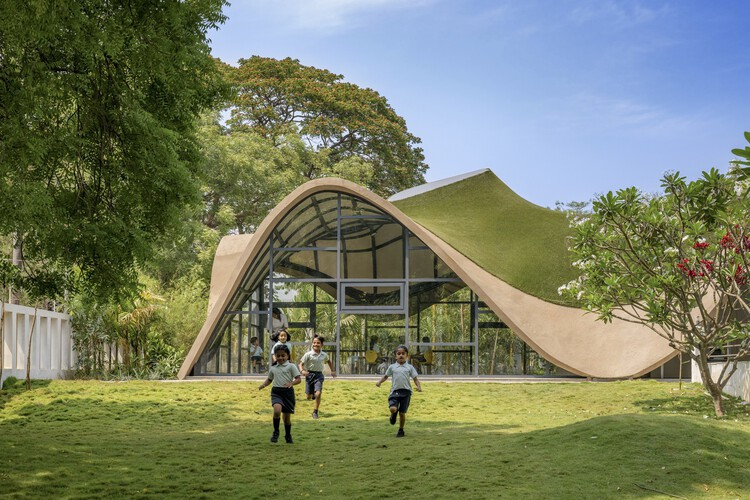
Buildner has announced the results of its Kinderspace Edition #2 Competition and launched the third annual Kinderspace Edition #3 with an upcoming registration deadline of 26 November 2025. Following its inaugural launch, this annual international competition once again invited architects, designers, and educators to explore new possibilities for early childhood learning environments.
Participants were tasked with envisioning spaces that inspire discovery, foster imagination, and support the emotional and cognitive development of young children. The aim was to move beyond standardized classroom design and propose innovative, flexible, and nature-connected spaces that reflect a deeper understanding of how children interact with their surroundings.
Kindergarten architecture has long stood apart as a realm where design and imagination converge. Unlike most building typologies, these spaces are conceived not only to shelter and function but to shape the earliest experiences of curiosity, play, and social interaction. Throughout history, the design of kindergartens has evolved alongside pedagogical shifts, moving from modest, utilitarian beginnings to highly intentional environments that stimulate both learning and wonder. In this context, architecture becomes more than a backdrop — it becomes a silent educator, capable of nurturing emotional, cognitive, and physical development.
Bruce Jilk in his essay ‘Place Making and Change in learning environments” showcases a radical view of contemporary education which, he argues, is outdated and does not meet the needs of the modern world. Instead of providing for a world of individuals operating within a wider urban environment, schools have become internalized ghettos of childhood, cutting off from communities they are supposed to serve, centrally administered in a “one size fits all” ethos. Designers and architects around the world have always been seeking a more flexible architectural model which will allow much more creativity within the learning process and the environments which serve it.
This week’s curated selection of the Best Unbuilt Architecture focuses on projects related to learning, research and culture submitted by the ArchDaily Community. From kindergartens to libraries and universities, the article explores how different spaces of knowledge around the world are designed to inspire their users.
Featuring an array of scales and architectural programs, the list of projects includes a circular library in South Korea, a bridge-like kindergarten in Poland, as well a university in Tel Aviv that creates a series of opportunities for unmediated interactions and unscripted learning. The following are architectural programs that cater to the dissemination of knowledge in all its forms and to all age and social groups.
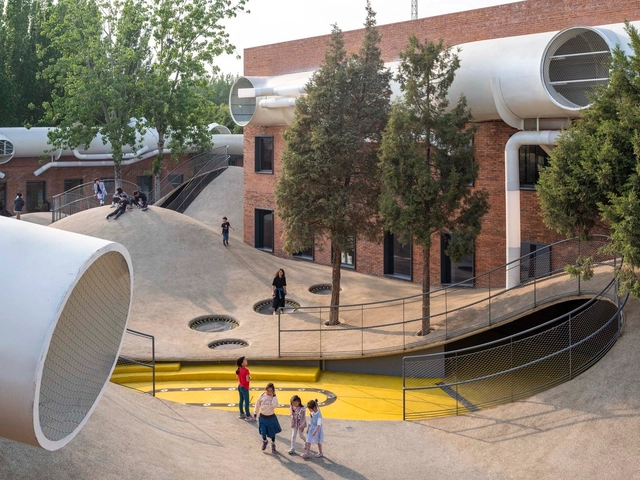
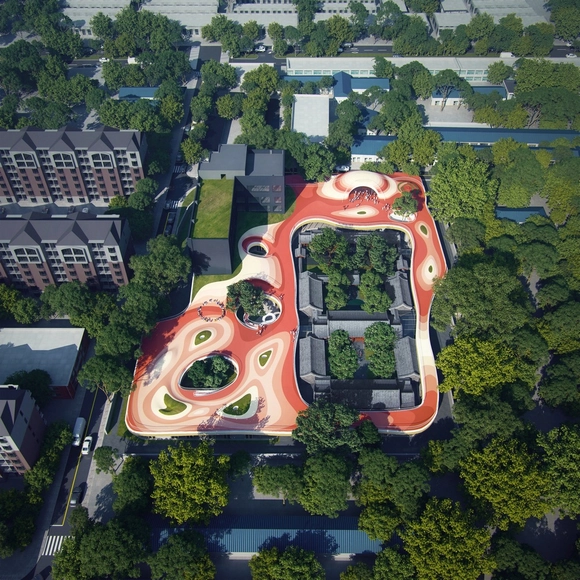
Construction has begun on MAD Architect’s “Courtyard Kindergarten” in Beijing. Located on the site of a traditional siheyuan courtyard dating from 1725, MAD’s proposal sees a new building inserted to protect the surroundings, and reinvigorate the existing buildings into use.
The courtyard will be surrounded by a “dynamic floating roof” offering a “multi-layered urban narrative, where old and new co-exist.” The rooftop element is envisioned as a “place full of magic – a playful escape for the children that is a symbol of freedom and endless imagination.”
Manufacturers: Alfarera Pueblo Viejo, Cabinas y Fachadas, Colbloques, Facolcreto, Fábrica Colombiana de Concretos Facolcreto, +3Montajes del Acero, Prefabricados e Innovaciones Zanzíbar, Vinisol-3
Five great kindergardens in Europe for our fifth selection of previously featured projects. Check them all after the break.
Rosales del Canal Kindergarden / Magén Arquitectos The Kindergarden in Rosales del Canal is located in an area of residential growth in the south-west of Zaragoza. This is the first phase of an educational facility that will be completed with the primary education building. In agreement with the criteria on accessibility and preferably south-facing orientation of teaching spaces, the three buildings – Kindergarten, dining hall/gymnasium and primary – are arranged in a U-shape on the perimeter of the plot (read more…)
It’s the place where your little kid will spent most of their time outside your house. Shouldn’t it be nice? Here’s our third selection of previously featured kindergartens. Check them all after the break!
Medo Brundo Kindergarten / njiric+ arhitekti How to design a kindergarten on a too small plot ? What if the plot is overshadowed by a massive nine-story block on it’s south side ? What if the plot is surrounded by the heavy traffic? The kindergarten is initially conceived as a single-story mat building – compact, introverted, autocatalytic, with clearly defined borders. Due to the context, the mat is pushed away from the shadow and folded up towards the sun (read more…)
Probably, the first place outside our homes where we spend a large time of the day. So to finish this week’s Round Up, we bring you our second part of previously featured Kindergardens. See the first part here.
Our first step in educational backgrounds. It’s where we cry during our first day and probably where we make our very first best friend. Maybe, one of the most important places in our eary years. So to start this week of Round Up, we bring you our previoulsy featured Kindergardens.