1. ArchDaily
  2. Interiors

Interiors: The Latest Architecture and News

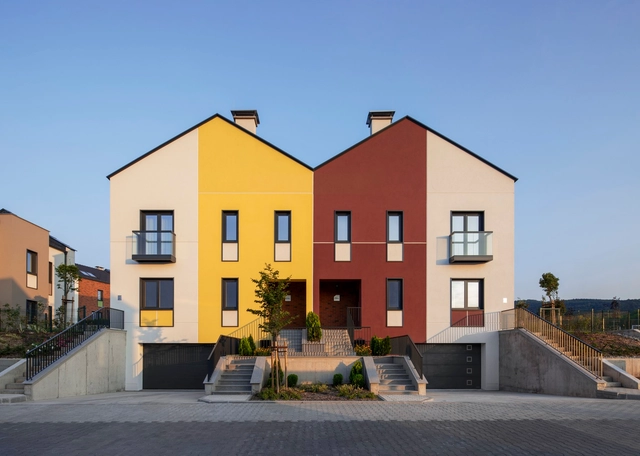
Case Studies in Community-Centered Living: Innovative Residential Design

Subscriber Access | 

Architecture evolves, particularly in how it reflects the relationships between people, their behavior, and the environment. Even subtle variations in these dynamics can influence how we think and live in our communities. According to the World Bank, 56% of the population currently lives in urban environments, and it is estimated that by 2050 this number will reach 70%. This projection echoes the speed and magnitude of urban growth, posing challenges for architects and design firms, from the viability of buildings to the sustainability of the built environment, encompassing residential architecture and other typologies that influence daily life.

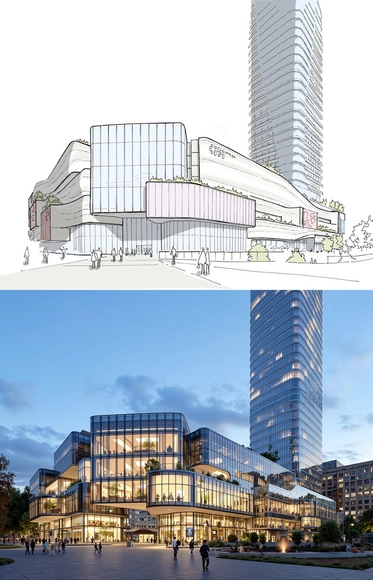
How AI-Powered Rendering Crushes Bottlenecks in Architecture and Interior Design

 | Sponsored Content

Architecture is a discipline that evolves through progressive stages, with each phase building upon the previous one. Schematic design, for example, begins with broad concepts and initial explorations, followed by site analysis, sketches, and 3D models, with adjustments made along the way. The true challenge lies not just in following this sequence but in balancing speed, quality, and efficiency to navigate the trade-off between time and quality. In this context, the integration of generative artificial intelligence in the built environment reshapes architectural dynamics by assisting architects and creating space for more experimentation and exploration. Its impact is especially significant in rendering, which was previously a constraint at different project stages—particularly during concept development. Today, however, AI-powered architectural rendering operates smoothly, allowing more focus on creative problem-solving through innovative tools and strategies.

Air Ionization: When Negative Can Be Positive in Built Spaces

Subscriber Access | 

In 1902, physicist Philipp Lenard discovered that the breaking of water droplets in waves, waterfalls, rain, or mist releases negative ions into the air. This occurs because, upon breaking, the droplets separate their electrical charges: electrons, which are smaller and lighter, adhere to suspended particles in the air, while positive charges remain in the water or dissipate quickly. This phenomenon increases the concentration of negative ions in the environment, which can directly influence our body and mind, interacting with neurotransmitters and essential cellular functions. It is no coincidence that many people report feelings of well-being, energy, and mental clarity after spending time at beaches, waterfalls, or forests. In Japan, this connection with nature is explored in the practice of Shinrin-Yoku, or "forest bathing," which promotes relaxation and revitalization simply through contact with the natural environment.

Rolling Up in Style: Wagner Transforms Airstream into Mobile Office

 | Sponsored Content

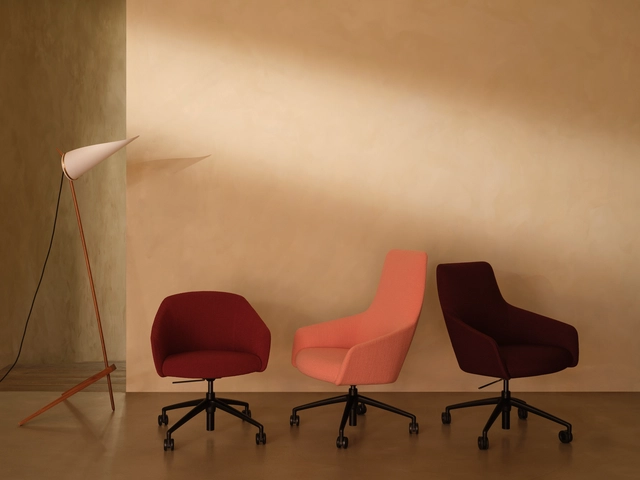
Wagner hits the road in 2025 with the Airstream Roadshow, an immersive experience that inspires new perspectives on office spaces. Under the motto 'It's time for bespoke interior design,' the traveling exhibition highlights the iconic 1962 Airstream Bambi, converted into a mobile working space to showcase Wagner's D2 bespoke interior system, designed by renowned studios Gonzalez Haase AAS and Stefan Diez. As the Airstream travels across Germany, design enthusiasts are invited to explore the lightweight aluminum construction and witness live 3D printing in action.

Cooling Canvas: When Air Conditioning Meets Interior Design

 | Sponsored Content

The first air conditioning systems were created by electrical engineer Willis Carrier in 1902 to solve a problem for a printing press in Brooklyn, New York, where humidity threatened to ruin the paper. Since then, air conditioning has evolved from a revolutionary thermal comfort system into an essential element of homes and workplaces. Initially, the units were large and centralized, hidden away due to their ducted system nature. However, this approach is rapidly changing as more energy-efficient efficient ductless air conditioners become more integrated into contemporary interiors.

Architectural Glass 101: Transparent Trends in 2024

In the 21st century, Glass has become a cornerstone material for architecture. Once limited to apertures and openings, Glass now dominates entire facades, especially in high-rise buildings where transparent cladding material is preferred to maximize views. The technological advancements in Glass have been remarkable, transitioning from single-pane panels, such as those used in Bauhaus' iron window frames, to today's triple-pane systems with specialized gas infills, such as argon, designed to address Glass's long-standing thermal limitations.

Architectural Glass 101: Transparent Trends in 2024 - Imagen 1 de 4Architectural Glass 101: Transparent Trends in 2024 - Imagen 2 de 4Architectural Glass 101: Transparent Trends in 2024 - Imagen 3 de 4Architectural Glass 101: Transparent Trends in 2024 - Imagen 4 de 4Architectural Glass 101: Transparent Trends in 2024 - More Images+ 11

Surfaces that Engage with Light, Space, and Nature

 | Sponsored Content

A surface does more than simply cover a space—it transforms it, infusing personality, rhythm, and soul. It evolves from being a mere backdrop to becoming an active element that shapes the atmosphere through the interplay of material, form, and light. The balance of the touch, the thickness, incisions, tones, and luminous reflections can transform surfaces into sensory experiences. Textures can evoke stability or lightness, grooves introduce dynamism, colors define moods, and light sculpts depth and movement. Ceramic, with its aesthetic and functional versatility, is particularly well-suited to this role, offering architects a broad palette of creative possibilities.

World Architecture Festival 2024: fjcstudio Recognized for World Building of The Year and All Other Day 3 Winners

The Darlington Public School in Australia by fjcstudio has been declared the World Building of the Year at the World Architecture Festival 2024. fjcstudio previously won Building of the Year in 2013, making it the first practice in WAF's history to win the award twice.

The ultimate accolades of World Building of the Year, World Interior of the Year, Future Project of the Year and Landscape of the Year were announced today as hundreds of delegates from across the world convened at a final Gala Dinner at Marina Bay Sands in Singapore. The announcement follows the final day of WAF, in which prize winners across all 42 categories have been competing for the winning titles.

World Architecture Festival 2024: fjcstudio Recognized for World Building of The Year and All Other Day 3 Winners - Image 1 of 4World Architecture Festival 2024: fjcstudio Recognized for World Building of The Year and All Other Day 3 Winners - Image 2 of 4World Architecture Festival 2024: fjcstudio Recognized for World Building of The Year and All Other Day 3 Winners - Image 3 of 4World Architecture Festival 2024: fjcstudio Recognized for World Building of The Year and All Other Day 3 Winners - Image 4 of 4World Architecture Festival 2024: fjcstudio Recognized for World Building of The Year and All Other Day 3 Winners - More Images+ 1

Carving Pietra Tiburtina: A Contemporary Approach to Classic Travertine

 | Sponsored Content

Travertine —known as lapis tiburtinus by the ancient Romans— has endured for centuries as one of the most iconic materials in Italian design heritage. This limestone has left a lasting mark on architectural history, from the monuments of the Roman Empire to contemporary works like the Church of 2000 and the Ara Pacis Museum. Over time, its aesthetic has evolved alongside art and design, adapting to technical advancements while preserving its essence and relevance in modern architecture.

From Vault to Exhibition: The Role of Display Cases in the World’s Libraries

 | Sponsored Content

Before the emergence of AI, the internet, and TV— books and manuscripts were the primary vessels of knowledge. These artifacts, now echoing voices from the past, have played a fundamental role in shaping our shared legacy. A pivotal moment in this evolution came in the 15th century with Gutenberg's invention of the printing press, which revolutionized access to information and laid the groundwork for the democratization of knowledge. As a result of their historical and cultural significance, many early manuscripts and incunabula (books printed during the earliest period of typography) have been preserved in libraries and often remained in the shadows.

Worldwide, libraries have started unveiling these collections to the public, driven by a growing openness to showcase their 'treasures'. This allows a broader audience to appreciate the richness of these historical materials. While this effort fosters a deeper understanding of cultural heritage, it also introduces several challenges. One of the most critical is preservation, which must be carefully balanced with functional considerations. Key decisions include selecting and designing display case solutions, such as those from Goppion, that harmonize with the interior design and layout while providing effective protection.