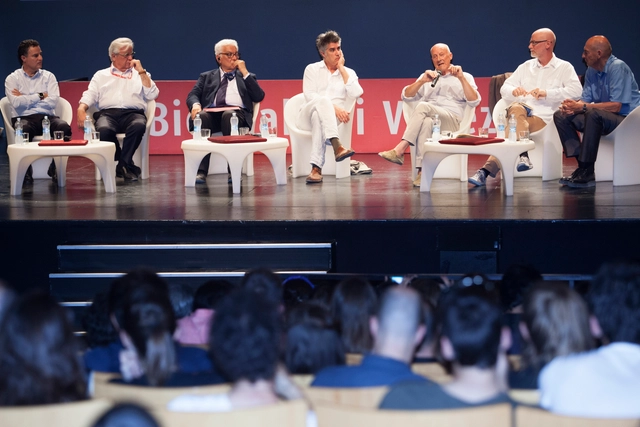
On May 28th, a selection of participants of the 2016 Venice Architecture Biennale, including Rem Koolhaas and Norman Foster convened for the first of Alejandro Aravena's "Meetings on Architecture," a series of talks that will take place throughout the Biennale. Under the theme of INFRASTRUCTURE, each invited speaker was given the chance to explain stories behind their participating projects in the Biennale, and the floor was also opened up for questions from the audience.
However, as Aravena explains about the talks, “we have organized them around themes, but architecture by nature always integrates more than one dimension. These Meetings will thus be a way to get from the authors themselves the richness and complexity of the built environment, and what it takes to get things done.” While highlighting unique projects, topics at the first Meeting converged around the focus on shaping the urbanization of emerging economies and the socio-political process and effect of realizing each project. The rest of the speaking panel was comprised by Joan Clos, Andrew Makin and Grupo EPM.
Crossrail Limited has released new renderings of stations set to open on the Elizabeth Line in London. Notable features of the new stations include step-free access from train to street, and seamless integration into the existing Transport for London (TfL) network. Seating, signage and full-height platform screen doors emulate precedents within the system to promote ease and familiarity. The designs strive for simplicity and clarity with reduced visual clutter and clear sight lines along platforms. Additionally, there will be permanent artworks installed and fully-integrated in many of the central London stations. The stations depicted – Paddington, architect Weston Williamson, Bond Street, architect John McAslan + Partners, Tottenham Court Road, architect Hawkins\Brown, Farringdon, architect Aedas, Liverpool Street, architect Wilkinson Eyre, Whitechapel, architect BDP, and Woolwich, architect Weston Williamson – are scheduled to begin service in December of 2018.
The following article was first published by Volume Magazine in their 47th issue, The System*. You can read the Editorial of this issue, How Much Does Your System Weigh?, here.
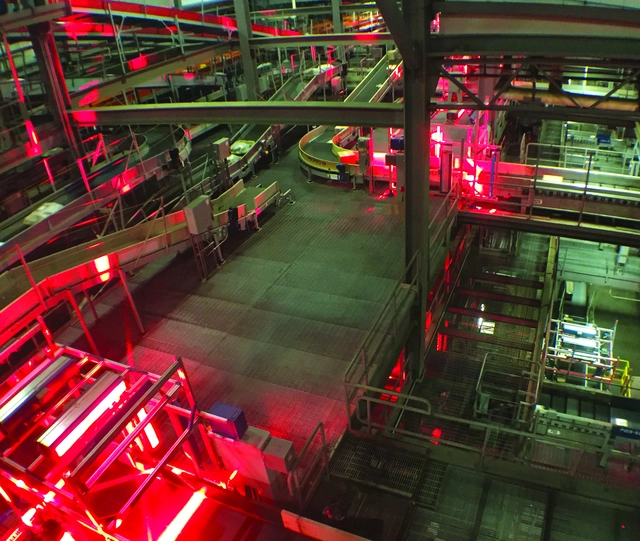
For the United Parcel Service (UPS), space is valued insofar as it grounds the socio-technical assemblages that secure the company’s economy of speed. Holding one of the largest airline fleets in the United States, UPS’s services range from delivering cargo for the US Air Force and e-commerce packages to relocating endangered animal species and partaking in disaster relief. It operationalizes logistics in the space between military and civilian domains and from the scale of cargo for large corporations to small packages for individuals. UPS runs a global logistics network that crosses more than 200 countries and territories and delivers about 17 million packages every day through its planetary ring of Shanghai-Shenzhen-Anchorage-Louisville-Cologne-Dubai.[1] It participates in the making of trans-border infrastructural systems and influences national politics towards the lifting of legal barriers to transnational trade. Yet what makes UPS significant is not its volume of shipment, infrastructural capacity, or magnitude of operational precision, but rather its resiliency and acute performance within the tides of uncertainty.
Atkins-designed Cadre International TOD Centre. Image Courtesy of Atkins
Atkins has been selected to design a transit-oriented development (TOD) master-plan along the new Jakarta-Bandung high-speed rail (HSR) corridor, the first HSR project in Indonesia. Set for completion by 2019, the corridor will extend 142.3km, stimulating economic growth along the corridor while re-allocating traffic to de-congest the region.
The TOD masterplan will integrate smart planning, land value capture and development/station integration, with Atkins specifically covering "masterplanning, transit oriented development, architecture and urban design, landscape design and station integration for Halim and Manggarai areas."
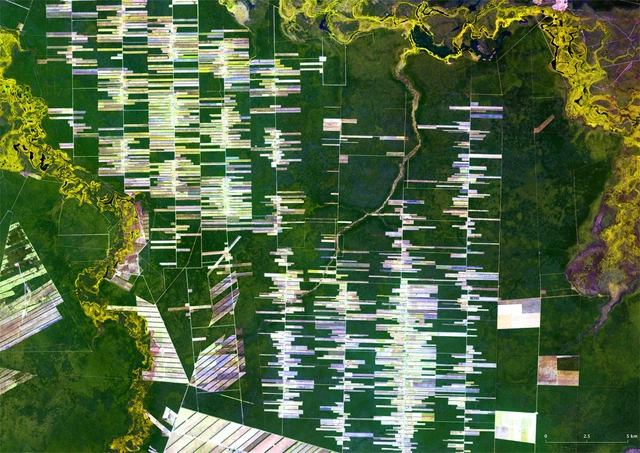
The Project of a Collective Line: Santa Cruz in Bolivia is an agro-export region dominated by transnational corporations. Image Courtesy of USGS
The following article was first published by Volume Magazine in their 47th issue, The System*. You can read the Editorial of this issue, How Much Does Your System Weigh?, here.
In 2006 Venezuelan President Hugo Chávez, Brazilian President Lula da Silva and Argentinean President Néstor Kirchner proposed the construction of a gas pipeline connecting Venezuela to Brazil and Argentina, called the Gran Gasoduto del Sur. Although the project was never built, its path through the Amazon rainforest foregrounds the violent nature of resource extraction. At the same time, the project raised unique questions regarding the architecture of collective politics, particularly if understood in the context of the last fifteen years of political transformations throughout Latin America.
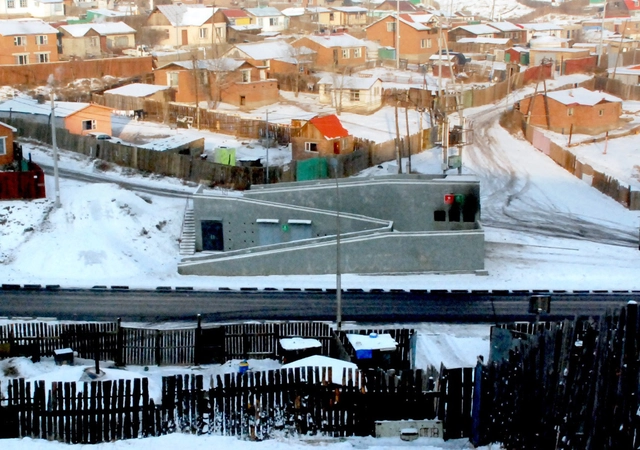
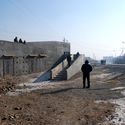
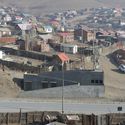
Home to vast geographic features like the Gobi Desert, Mongolia is not a country associated with its urban environment. But after economic reforms following the withdrawal of the Soviet Union in 1990 and the discovery of vast reserves of coal, gold and copper, a large portion of Mongolia’s historically nomadic society has recently begun to settle down, particularly in the capital city of Ulaanbaatar, where nearly half of the country’s 3 million residents now live.
Unfortunately, the infrastructure of the city hasn’t yet had a chance to catch up to these rapid growth patterns, resulting in sprawling slum-like settlements consisting mainly of traditional felt tents - known as gers - encircling the city. Civic buildings throughout these neighborhoods are rare, and even travelling within the city is difficult due to the lack of official maps.
The Land Art Generator Initiative is delighted to announce that LAGI 2016 will be held in Southern California, with the City of Santa Monica as site partner. This free and open call ideas competition invites individuals or interdisciplinary teams to design a large-scale site-specific work of public art that also serves as clean energy and/or drinking water infrastructure for the City of Santa Monica.
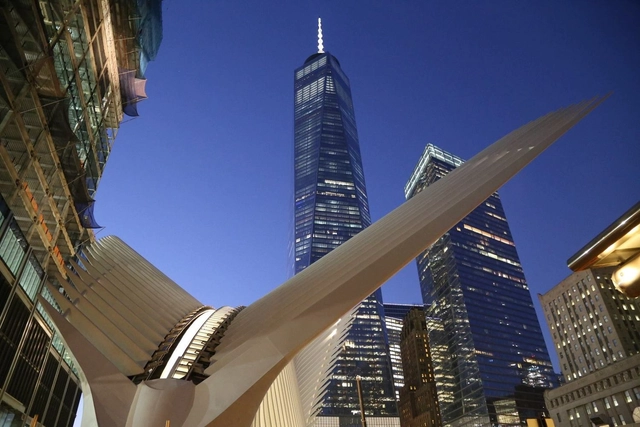
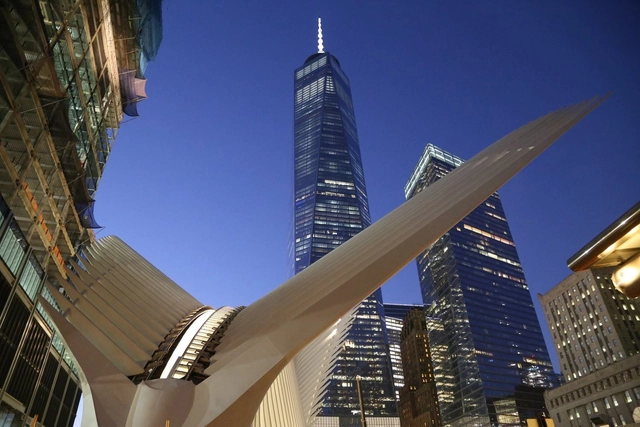
After 12 long years and a series of construction headaches, Santiago Calatrava’s $4 billion World Trade CenterTransportation Hub has finally opened to the public. Once widely regarded as a symbol of hope for post-9/11 New York, the project’s ballooning budget and security-related revisions gradually soured the opinions of the public and top design minds including Michael Graves and Peter Eisenman, and provoked a multitude of mocking nicknames ranging from “Calatrasaurus” to “squat hedgehog” to “kitsch dinosaur.” All the while, Calatrava urged critics to reserve their opinion until the project’s opening. Now that day has arrived - did Calatrava receive the vindication he was insistent would come? Read on for the critics’ takes.
Since infrastructure is the embodiment of long-term investments, its impact in determining the organization of flows extends well into the future, both for developed and developing countries. Whereas the former are confronted with the need to maintain and renew highways, electrical grids, sewage systems, and the like, the latter are scrambling to meet the needs of their own expanding populations. In both cases, massive investments for retrofitting or for new infrastructure are key to sustaining the human habitat. This topic: “Infrastructure Space” will be the focus of the 5th International Forum for Sustainable Construction in Detroit, USA from April 7 to April 9, 2016.
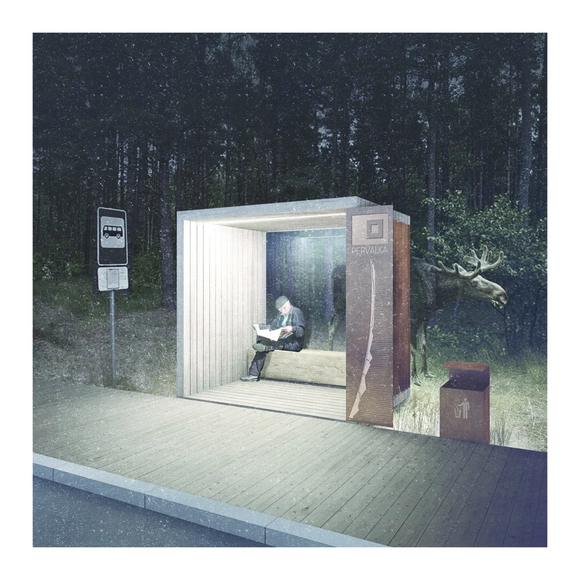
Signs for the Curonian Spit by AKETURI ARCHITEKTAI. Image Courtesy of Architect Algimantas Zaviša Charity Foundation
The Curonian Spit in Lithuania contains six main villages: Smiltynė, Alksnynė, Juodkrantė, Pervalka, Preila and Nida, all connected by a single narrow road surrounded by water on both sides. As such, buses are the only public transportation that can connect all six villages. As part of an annual seminar to elevate the architecture of the Curonian Spit, a series of 5 bus stops, within the Neringa region of the spit, have been planned for construction. Specifically chosen to improve the cultural and social function of a typical piece of infrastructure, each bus stop uniquely elevates the qualities of the village it will be built for. See the five planned stops after the break.
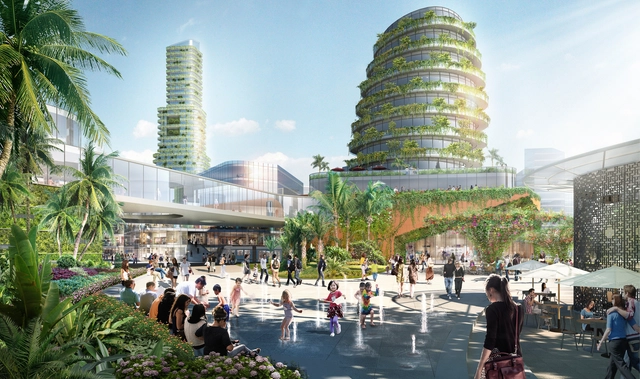
Rendered VIew. Image Courtesy of Sasaki Associates
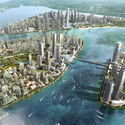
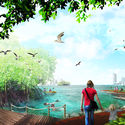
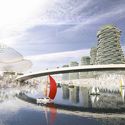
Located on four man-made islands in Iskandar Malaysia, “Forest City” is set to be South-East Asia’s largest, mixed use green development. Designed by Sasaki Associates, the master plan has an estimated investment of S$58.3 billion (US$40.9 billion) and is expected to bring around 220,000 jobs to the area. Located near the economic centers of Southeast Asia, the new Forest City is ideally placed to become a hub of commerce and culture. Designed to encourage live/work culture, it is composed of “financial institutions, high-tech research and development facilities, headquarter offices, and a variety of creative industries that establish an innovative and sustainable employment base for the region,” write the architects. Read more after the break.
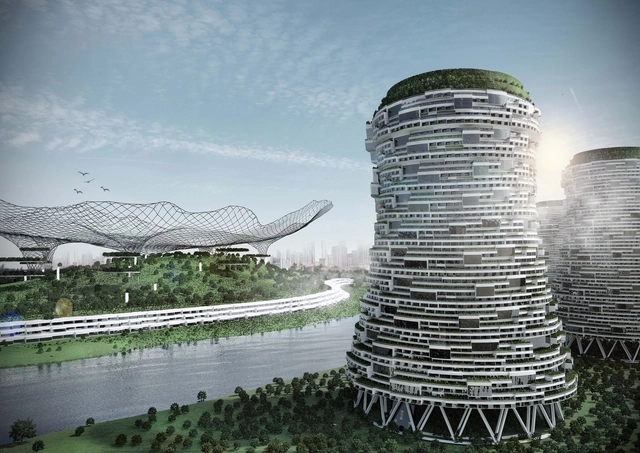
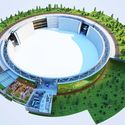
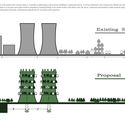
What if a power plant could also be a home, an office, or even a park? That is the question behind Cypher CO2ling Plant, a conceptual design developed by Kawan Golmohamadi, Shilan Golmohamadi, and Soad Moarefi. Power plants are a ubiquitous and inevitable byproduct of modern lifestyles, but they are typically located in remote areas, far from where the power is actually needed, due to their unsightly appearance and the emissions associated with combustion-fueled energy generation. Cypher CO2ling Plant proposes an alternative scenario that utilizes the infrastructure of the power plant’s cooling towers to support mixed-use development, while also mitigating the less desirable aspects of energy generation.
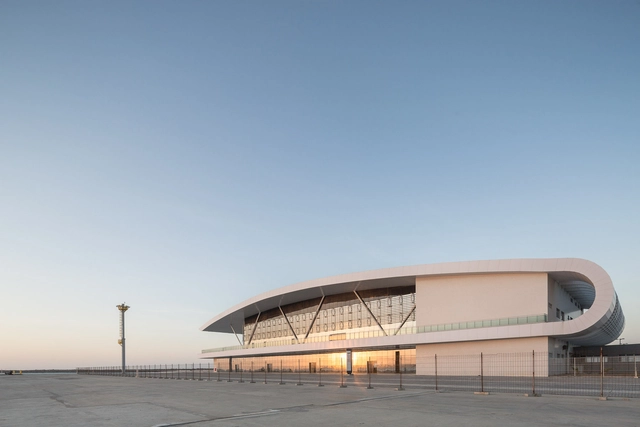
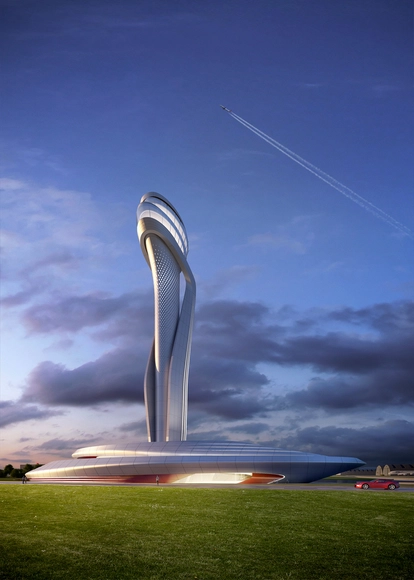
“One of the World’s largest aviation projects, Istanbul New Airport’s air traffic control tower will be an iconic structure, visible to all passengers traveling through the airport. We were looking for a striking design fit for a 21st century airport while remaining sensitive to Istanbul’s unique heritage. We received excellent designs from all over the world and are delighted to announce the AECOM and Pininfarina team as the competition winner,” said Yusuf Akçayoğlu, chief executive officer of İGA.
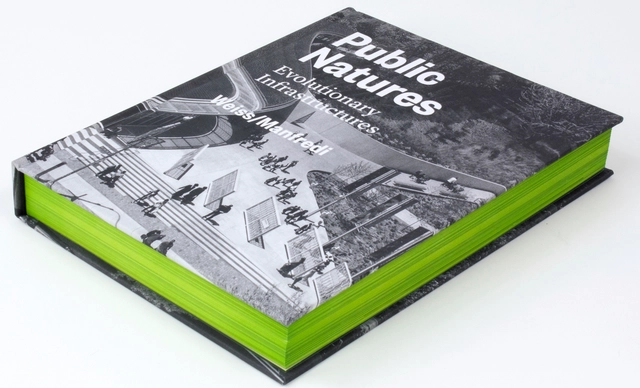
From the Publisher. Rail lines, bridges, highways, waterways, and off-ramps—larger than life but part of it, infrastructural systems are the enduring forms of urban evolution, multiplying as cities grow and requiring expanding swaths of territory to accommodate more and more monofunctional requirements. What if the very hard line between landscape, architecture, engineering, and urbanism could find a more synthetic convergence?
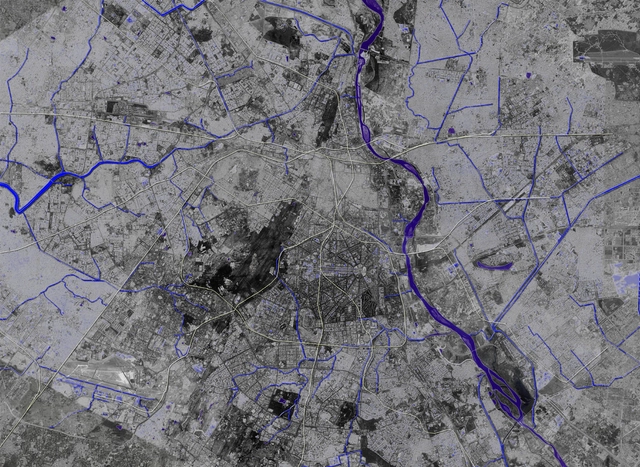
Map of Delhi's nullah network. Image Courtesy of Morphogenesis
The city of Delhi has a transportation problem. The streets are crowded and dangerous, and with 1,100 new vehicles being added to the roads each day the city is suffering from the consequences. Last year, New Delhi was rated the most polluted city in the world by the World Health Organization, with nearly 3 times the particulate matter of Beijing. Noise levels throughout the city consistently exceed regulations set by the Indian Central Pollution Control Board, and heavy traffic means increased travel times and perilous pedestrian conditions. Even walking the last mile from a bus stop to a destination has become a game of chance.
At the same time, the river upon which the city was founded, the Yamuna (a main tributary of the Ganges), has been polluted to the point where it has become little more than a glorified sewer drain. Illegal settlements without sewage systems pollute the river directly, and even within the regulated systems, 17 sewage drains empty directly into the Yamuna. For a city already struggling with water shortages, polluting a main water source is akin to throwing salt into a wound. However, a proposal by Dehli-based Morphogenesis Architects attempts to tackle all of these issues through the revitalization of the river and its canals, known as nullahs.
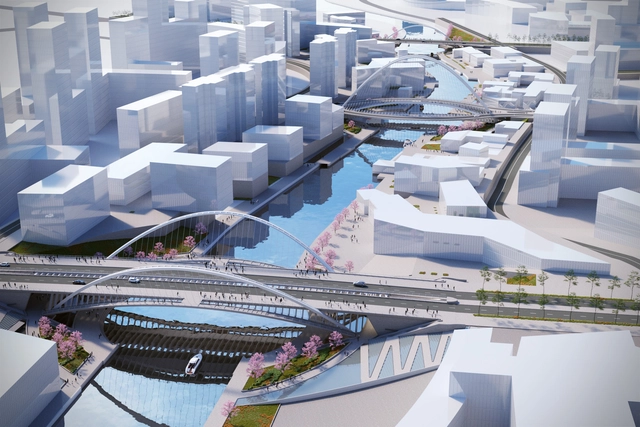
Santiago Calatrava has been commissioned to design a trio of bridges in the Chinese city of Huashan, east of Wuhan. The three steelbridges - Xihu, Xianbi and Lincong - will span 1.5 kilometers of the city's new Yangtze River canal, providing access to pedestrians, cyclists and vehicles.
“Architecture is one of the art forms best able to improve and revitalize cities both artistically and functionally,” said Calatrava. “The Huashan project is a clear example of how an urban element, key to the successful growth of the city, can at the same time improve the quality of life for its citizens, thanks to an integration of all three bridges and the creation of boulevards on the banks of the canal.”