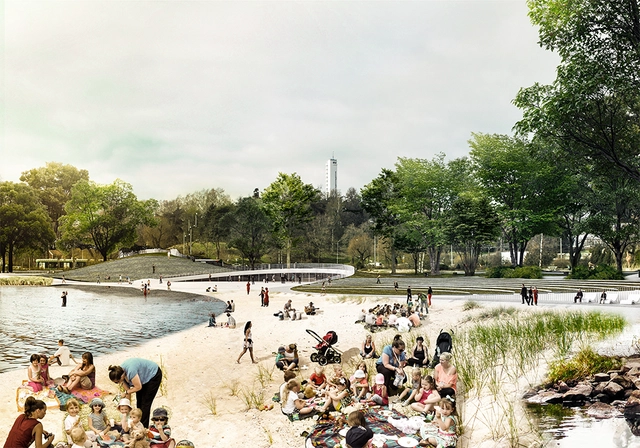
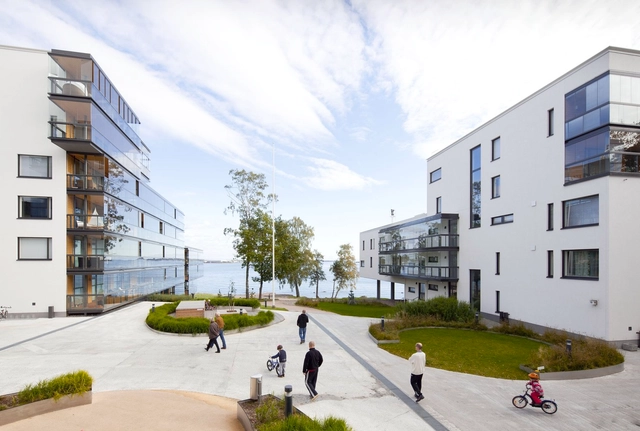
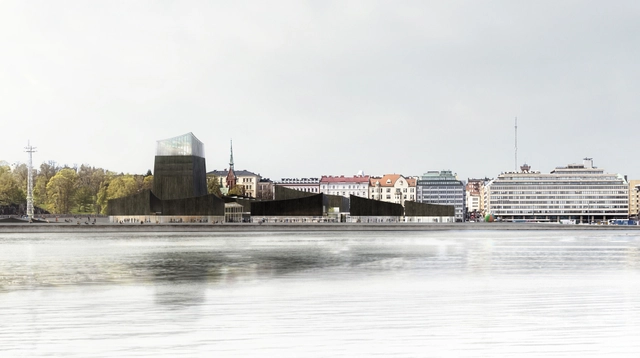
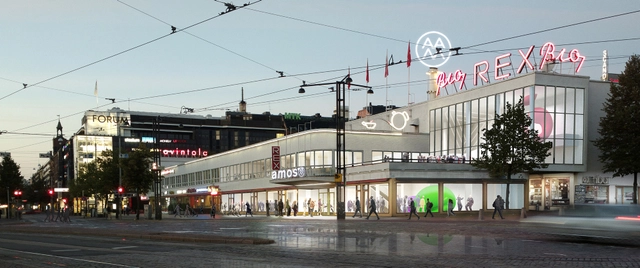
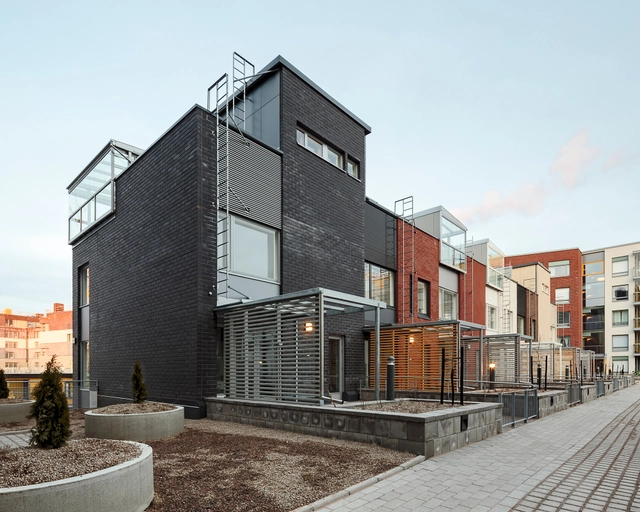
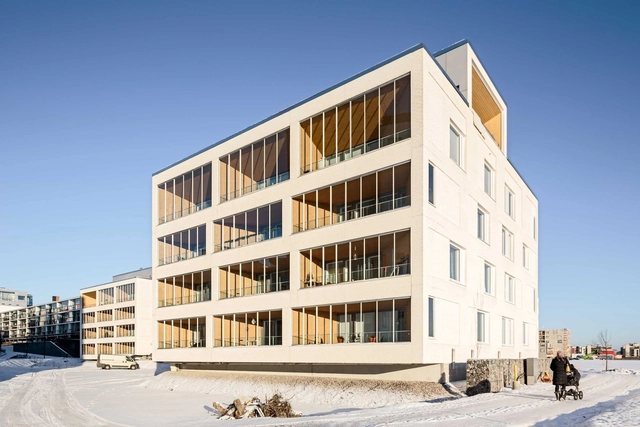
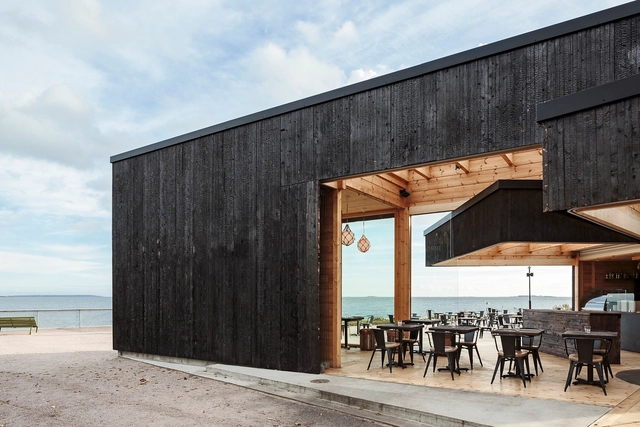
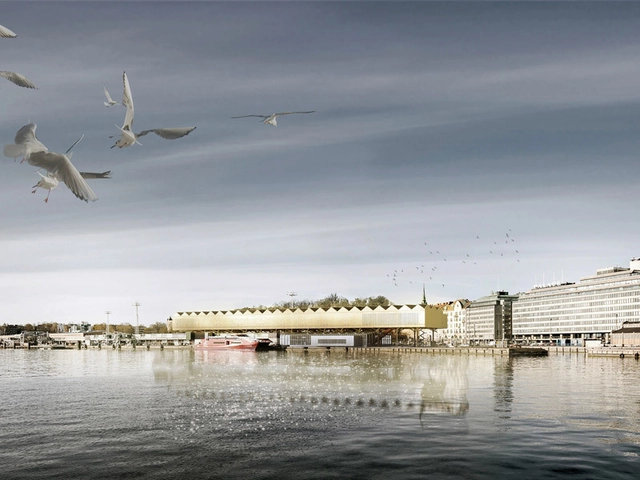
COBE and Lundén Architecture, the Danish-Finnish collaboration that has previously worked together on Tampere's Transport Hub, has revealed a plan to revitalize the Töölönlahti bay area in central Helsinki. Completed for the Finnish creative marketing agency N2, the proposal is a vision of what the area could become after a century of broken promises to clean up the polluted and underutilized area of the city. On their website, N2 estimates that the project would require an investment of €120 million, and if taken up by the government could be completed in time for the 100th anniversary of Finland's independence in 2017.
How do you compare cities? It's difficult to collapse millions of individual subjective experiences into a single method of comparison, but one popular technique used in recent years has been to judge a city's "livability." But what does this word actually mean? In their 2015 ranking of the world's most livable cities, Metropolis Magazine has gathered together a group of experts on city planning, urban life, tourism and architecture to break down "livability" into the categories they think matter and draw upon Metropolis' considerable urban coverage to produce one of the most thorough attempts to rank world series yet attempted. Find out the results after the break.
Tommi Lindh, director of the Alvar Aalto Foundation, shares four exciting reasons to enjoy the architectural offerings of Finland this summer.
Architecture hasn't been this intensively represented in the Finnish summer events ever. The whole summer is full of nice places to visit, but what makes August so very special is what's happening in Helsinki and Jyväskylä in the beginning of the month. The Alvar Aalto Symposium kicks off with lectures by the Museum of Finnish Architecture in Helsinki on Wednesday, August 5 and continues to Jyväskylä where the main event starts on Friday, August 7 with the first thematic session and a keynote presentation by Liu Xiaodu of Urbanus.
Moreau Kusunoki, based in Paris, have been announced as the winners of the Guggenheim Helsinki competition following a year of shortlisting, refining and deliberation. Their proposal—entitled Art in the City—"sums up the qualities the jury admired in the design" noted Mark Wigley, chair of the jury. He continued: "the waterfront, park, and nearby urban area all have a dialogue with the loose cluster of pavilions, with people and activities flowing between them. The design is imbued with a sense of community and animation that matches the ambitions of the brief to honor both the people of Finland and the creation of a more responsive museum of the future."
The announcement was made this morning in Helsinki by Richard Armstrong, Director of the Solomon R. Guggenheim Museum and Foundation. Also present was Professor Mark Wigley, chair of the jury and Dean Emeritus of Columbia GSAPP, Jussi Pajunen, Mayor of Helsinki, Ari Lahti, chairman of the Guggenheim Helsinki Supporting Foundation, and the architect team.
The future of Helsinki's contemporary art scene has never been brighter; Amos Anderson Art Museum has announced plans to build a new venue at the heart of the the Finnish city. Designed by local firm JKMM, the New Amos Anderson Art Museum is to be built in and below Lasipalatsi square, a landmark site of Finnish Functionalism.
Clockwise from top left: Guggenheim Helsinki entry GH-3355371286; Nine Elms Bridge entry number 66; and Bamiyan Cultural Center entry BCC3008. Image Courtesy of Malcolm Reading Consultants, Nine Elms Vauxhall Partnership and UNESCO
What have these three projects got in common? They will never be published in a reputable architecture magazine. This news is no surprise: only a few projects in all the world deserve the right to be published. Editors set trends, put focus on hot topics, give visibility to emerging firms and confirm architectural stars.
A printed magazine has limited space and therefore has to engage in a very strict decision-making process; only the very few are shown. In this Darwinian selection some worthy and brilliant architects perish. On the other hand, an internet site has the possibility to widen the projects range. The web has virtually unlimited space - but still, this space is not to be wasted. Very few would benefit from a site that published every architecture project on earth.
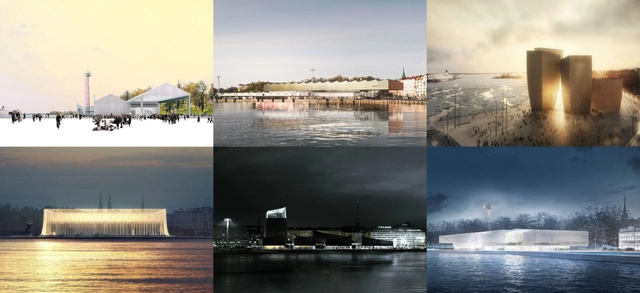
Now for the first time, Guggenheim has unveiled the six fully developed designs competing to become Guggenheim Helsinki. Selected from 1,715 entries in world's the most popular architectural competition, the remaining finalists have spent the past five months refining their designs after being shortlisted by an independent 11-member jury, of which includes Studio Gang's Jeanne Gang and former Columbia University dean Mark Wigley.
#76 MUUSA / draftworks*architects. Image Courtesy of The Next Helsinki
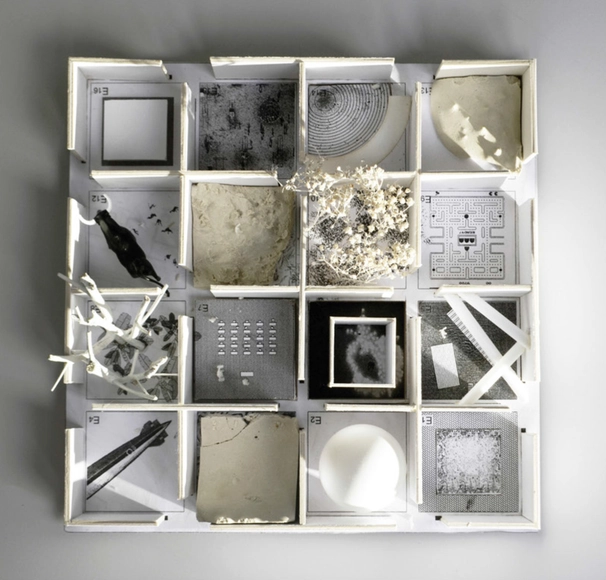
The organisers behind The Next Helsinki, an 'anti-competition' masterminded by architect and critic Michael Sorkin, have highlighted a number of entries from 217 international submissions. Launched as an alternative to the controversial, "imperialised" Guggenheim Helsinki project, the call for ideas asked architects, urbanists, artists, and environmentalists to imagine how Helsinki and its South Harbour could be transformed for the maximum benefit of the city’s residents and visitors. It "sought to ask first if a massive foreign museum was the highest and best use for public resources, especially in an aspiration-focused egalitarian social democracy like Finland."
See a shortlist of eight entries that, according to the jury, "reflect the variety and depth of the submissions" after the break. "These entries are not to be viewed as refined and final proposals, but rather ideas."
The organisers behind The Next Helsinki, a competition masterminded by architect and critic Michael Sorkin, have announced that they have received over 200 international entries. Launched as an alternative to the controversial Guggenheim Helsinki project, the competition called upon architects, urbanists, artists, and environmentalists to imagine how Helsinki and the South Harbour site allotted to the proposed museum could be transformed for the maximum benefit of the city’s residents and visitors.
One of the finalists in the Guggenheim Helsinki competition. Image Courtesy of Malcolm Reading Consultants
More than ever, the media shapes architecture. The controversial Helsinki Guggenheim competition is as much about the use and exploitation of contemporary media as it is about design. The competition organisers are hugely proud to have over 1,700 entries to tweet about, but informed critics are less impressed. Has quantity ever guaranteed quality?
The competition has certainly created an impact. Some celebrate this, while others feel it has been detrimental to the profession, with so much unpaid time invested resulting in a low-level contribution to museum design.
Meanwhile, the spectre of Frank Gehry’s Bilbao Guggenheim, an “iconic” building that gave the American foundation so much positive publicity when it opened in 1997, haunts the Helsinki project. Finnish politicians hope for a similar success, a Sydney Opera postcard effect in this remote corner of the earth.
Finalist: GH-121371443. Image Courtesy of Malcolm Reading Consultants
Aside from attracting a huge level of media interest, the record-breaking competition to design the Guggenheim Museum's planned outpost in Helsinki also generated a significant level of criticism - not least from Michael Sorkin and his collaborators, who launched a counter-competition seeking alternative suggestions for how the site could be used. In this article, originally published on Metropolis Magazine as "'We Mean to Be Provocateurs': Michael Sorkin on the Next Helsinki Competition," Zachary Edelson interviews Sorkin on his reaction to the Guggenheim's shortlist, his hopes for his own competition, and the critical role that museums play in the worlds of both art and architecture.
The reverberations of the Bilbao Effect, where a prize museum infuses a region with prosperity and global cache, have concentrated on an unlikely city: the Finnish capital of Helsinki.
The Solomon R. Guggenheim Foundation is famous for its Fifth Avenue museum, but its 1997 Frank Gehry-designed Bilbao outpost famously catapulted its small Basque host city to new levels of international renown. The city’s tourism revenue quickly helped recoup the museum’s extensive costs: $100 million for design and construction, subsidies towards a $12 million annual budget, $50 million for an acquisitions fund, and $20 million to the Guggenheim for its name, curatorial services, and the use of parts of its collection. Within three years, visitors’ spending had garnered $110 million and by 2013 more than 1 million had entered the gleaming metallic structure. Many have tried to replicate Bilbao’s success but opposition against such massive expenditures always looms. In this case, it has manifested in a rival competition led by New York-based architect and writer Michael Sorkin and titled The Next Helsinki.
The search for a design for Helsinki’s new Guggenheim Museum is well under way. Over a thousand entrants submitted anonymous proposals for the harbor-side museum, and though six finalists have now been chosen, the incredible wealth of talent and effort present in the submissions is hard to ignore. We celebrate that talent here, showcasing 32 great designs-that-could-have-been for the Helsinki Guggenheim. Learn more about all of them, after the break!