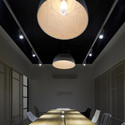
.jpg?1422672335 "Courtesy of C&C Design")
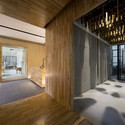

-
Architects: C&C Design
- Area: 600 m²
- Year: 2013

Recently, lots of controversial "Jumbos" have been erected on mainland China, leading most of their creators, architects from Western countries, to be placed at the centre of public discussion. Furthermore, China’s President Xi Jinping's recent comment about "no more weird buildings" has led the Chinese central government into this whirlpool. What can western landmark makers learn from all of this?
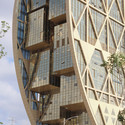
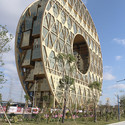
We met Joseph di Pasquale, architect of the Guangzhou Circle, in Milan some days after “weirdness” became the most used word in Chinese architecture. In the following edited talk with interviewer Yifan Zhang, the architect of the latest landmark in South China's largest city discusses his new project, the real circumstances in China, and the future for foreign architects.
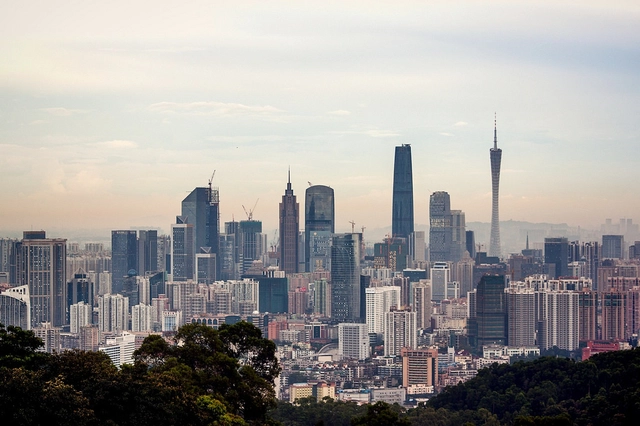
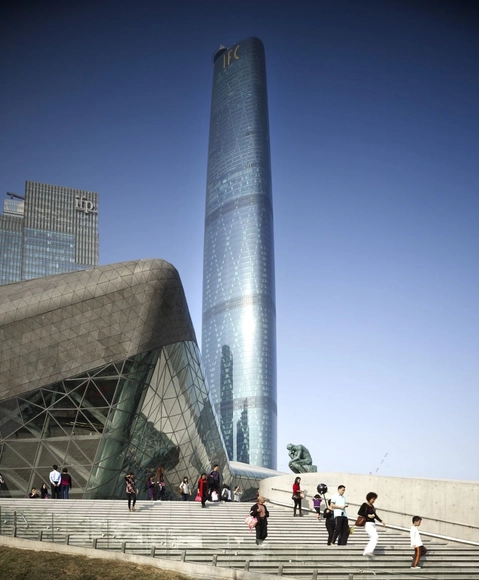
The Guangzhou Bureau of Science and IT has announced the shortlists for two major projects in Guangzhou. The two museum projects - the Guangzhou Museum and the Guangzhou Science Museum, each worth over $160 million - will be the latest in a host of high profile projects in China's third-largest city, a list which includes Zaha Hadid's Guangzhou Opera House, the 600m tall Canton Tower, IFC Guangzhou by Wilkinson Eyre Architects and the Guangzhou Circle, among others.
The Guangzhou Museum will be located to the West of Lingnan Square near the Canton Tower, while the Guangzhou Science museum will be located to the East. Practices making the two lists include Bjark Ingels Group, Miralles Tagliabue EMBT, TFP Farrells, MAD Architects and Steven Holl Architects. Read on after the break for the complete shortlists.
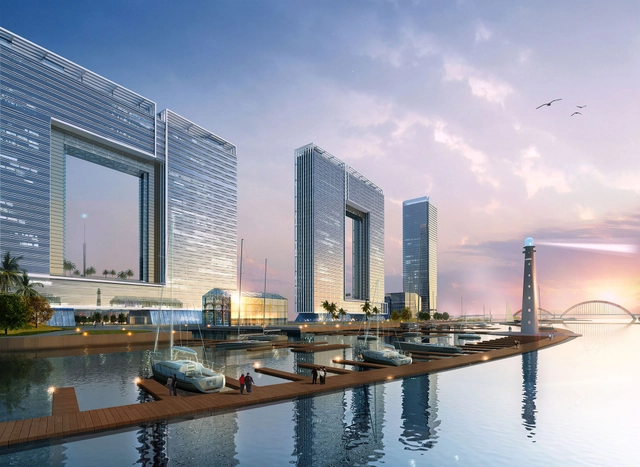
Design and engineering firm Atkins has been commissioned by the China Communications Construction Company (CCCC) to design a series of new office buildings in Guanzhou. Their proposed design takes the form of three independent buildings, two of which form large, window-like structures. With a working title “Window of Guangzhou,” these buildings will commemorate the city’s history as the first Chinese port city opened to international trade along China’s legendary Silk Road.
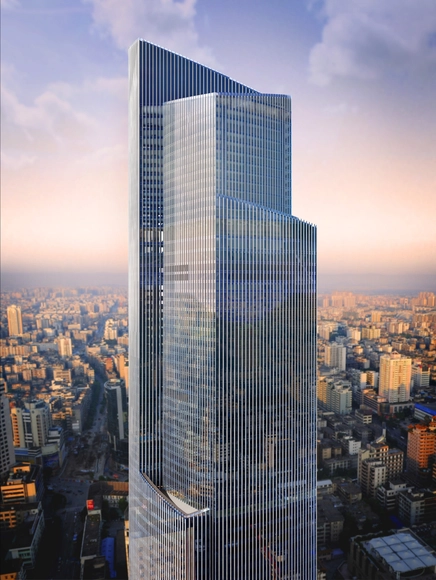
The days of elevator small talk could be coming to an end with Hitachi planning to deliver the world's fastest elevator by 2016. Capable of travelling at speeds of 72km/h (44m/h), the record-breaking lifts will be able to hoist passengers up 95 floors in less than 40 seconds. Khon Pedersen Fox's 530-meter Guangzhou CTF Finance Centre will be the first to house the super-speed elevators, amongst 13 other high-speed elevators and 28 double-decker elevators. Currently, the world's fastest elevator is by Toshiba and only capable of reaching speeds of 61km/h (38m/h) within Taipei 101. You can learn more about the super-speed elevators, here.
.jpg?1413924151&format=webp&width=640&height=580)
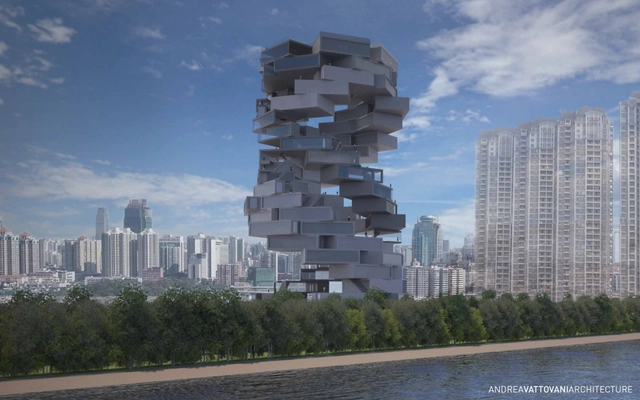
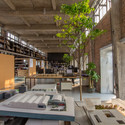
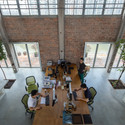
Designed by Andrea Vattovani Architecture, their ‘Back2rots’ research center proposal consists of a new working environment for young people. Upon developing the program to determine their target and who they wanted to reach, the architects decided to develop a big creative block in which young talented people could find everything. This project would be able to give them everything they need to be creative and to make their dreams a reality by having all the necessary tools. More images and architects’ description after the break.


IAPA shared with us their proposal for the Guangzhou Daily Group of Culture Center, a large multi-purpose building complex, which recently won the excellence award in the International Architecture Design Competition. The center, which includes office, exhibition, commercial, hotel, culture, and service space, creates a building complex with a vivid image, unique content and regional cultural features. More images and architects’ description after the break.
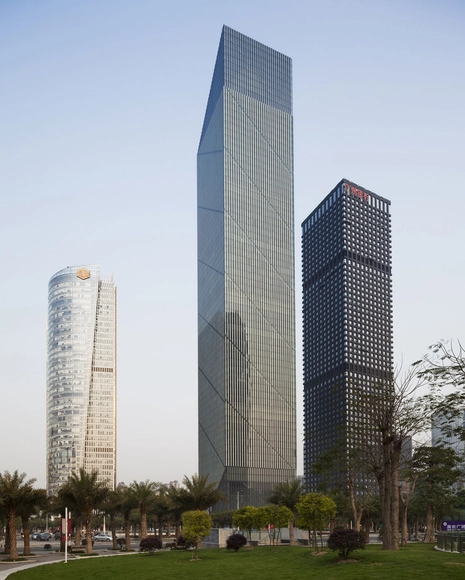

Serving Guangzhou, China as a distinctive emblem of China Southern Airlines’ global leadership, the winning proposal by Woods Bagot is a bold reinterpretation of the corporate campus model. A 400-hectare, mixed-use development, the three-precinct master plan integrates business, manufacturing, residential, and cultural amenities within a comprehensive open space network that supports recreational opportunity and bolsters ecological vitality. More images and architects’ description after the break.

The emergence of China on the global economic stage has been discussed at nauseum in myriad publications. But this emergence has had an impact on the world of architecture, providing a testing ground where architects can experiment with new ideas about sustainability and urban growth. These new ideas have been realized in recently completed structures, and more are just beginning construction or have been proposed for the future. More on these new buildings after the break.









.jpg?1413924162 "Courtesy of Atelier cnS")
.jpg?1413924167 "Courtesy of Atelier cnS")
.jpg?1413924172 "Courtesy of Atelier cnS")
.jpg?1413924177 "Courtesy of Atelier cnS")
.jpg?1413924151)