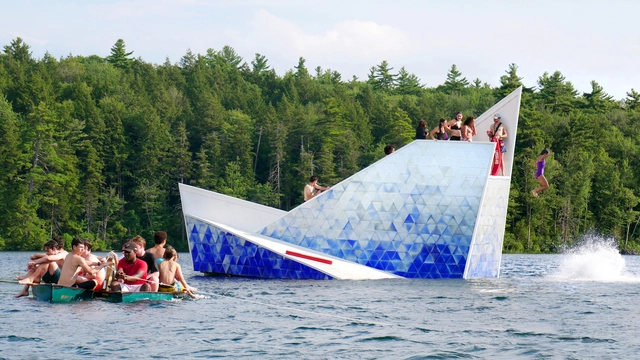
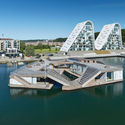
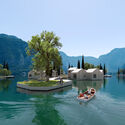
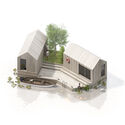
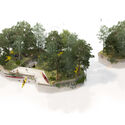
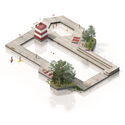
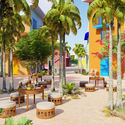
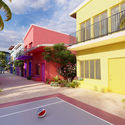
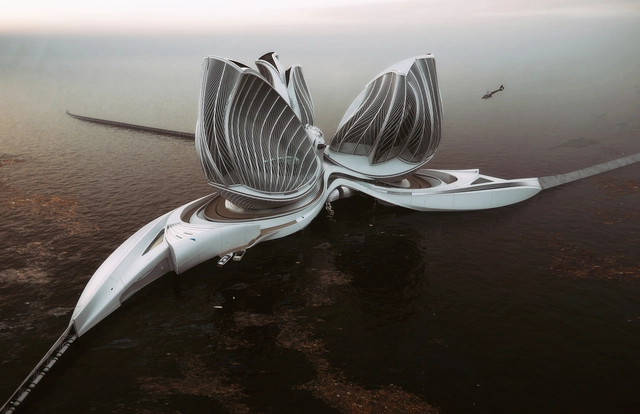
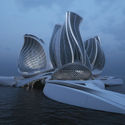
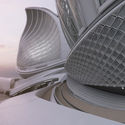
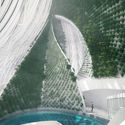
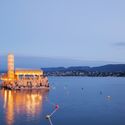
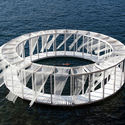
Plataforma de Mergulho ICEBERG / Bulot+Collins. Image Cortesia de Bulot+Collins
The aquatic environment has always fascinated dreamers and researchers. Around 1960, in the midst of the fierce space race of the Cold War, French explorer Jacques Cousteau developed equipment such as the Aqualung to unravel the depths of the sea, which remained as unexplored as outer space itself. He even stated that in 10 years we could occupy the seabed as “aquanauts” or “oceanautas,” where it would be possible to spend long periods extracting mineral resources and even growing food. Sixty years later, the seabed is still reserved for few, and mankind has been more concerned with plastic in the oceans and rising sea levels than colonizing the ocean floor. But being close to a body of water continues to attract most people. Whether out of interest or in response to risks of flooding and over-population, some have turned to utopian proposals and floating architecture, examples of which have been featured in the ArchDaily project archive. But what are the fundamental differences between building houses on land versus on water, and how do these buildings remain on the surface rather than sinking?
The threat of climate change is looming before us. Sea level rise concerns over 410 million people at risk of losing their livelihoods. Coastal cities are choked with high-rise buildings and traffic-laden roads, consuming land insufficiently. Synthesizing these problems, architects across the world have proposed a potential answer - floating cities. A future of living on water seems like a radical shift from how people live, work, and play. Vernacular precedents prove otherwise, offering inspiration for what our cities could morph into. As world leaders discuss courses of action to tackle climate change at the COP27 climate summit in Egypt, ArchDaily dives into the concept of radical water-based settlements.
Climate change has been one of the most pressing topics of this year, and for a good reason. Its effects are visible not only in natural habitats but also in urban environments. The construction industry has an important role to play in this dynamic. Throughout the year, events such as COP27 emphasized the importance of striving to achieve net carbon zero and the challenges faced by developing countries affected by increasingly devastating natural disasters. Possible directions for development include actions at varying stages and scales, from optimizing green spaces for urban heat control to employing local and innovative building materials to minimize the carbon footprint or passing laws that help create more sustainable urban and natural environments.
This article represents a roundup of articles published on ArchDaily during the course of 2022 with themes related to climate change and architecture’s potential to make a difference. It breaks down the topic into four main questions: What Are Cities Doing to Mitigate Urban Heat? How to Tackle Rising Sea Levels? What Was COP27 and Why Does It Matter? Can Building Materials Play a Role in Achieving These Goals? The last section presents an overview of new legislation approved during 2022 as a way of understanding how state and local governments are imposing this need for change.
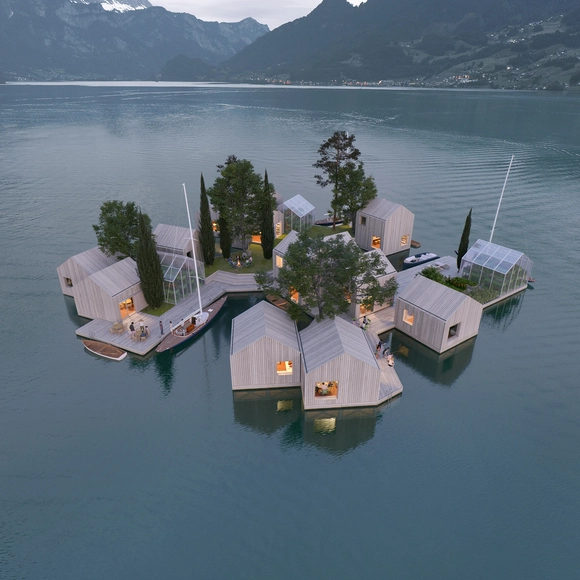
Danish Maritime Architecture Studio MAST has developed the “Land on Water” project, a system that provides an adaptable solution to building almost anything on the water: floating homes, campsites, even small parks, and community centers. The project represents a response to the acknowledgment of raising sea levels and increased risks of urban flooding, which has led to a growing interest in adapting architecture to be built on water. The “Land on Water” proposes a flexible and sustainable solution, a departure point from previous solutions, which are proven to be difficult to adapt, transport and are often using unsustainable materials such as polystyrene-filled concrete foundations or plastic pontoons. The project is developed with the support of Hubert Rhomberg & venture studio FRAGILE.
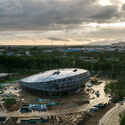
Cloud Center Under Construction. Image Courtesy of MAD
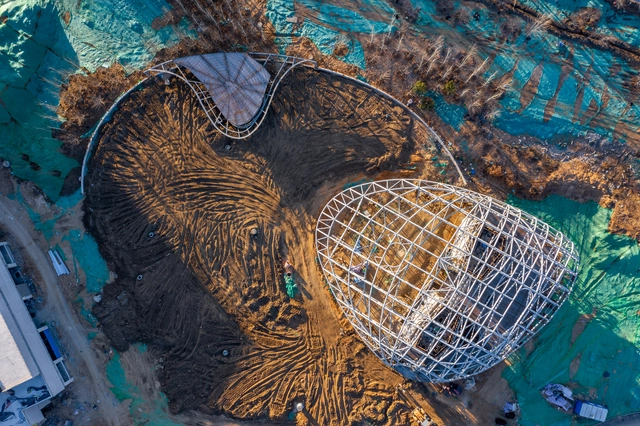
Nearly to be completed and opened in 2023, MAD Architects reveals the construction details that made it possible for the Aranya "Cloud Center" to appear floating above the rolling landscape surrounding it. Located in Qinhuangdao, 160 miles away from the east of Beijing, China, the 2,500-square meters Center will be a public art space for the vibrant artistic seaside community that, from the outside, will mark the center of a sculptural landscape that MAD had conceptualized as a "white stone garden."
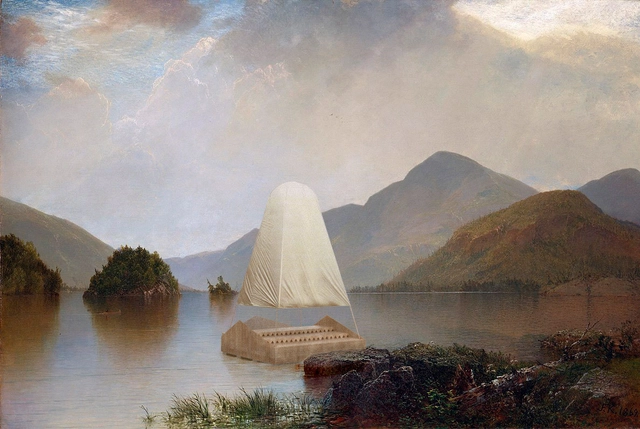
First Place - Federico Fiorino. Image Courtesy of The Outsider magazine and the City Municipality of Maribor
The Outsider magazine and the City Municipality of Maribor have announced the winners of the international competition “Floating Pavilion on the Drava River.” The purpose of the competition was to obtain an innovative design for a floating pavilion that would have two main functions: a space for smaller events during the Lent Festival and a space for contemplation by the river. The City Municipality of Maribor will invite the winning candidate to participate in the implementation of the project.
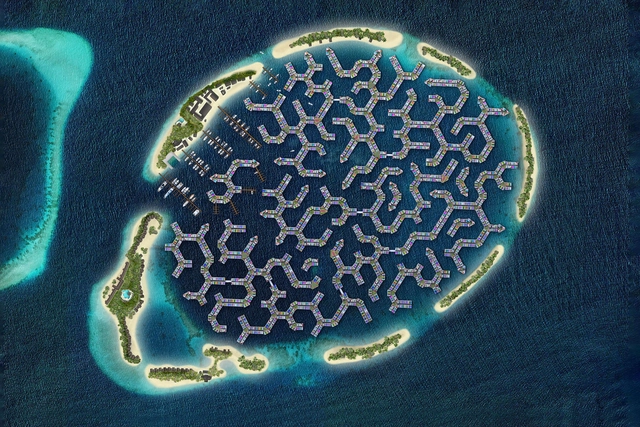
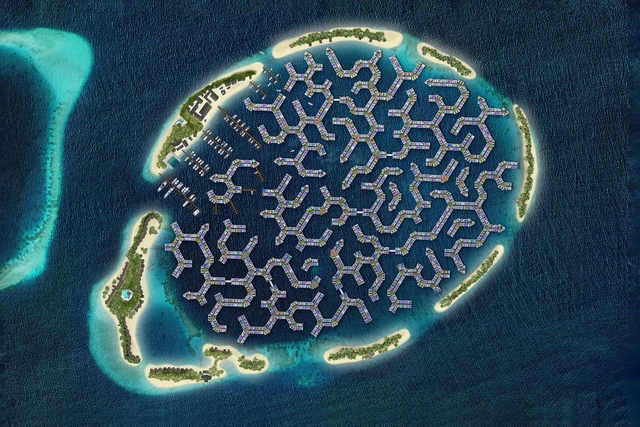
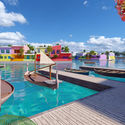
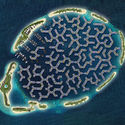
Netherlands-based architecture, urban planning, and research firm Waterstudio.NL in collaboration with Dutch Docklands and the Government of The Maldives have revealed the design of Maldives Floating City (MFC), a first-of-its-kind “island city” that offers a new approach to modern sustainable living on the Indian Ocean. The project has been in development for over a decade, and will feature thousands of residences, floating along a flexible, functional grid across a 200-hectare lagoon.
UN-Habitat and blue tech firm OCEANIX unveiled the design of the world’s first prototype for a sustainable floating city, to be hosted by Busan. The project is intended to provide a scalable framework of development for coastal cities facing land shortages and rising sea levels. With a population of 3.4 million people, Busan is the second-largest city in the Republic of Korea and, at the same time, one of the most important maritime cities, making it a suitable environment for deploying the floating city prototype.
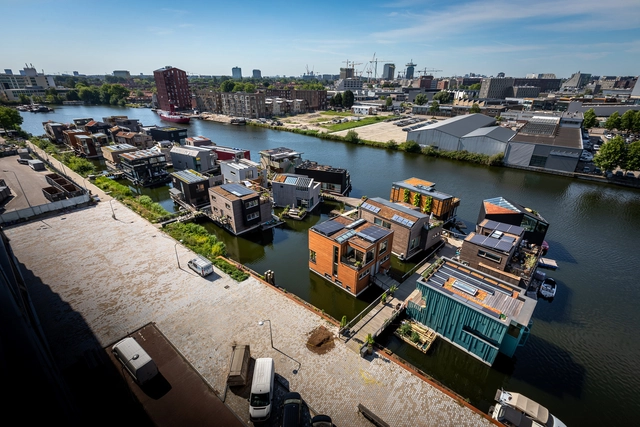
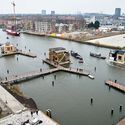
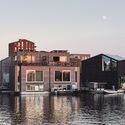
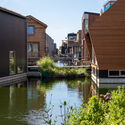
Schoonschip is Amsterdam’s innovative circular neighbourhood, a community-driven project set to become a prototype for floating urban developments. With a masterplan designed by Dutch architecture practice Space&Matter, the project comprises 46 dwellings across 30 water plots connected by a jetty and features decentralised and sustainable energy, water and waste systems. With the last of its buildings completed this year, the development showcases a valid adaptation strategy in the face of climate change and rising sea levels.
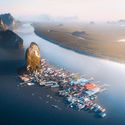
Slovak designer Lenka Petráková has won the 2020 Grand Prix Award for an ocean-cleaning research facility in the Pacific. The "8th Continent" project is a floating station that restores the marine environment by collecting plastic debris from the surface and breaking it down to recyclable material. The plastic recycling center connects with a research and education facility to create an interdisciplinary and sustainable platform for the future.
When we talk about cities or their lesser variations – villages, towns, communities –, we are used to evoking stereotyped scenarios that relate to streets, cars, buildings, and we often end up forgetting that there are plenty of other surprisingly unique patterns.
Many people study the cities and wonder about the exact moment when they were invented, given that they are open, unfinished works in progress. Some assume that their origin was due to the need for protection, which caused humans to quit nomadic lifestyles and settle as groups in a specific land to increase their chances of survival.
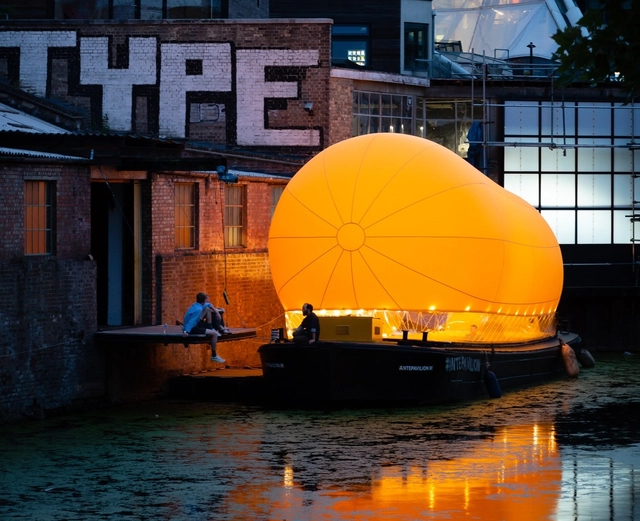
Architecture is defined by its permanence. While the discipline's most celebrated works are often those that were built to last, there's inherent beauty and value in an architecture of impermanence. Moving beyond conventional buildings and considering environmental and social impacts, temporary structures hold the potential to push the boundaries of architecture and the categorization of art.
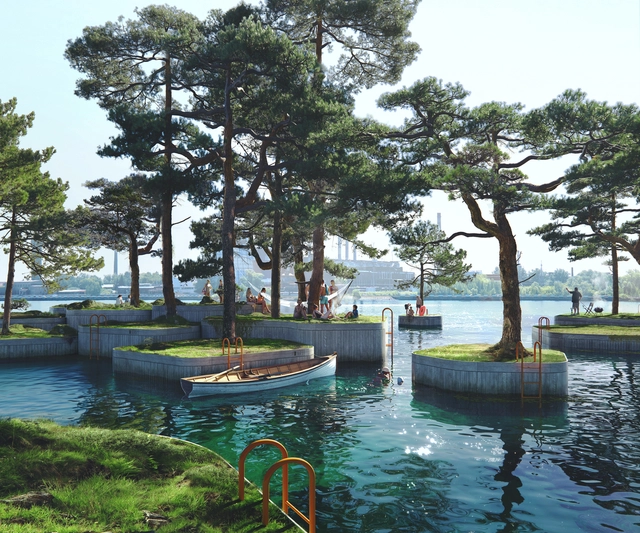
Marshall Blecher & Studio Fokstrot have introduced “wilderness and whimsy”, to the Danish capital by creating a series of floating islands in the city’s harbor. Adding a new archetype to the urban space, the project can be used by boaters, fishermen, kayakers, stargazers, and swimmers.
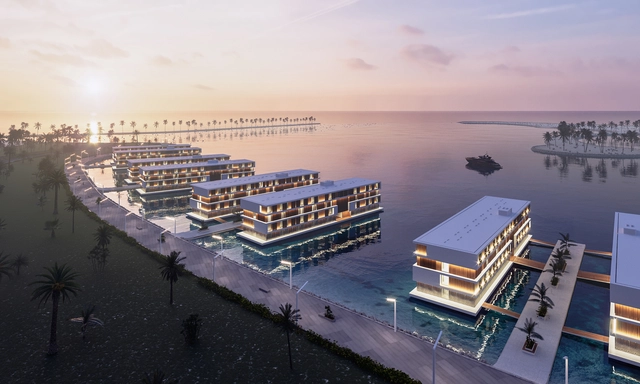
Located on Qetaifan Island North in proximity to Lusail International Stadium, which will host the opening and final games of the FIFA World Cup 2022, ADMARES and Sigge Architects are developing 16 floating hotels to serve tourists and fans that will be visiting Qatar.
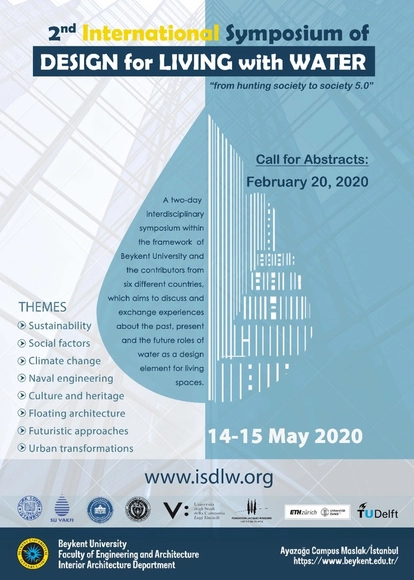
In the days of witnessing the nature's responses to climate change and facing the risk of loosing basic life sources we are calling (inviting) all the academicians, designers, and all other interested parties to take a part in sharing their idea about the importance of ecofriendly, responsive and nature responsible design. We are curious to hear your opinions. We proudly announce the 2nd International Symposium of Design for Living with Water!! It is our turn to take a part in responsibility toward water and nature!
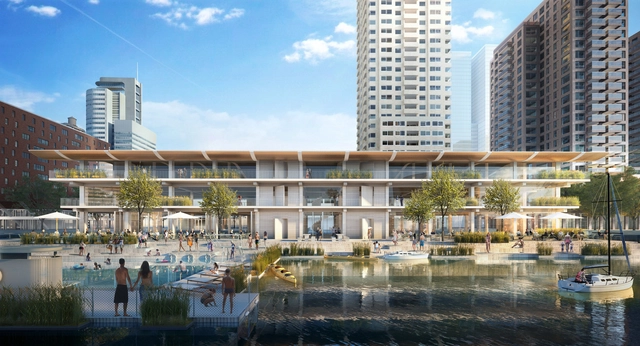
Powerhouse Company has revealed a new design for Floating Office Rotterdam (FOR), the headquarters of the Global Center on Adaptation (GCA). As the team states, construction will start this spring, and the all-timber project will be both energy-neutral and self-sufficient. The GCA will be housed in the Rijnhaven in Rotterdam for a period of 5 to 10 years.
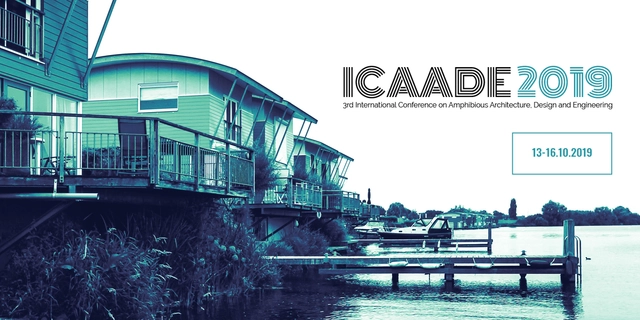
The International Conference on Amphibious Architecture, Design and Engineering (ICAADE) 2019 will bring together researchers, practitioners, authorities, students, NGOs, communities, and investors to discuss amphibious construction. Amphibious construction allows otherwise-ordinary structures to temporarily float in-place when flooding occurs.
Aquatecture 2018, a competition that challenges to explore innovative designs on water for our aquatic future Come join the movement and define the next big thing on Water!!
Water – an element in nature that life is constantly surrounded by; an element that has given birth to life on Earth and continues to support it. Although we made our shift to land, our bond with water still remains significant as ever; it is an element that is a basic necessity for our survival. The life on Earth is today plagued by adverse climate changes, global warming, the increasing toxic emissions, rising population, and scarce land resources. With various countries, such as Holland , fighting rising water levels for decades and with the current trends, it is now time to brace ourselves against the unseen future and design solutions to cope with the ever-changing community on Planet Earth. Today, the discourse of ‘smart cities’ has overtaken every conversation discussing the future of architecture. It is a glaring question as to how are we going to address the equation between the contrasting aspects of ecological crises and technological advancement for building our futures. Covering 71% of the Earth, it is now time to look at the water again as a harbinger of life in the near future; a place where human life can again thrive in its original glory. Creating living spaces on water will soon become a need to survive as a “What happens in the Arctic, does not stay in the Arctic” Extract - Greenpeace report on melting ice in Arctic paradigms of nature.