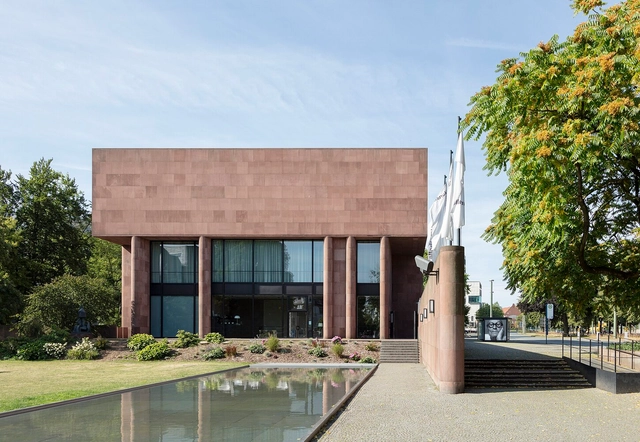
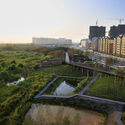
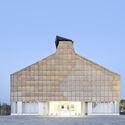
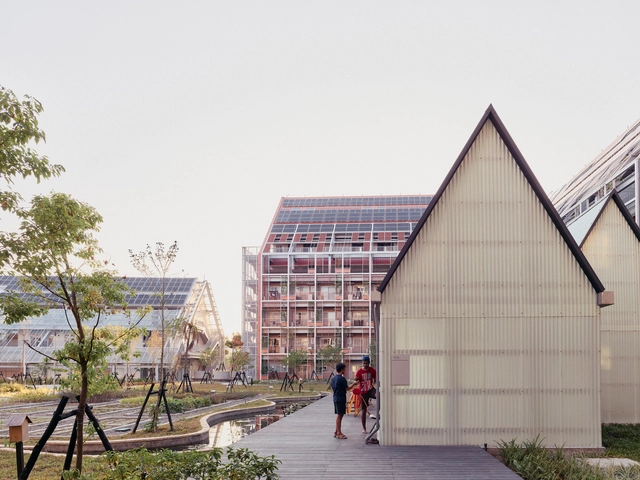
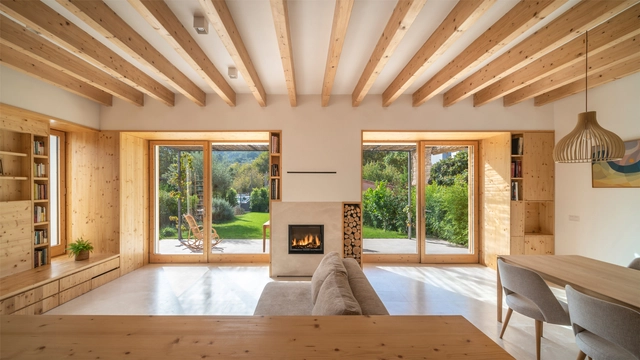
Following an international competition, Caruso St John Architects has been appointed to renovate the iconic Kunsthalle Bielefeld in Northwest Germany. Designed by Philip Johnson and completed in 1968, the structure is Johnson’s only museum in Europe. Despite past maintenance efforts, the building remains largely unchanged from its original state. The renovation aims to modernize the museum’s services, exterior, and interior spaces.
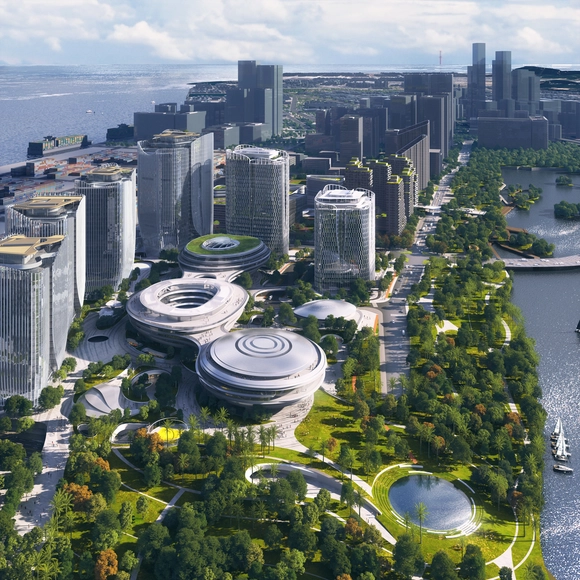
Tencent Shenzhen Headquarter Lot 04 East designed by Ma Yansong/MAD Architects. Image Courtesy of MAD Architects
Tencent is developing its new headquarters campus on five parcels spanning over 80 hectares east of Da Chan Bay Island in Qianhai, Bao'an District, Shenzhen. MAD Architects, led by Ma Yansong, has designed LOT 04 East of Tencent's new headquarters, envisioning two biomorphic office towers, three interconnected buildings, and a raindrop-shaped building. This project covers approximately 72,000 square meters with a Gross Floor Area of 412,000 square meters. Currently under construction, Lot 04 East of the headquarters is expected to be completed and open for users in 2025. Other projects announced for the campus include Büro Ole Scheeren’s swirling design for the Tencent Helix, and MVRDV’s residential complex named Tencent P5.
Celebrating groundbreaking projects that showcase sustainable construction practices, this year’s winners of the Holcim Foundation for Sustainable Construction 2023 highlight innovative approaches across various scales, forms, geographies, and forms. The Gold Prize for North America was awarded to Partisans Architects and Well-Grounded Real Estate with their high-tech, low-cost modular housing solution for urban living in Toronto. In a video interview for ArchDaily, Jonathan Diamond from Well-Grounded Real Estate discusses the development of the winning project and the forces that shaped it.
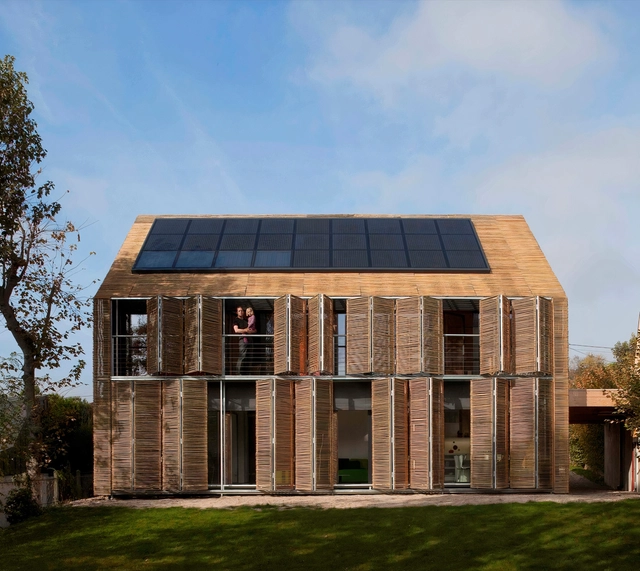
It seems like everyone is going solar these days. In the United States, the net solar power generation has increased by more than 113,000 million kilowatt hours in the last decade. Solar integration with residential projects saves homeowners money on energy bills and increases property value over time. As solar integration technology advances, the advantages span beyond financial and environmental; solar panels are assuming an aesthetic role in modern architecture, too.
Solar integration is becoming an expectation among new construction homebuyers. Architects and designers must adapt accordingly to increase the availability of photovoltaic integration in residential developments. However, with careful planning and execution, solar panels can be better incorporated during the design and construction phases. This article outlines how homebuilders can meet consumer demands for solar integration, creating an easy-to-follow pathway for accommodating changing home design trends.
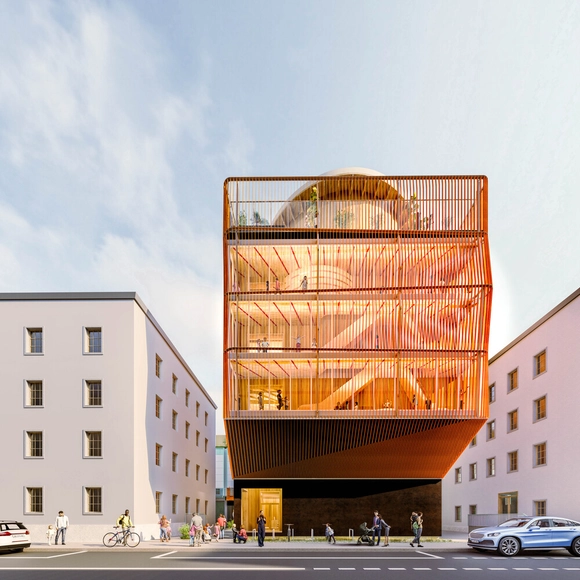
Kéré Architecture has revealed the design for a vertical childcare center at Munich’s Technical University (TUM) in Germany. Named "Ingeborg Pohl Kinderoase an der TUM," the center will be built in wood to the extent allowed by local norms and regulations for energy efficiency, thermal comfort, fire protection, and acoustics. The new building, located between the TUM main campus and the university canteen, broke ground on April 18 and is expected to be completed by the end of 2025.
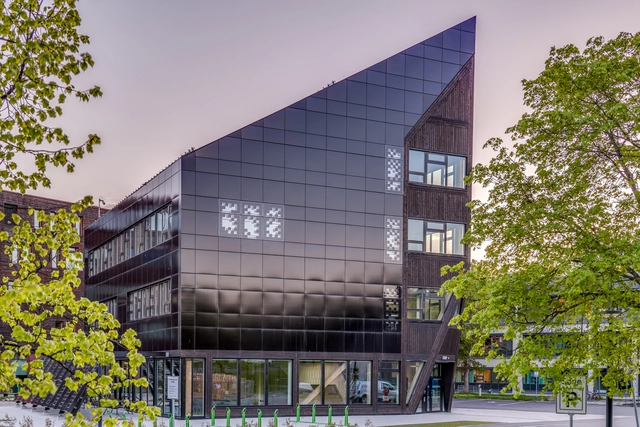
ZEB Living Lab is a research building that stands out for its pioneering initiative among zero-emission buildings, seeking to have a significant impact on the future. Located in Trondheim, Norway, it is much more than just a building; it is a tangible manifestation of the global commitment to sustainability and innovation. Conceived as an advanced research laboratory and a practical example of sustainable construction practices, it represents the point of convergence between architecture, technology and environmental awareness. Managed in collaboration between NTNU (Norwegian University of Science and Technology) and SINTEF (Scandinavian Institute of Technology), this center of scientific excellence is a platform for living experimentation, where innovative materials and solutions are developed, tested and demonstrated in direct interaction with the building occupants.
Every year, Earth Day, celebrated on April 22, presents us with an opportunity to contemplate the conditions of our planet and our impact upon it. Generating around 37% of global carbon emissions, the construction industry has an important, often detrimental, role to play, thus placing an increasingly urgent responsibility on architects and builders to devise strategies for reducing this number. Still, the built environment represents the habitat for most of humanity, and so it has the potential to protect and shelter people from the risks posed by the changing climate. Read on to discover a collection of articles delving into the strategies available at urban and architectural scales for mitigating the effects of climate change and minimizing the industry’s impact upon it.
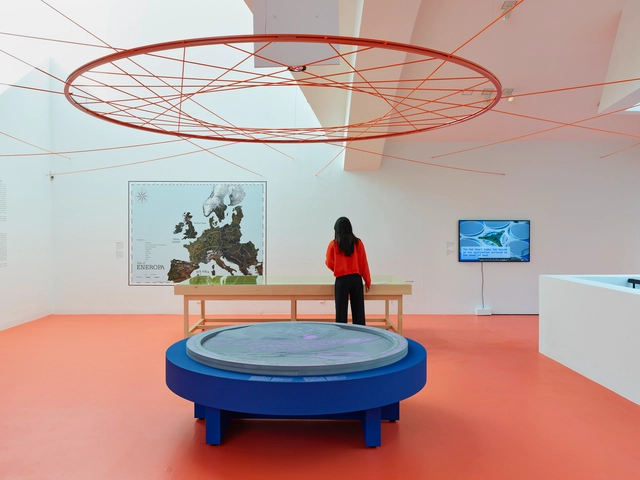
The Vitra Design Museum presents 'Transform! Designing the Future of Energy', an exhibition running from March 23rd to September 1st, 2024. As energy stands as the cornerstone of modern society, the subject encompasses political, social, and environmental dimensions. The exhibition aims to highlight design’s role in the effort to transform the energy sector into a more efficient, reliable, and sustainable one, relying more on renewable sources, smart mobility systems, and moving towards self-sufficient cities.
Rising demands for energy efficiency, technical functionality, and interior comfort in buildings necessitate the development of more efficient building envelope constructions. The building envelope serves as a mediator between a building's exterior and interior. In today's architectural landscape, it performs a multitude of functions to enhance the building's performance. These functions include building control systems, energy supply (such as gas and electricity), and heating, ventilation, and air conditioning (HVAC), among others. These elements primarily determine the functionality, efficiency, and safety of building spaces. Given that the nature of building envelopes heavily depends on these services, how can they serve as primary frameworks for building design development?
In an effort to find effective strategies to mitigate the adverse effects of climate change, the Biden-Harris administration has released a draft of a new legislative initiative that strives to impose a National Definition for Zero Emissions Buildings. Overseen by the U.S. Department of Energy (DOE), the draft proposes a standardized and verifiable base for defining the common minimum conditions for such buildings, as well as pathways for transparent verifications by public and private entities. DOE has now launched a ‘request for information' asking for feedback from industry, academia, research laboratories, and other stakeholders before finalizing the document.
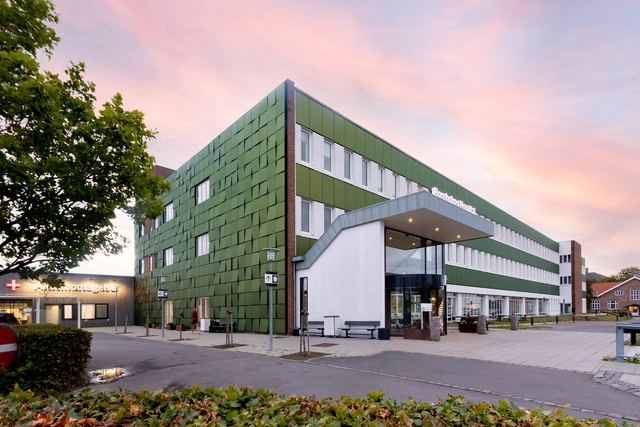
Solar Facades on Bornholm Hospital. Image Courtesy of SolarLab
Environmental degradation has shed light on the need for new sources of energy. A shift in energy sources calls for innovative means of storing energy. For centuries, buildings have proven able to store people, objects, and systems, inviting a conversation about their untapped potential to efficiently store large amounts of energy. In this new era, can buildings go beyond being structures of function to potential reservoirs of power?
In the context of global initiatives to promote energy efficiency and the decarbonization of buildings, Latin America is at the center of the debate. The International Seminar on Sustainable and NetZero Buildings 2023, held in Bogotá and organized by CCCS, IEA, UNIANDES, CAF, and CEELA, aimed primarily to create a space for the exchange of experiences, such as Oliver Schütte's No Footprint House, while simultaneously conducting a review of government policies and the implementation of norms and standards in the region.
Among panels and conferences featuring Clara Camarasa, Nicola Borregaard, Laura Chapa, Paola Valencia, Iván Osuna, Juan Carlos Vega, Angélica Ospina, and Diego Velandia, five main learnings emerged as lessons: from creating more relevance and energy calculations to the development of the timber industry - and certifications.
COP28, or the 2023 United Nations Conference of the Parties, was held in Dubai between November 30 and December 13. The annual meeting gathers representatives from 198 countries, as well as industry leaders to discuss and establish strategies to limit the extent of climate change and its adverse effects. The ultimate goal of these meetings is to find ways to limit the global temperature rise below 1.5 degrees Celsius compared to pre-industrial times. At the moment, the global temperature rise is already at 1.2 degrees Celsius. As the construction industry at large accounts for 39% of global emissions, architects and planners have a shared interest in the results of thee international summit, Read on to discover some of the key takeaways of COP28.
If the past few years were a perfect occasion for reflecting and debating on well-being, digitalization, and democratization in architectural design, this 2023 has been a tremendous opportunity to delve deeper and comment on other urgent topics: The climate crisis and the natural environment have unquestionably entered the global agenda of architecture and construction, alongside circularity, energy efficiency, and decarbonization. It's time to engage in dialogue about these matters to conscientiously build for the future.
Reviewing the future of wood, water, and lighting, in each of the related topics that ArchDaily developed month by month, we posed an open question for you - our dear readers - to actively contribute with your experiences and knowledge. After reading and compiling an immense amount of received messages, from construction professionals to students and architecture enthusiasts, it's time to present you with a summary of the main perspectives. Many thanks for your opinions, and we look forward to your comments for 2024!
How is it possible to reduce the energy consumption of our homes? What design, material, and/or technological strategies can be developed to achieve interior comfort while also addressing the climate crisis? While achieving energy efficiency depends, among other factors, on the state of the homes, there are various strategies related to the implementation of renewable energies, air conditioning technologies, and more that can be applied, taking into account government policies, laws, regulations, and standards specific to each region.
Bradbury Works / [Y/N] Studio. Image Courtesy of [Y/N] Studio
In the contemporary context, global warming has marked a turning point in the way we think about architecture. We are witnessing record temperatures on our planet and a challenging panorama in many large cities, characterized by heatwaves and, in some cases, more severe winters. These circumstances have triggered a cycle in which the demand for heating and cooling systems increases, which, in turn, translates into higher energy and operating costs for buildings.
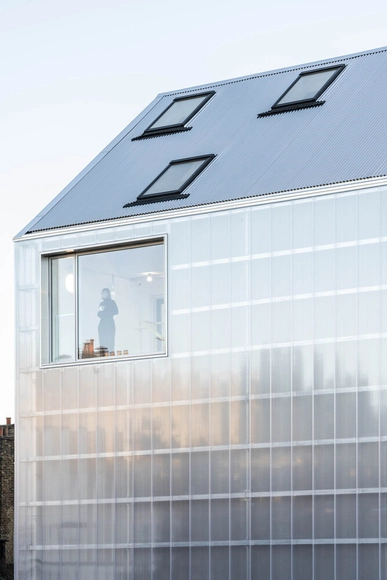
Given this situation, it becomes imperative to design energy-efficient buildings to reduce both the environmental impact and the associated costs. One of the strategies to achieve this is to properly plan the facade, which, serving a function similar to the building's skin, can help reduce the energy required for heating and cooling. In this context, the polycarbonate panels developed by Rodeca contribute to the energy efficiency of buildings, in addition to their lightweight, slender construction, and translucent aesthetics.
https://www.archdaily.com/1009134/ecological-lightweight-and-slender-energy-efficient-architecture-with-translucent-polycarbonateEnrique Tovar
The world has just witnessed the hottest months in recorded history, and the outlook is far from optimistic. Rising temperatures are driving greater cooling demands, threatening to trigger a vicious cycle of higher electricity use and carbon emissions. In a planet simultaneously facing unprecedented urbanization and a climate crisis, the intersection of building energy efficiency and cooling technologies has never been more crucial.