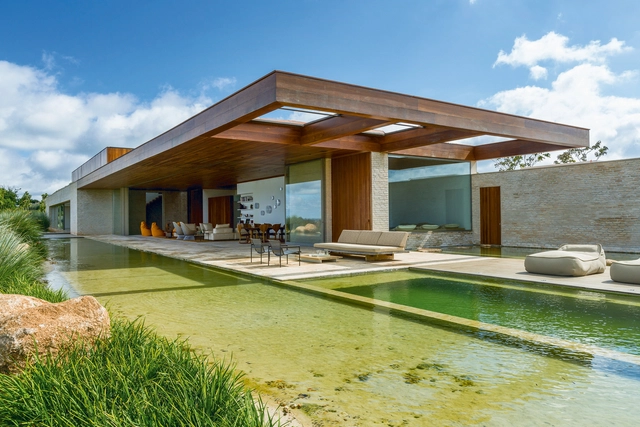
At a time when biophilia is highly valued in architecture, natural pools become another element capable of increasing the connection with nature, enabling the creation of a recreational and contemplative space at the same time. Also known as ecological or biological pools, they reproduce an ecosystem composed of plants, rocks and even some species of fish.
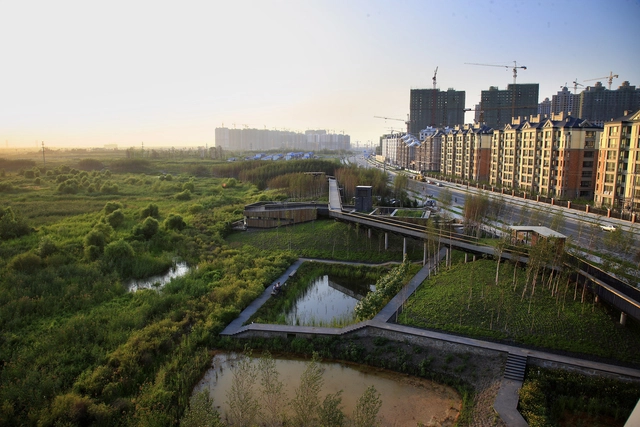
Parque Manancial de Águas Pluviais / Turenscape. Imagem cortesia de Turenscape
According to the architect and researcher Patrícia Akinaga, ecological urbanism emerged at the end of the 20th century as a strategy to create a paradigm shift with regard to the design of cities. With this, urban projects should be designed from the potential and limitations of existing natural resources. Unlike other previous movements, in ecological urbanism architecture is not the structuring element of the city — the landscape itself is. In other words, green areas should not only exist to beautify spaces, but as true engineering artifacts with the potential to dampen, retain and treat rainwater, for example. With ecological urbanism, urban design becomes defined by the natural elements intrinsic to its fabric.
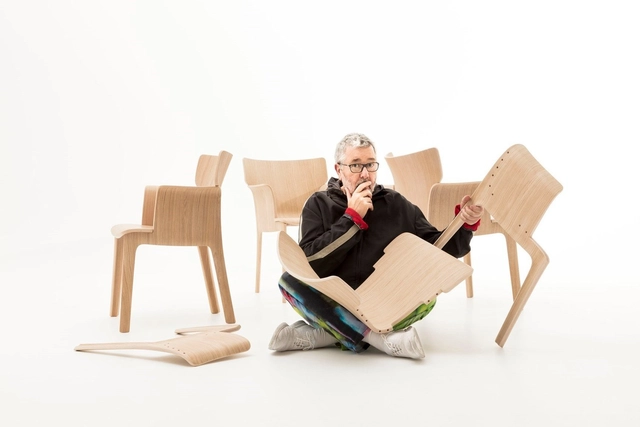
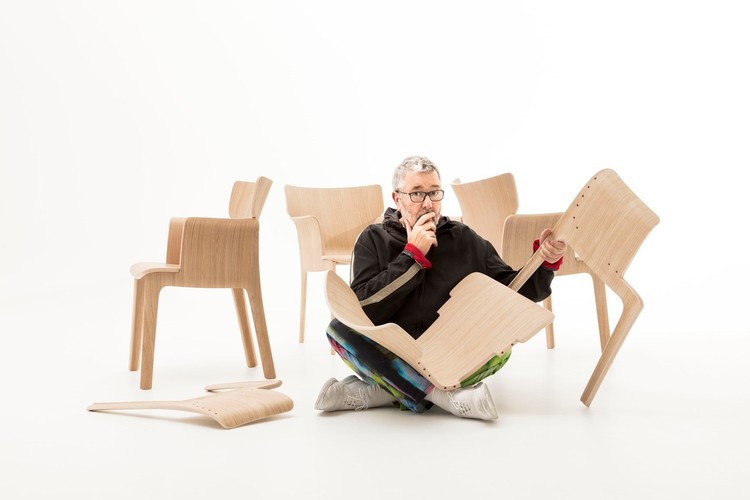
Believing that a creator has a duty towards society, Philippe Starck, is a multifaceted designer whose projects span across many disciplines. From architecture and interiors to industrial and furniture design, Starck’s portfolio is always, as he puts it, “focused on the essential”, and “must improve the lives of as many people as possible”. Author of Alessi’s famous lemon squeezer, he is known for pushing the boundary of design in everyday objects.
With 10,000 creations, completed or yet to come, Philippe Starck is a pioneer in “making things in the way of ecology”. In fact, ArchDaily had the chance to meet the designer at the 2021 Salone del Mobile, to discuss his design approach and visions as well as hislatest plywood creation for Andreu World.
In 1941, Swiss engineer George de Mestral was coming back from a hunting trip with his dog when he noticed that some seeds kept sticking to his clothes and his dog's fur. He observed that they contained several "hooks" that caught on anything with a loop, and from studying this plant, seven years later, he invented the hook and loop fastener, which he named Velcro.
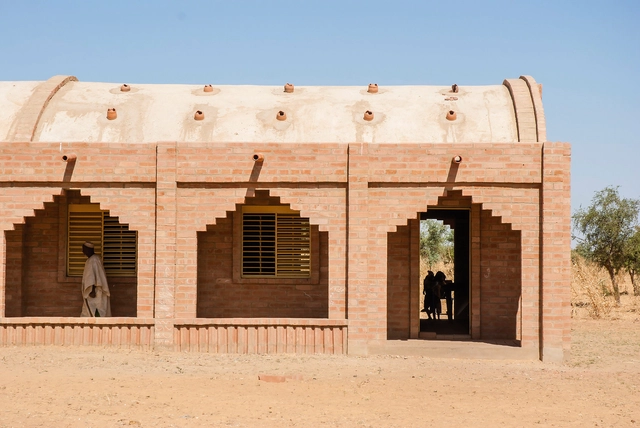
Primary School Tanouan Ibi, Mali. Image Courtesy of LEVS Architecten
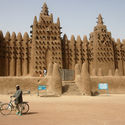
Vernacular architecture can be defined as a type of local or regional construction, using traditional materials and resources from the area where the building is located. Consequently, this architecture is closely related to its context and is aware of the specific geographic features and cultural aspects of its surroundings, being strongly influenced by them. For this reason, they are unique to different places in the world, becoming even a means of reaffirming an identity.
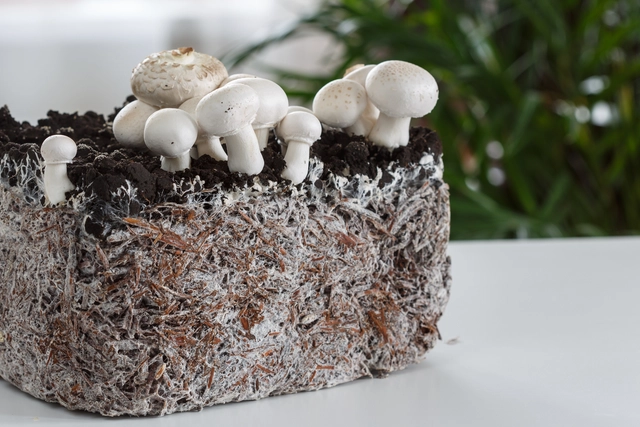
Fungi are everywhere. In the air, in the water, in our bodies, in the trees, in the ceilings of our bathrooms, underground. They can be mushrooms (edible, medicinal, hallucinogenic, or very poisonous), or take other simpler forms, such as molds. They can trigger illnesses, but they can also produce antibiotic remedies, such as penicillin, or help ferment amazing cheeses and breads. Could they also be the future of packaging and building materials?
GIDA 2020 - Goldreed Industrial Design Award - is the new international design award sponsored by the Xiongan Future Industrial Design Institute, with the aim of promoting at an international level the concept of “harmony” applied to design.
The 11th edition of MEDS workshop, held in the industrial region of Poland - Silesia, is now open for entries! Apply as a participant up to the 21st of March.
MEDS Workshop “Meetings of Design Students” is an international workshop organized each summer in a different country. Every year it gathers around 200 participants associated with various fields of art, design, and architecture. In a span of two weeks, guided by experienced tutors, the participants create and construct group projects, getting in touch with different approaches to design and mastering their skills in a wide range of building techniques. Each project combines practical, educational and cultural aspects, creating a meaningful impact on the space and tackling both current issues, and long-standing local traditions. Previous workshops have taken place in Turkey, Slovenia, Portugal, Ireland, Serbia, Romania, Belgium, Lebanon and Greece.
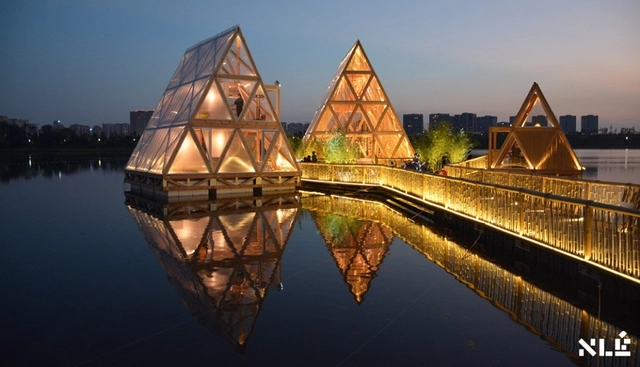
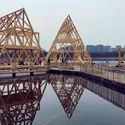
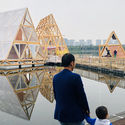
As part of a collaboration between the Centre Pompidou and the Mao Jihong Arts Foundation, the Cosmopolis #1.5: 'Enlarged Intelligence' exhibition features the developments of NLÉMakoko Floating School. The Minjiang Floating System (MFS IIIx3), the fourth prototype and the third iteration of the prefabricated self-built system for water, investigates methods to counter the challenges posed by urbanization and climate change.
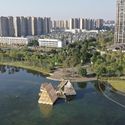
Earlier prototypes of the Makoko Floating School include the Waterfront Atlas (MFS II) launched in Venice, Italy and the Minne Floating School (MFS III) in Bruges, Belgium. The project, initially developed for the water in Lagos, is now usable in all these sites including the Jincheng Lake in Chengdu.
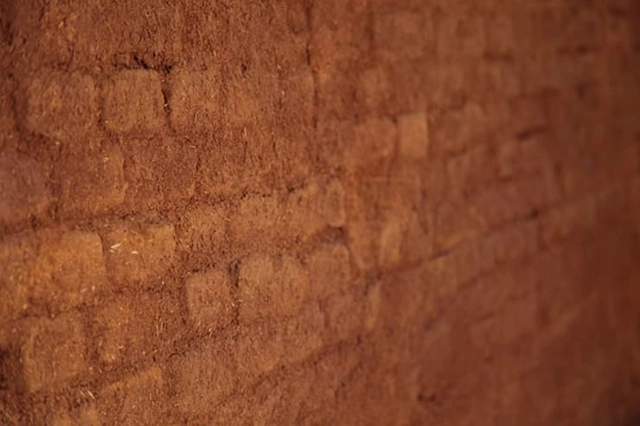
The use of earth plaster is very common in natural buildings; it is the same mixture used in adobe. Though easily made, its use is not widely known. Rafael Loschiavo, from Ecoeficientes, teaches the step-by-step method for bringing a new life to a run-down wall without the need for major renovations.
https://www.archdaily.com/905465/how-to-make-earth-plaster-in-5-easy-to-follow-stepsMayra Rosa
Against the backdrop of an ever-increasing number of its farmers committing suicides, and its cities crumbling under intensifying pressure on their water resources—owing to their rapidly growing populations—India has revived its incredibly ambitious Interlinking of Rivers (ILR) project which aims to create a nation-wide water-grid twice the length of the Nile. The $168 billion project, first envisioned almost four decades ago, entails the linkage of thirty-seven of the country’s rivers through the construction of thirty canals and three-thousand water reservoirs. The chief objective is to address India’s regional inequity in water availability: 174 billion cubic meters of water is proposed to be transported across river basins, from potentially water-surplus to water-deficit areas.
Architectural photographer Julien Lanoo is known for his storytelling. His documentary-style photographs of the built environment range from Adjaye Associates' Aishti Foundation, OMA’s CCTV and the Oslo Architecture Triennale to name a few. Now the photographer has released a short film: introducing Canadian-Ghanaian architect Akwasi McLaren as he tells the story behind building his eco-lodge in the Cape 3 Points region of Ghana. Broken down into 3 chapters, “Knowledge, Wisdom, and Understanding” follows McLaren’s journey from designing his parents’ hotel in Ghana as a student to building his beloved lodge on the beach, to his hopes of sharing the valuable skills of ecological building and craftsmanship to cities.
SB-Lab 2017 Conference Poster (Credits: Green Lines Institute)
SB-LAB 2017 - International Conference on Advances in Sustainable Cities and Buildings Development adopted the UN 2030 Agenda on Sustainable Development as the reference for its scope and goals. Proposed topics aim to cover all the Sustainable Development Goals in order to achieve the contribute that architects, engineers, contractors, politics and the construction industry in general may bring to these goals. Innovative solutions are a challenge to the near future that seems to be narrow as local actions have global impacts and global impacts affect locally environment, economic, social and culture. It's a difficult cycle to reverse, that seems to spin ever faster.
The International Khalifa Heritage School seeks interdisciplinary-minded students and young professionals to work collaboratively to develop innovative design solutions for a proposed Heritage and Environment Park. The park will occupy a critically important site at the southern gateway to Khalifa neighborhood and overlooking the 13th-century al-Ashraf Khalil and Fatima Khatun Domes, monuments of great heritage significance.
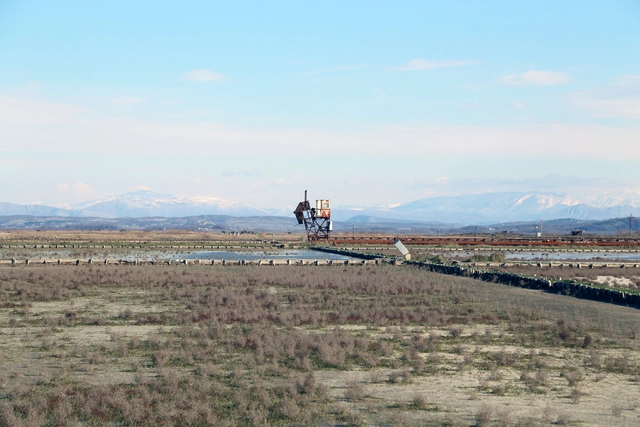
Near Montenegro's most southern town Ulcinj sits the former saline "Bajo Sekulic," a completely artificial, man-made biotope which has taken on almost global importance as a crucial node in the migratory patterns of birds. As such, the Solana Ulcinj is the front line of all kinds of conflicts: between nature and culture; the local and the global; economy and environmental awareness.
The Project Solana Ulcinj, commissioned by Dijana Vucinic and the Ministry of sustainable development and tourism and curated by Bart Lootsma and Katharina Weinberger, is the Montenegrin contribution to the 15th International Architecture Exhibition of the Biennale di Architettura. The Montenegrin pavilion hosts four projects outlining four different sustainable futures for the Solana Ulcinj, developed specially for the Biennale by four practices: ecoLogicStudio from London, LOLA form Rotterdam and LAAC from Innsbruck, while a fourth project will be decided following a national competition in Montenegro. The project is accompanied by a series of three symposia in Montenegro and in Venice.
https://www.archdaily.com/784971/montenegro-pavilion-at-2016-venice-biennale-to-investigate-one-of-europes-largest-post-industrial-landscapesBart Lootsma and Katharina Weinberger
The Department of Spatial and Sustainable Design, Vienna University of Technology, and the Society of Architecture and Spatial Design is organizing the BLUE AWARD, an international student competition for sustainable architecture. The prize is overseen by the UIA, International Union of Architects, represented by its former President Albert Dubler.




.jpg?1645660187 "Cidade colombiana transformou 18 ruas e 12 hidrovias em paraísos verdes. Imagem cortesia de CicloVivo")




_NAARO_-_Copia.jpg?1606329213&format=webp&width=640&height=580)


_NAARO_-_Copia.jpg?1606329213)