1. ArchDaily
  2. Dabbagh Architects

Dabbagh Architects: The Latest Architecture and News

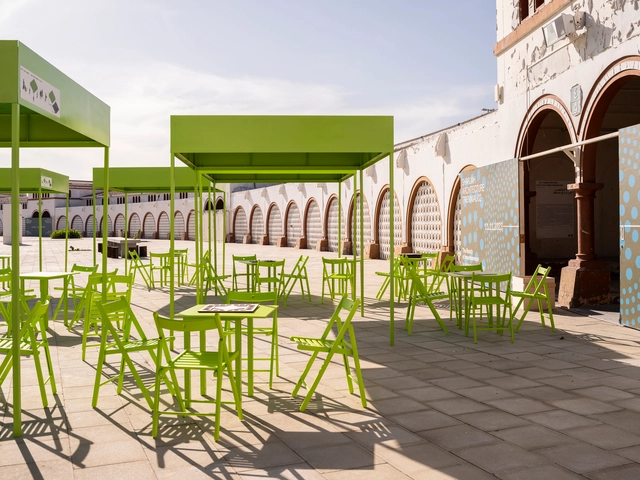
Reframing Cultural Landmarks: A Local Approach to Architecture in the Middle East

Subscriber Access | 

A previous exploration of cultural landmarks in the Middle East designed by international architects highlighted recurring themes such as architecture as an extension of the landscape, climate-responsive design, and abstraction of traditional forms. These projects often introduced high-tech environmental solutions, used monumental forms to reinterpret local identity, or positioned themselves as landmarks within the broader urban or desert landscape. While these approaches have defined many of the region's most recognizable cultural institutions, they represent just one side of the architectural discourse. An equally significant yet distinct trajectory emerges from local architects, who work within existing structures, historical contexts, and lived environments to create institutions that feel deeply embedded in their surroundings. This approach prioritizes continuity, transformation, and accessibility, ensuring that architecture remains an evolving part of the cultural fabric rather than a self-contained object.
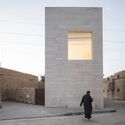

Reframing Cultural Landmarks: A Local Approach to Architecture in the Middle East - Image 1 of 4Reframing Cultural Landmarks: A Local Approach to Architecture in the Middle East - Image 2 of 4Reframing Cultural Landmarks: A Local Approach to Architecture in the Middle East - Image 3 of 4Reframing Cultural Landmarks: A Local Approach to Architecture in the Middle East - Image 4 of 4Reframing Cultural Landmarks: A Local Approach to Architecture in the Middle East - More Images+ 10

Shaping the Future of Islamic Architecture: Diriyah Biennale Foundation Unveils AlMusalla Prize

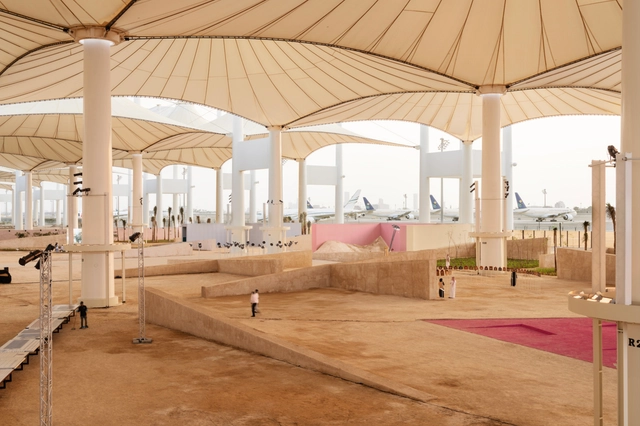
The Diriyah Biennale Foundation has just unveiled the competition details for the AlMusalla Prize, along with the shortlisted architecture studios and the jury. An addition to the Islamic Arts Biennale, this international architecture competition focuses on designing a musalla, a flexible space for prayer and reflection accessible to people of all faiths. Situated in the Western Hajj Terminal of King Abdulaziz International Airport in Jeddah, Saudi Arabia, the musalla will be an integral part of the Biennale’s upcoming edition. The winner of the competition will be announced later this year, and the opening of the musalla will be held on January 25th, 2025.

Reimagining The Mashrabiya: Functionality and Symbolism in Contemporary Architecture

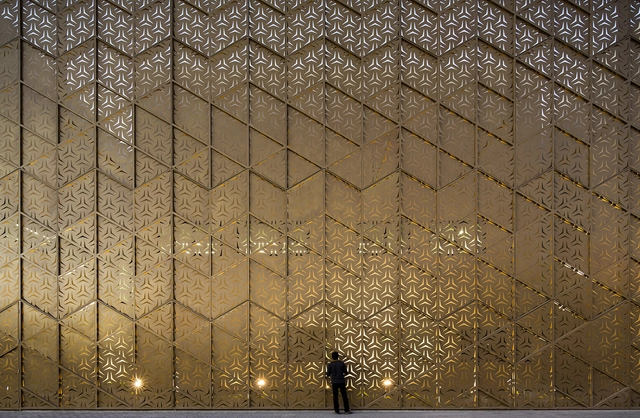
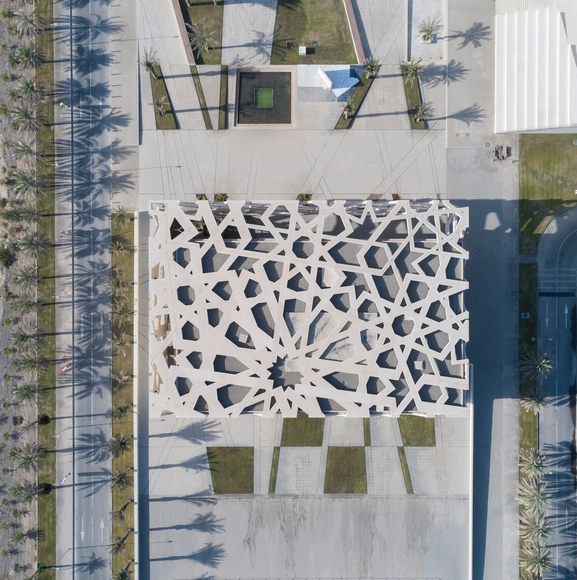
For centuries, arid environments have solved the problem of light, privacy, and heat through a statement architectural feature of Islamic and Arab architecture, the mashrabiya. Crafted from geometric patterns traditionally made from short lengths of turned wood, the mashrabiya features lattice-like patterns that form large areas. Traditionally, it was used to catch wind and offer passive cooling in the dry Middle Eastern desert heat. Frequently used on the side street of a built structure, water jars, and basins were placed inside it to activate evaporative cooling. The cool air from the street would pass through the wooden screen, providing air movement for the occupants.

Similar to the Indian jali, the vernacular language also offers a playful experience with daylight while still maintaining a certain degree of privacy. Traced back to Ottoman origins, the perforated screens protected occupants’ from the sun while simultaneously letting daylight through in calculated doses. Although the mashrabiya was a statement in arab and Islamic architecture languages, it wasn’t until 1987 that the archetypal element began appearing with a revised contemporary application.

Reimagining The Mashrabiya: Functionality and Symbolism in Contemporary Architecture  - Image 1 of 4Reimagining The Mashrabiya: Functionality and Symbolism in Contemporary Architecture  - Image 2 of 4Reimagining The Mashrabiya: Functionality and Symbolism in Contemporary Architecture  - Image 3 of 4Reimagining The Mashrabiya: Functionality and Symbolism in Contemporary Architecture  - Image 4 of 4Reimagining The Mashrabiya: Functionality and Symbolism in Contemporary Architecture  - More Images+ 7

"Architecture that Responds to the Memory of a Place": In Conversation with Sumaya Dabbagh

Sumaya Dabbagh, the founder of Dabbagh Architects, based in the UAE, stands at the forefront of architectural innovation with a focus on identity and connection to place. Her recent participation in the Sharjah Architecture Triennial’s second edition “Earth to Earth" is a showcase of cumulative ideas that Dabbagh Architects has been fostering through their projects. Onsite in Sharjah, ArchDaily had the chance to speak to the architect about her exploration at the Triennial, as well as her broader architecture practice and its impact on the Global South.

"Architecture that Responds to the Memory of a Place": In Conversation with Sumaya Dabbagh - Image 1 of 4"Architecture that Responds to the Memory of a Place": In Conversation with Sumaya Dabbagh - Image 5 of 4"Architecture that Responds to the Memory of a Place": In Conversation with Sumaya Dabbagh - Image 2 of 4"Architecture that Responds to the Memory of a Place": In Conversation with Sumaya Dabbagh - Image 3 of 4Architecture that Responds to the Memory of a Place: In Conversation with Sumaya Dabbagh - More Images+ 10

Top 2023 Pavillions and Installations Interrogating Architecture of the Global South

Architecture in the Global South often embodies a rich cultural heritage and craftsmanship, incorporating vibrant colors, intricate patterns, and symbolic elements. It also tackles the challenges faced by developing economies, such as limited resources, rapid urbanization, and social inequality, by promoting inclusive and community-driven design solutions. As installations and pavilions serve as radical templates for interrogating these architectural ideals and seeking innovative solutions, we present the top architectural installations as part of our year-in-review. They encompass curated exhibitions like the Venice Architecture Biennale, as well as permanent pavilion structures in specific contexts that delve into local materials, waste reuse, and the reinterpretation of historical narratives.

Top 2023 Pavillions and Installations Interrogating Architecture of the Global South - Image 1 of 4Top 2023 Pavillions and Installations Interrogating Architecture of the Global South - Image 2 of 4Top 2023 Pavillions and Installations Interrogating Architecture of the Global South - Image 3 of 4Top 2023 Pavillions and Installations Interrogating Architecture of the Global South - Image 4 of 4Top 2023 Pavillions and Installations Interrogating Architecture of the Global South - More Images+ 6

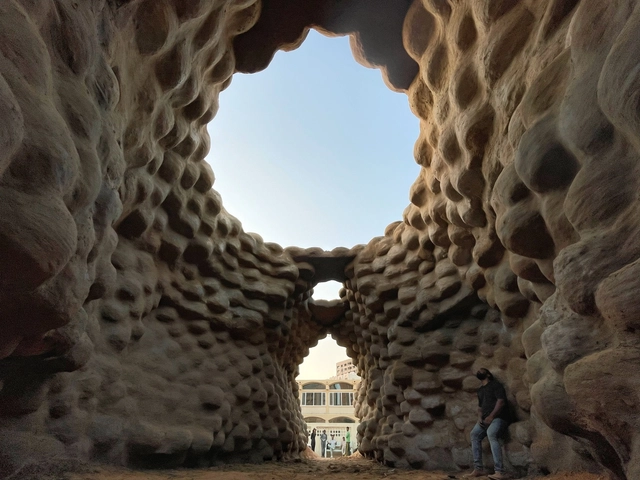
The Beauty of Impermanence: Exploring Adaptive Architecture from the Global South at the 2023 Sharjah Architecture Triennial

Subscriber Access | 

Inaugurated on November 11, 2023, and running until March 10, 2024, the Sharjah Architecture Triennial serves as a metaphor drawing attention to the design and technological innovations within the built environment, particularly in the global south. The exhibition features contributions from 29 architects and studios spanning 25 countries. Building upon Venice's global platform for experimentation at the 18th International Architecture Exhibition, the 2023 Triennial embarks on a similar journey, creating space for voices and discussions often overlooked in global exhibitions and unveiling elements that have long existed but remained unseen. With a keen awareness of the global south, but also of the global north, and an understanding of the polarities between them, as articulated by curator Tosin Oshinowo, this second edition of the exhibition focuses on "The Beauty of Impermanence: An Architecture of Adaptability."

Celebrating everything that exists, especially in the global south where places thrive amidst scarcity, the triennial adopts an optimistic approach, drawing lessons from current situations and revealing the value and sophistication of alternative responses that have emerged due to resource constraints. “We're able to celebrate them. We're able to learn from them”, adds the curator. The triennial aims to comprehend a more sustainable, accessible, and equitable future—a collective effort to address the challenges of climate change, explore the built environment, and embrace under-celebrated regional traditions. Highlighting solutions that have endured the course of time and others responding to contemporary difficulties, "The Beauty of Impermanence" emphasizes the necessity of nuanced hybridity essential for our urbanized world.

The Beauty of Impermanence: Exploring Adaptive Architecture from the Global South at the 2023 Sharjah Architecture Triennial - Image 1 of 4The Beauty of Impermanence: Exploring Adaptive Architecture from the Global South at the 2023 Sharjah Architecture Triennial - Image 2 of 4The Beauty of Impermanence: Exploring Adaptive Architecture from the Global South at the 2023 Sharjah Architecture Triennial - Image 3 of 4The Beauty of Impermanence: Exploring Adaptive Architecture from the Global South at the 2023 Sharjah Architecture Triennial - Image 4 of 4The Beauty of Impermanence: Exploring Adaptive Architecture from the Global South at the 2023 Sharjah Architecture Triennial - More Images+ 14