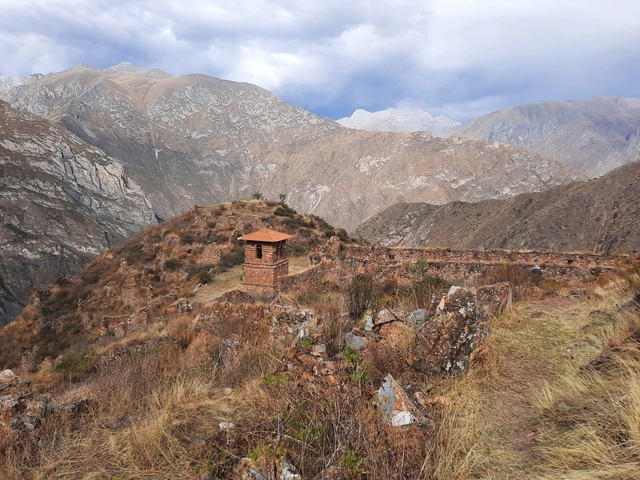
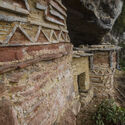
Yanacancha-Huaquis Cultural Landscape, Peru. Image Courtesy of World Monuments Fund
The World Monuments Fund (WMF) announced a commitment of more than US$10 million to go towards preservation projects to protect culturally significant places from around the globe in urgent need of intervention. The initiatives vary in scope, from winterization efforts at Ukrainian heritage sites to protecting remote archeological sites representative of Peru’s Chachapoyas Civilization. The suite of projects launching in 2023 aims to address and help mitigate the threats that heritage sites are facing: conflict, climate change, and underrepresentation.
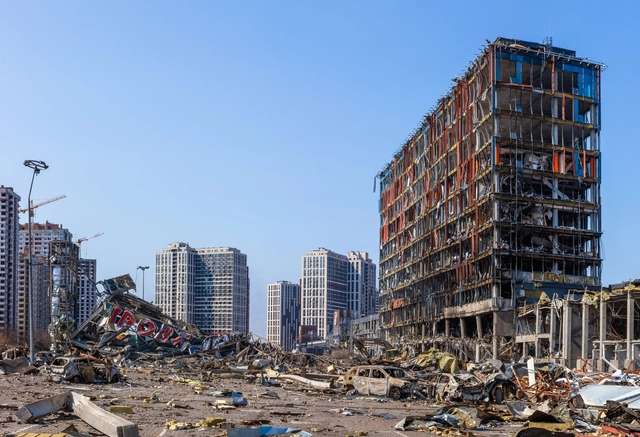
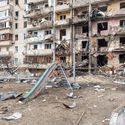
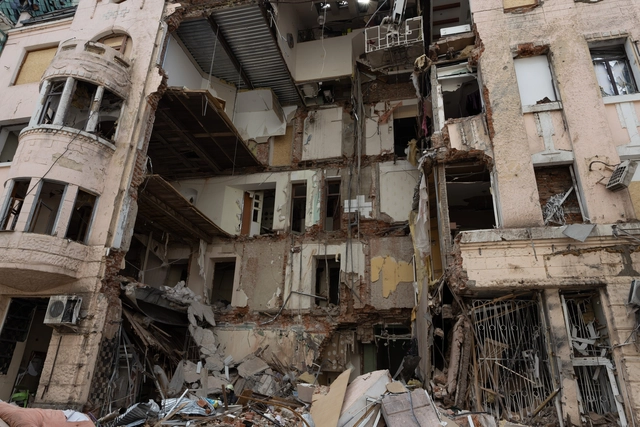
On 24 February 2022, Russia invaded Ukraine, a major escalation of the conflict dating since 2014. Now, a year later, the war is still ongoing. Both soldiers and civilians have fallen victim, while millions of others have become refugees, fleeing to safer areas across Europe or within Ukraine. What was instilled was a severe humanitarian and refugee crisis. The hostilities have also threatened Ukraine’s cultural and architectural heritage, as museums, monuments, and historical landmarks have become targets.
The implications are also reaching Europe and globally, as energy resources and food supplies become scarcer, damaging some economies. Still, Western countries remained unified in their support of Ukraine, as reported by international news outlets. Despite the economic difficulties, international support was mobilized through various initiatives in hopes of helping displaced people, protecting cultural heritage, and mapping a plan for reconstruction.
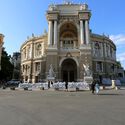
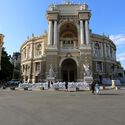
The World Heritage Committee decided to inscribe the Historic Center of the Port City Odesa, Ukraine, on the World Heritage List. The decision symbolizes the recognition of the outstanding value of the site and the commitment of the 194 States Party of the Convention not to undertake any deliberate step that may damage it and to help protect it. The site has also been inscribed on the List of World Heritage in Danger, which gives it access to international financial or technical assistance to ensure its protection and, if necessary, assist in its rehabilitation, according to UNESCO.
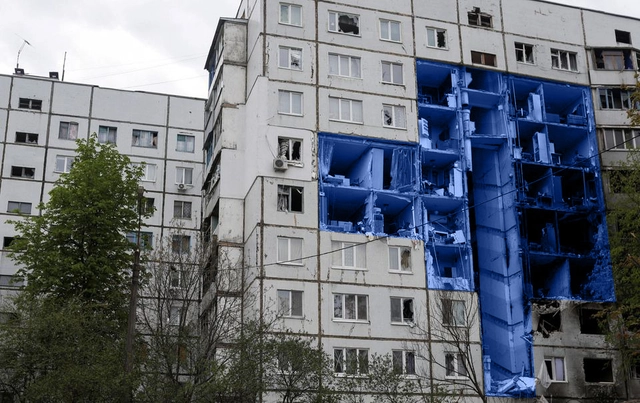
Kharkiv, Kharkiv oblast, Ukraine. Image via Shutterstock
Norman Foster Foundation and Arup office in Berlin schemed a master plan for Kharkiv, Ukraine, to guide future urban regulations and prepare professionals for the city's reconstruction. In collaboration with a local advisory board, the outline is defined by a series of pilot projects to develop aspects such as heritage, infrastructure, and rivers. The initiative follows a request from the Kharkiv Mayor to the Foster Foundation through the United Nations Economic Commission for Europe, weeks after the Ukraine War started in February 2022.
Zaha Hadid Architects has joined Ukrainian authorities to present the OdesaExpo 2030 bid proposal, an event planned to become the first Expo to be hosted in Eastern Europe. The masterplan is designed with legacy and sustainability in mind. The central pavilions are configured to be transformed into Ukraine’s first fair exhibition hub after the closing of the Expo, while the national pavilions are designed to be dismantled and redeployed as new civic buildings throughout Ukraine.
Shigeru Ban has just launched the office’s most recent project in Nieuw Zuid in Antwerp, Belgium. Named Ban, after its creator, and in collaboration with Bureau Bouwtechniek, the complex puts in place a 25-story residential tower and a separate building, creating a total of 295 residential units. During the breaking ground ceremony, the architect also inaugurated an exhibition of images highlighting his humanitarian work in conflict and disaster areas, in near proximity to the construction site.
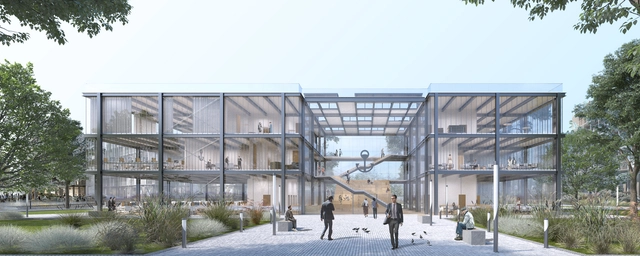
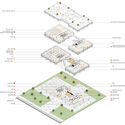
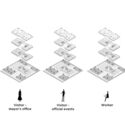
Emerging Ukrainian architecture firm NOVA - New Office of Vital Architecture- designed the new Mariupol City Hall as a proposal to reconstruct the city, almost devastated during the current war in Ukraine. The project seeks to open the discussion on urban democracy and civic life through architecture by replacing traditional hierarchical schemes with an open and accessible government building.
LINIA, a project signed by VICE VERSA Association, is a photographic installation exploring and documenting the stories, and the collective mindset of the territories near one of the most fragile, yet rigid lines in today’s context: the line separating NATO from non-NATO nations. The project, initiated by Dorin Ștefan Adam and Laurian Ghinițoiu, is on display at the Timișoara train station, in Romania, and it represents one of the main exhibitions of the Timișoara 2022 Architecture Biennale, which ran from 23 September to 23 October 2022. The schedule of LINIA has been extended however to remain open to the public until April 23.
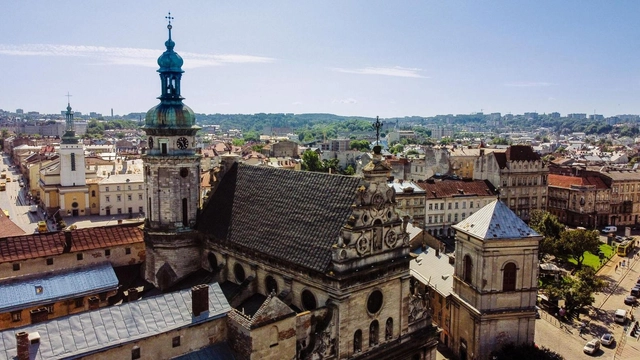
When war started in Ukraine, the faculty and students of the Kharkiv School of Architecture (KhSA) were forced to flee from their city. After three weeks of being scattered across Ukraine and Europe, they decided to reconvene in Ukraine and continue their work. The school relocated to Lviv, one of the safest cities in Ukraine, in order to restart their in-person education. Various platforms and institutions in Lviv, like the Lviv National Academy of Arts, are hosting the dislocated institution and providing continuous support. The KhSA is also looking for financial support to help keep the school open.
Today’s cities have been substantially reshaped to correspond with environmental and social needs or to reconstruct themselves after natural disasters or war. Whereas master plans and regulations take years, millions of people remain trapped in the crossfire and urgently need aid in their cities. With this pressing issue in mind, WZMH Architects developed a prefabricated- modular system for salvaging thousands of structures across Ukraine that have been partially or fully destroyed during the war. This system aims to integrate building technology into new buildings to create more sustainable communities.
Earlier this year the unprovoked barbaric Russian invasion of neighboring independent Ukraine forced millions of people to flee their cities and the country in search of safety. I talked to one of Ukraine’s top architects, Oleg Drozdov, who was forced to relocate his practice and architecture school he co-founded in Kharkiv, to Lviv, 1,000 kilometers to the west, next to the Polish border. His staff and professors — many of them assume both roles — resumed their work just weeks after the war broke out.
This week marks six months since Russia launched its war and invaded cities in Ukraine, causing detrimental destruction on a local and global scale. Since the beginning of the war, millions of Ukrainians have been internally displaced, losing their homes, businesses, and families. UNESCO has verified damage to 139 sites, including 62 religious sites, 12 museums, 26 historic buildings, 17 buildings dedicated to cultural activities, 15 museums, and seven libraries across Kyiv, Chernihiv, Kharkiv, Zaporizhzhya, Zhytomyr, Donetsk, Lugansk, and Sumy.
To help mitigate the devastating repercussions of the war on Ukrainians and the country's heritage, several humanitarian, preservation, and economic initiatives have been put in place by NGO's and governments from across the world.
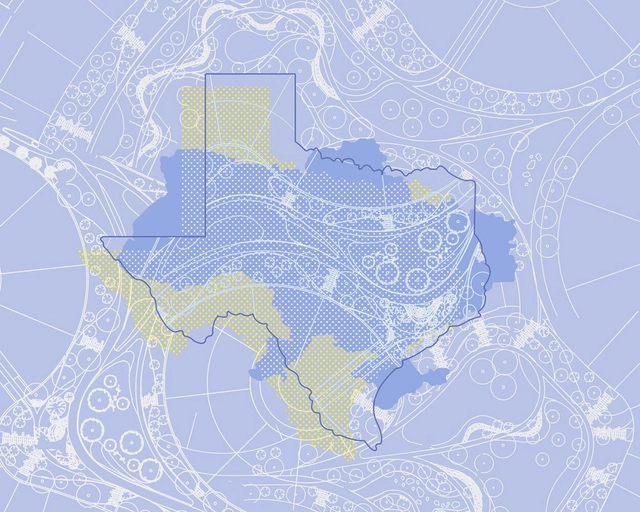
A graphic created by SWA Group overlays Texas (home to multiple SWA offices), Ukraine, and the work of new Ukrainian team members for a shared project in Egypt.. Image Courtesy of SWA Group
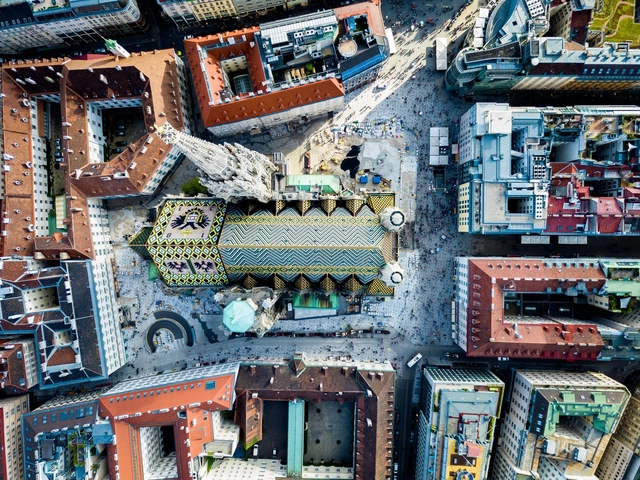
Vienna in Austria has topped the rankings of The Economist Intelligence Unit (EIU) 2022 Global Liveability Index, gaining back its previous position from 2019 and 2018, mostly for its stability and good infrastructure, supported by good healthcare and plenty of opportunities for culture and entertainment. Western European and Canadian cities dominated the top positions with Copenhagen, Denmark in second place and Zurich, Switzerland, and Calgary, Canada in third place. Adding 33 new cities to the survey, one-third of which are in China, bringing the total up to 172 cities, the classification excluded this year the city of Kyiv, due to Russia’s invasion of Ukraine.
Classified across 5 categories, stability, healthcare, education, culture and the environment, and infrastructure, the index was largely driven by the covid-19 pandemic. While covid-19 restrictions have eased in big parts of the world, liveability rankings started resembling “those seen before the pandemic”, however, the global average score remained below the pre-pandemic time. Although covid-19 has receded, a new threat to liveability emerged when Russia invaded Ukraine this year.
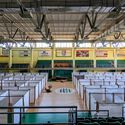
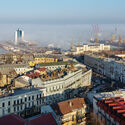
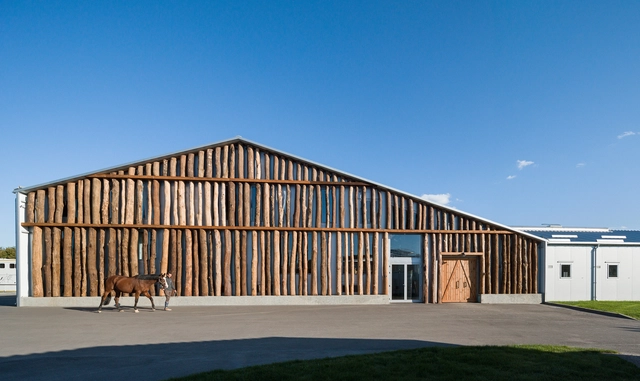
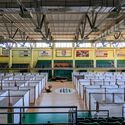
Lviv Regional Sports School for Children and Youth in Stryi Park. Image Courtesy of Drozdov & Partners
One of the most urgent problems faced by Ukrainians today is the unsettled situation faced by displaced citizens, along with the challenge of returning to the cities they were forced to abandon earlier this year. Ukrainian president Volodymyr Zelenskiy has shared that efforts to rebuild Ukraine will require ‘colossal investments’, and as leaders gather to work out ‘Marshall plan’ to rebuild the country, local architects have already begun developing emergency housing, healthcare, and educational facilities in cities further away from the Russian border.
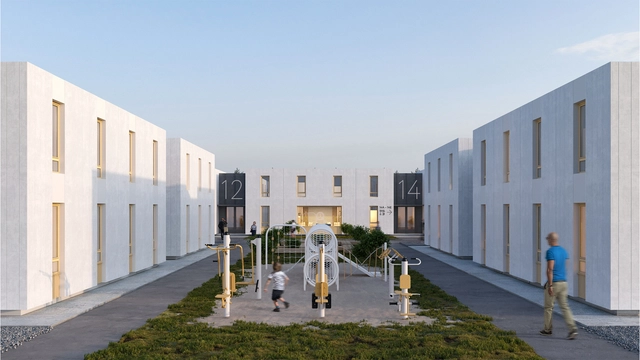
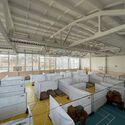
As a temporary solution to the displacement of north-eastern and eastern Ukrainians, Drozdov&Partners, together with Replus Bureau and Ponomarenko Bureau, have begun refurbishing shelters for internally displaced persons (IDPs) in Lviv and its region, using school campuses and other large-scale facilities as temporary housing.
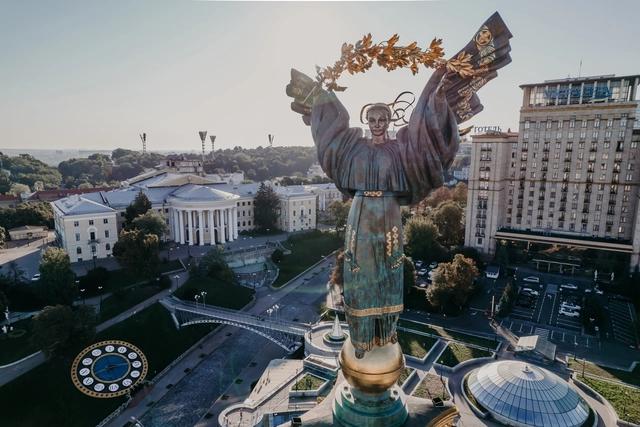
Kyiv, Ukraine, September 2021: Maidan Nezalezhnosti square - aerial drone view. Monument of Independence.. Image via Shutterstock
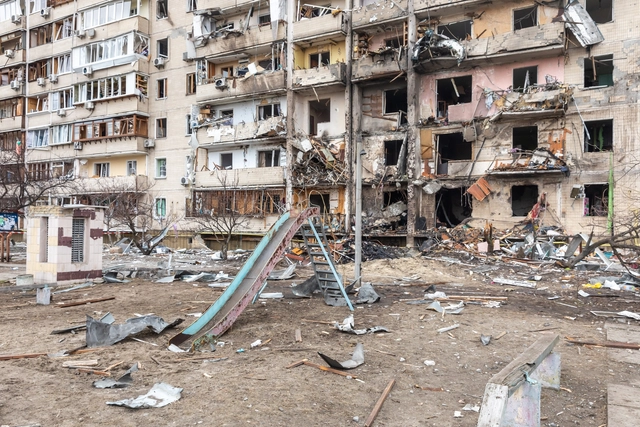
Friday, June 3, marks 100 days of war in Ukraine. One of the many devastating effects has been de destruction of urban and rural environments. Ukraine’s cultural and architectural heritage is under threat. As of 30 May, UNESCO has verified damage to 139 sites affected by the ongoing hostilities. The list includes 62 religious sites, 12 museums, 26 historic buildings, 17 buildings dedicated to cultural activities, 15 museums, and seven libraries. According to UNESCO, the most affected buildings included in the list are in Kyiv. Still, damages are also found in the regions of Chernihiv, Kharkiv, Zaporizhzhya, Zhytomyr, Donetsk, Lugansk, and Sumy. This represents a preliminary damage assessment for cultural properties done by cross-checking the reported incidents with multiple credible sources. The published data will be regularly updated.
Since the beginning of the war, over 7.1 million people have been internally displaced within Ukraine. In response to this growing humanitarian crisis, Kyiv-based practice Balbek Bureau has developed a modular temporary housing system that aims to provide a dignified dwelling to internally displaced Ukrainians. RE:Ukraine is designed to adapt to different types of terrain and settlement density while being deployed in a short time frame. While the project was intended for areas of Ukraine that are not under fire, the framework can also accommodate refugees abroad.
Norman Foster met with the Mayor of Kharkiv, Ihor Terekhov, on Monday to discuss the city's rebuilding, following discussions at the 2nd UN Forum of Mayors in Geneva. Since the onset of Russia's invasion of Ukraine, the city of Kharkiv suffered significant damage due to heavy shelling, losing much of its infrastructure, including housing, hospitals, schools, cultural institutions, and historic buildings. The second-largest city in Ukraine is already planning its rebuilding, with Norman Foster undertaking the task of bringing together the "best minds" to envision the city's future.











































.jpg?1656927557&format=webp&width=640&height=580)
.jpg?1656927557 "Lviv Regional Sports School for Children and Youth in Stryi Park. Image Courtesy of Drozdov & Partners")

.jpg?1656927412 "Lviv Regional Sports School for Children and Youth in Stryi Park. Image Courtesy of Drozdov & Partners")
_(1).jpg?1656927415 "Lviv Regional Sports School for Children and Youth in Stryi Park. Image Courtesy of Drozdov & Partners")
.jpg?1656927557)