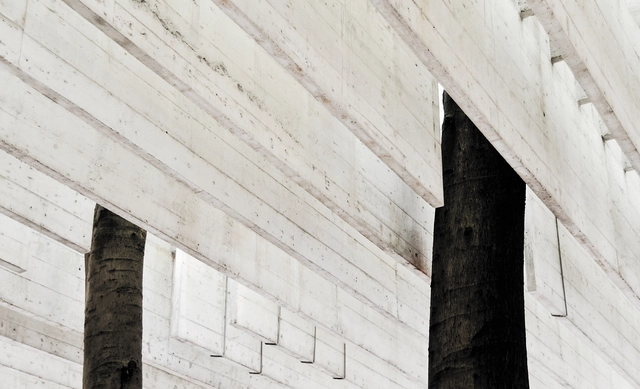
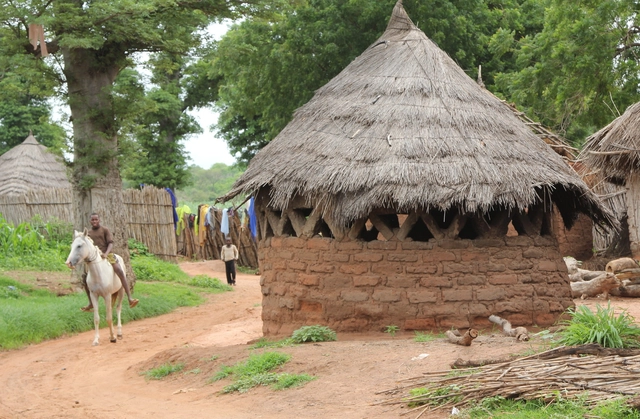
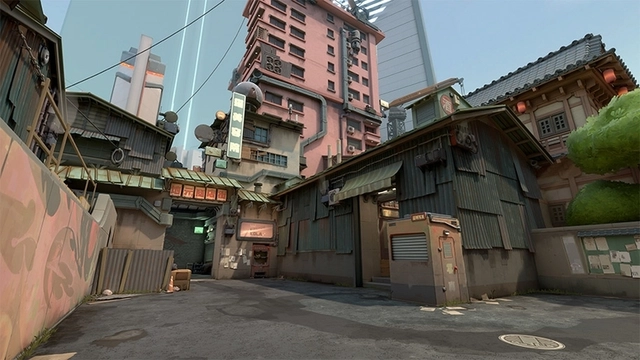
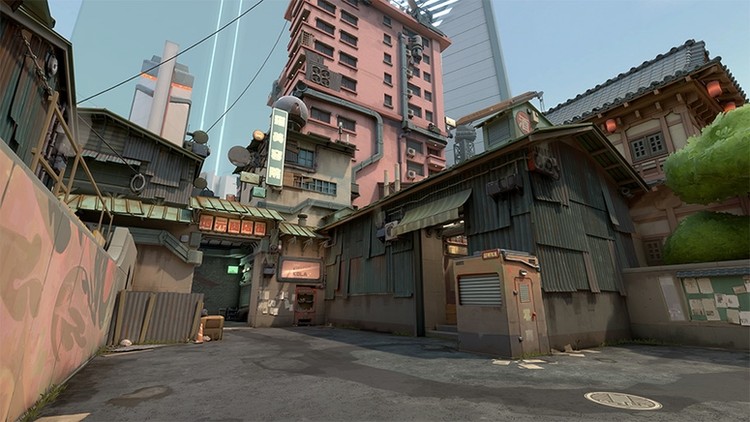
Map design and the significance of built environments continue to be inherently integral to gameplay within the realm of virtual worlds and video games, specifically in the genre of first-person shooters, and Riot Games’ VALORANT is no exception to this. Defying former expectations of its predecessors within the tactical shooter genre, Riot continually endeavors to make fundamental changes to decades of old formulas that have been implemented in practice all these years.
The Royal Institute of British Architects (RIBA) released a short educational film meant to teach young students aged 13 to 16 about the relationship between climate change and the built environment, exploring notions of sustainable design. The film introduces concepts such as embodied carbon, brownfield, green infrastructure, sustainable mobility and explains ideas such as adaptive reuse, retrofit, and the use of local materials. The scope of this learning resource is to empower young people to think creatively about how to address the climate crisis through design, helping raise a generation well versed in sustainability principles.
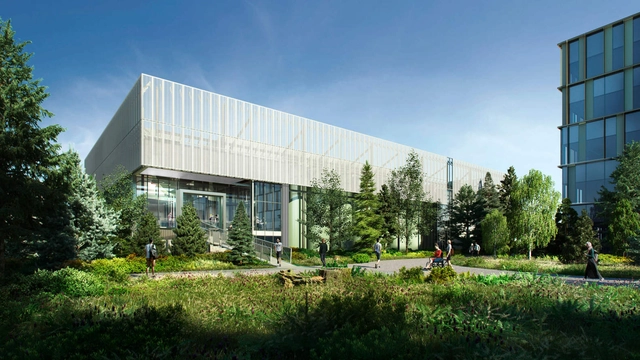
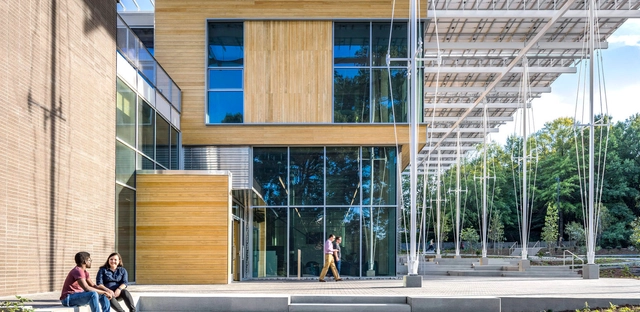
The Thermal Energy Center at Microsoft’s headquarters in Redmond, Washington, powers the campus almost entirely through electricity provided by geothermal energy exchanges. The project acts as a pilot program for the Embodied Carbon in Construction Calculator (EC3), a free database of construction EPDs and matching building impact calculator.. Image Courtesy of NBBJ
The growing consumer demand for transparency—especially around sustainability and environmental practices—has implications for industries from apparel to healthcare products. Mars Inc. recently released a cocoa sourcing map to tackle deforestation and increase accountability, and the Fashion Transparency Index pushes apparel companies to be more forthcoming about their social and environmental efforts.
Now it’s time for the building industry, characterized by a lack of information around the materials and practices used in construction and throughout a building’s lifecycle, to catch up. The cost of inaction is too high to ignore. That’s because buildings account for 39 percent of total global carbon emissions. Traditionally, most carbon reduction efforts in the building sector focus on operational carbon—a building’s everyday energy use, which accounts for roughly 28 percent of emissions. The remaining 11 percent comes from what is often ignored: embodied carbon.
https://www.archdaily.com/976015/strategies-to-reduce-embodied-carbon-in-the-built-environmentPeter Alspach, Margaret Montgomery
The 26th UN Climate Change Conference of the Parties (COP 26) debuted yesterday in Glasgow, bringing together more than 190 world leaders, with the aim of accelerating action to reach the goals of the Paris Agreement and UN's Convention on Climate Change. Leading architecture organizations and figures are attending the two-week summit to show the AEC's industry's commitment to reduce carbon emissions and urge decision-makers to implement clear targets to achieve global climate goals.
Only 18 months ago, everyone around the globe had their life upended by the COVID-19 pandemic. Almost immediately, architects and designers began to speculate on how they could design for a better world that would be flexible, functional, and healthy. While the pandemic is far from over, with many scientific advancements and public health policies still needed to truly allow us to live out our “new normal”, perhaps its time to reflect on our predictions and examine what aspects of the pandemic were short-term reactions, and which aspects of life might be permanently reflected in how we think about the built environment.
When we look at African architecture, we see the architectural diversity of a continent which has been shaped and moulded into its present form by a combination of internal and external factors. When we look at African architecture, there is also a tendency for certain regions to take precedence over other parts of the continent. The Tropical Modernist works of Maxwell Fry and Jane Drew in Ghana and Nigeria, for example, are extremely well documented. So is the extremely well-preserved colonial-era architecture of the Eritrean capital of Asmara. Yet, there seems to be parts of the continent that “slip under the radar” in African architectural conversations – and the book Architectural Guide: Sub Saharan Africa is a welcome addition to African architectural scholarship.
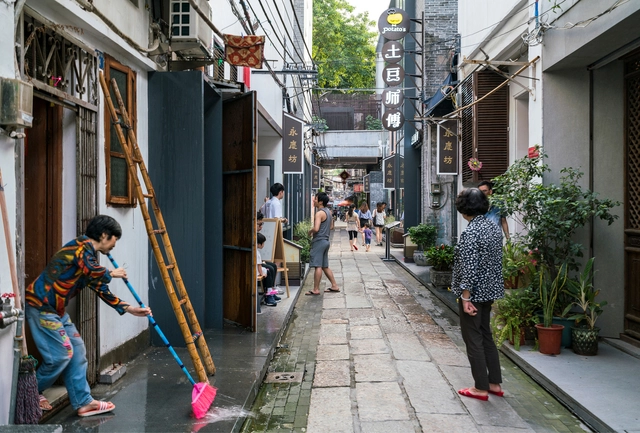
ASLA 2020 Urban Design Honor award. Yongqing Fang Alleyways: An Urban Transformation. Guangzhou, China. Lah D+H Landscape and Urban Design. Image Courtesy of The Dirt
People living in dense cities are among the least happy. Their rates of depression are 40 percent higher than other populations, and their rates of anxiety are 20 percent higher. Why? Because the built environment is directly linked with happiness and well-being, and too often urban environments fail to put people at ease.
If we ever wonder what the future could look like, all we have to do is take a look into our past, and observe how far we have come since thousands, a hundred, or even ten years ago. Life was radically different back then and it will be just as different in the future. And since we are well aware that the future merely resembles the present, we have the possibility to shape our future the way we want to. TASCHEN's latest BIG book installment Formgiving. An Architectural Future History explores the past, present, and future, drawing a timeline of the built environment from taking shape to giving form.
Martin C. Pedersen talks with Ron Rochon, managing partner at Miller Hull, about Carbon and the role of architectural firms in eliminating emissions. Discussing the EMissions Zero initiative, the current shortcomings of carbon offsets, and the way forward, the piece also questions the possibility of setting goals with the absence of an internationally, agreed-upon carbon cap.
For the 17th international architecture exhibition – la biennale di Venezia 2021, Austria is creating a platform of debate around how we envision the architecture of the future. In fact, the Austrian contribution, entitled “Platform Austria”, curated by Peter Mörtenböck and Helge Mooshammer, seeks to articulate the profound changes established by the development of digital platforms in our built environment.
Buildings and construction play a major part in climate breakdown and biodiversity loss. For everyone working in the construction industry, meeting the needs of society without breaching the earth’s ecological boundaries will demand a paradigm shift in behavior.
The urban landscape is constantly transforming to meet the changing social, economic, environmental, natural and technological needs. Ageing populations, sharing economy, urbanization, religion, flexible homes, education… Improving the social dimension and creating societal value are vital elements in the process of urban regeneration and architecture.
Over the timespan of just one generation the planet’s pace of urbanization has dramatically increased. Through these dynamics and its resulting environmental threats, new challenges have emerged that deeply question the validity of the post-war planning paradigms. Dominant ideologies have been replaced by a problem-solving attitude, increased economic pressure and an urgent quest for evidence. What impact does this have on the work of the urban designer and planner, and how can the profession prepare for the future?
As part of our 2018 Venice Architecture Biennale coverage we present the proposal for the Nordic Pavilion. Below, the participants describe their contribution in their own words.
Finnish architect Lundén Architecture Company has been chosen to design the Nordic contribution to the 2018 International Architecture Exhibition in Venice. Eero Lundén’s proposal, entitled Another Generosity, explores the relationship between nature and the built environment.
The goal is to explore new ways of making buildings that emphasise the delicate but often invisible interactions between the built and natural worlds.
https://www.archdaily.com/890813/nordic-pavilion-at-the-2018-venice-biennale-to-explore-natures-relationship-to-the-built-environmentAD Editorial Team
Durham University and University College London are pleased to announce the establishment of a new multi-disciplinary research network called the BOVA (Building out vector-borne diseases in sub-Saharan Africa) Network. The Network, funded by the Global Challenges Research Fund aims to bring together researchers and practitioners working in the fields of the built environment and insect-borne diseases such as malaria and dengue.
Whether they're pretending facade details are raindrops or peeking out of Ricardo Bofill’s La Muralla Roja, Daniel Rueda and Anna Devis introduce a unique perspective on the city. The Valencia-based duo are #couplegoals, and their Instagram accounts reveal their fun, quirky personalities and love for the built environment.
Scrolling through their feeds, viewers get a glimpse of the couple’s travels through whimsical portraits which celebrate the beauty of architecture. The adorable duo playfully interacts with their surroundings, using the city as their stage and architecture—and each—other as characters.


















![[TRANS-] topia 2019 :: journal call for submissions - Featured Image](https://snoopy.archdaily.com/images/archdaily/media/images/5c65/646c/284d/d176/a900/0407/slideshow/open-uri20190214-19344-17ny7ws.jpg?1550148698&format=webp&width=640&height=580)