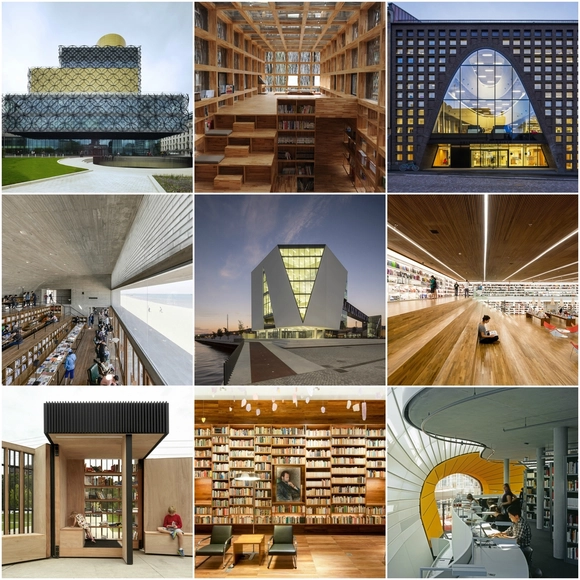
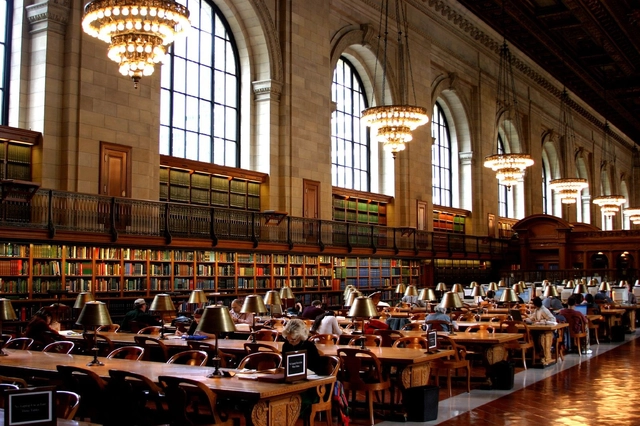
From community meeting hubs to secluded refuges, places to learn and places to study, libraries can be so much more than just a place to a check out a book. With this in mind, we’ve rounded-up 15 awe-inspiring libraries, including a Canadian church that was converted into a library, the first library in Muyinga, Burundi – built using participatory design and local materials – and the largest academic library in Finland. See what makes each of the libraries unique after the break.
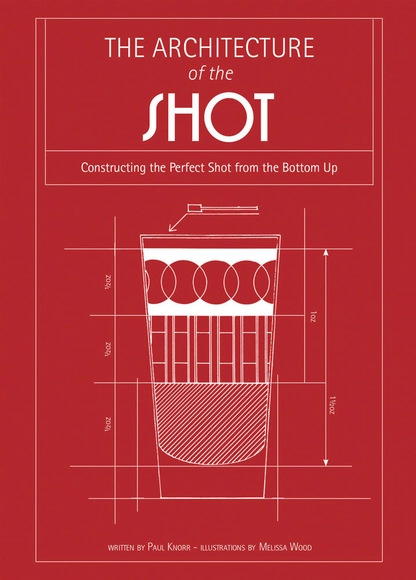
The best buildings always start with a background, materials, and a plan. With a little help, now shots can too. In their new book, The Architecture of the Shot, author Paul Knorr and architectural planner Melissa Wood teamed up to create 75 blueprints detailing the creation of "the perfect shot from the bottom up." With historical backgrounds, detailed materials lists, and precise plans, anyone with an architectural eye will feel right at home constructing the “perfect” mixtures.
View a few of the blueprint recipes, after the break.
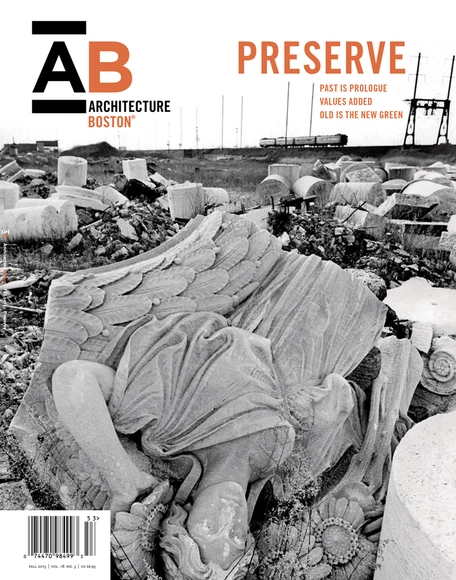
As the 50th Anniversary of the National Historic Preservation Act approaches, the fall issue of ArchitectureBoston hits hard with questions about one of the profession’s most heated topics today: preservation. With essays and articles from a dozen different perspectives, featuring a dozen different problems and solutions, the issue is a gateway for discourse for anyone interested in the role of the past, in the future of architecture. Read on for more information.
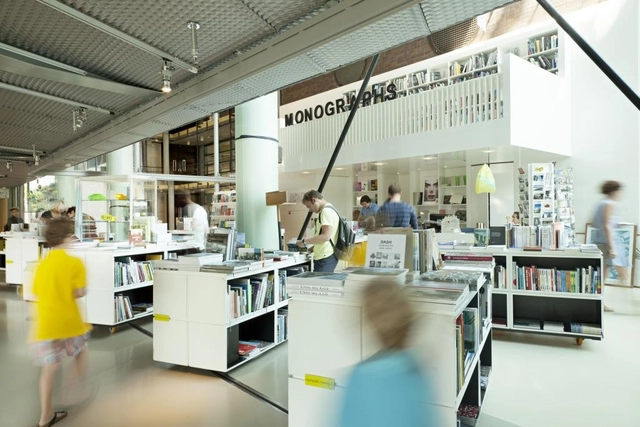
The bookshop of the Netherlands Architecture Institute, with a space dedicated to the architectural monograph. Image via Nieuwe Instituut
It's common to find an architectural monograph (or three) on an architect's bookshelf. Within the pages of these large, heavy, often expensive tomes lie a formalised portfolio of a studio's professional output, interspersed by essays penned by influential writers, thinkers or practitioners. They are sources of both information and inspiration, bringing architecture from around the world into your personal field of vision.
Recent years have seen a vast number of these types of books published on architects and their practices, begging the question: Why a Monograph? Are they simply part and parcel of a studio's creative process, or necessary tools for communication with the wider world? Perhaps more interestingly, what role does the recording of work in this way have for architects in enabling them to take stock and move forward? It will seek to examine how the print monograph has become a staple tool for self-promotion, reflection, and criticism in a world which is leaning towards a gradual digitisation of the discourse.
https://www.archdaily.com/632117/why-has-the-monograph-become-a-default-in-architectural-publishingAD Editorial Team
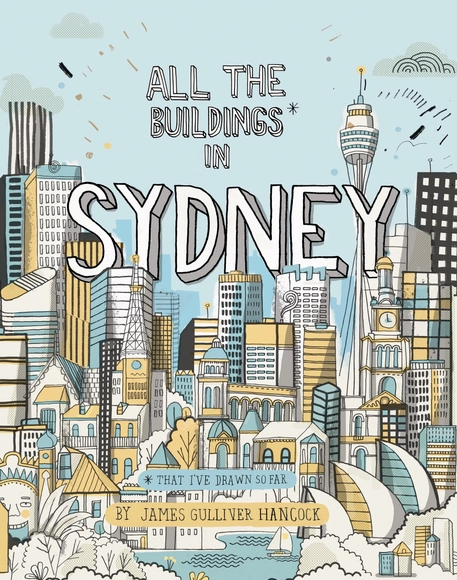
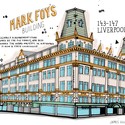
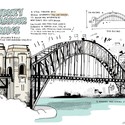
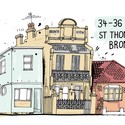
Packed full of idiosyncratically meticulous and colorful illustrations, the book provides a whimsical account of Sydney's architecture and history. From icons such as Utzon'sSydney Opera House to lesser known gems like Mark Foy's building opposite Hyde Park, to the terrace houses of inner city suburbs, All the Buildings in Sydney presents each building with care, detail, and an abundance of charm.
See more images from All the Buildings in Sydney, after the break…
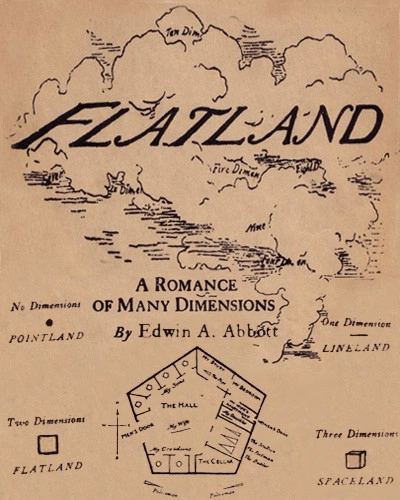
Published in London in 1884, Edwin Abbot’s amusing short novel Flatland: A Romance of Many Dimensions is a biting critique of Victorian social hierarchies and a canonical work of scientific and theological commentary. It is also a remarkable spatial allegory, challenging conceptions of visual reality and postulating on the existence of unfamiliar dimensions that are obscured by the learned limits of our own knowledge. The book’s narrator, A Square, lives in a two-dimensional planar world inhabited by geometric shapes that are stratified into social classes based on the number of their sides. Polygons constitute the highest classes, while the laboring isosceles triangles exist only above the women, straight lines condemned to tirelessly wiggle back and forth to make themselves visible. One day, A Square receives a strange visitor—a Sphere—from a three-dimensional place called Spaceland, who reveals to him the limits of his conceived reality. Posing enduring questions of knowledge, reason, and faith, this deeply architectural novel is simultaneously among the most entertaining articulations of a phenomenological approach to our sensory understanding of space.
The first three sections of the book are excerpted below.
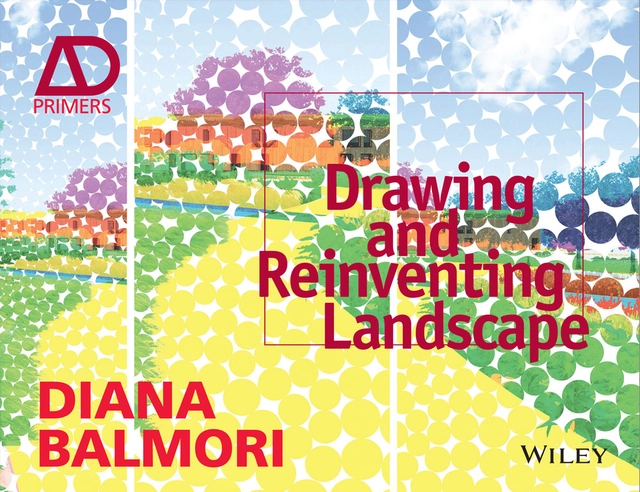
On Wednesday, November 5, Diana Balmori will visit the Strand to chat about Drawing and Reinventing Landscape with the MoMA's architecture curator, Barry Bergdoll. Diana's book examines digital, analog and hybrid methods of representing landscape and places the contemporary landscape architecture within its fascinating historical context. This exclusive Strand chat will investigate crucial aspects of the design process. Join as these two experts discuss this important design topic at a moment of increasing global environmental change. More information here.
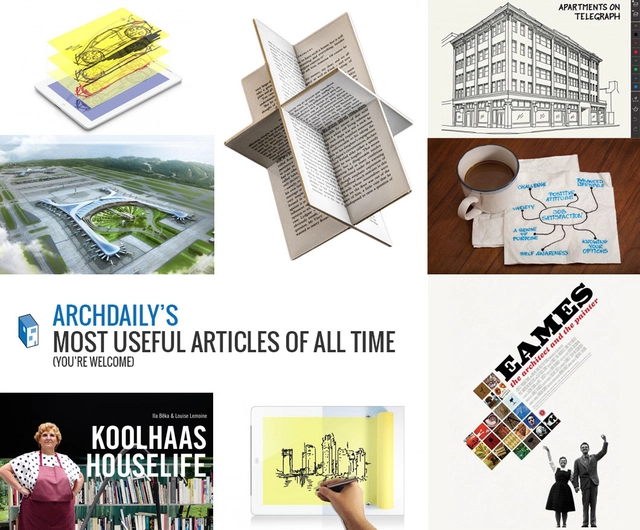
As summer draws to an end and we enter into the last quarter of 2014, we decided to round-up a selection of the most useful articles we've published over the past three years. Ranging from The 40 Architecture Documentaries to Watch in 2014 to The 10 Most Overlooked Women in Architectural History, we've also brought together app guides, career tips, and city guides. Alongside links to open-source CAD files and cut-out people, we've also featured book recommendations, study tips, and links to our complete coverage of some of the world's major architectural events and prizes. Delve into our collection and discover what our readers have found most useful!
Wondering what to do with the last, lingering weeks of summer? There's still plenty of time for some enticing summer reading! Peruse this online collection of select books on Architecture, chosen from academic publisher Routledge's titles on themes of Professional Practice and Sustainable Architecture, and available in their entirety for free throughout the month of August.
Including compelling and notable works, these books tackle relevant and significant contemporary issues facing the design world today. See what's available after the break.
Architects are woefully underrepresented in literature. According to Jay Wickersham, author of this article originally published in Architecture Boston, there are very few books that accurately portray designers without sensationalizing or glossing over their craft. He does, however, point us towards some exceptions: works of fiction that come close to grasping what the study and practice of architecture is all about. Read the full article, along with these recommendations, after the break.
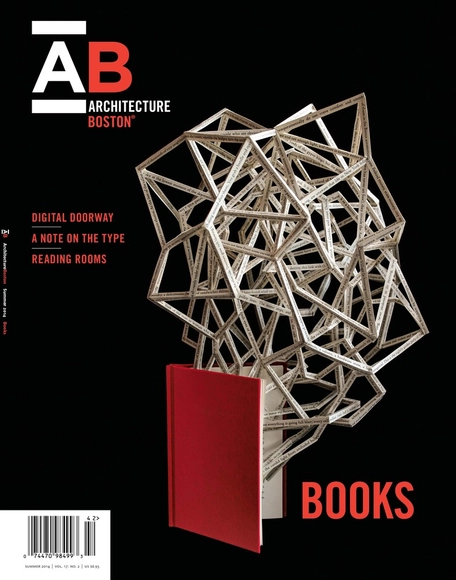
This summer, ArchitectureBoston gives readers a reason to linger in their hammocks a little longer and drift away into the world of architecture and design. The new issue contains extensive and insightful suggestions for book lovers looking to build a personal library of new and important titles. Read on for more information.
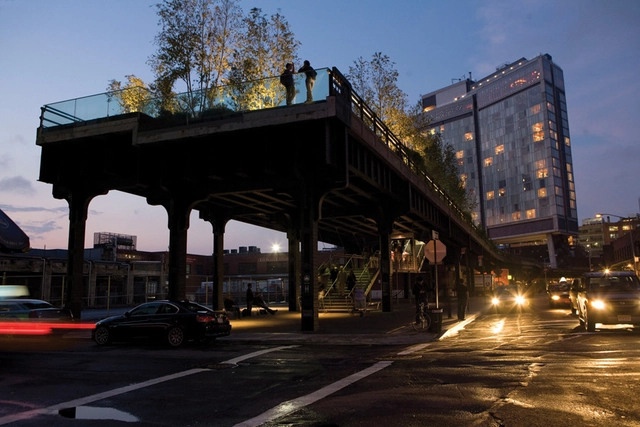
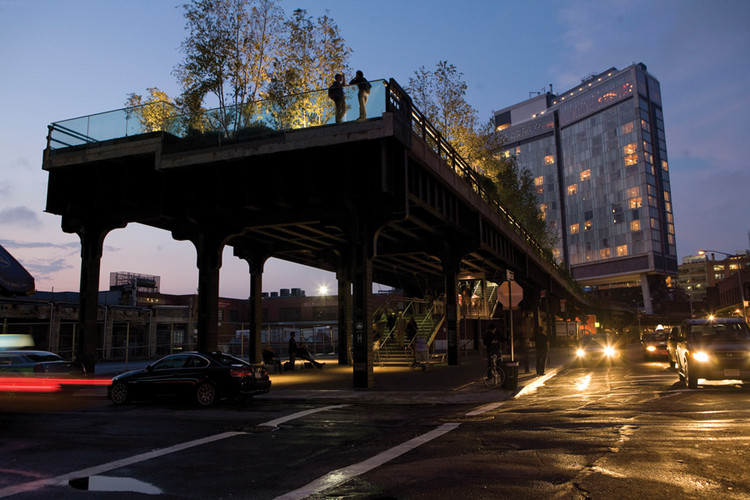
Over the past two decades, James Corner has reinvented the field of landscape architecture. His highly influential writings of the 1990s, included in our bestselling Recovering Landscape, together with a post-millennial series of built projects, such as New York's celebrated High Line, prove that the best way to address the problems facing our cities is to embrace their industrial past. Collecting Corner's written scholarship from the early 1990s through 2010, The Landscape Imagination addresses critical issues in landscape architecture and reflects on how his writings have informed the built work of his thriving New York based practice, Field Operations.
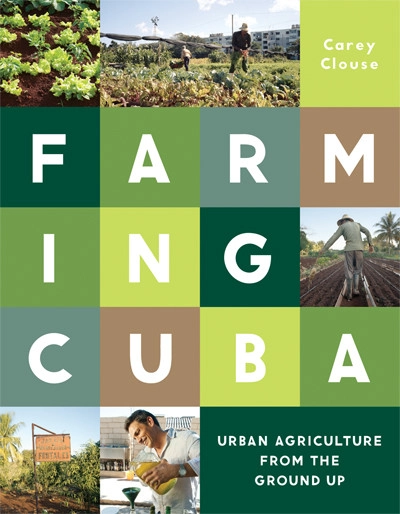
The following is an excerpt from Carey Clouse's Farming Cuba: Urban Agriculture from the Ground Up, which explores Cuba's impromptu agricultural development after the dissolution of the Soviet Union, and the challenges that development poses for modern day architects and urban planners.
Following the collapse of the Soviet Union in the early 1990s, Cuba found itself solely responsible for feeding a nation that had grown dependent on imports and trade subsidies. With fuel, fertilizers, and pesticides disappearing overnight, citizens began growing their own organic produce anywhere they could find space, on rooftops, balconies, vacant lots, and even school playgrounds. By 1998 there were more than 8,000 urban farms in Havana producing nearly half of the country's vegetables. What began as a grassroots initiative had, in less than a decade, grown into the largest sustainable agriculture initiative ever undertaken, making Cuba the world leader in urban farming. Featuring a wealth of rarely seen material and intimate portraits of the environment, Farming Cuba details the innovative design strategies and explores the social, political, and environmental factors that helped shape this pioneering urban farming program.
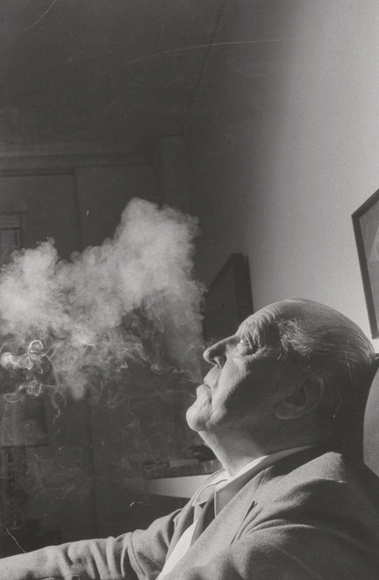
Mies van der Rohe with smoke, 1957; photographed for Life magazine. Image Courtesy of Frank Scherschel/Time & Life Pictures/Getty Images
This review of Detlef Mertins' book "Mies" - by Thomas de Monchaux - originally appeared in Metropolis Magazine as "Mies Reconsidered". According to de Monchaux, Mertins reveals the modernist master as a voracious reader who interpreted a wide variety of influences to arrive at his stripped-down style.
The quintessential page of the 528 that make up Detlef Mertins’s monumental new monograph on Ludwig Mies van der Rohe—entitled simply Mies (Phaidon, 2014)—is 155. There, you will find a reproduction, a page within a page, of page 64 of Romano Guardini’s 1927 book Letters from Lake Como—a book about modernity and human subjectivity—with Mies’s own annotations penciled in the margins, in a surprisingly ornate and delicate hand.
And there, you will find Mertins’s notes on Mies’s notes on Guardini: “Of all the books in Mies’s library, Guardini’s Letters is the most heavily marked. Mies highlighted passage after passage with bold and rapid margin strokes and wrote key words diagonally and in large script across the first pages of many of the chapters: Haltung (stance), Erkenntnis (knowledge), Macht (power).” Mertins’s vivid marginality, his attention to the divine details along edges, recalls the experience of reading the Talmud, that commentary on Jewish law and scripture in which, by marking and emending earlier readers’ marks and emendations, generations of rabbis enacted an intimate conversation across time and space.
20 years ago, Greg Girard and Ian Lambot published "City of Darkness", a book which documented life inside the notorious Kowloon Walled City in Hong Kong during its peak in the late 1980s. When the high-rise slum was cleared and demolished soon after in 1993, this collection of photographs, interviews and essays became a eulogy of sorts, becoming one of the key texts on the most densely populated place the world has ever seen.
Two decades later, Girard and Lambot have revisited the book - and to fund this new edition, they have turned to Kickstarter.
Read on after the break to find out what's new in this edition and how you can help fund the book.
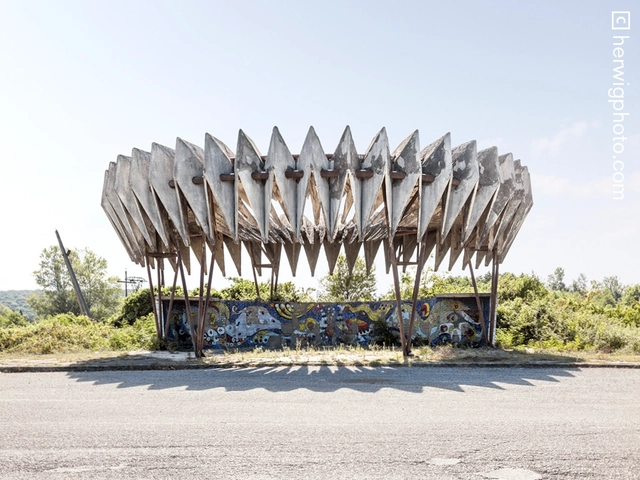
Pitsunda, Abkhazia. Image Courtesy of herwigphoto.com
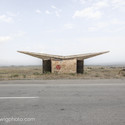
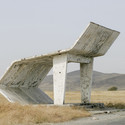
Over a decade ago on a cycling trip across Europe, photographer Christopher Herwig stumbled upon a curious phenomenon that would become his obsession for years: bus stops. Curiously for a regime usually associated - both architecturally and otherwise - with uniformity and with sameness, the bus stops built by the Soviet Republic display remarkable diversity and creativity. Herwig made it his mission to photograph as many of these remarkable structures as possible, travelling through Latvia, Lithuania, Estonia and Russia; Kyrgyzstan, Uzbekistan, Tajikistan, Turkmenistan and Kazakhstan; Ukraine, Moldova, Georgia, Armenia, and Abkhazia.
Now complete, Herwig has launched a Kickstarter to turn this remarkable collection of photographs into a limited edition book, which he describes as "the most mind-blowing collection of creative bus stop design from the Soviet era ever assembled." Check out some of the images after the break.
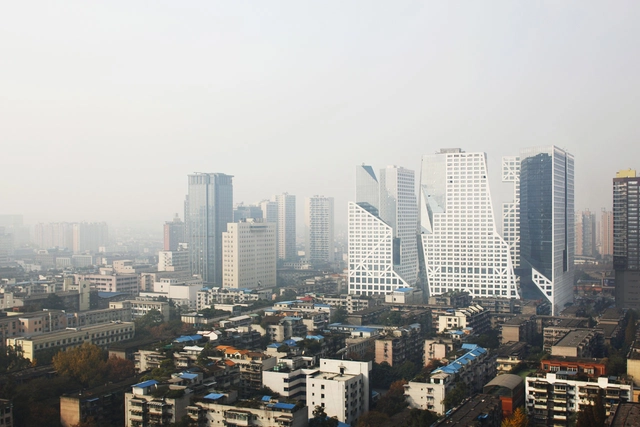
In this article originally published by Metropolis Magazine as "Urban Hopes, Urban Dreams", Samuel Medina reviews a new book on the work of Steven Holl in China. Focusing on five major projects, the book places Holl's work in the wider context of his urbanistic influences - including ideas from his own early paper architecture that are just now resurfacing.
Steven Holl is the rare architect whose concepts are equally known as his buildings. Chalk that up to Holl’s prolific output, in both buildings and monographs, and his knack for branding his ideas. Urban Hopes: Made in China (Lars Müller, 2014), a condensed reader on Holl's latest work in China, is the latest in a stream of small books that have continually repackaged the architect's growing body of work.
Anchoring and Intertwining appeared in 1996 and expounded on architectural themes and spatial notions only partially evinced by his work up until that time. In both, the buildings were few and far between, scattered between pages imprinted with “paper architecture,” the primary outlet for Holl’s creative energies in the prior decades since his move to New York in 1976. These and more titles were followed up by Parallax in 2000, a blend of philosophical, scientific, and poetic references that invest the architecture with the aura of the Gesamtkunstwerk. Holl’s idea of “porosity” made its debut here, if prematurely, where it was applied rather literally to Simmons Hall at MIT and its sponge-like facade. It wasn’t until a few years later, when the architect first got his feet wet in China, that the concept would be baptised as a core tenet of 21st-century urban design. 2009’s Urbanisms advances as much, while further recapitulating the big ideas of the previous book installments.
Read on after the break for the review of Urban Hopes

.jpg?1407535828)