-
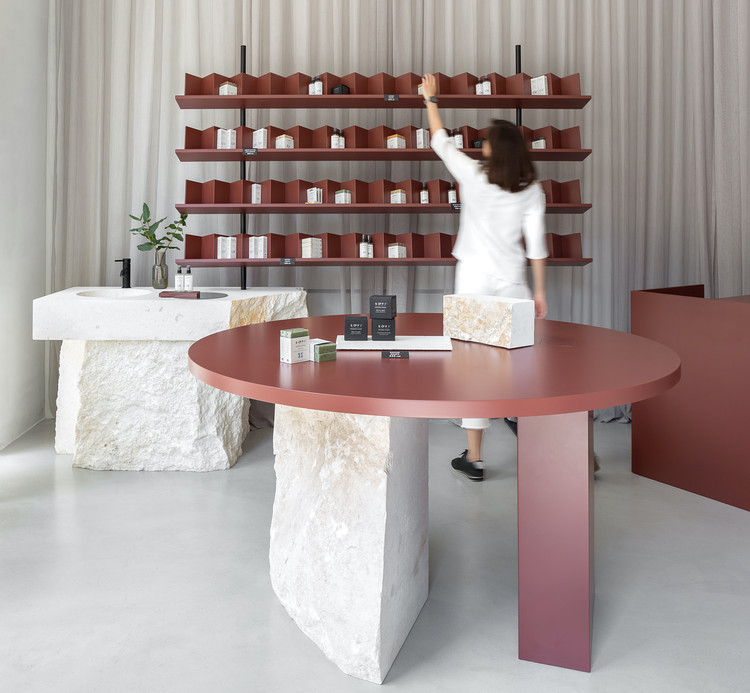
Architects: Studio AUTORI
- Area: 30 m²
- Year: 2020
-
Manufacturers: AUTORI, Studio AUTORI

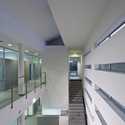
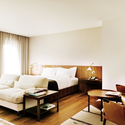
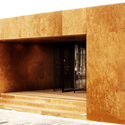
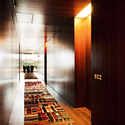
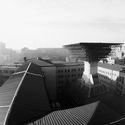
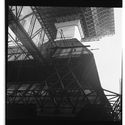
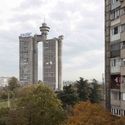
The Police Center Operative Headquarters by Spasoje Krunic is a building that technologically is way ahead of its time. It is an extravagant vision based on futuristic concepts and a sophisticated morphological and constructive technology, which combined, form a unity with distinctive aesthetical features. Owing to its construction and well-formed dynamics, the Operative Headquarters finds its place somewhere on the borderline between architecture and free design. The building is associated with new constructivism, a movement that has never been established in Serbian architecture, nor is it a current trend. Rather, it developed out of a specific set of structural requests imposed on the architect.
.jpg?1413947919&format=webp&width=640&height=580)
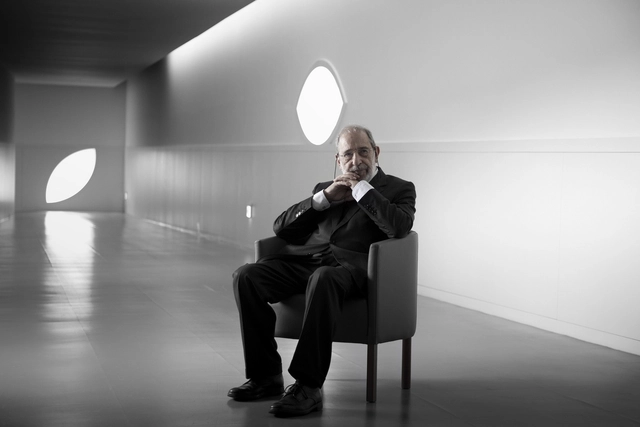
A new collection of five minute-long On Design stories—developed by the team behind Section D, Monocle 24's 24's weekly review of design, architecture and craft—profile a person, survey a place, or unpack an idea that’s changing or shaping design and architecture today. We've selected fourteen of our favorites from the ongoing series, examining issues as wide as Postmodernism and the architectural competition, to five-minute profiles of Alvaro Siza, Josef Hoffman, Kengo Kuma and Superstudio.

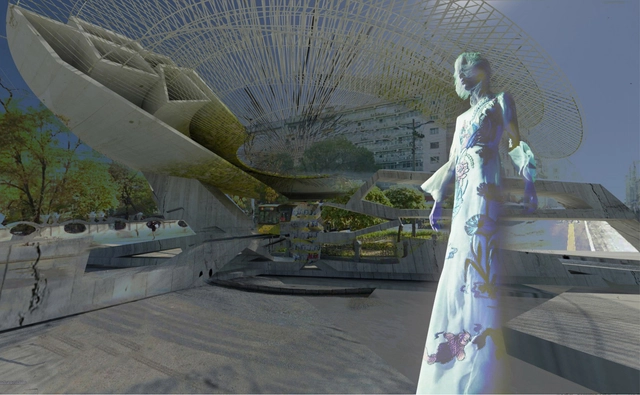
Far from the common dismissal of Margot Krasojevic’s work as (in her own words) “parametric futurist crap,” her work has always revolved around concepts of sustainability. As she explained to ArchDaily last year, she aims to focus on the ways that sustainable technology “will affect not just an architectural language but create a cross disciplinary dialogue and superimpose a typology in light of the ever-evolving technological era.” For the second project in a series of three proposals for the city of Belgrade Serbia, the architect is proposing a “Trolleybus Garden” that functions as a waiting shelter and park while simultaneously harnessing kinetic movement to produce electricity.
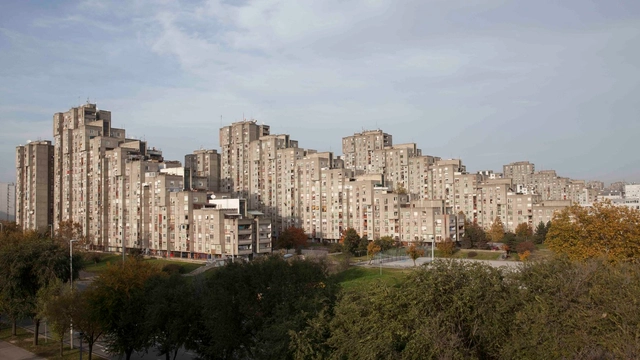
In the autumn of 2014, Piotr Bednarski, a Warsaw-based architectural photographer, visited the municipality of Novi Beograd (New Belgrade), a planned city built in 1948 which constitutes one of Belgrade Serbia’s 17 municipalities. There, he quickly fell in love with the gritty Communist-era architecture of the area. He writes:
In Warsaw, where I'm from, most of the residential buildings from the Communist era [have been] turned into kitschy, colorful blocks… Seeing the dense, raw and, desolate modernist architecture, and rediscovering the atmosphere of my childhood made me fall in love with Novi's neighborhood. I saw people from different social backgrounds living peacefully in one place.
Since that initial trip, Piotr has made multiple return visits to capture the city in a variety of thought-provoking ways, showing long span views of the city, the streetscape, and even the view from inside people’s apartments. He believes that there is much to uncover in Novi Beograd, and that his story with New Belgrade is not yet finished.
In the latest episode of The Urbanist, Monocle 24's weekly "guide to making better cities," the team tackle the 'establishment'. From small businesses to citizen collectives, the show discovers how "championing transformative change from the ground up can be the best way to alter the status quo in our cities." Investigating how the Ministry of Space is reclaiming public spaces in Belgrade, how ordinary citizens in Vienna are welcoming refugees, and how a collective in Rio de Janeiro wants to reshape the politics of the city, the episode also explores how small businesses in London’s West End are fighting against increasing rent.
_Relja_Ivanic.jpg?1430786920&format=webp&width=640&height=580)
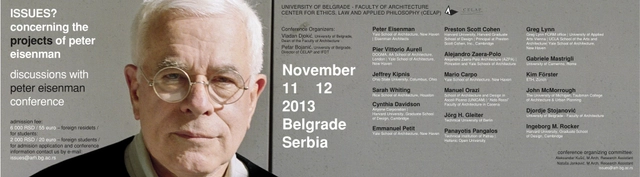
The conference will focus on Peter Eisenman's long and outstanding oeuvre.Thematization of almost 50 years of his theoretical and educational work and almost 25 years of his full-time architectural practice is seen here as vital to the understanding of both the past and the presence of contemporary architecture. From the questions related to Renaissance heritage to the problems associated with disciplinary autonomy and the digital, the conference aims to provide a space for a critical debate among architects and theorists.

Designed by Miloš Milivojević for the Strawberry Energy company, ‘Black Tree’ is a public solar charger which enables visitors to recharge batteries of their mobile phones, tablets and multimedia devices with the energy of Sun. In cooperation with Palilula Municipality and the city of Belgrade, this Strawberry Tree with a completely new design has been set up in Tašmajdan park in Belgrade in November 2012. More images and architects’ description after the break.

Sou Fujimoto Architects have shared with us their first place proposal for the Beton Hala Waterfront Centre in Belgrade, Serbia. Contrasting the medieval fabric of the capital city, Sou Fujimoto’s “floating cloud” intertwines an array of social and transportation programs into an organized tangle of suspended ramps that emerge from the static platform of the Beton Hala. It was lauded by the jury to be a “brave proposal” that holds the “highest emblematic potential among all of Beton Hala entries”.
Learn more after the break.

Organized by the University of Belgrade and the Center for Ethics, Law and Applied Philosophy (CELAP), the ‘Architecture of Deconstruction: The Specter of Jacques Derrida’ is a three-day, international scientific conference which will be held in Belgrade October 25-27. The conference aims to bring attention to the questions of the relation between the disciplines of architecture and philosophy. Distinguished guests include Bernard Tschumi, Catherine Ingraham, Chris Younes, Francesco Vitale, Jeffrey Kipnis, Ljiljana Blagojević, Mark Cousins, Mark Wigley, Peter Eisenman, and more. For more information, please visit here.

The main idea for the Raft ’4U’ cafe restaurant was to create a pleasant environment, like staying under the shadow of a tree, but also above water. Designed by Studio Alfirevic, the raft represents an extension of the riverbank. The atrium space is the central motif, with elements of the natural environment such as birch, stone, grass, etc. The spatial organization consists of the main entrance, wardrobe with toilets, café-restaurant with atrium and bar with storage space. More images and architects’ description after the break.
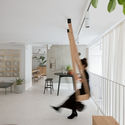
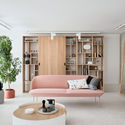
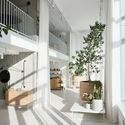
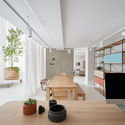



.jpg?1413947921 "© Relja Ivanić")
.jpg?1413947930 "© Relja Ivanić")
.jpg?1413947937 "© Relja Ivanić")
.jpg.jpg?1413947946 "© Relja Ivanić")
.jpg?1413947919)









_Relja_Ivanic.jpg?1430786625 "© Relja Ivanić")
_Relja_Ivanic.jpg?1430786438 "© Relja Ivanić")
_Relja_Ivanic.jpg?1430786727 "© Relja Ivanić")
_Relja_Ivanic.jpg?1430786780 "© Relja Ivanić")
_Relja_Ivanic.jpg?1430786920)