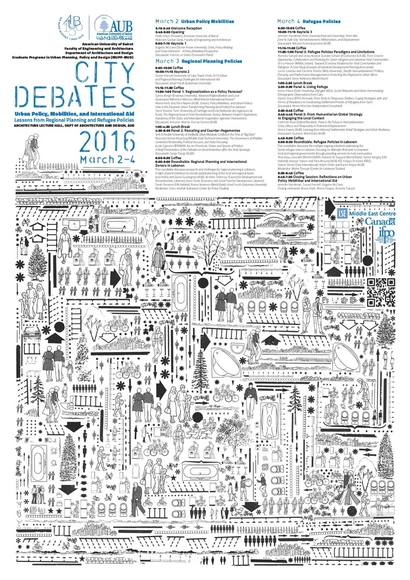
City Debates 2016 stems from a relational and multi-scalar understanding of urban policy as an assemblage of ideas and tools that circulate and transform. We seek to examine how international aid promotes the mobility of urban policy ideas, and mobilizes a range of stakeholders, and technologies in the process. We explore these questions by investigating two sets of urban policies: regional planning, and refugee policies.
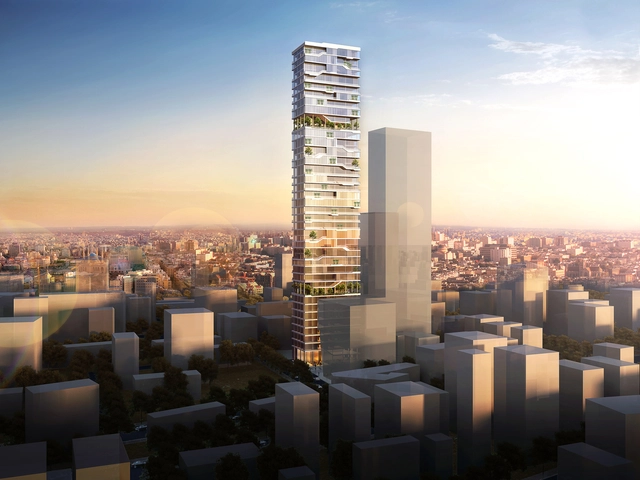
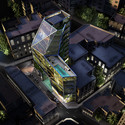
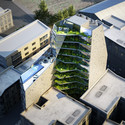
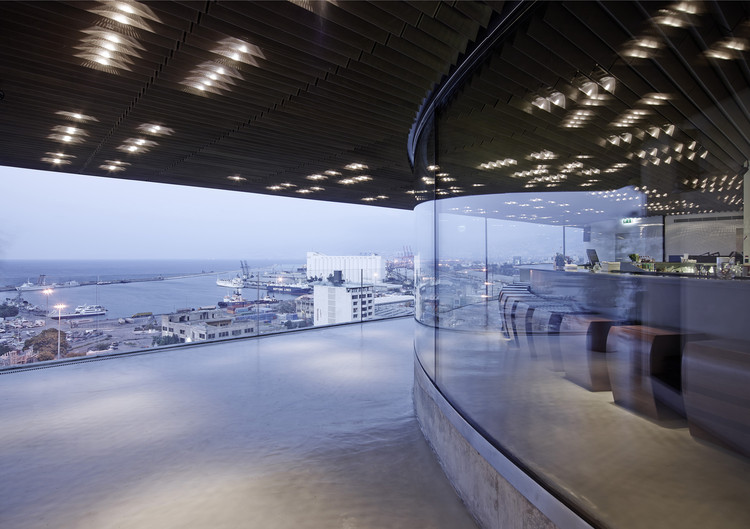
Lebanese architecture practice PARALX has won the AIA in Los Angeles' Merit Design Award for its T3 high-rise tower in Beirut. The tower is a part of a larger development scheme in the burgeoning Beirut Digital District (BDD) that will include 12 buildings and over 150,000 square meters of office spaces, apartments, hotels, shops, and entertainment facilities.
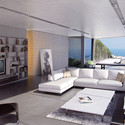
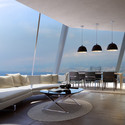
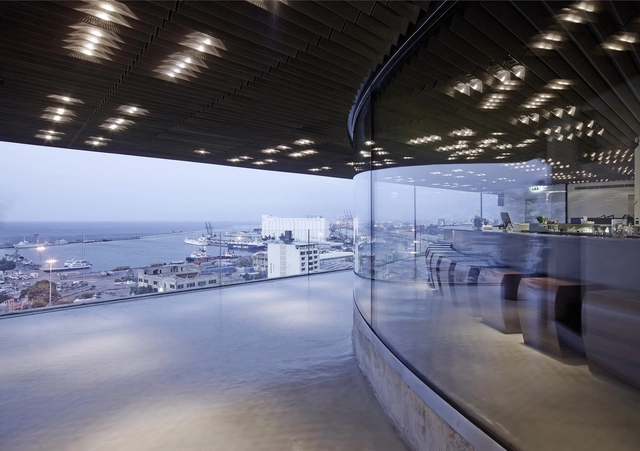
T3 will host cafes and restaurants on the ground level, with residential apartments located throughout the upper floors, all targeted towards the creative class that is moving into the area labeled as “Lebanon’s Silicon Valley.”
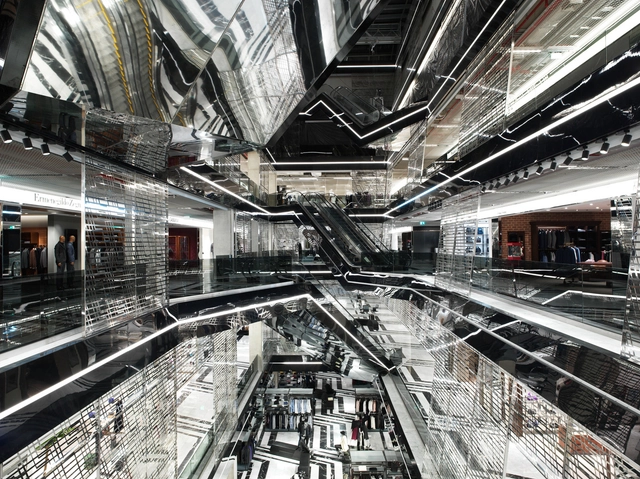
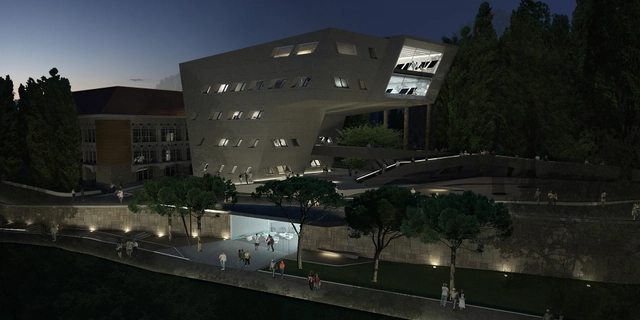
The David Adjaye-designed Aishti Foundation in Beirut, Lebanon is nearing completion. Located in central Beirut, the building replaces former warehouses, housing both an art gallery and retail space. This unique “juxtaposition of art and shopping” inspired Adjaye and Associates “to create a design for an entirely new typology that would integrate two, often conflicting, worlds,” write the architects in a press release.
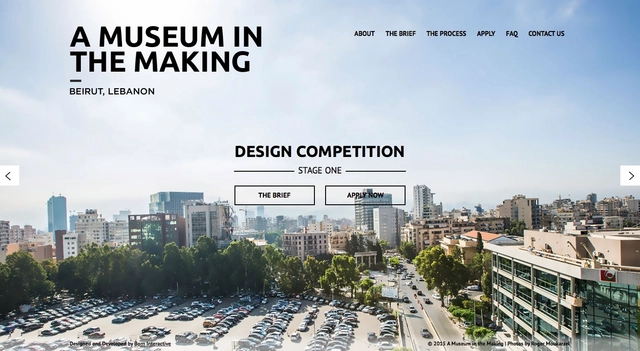
The Association for the Promotion and Exhibition of the Arts in Lebanon (APEAL) is planning to open a museum of modern and contemporary art in Beirut by 2020.
Developed from an idea by Publicomm, ARCHMARATHON is an International Architecture event that brings together 42 Architecture Design Studios in a unique and unprecedented format. The first edition took place in November 2014 in Milan and was a great success with the public and highly appreciated by the participants. After the tremendous success of this first edition, the FEDERATION OF LEBANESE ENGINEERS and Publicomm organize a special edition focusing on architects originally from the Arab and Mediterranean Countries. As a result, there will be a special edition held in Beirut, Lebanon from the 8th to the 10th of October 2015.
This edition of Section D, Monocle 24's weekly review of design, architecture and craft, dives into Beirut Design Week exploring "what Lebanese designers can show the world." In this show Josh Fehnert examines why Domus have decided to start an academy in Milan, speaks to Dutch typographer Joep Pohlen about his ultimate type reference guide, and assesses some of the architectural similarities between Istanbul and London. While the likenesses are not immediately obvious, both cities are currently undergoing an unprecedented property boom. Istanbul, a city with no strategic masterplan, is growing fast and there are lessons to be learnt from London's comparatively porous urban realm.
New York-based SOMA Architects has announced plans for an 11-story residential development in Beirut. Cantilevering over a protected 1920s house, “BOBO’s” steel exoskeleton and concrete core will support 13 new residences on top ground floor retail in the Lebanese capital’s Mar Mikhael district.
Lebanese design firm GM Architects will be presenting its “Museum of Civilization” at the Time Space Existence exhibition of the 2014 Venice Biennale. The firm will be the only group representing Lebanon at this year’s exhibition. Their museum design addresses the Biennale’s theme of fundamentals by exploring the historical basis of architectural culture in the rich and varied context of their home country.
"Morphosis presented a strong, cohesive team with over 50 years of collaborative experience. Their presentation demonstrated the management and design approach required to successfully execute this project, as well as a thorough understanding of the importance and impact of an American Embassy in Beirut.
The Department of State’s Overseas Buildings Operations (OBO) has shortlisted six design teams for the new U.S. Embassy in Beirut, Lebanon. The project is part of OBO’s Excellence in Diplomatic Facilities initiative in which seeks to provide safe and functional facilities that represent the best in American architecture.
Context in architecture has become a subject bloated with discussion and debate over the years. And, as a matter of fact, it has come to matter very little in its formal and typological sense. Take, for instance, the fluid forms that compose Zaha Hadid’s hundreds of projects around the world, or Frank Gehry’s exploding compositions seen from South America to the unmistakable Guggenheim in Bilbao. The form architecture takes in these cases, and countless others, is in itself a deliberate disregard towards context in its literal sense.
But is this disregard for context a mistake? Observers would often say so, though I would like to disagree. It has become frequent that projects like these, largely formal and not politely accommodating their historic surrounding, actually take greater interest in social urban issues that have a direct impact on the city dwellers. Quite simply, successful architecture today is one that serves society culturally and practically, addressing tangible problems of 21st century cities and dealing with context in a solution-oriented manner, going beyond aesthetics (whose value is only temporary) and into future-invested urbanism. Case-in-point? My hometown: Beirut, Lebanon.
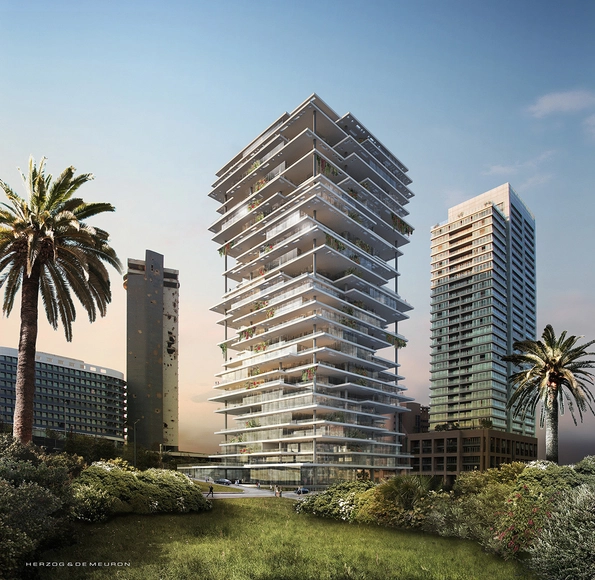
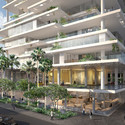
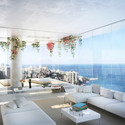
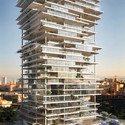
Beirut Terraces rethinks the concept of the skyscraper, creating a vertical village composed of thin, elegant platforms layered in a playful formation. By offering lavish outdoor spaces, breathtaking views, and meticulously composed lofts, architects Herzog & DeMeuron bring an unprecedented way of living to crowded and dense Beirut.
More on these contemporary living spaces after the break...
The design proposal for NAAS Springs, a well-known wellness center and place of relaxation in Beirut, is formed by a series of walls projecting into nature. They alternate between large living spaces with roofs for residences and uncovered elongated spaces for the passages, which form an extension of nature. Designed by Hapsitus Architects, the architectural landscape is created in the spirit of water following down a sloped terrain. More images and architects’ description after the break.
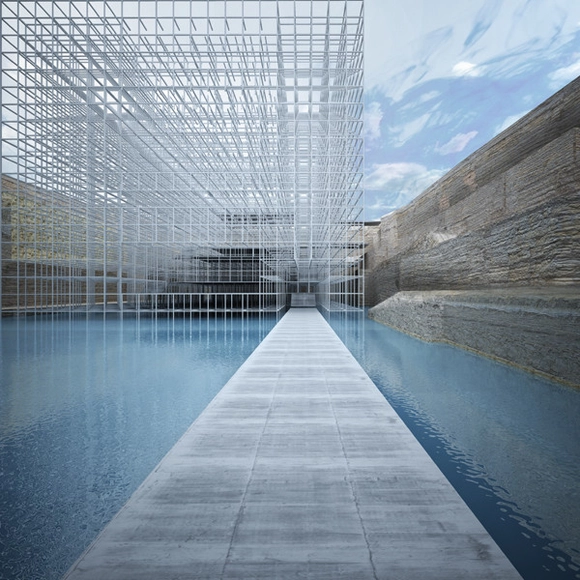
Designed by architect Dina Hadi, the proposal for the Beirut Multi Art Use project represents a total art mass from the city with different rhythms and patterns. It becomes a live scene from local artists that is captured into this box. With a focus on art as a foundation base for cultures, this project becomes a model for global art beyond. Her study was also awarded the best prize at the Oslo School of Architecture under the title, ‘Excellence in Professionalism’. More images and architects’ description after the break.