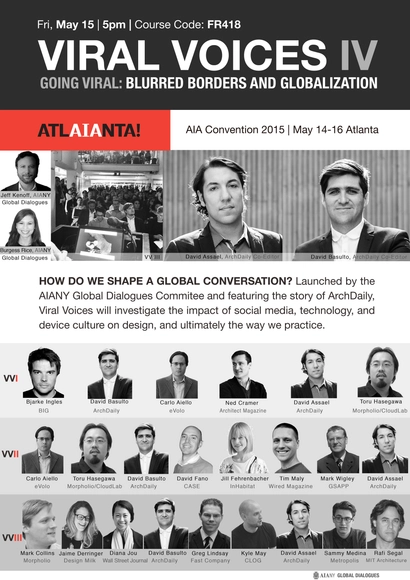
A week from today the 2015 AIA National Convention will kickstart in Atlanta, Georgia. With a plethora of options to consider, we encourage those attending to sign up for the hour-long discussion "Going Viral: Blurred Borders and Globalization." Presented by ArchDaily co-founders David Basulto and David Assael, and organized by the AIANY Global Dialogues Committee, "Going Viral" will discuss how you can take your practice (and profits) to a global level. The discussion will occur at 5PM on Friday, May 15th. Sign up for the course here, using the code "FR418."
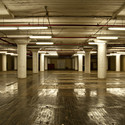
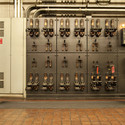
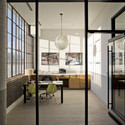
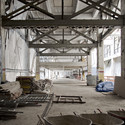
For almost a century, one of the largest buildings in the Southeastern United States has maintained a dominating street presence in Atlanta, Georgia. Now the Ponce City Market, the building was originally designed by Nimmons, Carr and Wright Architects and built in 1925 as a Sears, Roebuck & Co. distribution and retail center, operating until 1989. In 1991, the City of Atlanta purchased the building, renamed it City Hall East and housed several public works departments, storing countless items among its 2.1 million square feet of space. As the city’s utilization of the building dwindled, Jamestown Properties stepped in and acquired the building in 2010. Five years later, Ponce City Market is poised to become one of the greatest historic rehabilitation projects in the country.
The Negro Building Remembrance Competition invites architects, landscape architects, artists, playwrights, poets, musicians and writers from every discipline, as individuals, teams, students or professionals, to propose imaginative ways to commemorate the Negro Building, the forgotten landmark of the 1895 Cotton States and International Exposition in Atlanta, Georgia.
The Atlanta Bridgescape Competition is an urban design challenge seeking creative strategies to enhance existing freeway infrastructure in Midtown and Downtown Atlanta, Georgia. The objective of the competition is to solicit designs for the next two bridge projects: the 10th Street Bridge in Midtown and the Courtland Street/Ralph McGill Boulevard Bridge in downtown. The competition seeks broad participation from multi-disciplinary design teams to develop innovative approaches for enhancing existing infrastructure in a manner that will elevate the experience of travelers along the Connector and improve the environment for pedestrians and cyclists on the bridge surfaces.
A fly-through over the new Atlanta Falcons’ stadium has been released, revealing an unprecedented retractable roof designed by 360 Architecture (recently acquired by HOK). According to the stadium’s official website, the Pantheon-inspired stadium’s “eight unique roof petals” can rotate open in less than eight minutes, much like a “camera lens.” It will also be clad in a translucent ETFE fabric that, when closed, will allow natural light to pass into its interior.
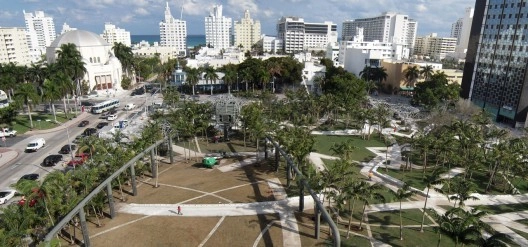
This year there was a cultural shift that saw landscape architecture and its practitioners achieve an unprecedented level of visibility and influence.
This year the single most notable development came courtesy of the New York Times architecture critic Michael Kimmelman who wrote: "Great public places and works of landscape architecture deserve to be treated like great buildings."
Landscape architecture and architecture on equal footing. Let that sink in.
https://www.archdaily.com/577280/2014-a-great-year-for-landscape-architectureCharles A Birnbaum
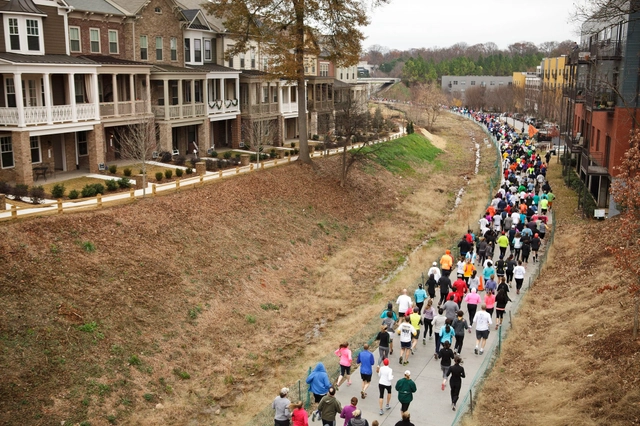
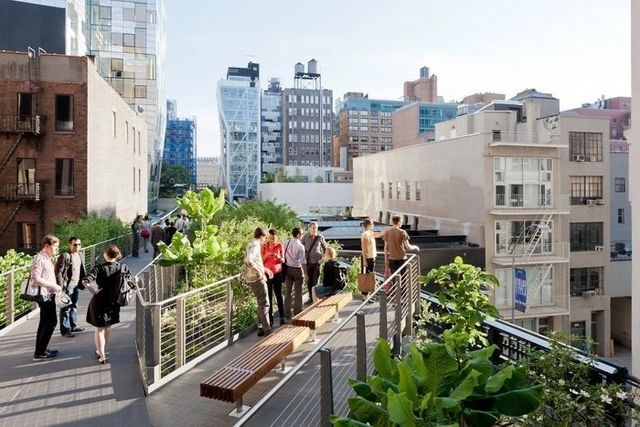
An abandoned twenty-two mile stretch of derelict railroad and industrial sites used to be a thorn in the Atlanta community's side. But with one student's thesis proposal to redevelop these areas into a sustainable network connecting 45 mixed-use neighborhoods, public concern has since turned into excitement. To learn more about the ambitious project, head over to The Atlantic Cities here.
The American Institute of Architects (AIA) and MIT’s Center for Advanced Urbanism has produced a new report examining urban health in eight of the USA’s largest cities, which has been translated into a collection of meaningful findings for architects, designers, and urban planners. With more than half of the world’s population living in urban areas - a statistic which is projected to grow to 70% by 2050 - the report hinges around the theory that “massive urbanization can negatively affect human and environmental health in unique ways” and that, in many cases, these affects can be addressed by architects and designers by the way we create within and build upon our cities.
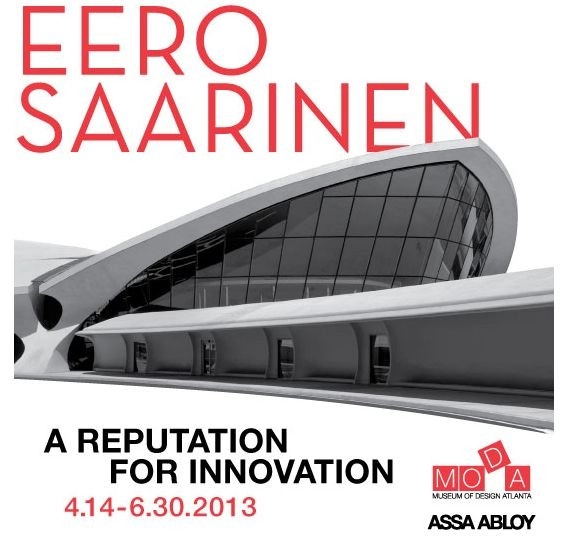
Taking place now until June 30 at the Museum of Design Atlanta, the 'Eero Saarinen: A Reputation for Innovation' exhibition pays tribute to Saarinen’s brief yet brilliant career, in which he designed numerous corporate, educational, cultural, public, and private buildings, including recognizable icons like the Saint Louis Gateway Arch, the TWA Terminal at New York’s JFK Airport, and Dulles Airport in Washington DC. Also breaking new ground by shedding light on a little known chapter of Saarinen’s secret professional life during World War II, the exhibit highlights the architect’s work and a study of the design principles he followed. For more information, please visit here.
This year's Douglas C. Allen Lecture, presented by the Georgia Institute of Technology School of Architecture, features Adriaan Geuze, one of the founders of West 8 Urban Design & Landscape Architecture. Founded in 1987, West 8 is an award-winning international office which has established itself as a leading practice within the last 20 years with about 70 architects, urban designers, landscape architects, and industrial engineers. The event takes place Wednesday, March 6th, from 6:00pm-7:30pm in the Reinsch-Pierce Family Auditorium. For more details about the event, please visit here.
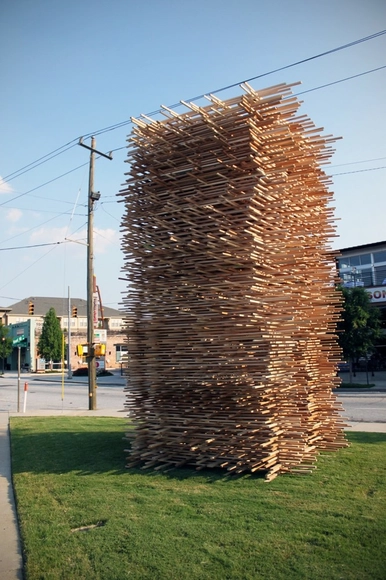
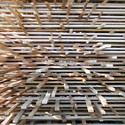
Composed of approximately 400 simple wooden chairs arrayed and stacked in a sine wave surface, the ‘SEAT’ public pavilion, by E/B Office, is a recently completed winning entry for this year’s Flux Project in Freedom Park. Located in Atlanta, the chairs are drawn into an agitated vortex rising from the ground. Sitting is perhaps the most common condition from which we experience architecture. Whether we work, relax, watch, eat, sleep, or talk to each other, sitting is at the core of our relationship to buildings. Therefore, this project formalizes the transformation of chairs from detached useable objects into structural and spatial components of an ambiguously occupiable edifice. More images and architects’ description after the break.
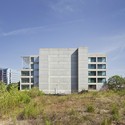
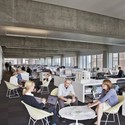
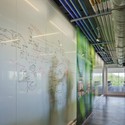
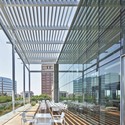
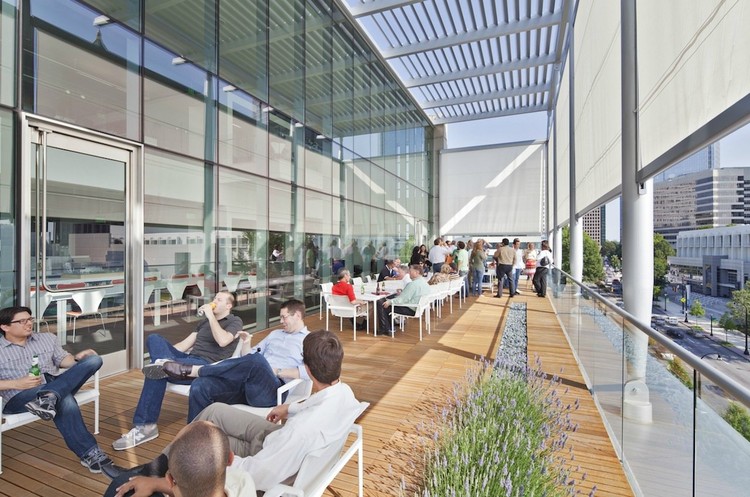
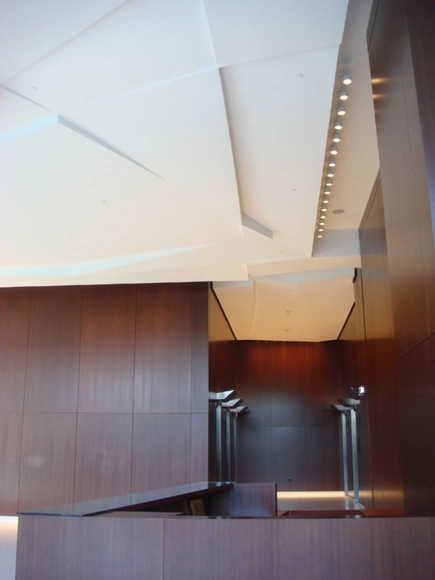
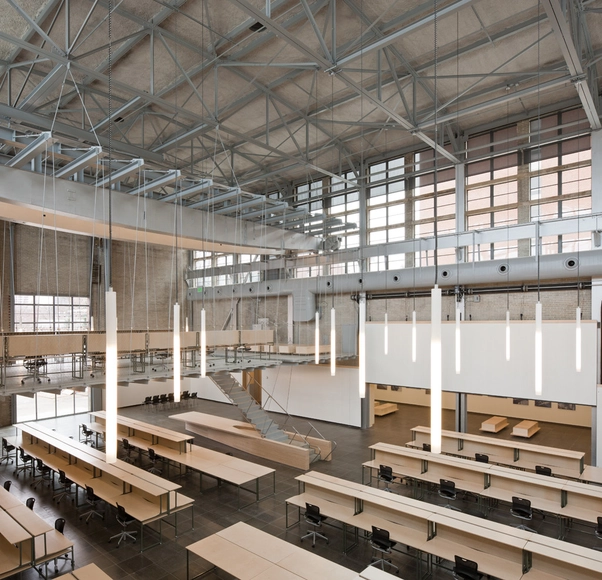
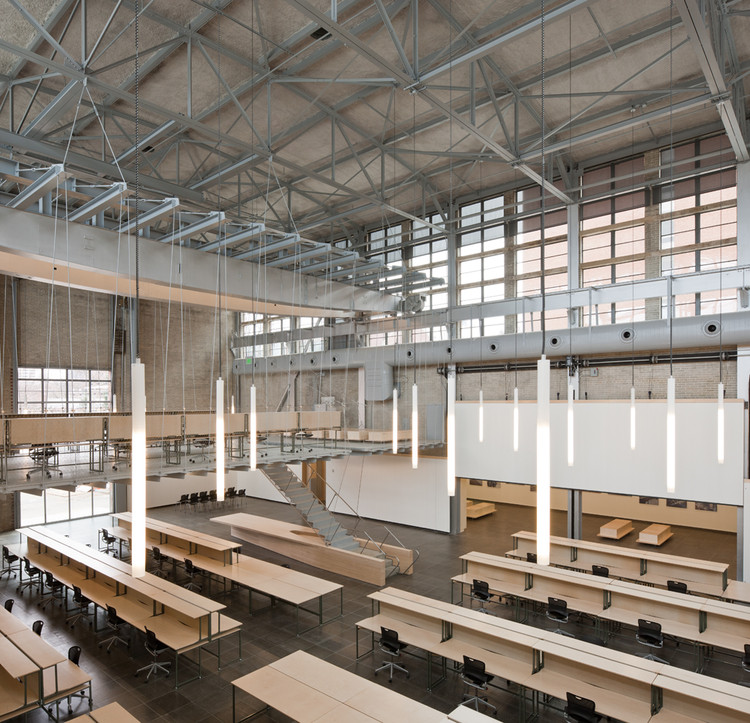
Understanding that environmental responsibility is an integral part of design excellence, Perkins + Will’s new Atlantic office, known as 1315 Peachtree, serves as an example on how current technologies can be used to achieve LEED Platinum Certification, meet the 2030 Challenge and help reduce toxic materials from our building products.
1315 Peachtree is an adaptive reuse of a 1985 office structure transformed into a high performance civic-focused building. Located in the heart of Midtown Atlanta across from the High Museum of Art, the new building continues to house the Peachtree Branch of the Atlanta-Fulton County Public Library and introduces a new street-level tenant space occupied by the Museum of Design Atlanta (MODA). The Perkins+Will Atlanta office occupies the top four floors with office space for up to 240 employees. Continue reading for more information on the highest LEED score building in the Northern Hemisphere.



.jpg?1409291215&format=webp&width=640&height=580)
.jpg?1409291070 "© Albert Vecerka / ESTO")
.jpg?1409290478 "© Albert Vecerka / ESTO")
.jpg?1409290642 "© Albert Vecerka / ESTO")
.jpg?1409290903 "© Albert Vecerka / ESTO")
.jpg?1409291215)