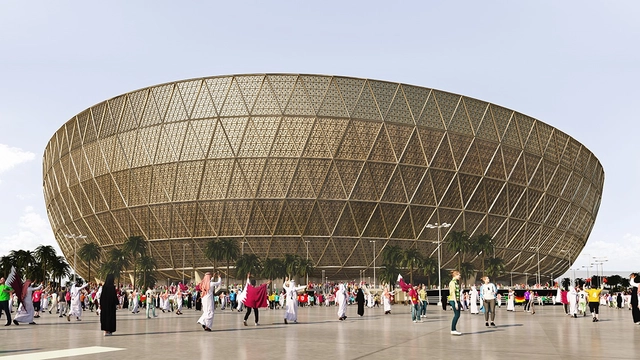
The organizers behind the FIFA 2022 Qatar World Cup have released new images of the Foster + Partners-designed Lusail Stadium. Merging contemporary and historical influences, the “sleek, bold shape” of the arena is inspired by the bowls and vessels used in the Middle East across centuries.
Architects are often driven by forces which are stronger than aesthetics or even client whims and desires. To some extent we’re captive to the tools and materials we use, and the legal limitations placed on us as architects. Today a new code definition has changed one type of building in all of the ways architects usually control.
It's easy to feel overwhelmed by the massive production of architecture today. Scroll through ArchDaily for more than a minute and even we'd forgive you for losing track of it all. But what seems like an endless scroll of architectural production doesn't quite fit with the popular movements surrounding resource sharing and community.
Hidden among the mass production that has defined architecture in the last century is a germ - one that seems to be marching to the forefront of practice today. More and more designers seem to be taking on locally-focused and/or adaptive reuse works. Award shortlists today highlight not icons by recognizable names, but sensitive international works that are notable for their process as much as their product.
The common image of the architect may be of one obsessed with ego and newness, but practice today doesn't bear that out as much as it used to. This week's news touched on issues of reduction, reuse, and a radical rethink what architecture is in the 21st century.
https://www.archdaily.com/906505/this-week-in-architecture-reduce-reuse-rethinkKatherine Allen
Home automation, or Domotics, is a set of technologies applied to a residence to control lighting, climate, entertainment systems, and appliances. Its systems allow for efficient management of energy consumption, security, accessibility, and the general comfort of the building, becoming an important issue to consider when designing, building, and living.
Domotic systems are based on the collection of data by sensors, which are then processed to issue precise orders to the executors, varying the environmental quality of each enclosure according to the needs of the user. The pace of current life and the technological advances we have experienced in recent years have led to new ways of living, motivating the design of homes and more human, multifunctional and flexible buildings. What was once a luxury is now a feasible and effective solution for all types of projects.
In this article, we've compiled a collection of smart homes where domotics have been used.
From city master plans to pocket-sized products, Zaha Hadid Architects (ZHA) have explored architectural formalism through innovative digital design methods. In 2006, the collaboration with furniture-makers and fashion houses led to the creation of Zaha Hadid Design that served both as an iterative process for and a resultant of ongoing architectural design.
A pop-up exhibition, located suitably on the ground floor of ZHA's renowned condominium along the High Line in New York City, features a scale model of the building itself on display. To honor and present the work produced by the firm in the last four decades, the Zaha Hadid Gallery showcases a series of projects in a wide range of mediums including the six 'Silver Models' that represent eight of the firm's key works.
This article was originally published on ArchDaily on 13 February 2018.
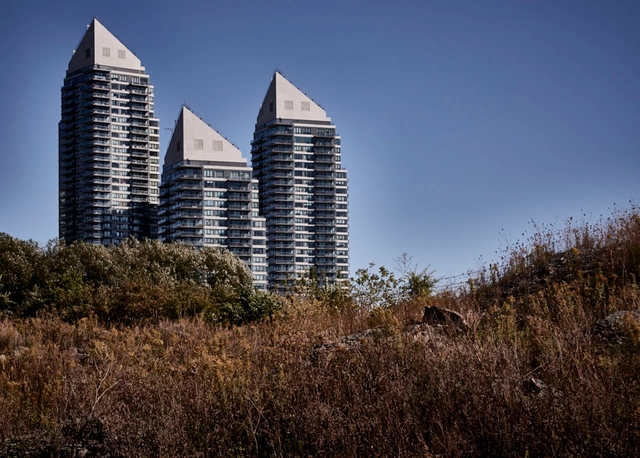
The City of Toronto has a long, fraught relationship with development and vacancy. The map of the initial Toronto Purchase of 1787 between the Mississaugas of the New Credit First Nation and the British Crown, which would later establish the colonial territory that became Toronto, conceives of the landscape as a single, clearly defined vacant lot anxious for development. Or, as artist Luis Jacob better described it, “signifying nothing but an empty page waiting to be inscribed at will.” Over two-hundred years later, as housing availability, prices, and rental shortages drive vertical condominium developments in the city, the politics of the vacant lot have never felt so palpable.
With rising sea levels and incessant consumption of plastic, the state of the earth's oceans is rapidly deteriorating. Instead of discarding or burning this plastic, architects Erik Goksøyr and Emily-Claire Goksøyr questioned whether any architectural potential exists in this neglected material. By conducting an extensive material study, the duo designed three prototypes to postulate this theory.
Though starting out as a humble thesis, this project is being actualized under the organization, Out of Ocean. From the shores of the Koster Islands in Sweden, plastic samples were collected and studied for their various material performance in areas such as color, texture, light, and translucency.
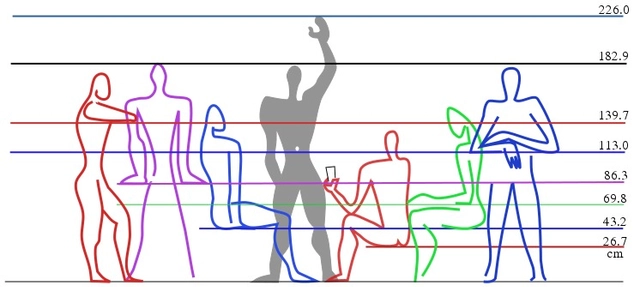
In 1948, the architect Charles-Édouard Jeanneret-Gris, better known as Le Corbusier, released one of his most famous publications titled Modular, followed by Modular 2 (1953). In these texts, Le Corbusier expressed his support of the research that Vitrubio, DaVinci, and Leon Battista Alberti started centuries before: to find the mathematical relationship between human dimensions and nature.
The research of the previously mentioned authors also represents the search to explain the Parthenon, the temples, and cathedrals built according to exact measurements that reference a code of essentiality. Knowing what instruments were used in finding the essence of these buildings was the starting point, instruments that at first glance seemed to bypass time and space. It wouldn't be farfetched to say that the measurements came from essence: parts of the body such as the elbow, the finger, thumb, foot, arm, palm, etc. In fact, there are instruments and measurements that carry names alluding to parts of the human body, an indication of architecture's proximity to it.
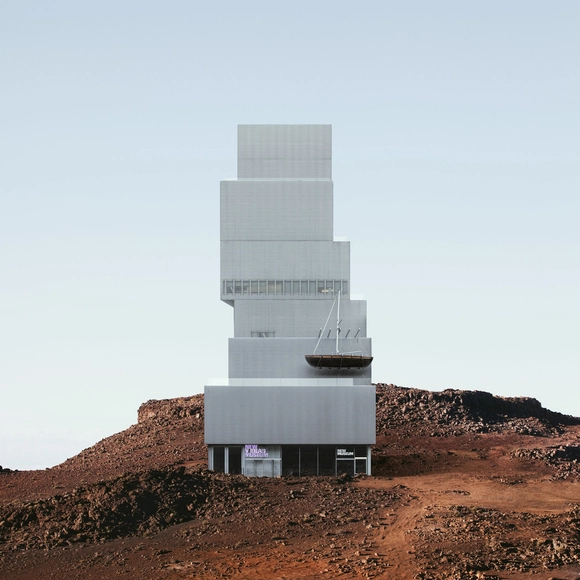
Architecture is all about context, either as a way to find harmony with it's surroundings or as a reaction against them. But what happens when you take context out of the picture entirely?
Designer Anton Reponnen, in his Misplaced photo series, has taken 11 of New York's most iconic landmarks, ranging from the Empire State Building to Renzo Piano's Whitney, and transplanted them in deserts, tundras, and plains. With the buildings placed in a "wrong" condition, viewers are challenged to evaluate the architecture in a different way. In Reponnen's eyes (and in the stories that accompany the images), each structure is as alive as we are, and their new location is mystery with motives to uncover.
Architecture, Form, and Energy is a documentary series featuring 6 interviews with architects and intellectuals from the United Kingdom, United States, Malaysia, and Mexico. The series seeks to disseminate information that inspires contemporary architectural evolution, from the impact of climate on a place, finding inspiration in nature, the relationship between form and energy, selecting the right materials, and appropriate technological application.
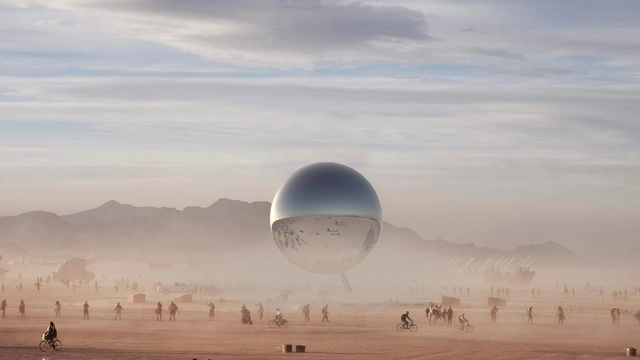
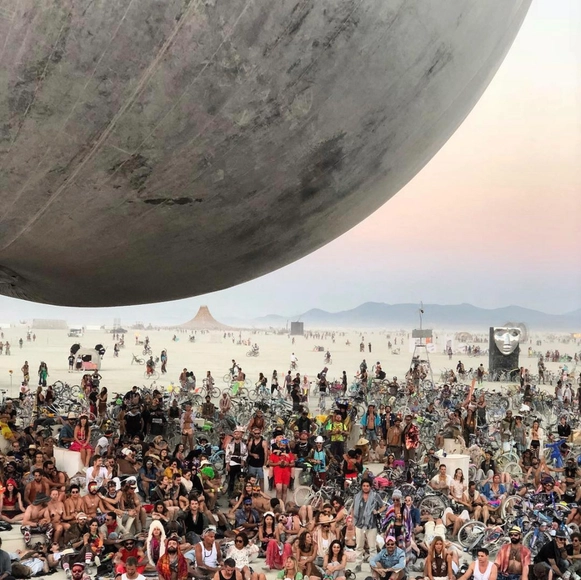
As Burning Man 2018 comes to a close, snapshots and glimpses of the event have begun to emerge in the mediasphere. The most recognizable among these is, perhaps, BIG's Orb, a hovering sphere representing a scaled version of the earth itself.
https://www.archdaily.com/901298/the-best-structures-of-burning-man-2018AD Editorial Team
What do dance and architecture have in common? It's difficult to explain how our experiences of dance are stored in our bodily memory, but central to our recollection of a performance is the architectural space that it inhabited. Although dance may have been the central focus, the site is integral to its experience. Both disciplines are fundamental when exploring the ways we navigate and create cities and urban spaces.
It's no surprise that many choreographers explore both disciplines: dance and architecture. These pieces question how our bodies navigate through built environments. However, it is important to note that this experimentation is not merely contemplative but speaks to the way specific groups of peoples and cultures operate in their surroundings. In the words of the philosopher Marina Garcés: "The body is no longer what is and binds us to a place, but it is the condition for every place. It is the zero point of all the spatialities that we can experience, and at the same time, all the links that constitute us, materially and psychically."
Working life as an architect is notoriously difficult. Unreasonable demands from clients, be they about budget, deadlines, or design (not to mention uncompromising personal standards) make the job tough, particularly as architecture continues to be seen as a product. And while it's no reason to accept low (or unequal) pay, troubling mental health, or any of the myriad issues architecture seems beset with, architects anywhere will tell you: you do it because you love it.
https://www.archdaily.com/901160/this-week-in-architecture-labors-of-love-from-the-hedonistic-to-the-homegrownKatherine Allen
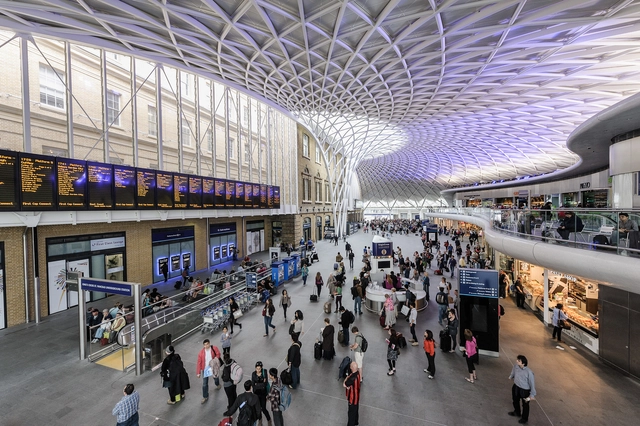
Courtesy of Flickr user Andrew Stawarz. ImageKing's Cross Station Concourse / John McAslan + Partners
In Europe, Asia and much of the developed world, high speed rail is convenient and accessible. Whether for business or pleasure, travelers are served by an efficient and extensive rail network that connects passengers to the desired destination on time and with relatively little effort. Although these train systems can travel as fast as 350 kilometers per hour, speed is not the only important factor. Rail stations in Europe, for example, are an integral part of the historic urban fabric. These facilities are often perceived as civic destinations that play a fundamental role in the mobility system, providing a wide range of services for the larger collective; shopping,entertainment, commercial and civic uses are often paired with transit services as new stations are built and historic stations are retrofitted.

















.jpg?1537436983)
.jpg?1537439379 "Urban Mountain. Image © John Siu")
.jpg?1537436954 "Upper. Image © John Siu")
.jpg?1537436811 "Detail. Image © John Siu")

.jpg?1537436983)











.jpg?1532465132&format=webp&width=640&height=580)