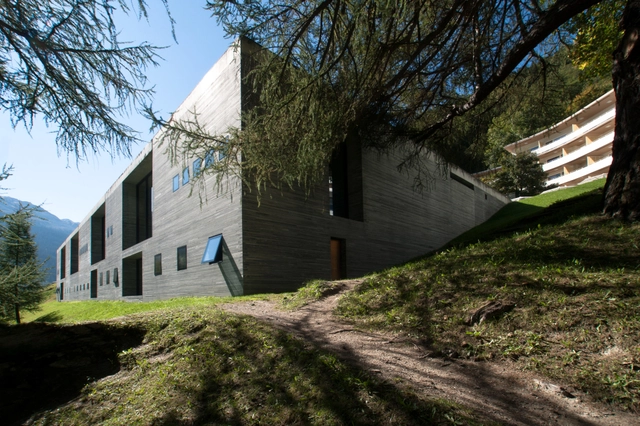
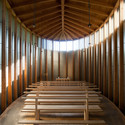
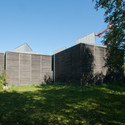
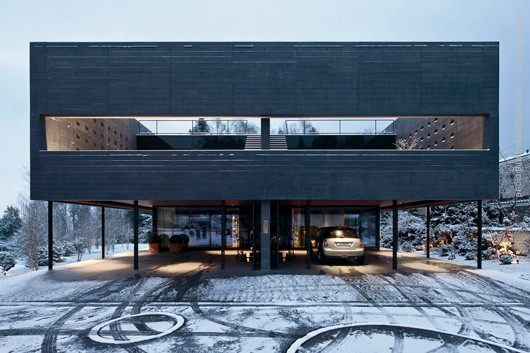
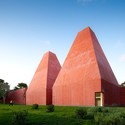
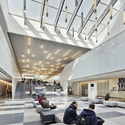
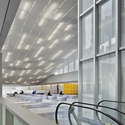
Our friend and architectural photographer Felipe Camus recently embarked on an architectural pilgrimage to the valley of the Rhein. Located in the Graubünden region in Switzerland, the valley boasts many of the seminal works of Pritzker Prize Laureate Peter Zumthor, all within a 60-kilometer radius. Born in Graubünden himself, Zumthor designed the works in relation to their location and time by paying special attention to details and materials. As a result, the works all present Zumthor’s unparalleled skills of craftsmanship and his uncompromising integrity.
Join us for a special AD Architectural Mountain Guide, including a detailed map, photos and descriptions of Zumthor’s works, after the break….
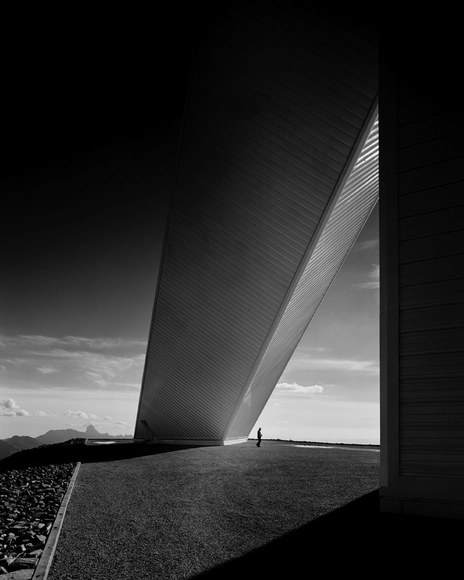
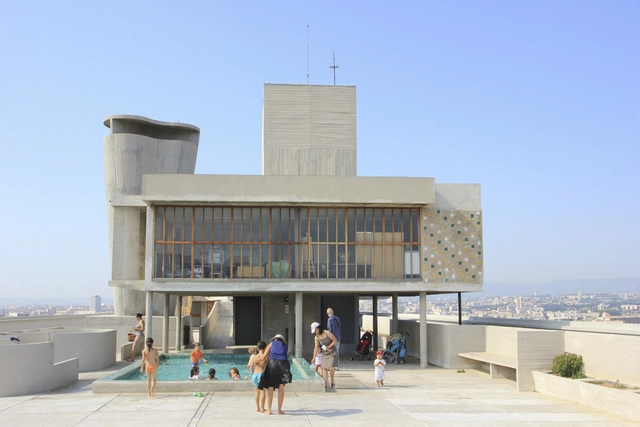
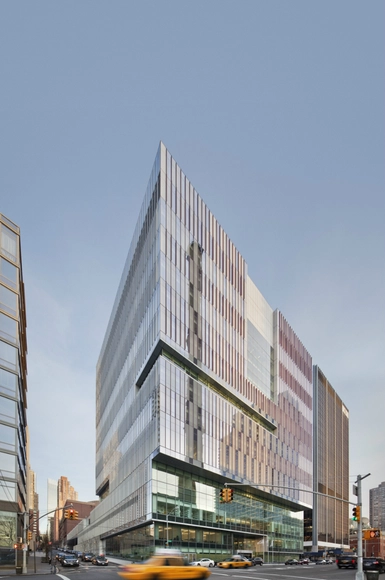
In honor of World Photo Day, we've rounded up the 13 architectural photographers who have been impressing us most in 2013. From industry heavyweights, like Iwan Baan and Thomas Mayer, to relative new comers, such as Miguel de Guzmán and Fran Parente, these photographers have traveled the world, getting the architectural shots we only dream of. See all 13, after the break...
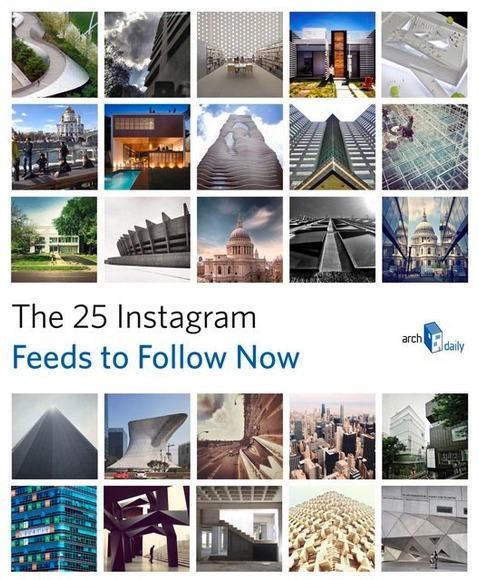
Last year, we published a post (one of our most popular of all time) on the4 Apps that every architect should have — 4 Apps that make your architectural life all the easier.But when it comes to everyday inspiration, perhaps there's no greater App than Instagram — the perfect way to instantly capture and share the architectural forms and details that surround us.
We've scoured the web and tracked down the 25 Instagrammers who will be sure to inspire - from international architecture photographers like Iwan Baan to famous architects like Michel Rojkindto our very ownArchDaily editors. If you're new to Instagram — or just want to bulk up the architectural inspiration on your feed - these are the 25 feeds to follow now!
See the 25 best architecture instagrammers, after the break...
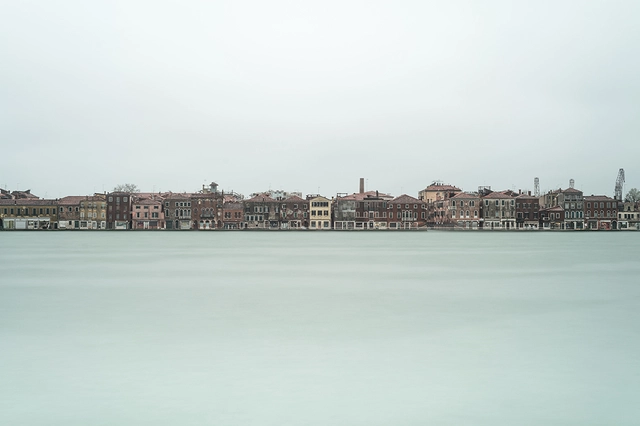
Architecture and Place Winner: Venice 2 / David Kirkland
Winners of the Architect’s Eye 2013 Competition have been announced! In an effort to encourage photography by architects, the biennial competition asked entrants to submit photography in two categories: Architecture and Place focusing on the aesthetics of a building and how it shapes the location and Architecture and People focusing on the interaction of people in relation to architecture.
Japanese architectural photographer and editor Yokio Futagawa(1932-2013) lost his battle to cancer on March 5 at the age of 80 in Tokyo, Japan. Futagawa was best known as the founder of the distinguished Global Architecture (GA) Publishing Group, which he established in 1970, and director of Global Architecture (GA) magazine. Throughout his 60-year-long career, Futagawa photographed modernist works from some of the world’s most famous architects and presented them in elegant magazine and book series. Two of his most important works include a ten-volume collection of "Japanese Traditional Houses" in the 1950s and a lavish twelve-volume collection that illustrates the complete works of Frank Lloyd Wright.
Now on view at the Yossi Milo Gallery through March 2, rarely-seen images by modernist architectural photographer Ezra Stroller (American, 1915-2004) captures a Post-War American landscape with stunning images of industry, technology, transportation and working class Americans.
Beyond Architecture covers the full range of Stoller’s work, including photographs commissioned by Fortune, Architectural Forum, and House Beautiful magazines in the 1940s and for commercial projects for IBM, Upjohn Pharmaceuticals and CBS in the 1940s and 1950s. Included are photographs of Skidmore, Owings & Merrill’s John Hancock Building, Chicago, and the United Nations Headquarters, designed by an international team of architects led by Wallace K. Harrison and including Oscar Niemeyer and Le Corbusier.
Organized by International Art Consultants (IAC) and supported by The Royal Photographic Society, the Architect’s Eye competition has been celebrating and encouraging architects’ passion for photography since 2007. Now, in its fourth edition, UK architects are challenged to submit photos into two distinct categories: Architecture and Place and Architecture and People. The former focuses solely on the aesthetics of the architecture and places it creates, while the latter explores and celebrates the interaction of people with the environments created by architects. There are no restrictions on which buildings qualify for the competition.
On January 15, 2013, illustrious architect and photographerBalthazar Korab (1926-2013) lost his prolonged battle with Parkinson’s disease. Although he managed to keep a low profile throughout most of his life, Korab was one of the most prolific and celebrated architectural photographers of midcentury modernism.
Iwan Baan's name may ring a bell for all those following Hurricane Sandy's devastation across New York City and New Jersey's coast. The photographer's iconic photograph made headlines when it was featured on New York magazine's front page days after the storm, showing lower Manhattan in complete darkness, set against its vibrant counterpart uptown, as the United States' east coast was recovering from the extensive damage left in Sandy's wake. The image not only brings to mind the absolute helplessness that New York City faced during the storm, but also lends a hand in a social commentary that is notably pervasive in Baan's work. The Perry Rubenstein Gallery in Los Angeles will feature the photographer's work in a two-month exhibition entitled The Way We Live, honing in on the images that encapsulate the world of architecture, urbanism and human engagement.
Photographer Cameron R Neilson, who we introduced in our earlier post about Oslo’s ripening real estate market, has produced some fantastic views from within Oslo. As part of the Straight Up project, Neilson is challenging both the way in which city-scapes and skylines are photographed and the way that our eyes navigate the urban environment.
Check out the remarkable photographs after the break.
Last April, we announced the opening of Pedro E. Guerrero: Photographs of Modern Life – a retrospective exhibition organized by the Julius Shulman Institute (JSI) at Woodbury University that honored the incredible life and career of the great 20th century architectural photographer, Pedro E. Guerrero (1917-2012). JSI was thankful to have Guerrero join the exhibition’s opening night, where he entertained the crowd with his charismatic personality as he shared fascinating stories from his life.
Sadly, the world is still in mourning over Guerrero’s passing last week, as he died at the age of 95 on Thursday, September 13, 2012, at his home in Florence, Arizona.
Woodbury University and the Julius Shulman Institute would like to share a few words from JSI director Emily Bills:
“The Julius Shulman Institute is deeply saddened to hear of the passing of Pedro E. Guerrero. We were honored to host a retrospective of his work last April, which included the lively, and often hilarious, conversation he shared with Hunter Drohojowska-Philp. Guerrero will be remembered as one of the great architectural photographers of the twentieth century, capturing the essence of work by Frank Lloyd Wright, Edward Durell Stone, Marcel Breuer, Joseph P. Salerno, and many others. He will be dearly missed.”
Read Guerrero’s obituary in the New York Times and the LA Times to learn more about his epic life and career. Continue after the break to view some of his best photographs that were featured at the exhibition.
This year’s Venice Biennale will kick off on August 29th and run through November 25th and will feature a pavilion from Israel called “Aircraft Carrier”. The collected work confronts the dramatic changes in Israeli architecture since 1973, and the American influences that made them possible. The curators of the exhibit, Erez Ella, Milana Gitzin-Adiram and Dan Handel defined four major architectural phenomena that epitomize these changes: Signals, Emporiums, Allies and Flotillas. The curators invited five leading Israeli and international artists and architectural photographers to reflect on these ideas. Participants include Assaf Evron, Fernando Guerra, Florian Holzherr, Nira Pereg, and Jan Tichy and product designer Tal Erez.
Stop by after the break to see some of the work to be featured as part of “Aircraft Carrier”.
Raimund Abraham (1933-2010), who would have turned 79 today, was far from your typical architect. A striking figure – usually sporting a black fedora, thick moustache, and cigar – Abraham was a radical thinker who believed passionately in the sacred importance of architecture.
For Abraham, architecture existed just as legitimately in the mind as on the ground; as he put it: “I don’t need a building to validate my ideas.” In fact, many of his visionary drawings were exhibited as art, including in the MOMA. Although most of his designs were never actually built, those that were gained critical acclaim.
He was best known for the Austrian Cultural Forum in New York City, a 24-story, “guillotine-like” building curiously squeezed onto a plot only 25 feet wide. Architectural historian Kenneth Frampton called it “the most significant modern piece of architecture to be realized in Manhattan since the Seagram Building and the Guggenheim Musuem of 1959.”
To celebrate this great mind, we present you his final work, Musikerhaus (House for Music or Musician’s House), as photographed by Thomas Mayer. The House, a former NATO missile base turned artists’ residence/exhibition gallery (you can see the latest exhibition “The Reality of the Unbuilt” in the photos below), will be completed next year.
Like no other style, Art Deco represents a built manifestation of the interwar period’s enthusiasm and splendor. In London, buildings of this era reflect the elegance, progress and assertiveness that describe the modern metropolis age. Even today, these buildings have lost none of their aura and appeal, yet they lack any proper documentation.
Together, Niels Lehmann and Christoph Rauhut have worked tirelessly for the past three years researching and photographing London’s architectural Art Deco heritage. With your help, they will feature over 230 buildings with large-scaled photographs in the soon-to-be published book “Modernism London Style.” Follow this link to become a supporter and learn more.
Last December, ArchDaily revealed the winners of the Architect’s Eye Photography Competition. Now, in celebration of the 2012 London Festival of Architecture, the winners of the the competition will be exhibited at the Roca London Gallery beginning June 23rd in Chelsea, London as part of a Launch Event, Exhibition and Discussion Panel. International Art Consultants (IAC) hosts the competition in recognition of architects’ passion for photography. Last year’s 19 finalists and winners will be on view to the public at the gallery until July 8th.
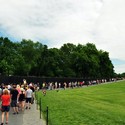
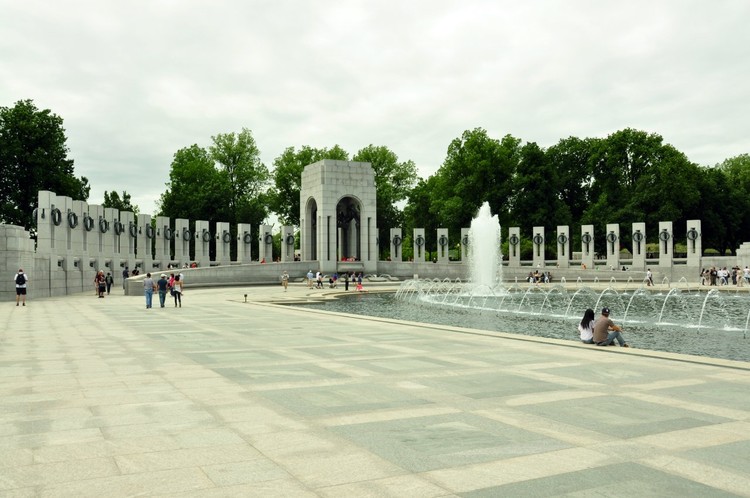
Partially cloudy with a high in the mid-seventies, this was weather we couldn’t say no to on the Sunday after the 2012 National Convention. Therefore we took advantage of the Washington D.C.Capital Bikeshare and set off on a self-guided tour of the National Mall. Although the National Mall was packed with graduates and tourists, we managed to weave in and out of pedestrian traffic quick enough to visit many of the historic buildings and memorials before heading off to Eero Saarinen’s beautiful Dulles International Airport. What a perfect way to wrap up an eventful week in the nation’s capital.