Since 2009, World Photography Day has been celebrated every August 19, commemorating the presentation of the daguerreotype to the French Academy of Sciences. The daguerreotype was the first photographic process, a milestone invention for human history and, of course, for our own discipline. Discussing architecture through photography is, in the words of Beatriz Colomina, one of its primary means of dissemination.
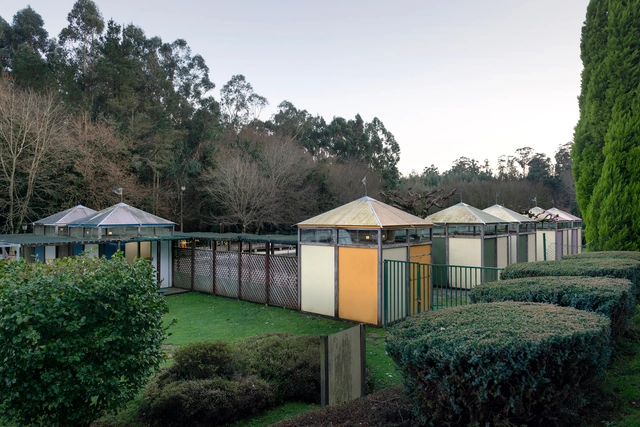
As a result of the research project MuWo - Women in Spanish (Post)Modern Architectural Culture (1965–2000), the interactive digital map of architecture designed by women in Spain was launched, aiming to study and bring visibility to women's work in architecture. As Myriam Goluboff Scheps is one of these architects, we set out to explore her history, ideals, and philosophy through one of her most recognized works: the open-air swimming pools for the Diputación de A Coruña.
The international architecture and city festival Open House will take place in Madrid from September 21 to 24, 2023, inviting residents to visit and explore some of the capital's most iconic buildings. Extending beyond Madrid to open several spaces in San Lorenzo de El Escorial, this ninth edition will open the doors of over 120 buildings and studios, while also offering 13 outdoor routes and itineraries to discover Madrid's architecture.
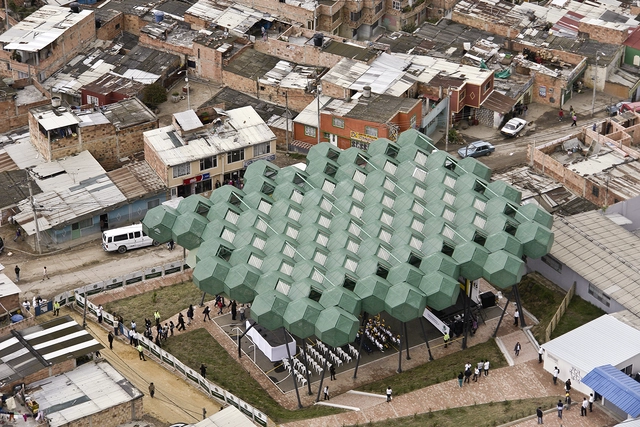
During the lockdown, ArchDaily hosted a series of interviews and talks via Instagram Live with some of contemporary architecture's most influential practices. In this installment, we spoke with Giancarlo Mazzanti about everything from the opportunities presented by the pandemic and his architectural philosophy to the notions of foreignness and legacy. Below is the transcript of our conversation.
“A thesis is like a pig; everything in it can be put to use,” concluded Umberto Eco in his book How to Write a Thesis. Indeed, these research projects, developed through four or five years of intense effort and sacrifice, become extraordinary tools and inexhaustible sources of information for both students and professionals looking to delve into a specific topic within their field of knowledge.
In Spain, the 2008 economic crisis triggered a notable increase in the number of architects who chose to pursue a doctoral thesis as a way to continue their academic training and expand their career options. Coupled with the rigorous training that Spanish architects typically receive, this has led to a vast body of exceptionally high-quality research, serving as an invaluable reference resource for both students and practitioners.
This article compiles 10 doctoral theses focused on major Spanish architects whose careers spanned the 20th century and who, for various reasons, left an indelible mark on the history of Spanish architecture during this period.
https://www.archdaily.com/1114503/10-doctoral-theses-on-great-architects-of-20th-century-spanish-architectureJavier García Librero
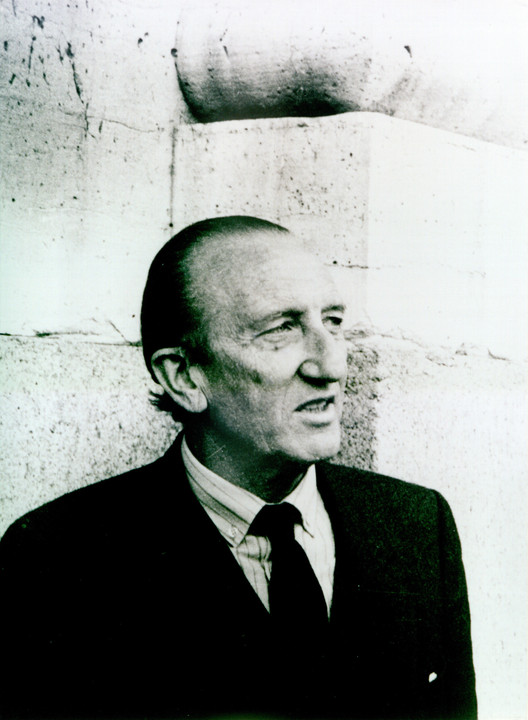
Francisco Javier Sáenz de Oiza. Image Cortesía de COAM
Architect Francisco Javier Sáenz de Oiza is undoubtedly a pivotal figure in 20th-century Spanish architecture. Designer of iconic works like Torres Blancas and the current Castellana 81, Sáenz de Oiza was twice awarded the National Architecture Award (1946 and 1954), served as Director of the Madrid School of Architecture (1981–1983), and was a figure whose work and theoretical reflections shaped the course of the Modern Movement in Spain.
This year marks the centenary of his birth in the town of Cáseda (Navarra). To celebrate this milestone, the 15th Architecture Week will pay tribute to him with a major exhibition charting his entire career. Titled Centenario Sáenz de Oiza. 1918-2018 (Sáenz de Oiza Centenary. 1918-2018), the exhibition is organized by the COAM Architecture Foundation in partnership with the Directorate-General for Architecture of the Ministry of Development, and curated by his children, architects Vicente, Javier, and Marisa Sáenz Guerra.
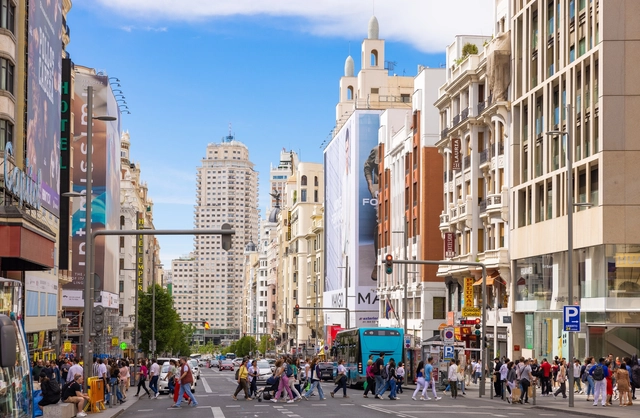
Madrid, the vibrant capital of Spain, offers a blend of tradition and modernity, reflected in its diverse architectural heritage. This rich past is etched into the old façades, expansive public spaces, and historic religious institutions that define much of Madrid’s character today. The city’s continuous architectural renewal, reflected in both respectful restorations and innovative new constructions, highlights Madrid’s commitment to preserving its heritage while embracing modernity.
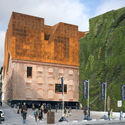
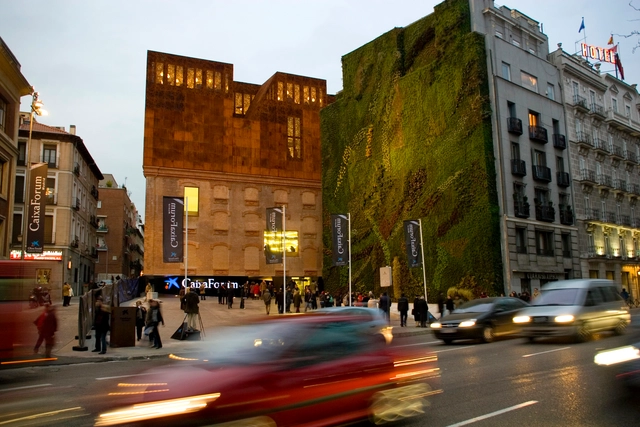
In the 20th century, Madrid embraced modernity, influenced by movements such as Rationalism, the International Style, and Brutalism. Today, Madrid is a showcase for contemporary design, where contemporary projects by renowned architects coexist with its historical legacy. Structures like the CaixaForum by Herzog & de Meuron and Jean Nouvel’s Reina Sofía Museum exemplify the city’s interest in architectural explorations
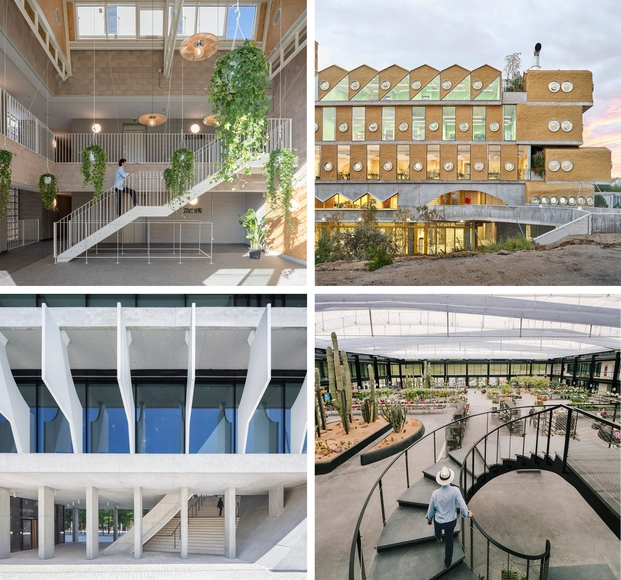
Architectural photography has developed into its own art form, and it might be as important as the built work itself. We consume architecture not only physically and spatially in a building but also through photographs. A good image reportage work can give the viewer a feeling of the atmosphere, senses, and design intentions the project may spark, without actually being in the place. Photography is also a way of documenting the project's process, the use of materials, lighting, and architectural elements, and as a result, tell a complete story behind a building.
To celebrate World Photography Day, we've gathered a list of 25 architectural photographers from around the world who are worth knowing - and following on Instagram. These emerging photographers have been selected for their ability to capture architecture each in their own unique ways. Get to know them!
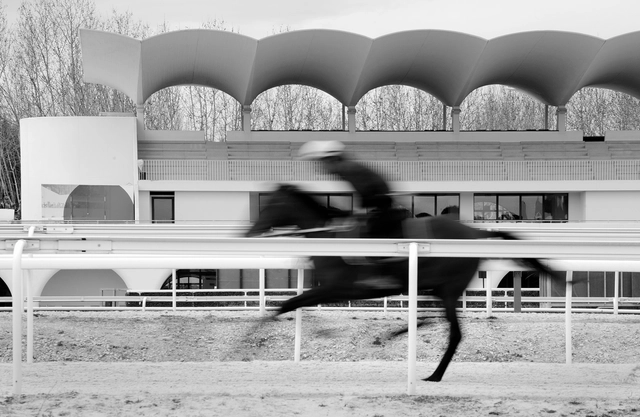
Conceived during the tumultuous years preceding the Spanish Civil War, the Zarzuela Hippodrome came about through a public contest sponsored by Madrid's Office of Suburban Access, who hoped that the winning design would replace the dilapidated Hippodrome located in Paseo de la Castellana.
In order to expand the Castellana-Recoletos, one of Madrid's main thoroughfares and the cornerstone of its growth in the 1930s, it became imperative to demolish the old hippodrome in order to make space for the Nuevos Ministerios government complex. For the new hippodrome, the planners sought out a more remote and suitable location, eventually deciding on a 115 hectare plot of land close to Monte El Pardo, on the northern outskirts of Madrid, where it would have the necessary space but also be connected to the city center via public transportation.
Nine projects were entered in the contest, with the winning team consisting of architects Carlos Arniches and Martín Domínguez along with engineer Eduardo Torroja.
Let's think of a paper sheet. If we tried to stiffen it from its primary state, it couldn't support its own weight. However, if we bend it, the sheet achieves a new structural quality. The shells act in the same way. "You can't imagine a form that doesn't need a structure or a structure that doesn't have a form. Every form has a structure, and every structure has a form. Thus, you can't conceive a form without automatically conceiving a structure and vice versa". [1] The importance of the structural thought that culminates in the constructed object is then, taken by the relationship between form and structure. The shells arise from the association between concrete and steel and are structures whose continuous curved surfaces have a minimal thickness; thus they are widely used in roofs of large spans without intermediate supports.
In structural terms, they are efficient because they resist compression efforts and absorb at specific points on their surface, especially near the supports — small moments of flexion.
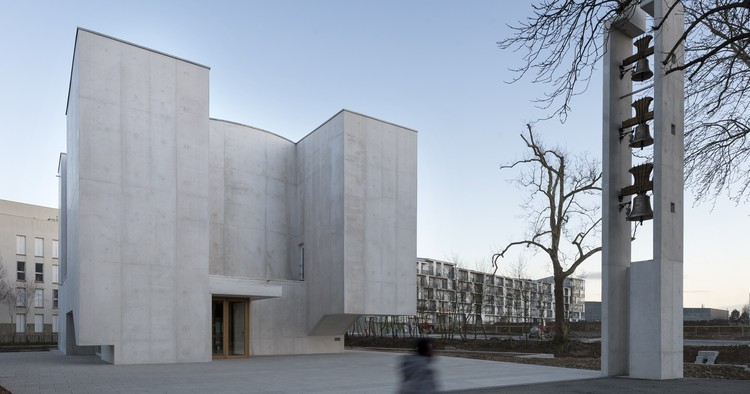
Architecture photographer Ana Amado has shared with us a set of photographs featuring Álvaro Siza's recently inaugurated Church of Saint-Jacques de la Lande, in Rennes—the first church built in Brittany, France this century.
As in many other Siza buildings, this church is built in white concrete and pays special attention to the natural light, which bathes the altar, tabernacle, pulpit and baptismal font from above. Externally, different volumes—blocks, cylinders and incisions—add to the overall mass of the building, distinguishing it from the neighboring housing blocks, while the use of few openings helps to establish a solid, permanent presence in the natural environment. Check Ana Amado's set of photographs below:
Madrid is unfathomable. If the city itself is immense, it´s examples of interesting architecture are overwhelming. For over a half a century, Madrid has been an experimental laboratory for modern and contemporary architecture in Spain. With numerous examples of innovative and experimental architecture, as well as many failures, few of which are valued and recognized. This selection seeks to show archetypal examples of architecture that have transcended time; it does not intend to be an exhaustive list of the city´s architectural works. Many will think that the list lacks important buildings and personally, I couldn´t agree more. That is perhaps the beauty of Madrid: there is a diversity of opinion, there are thousands of sites to see, the city surprises you with every step you take.