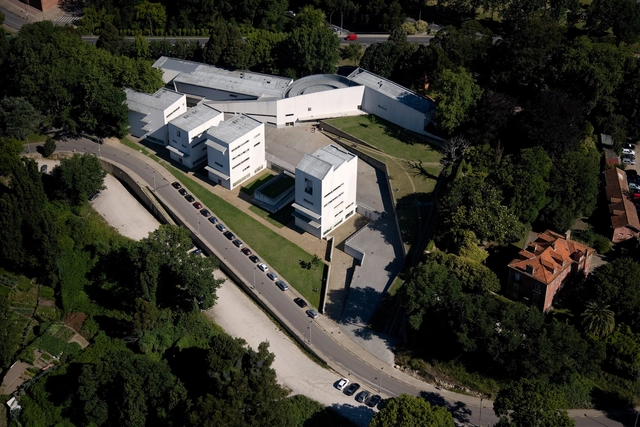
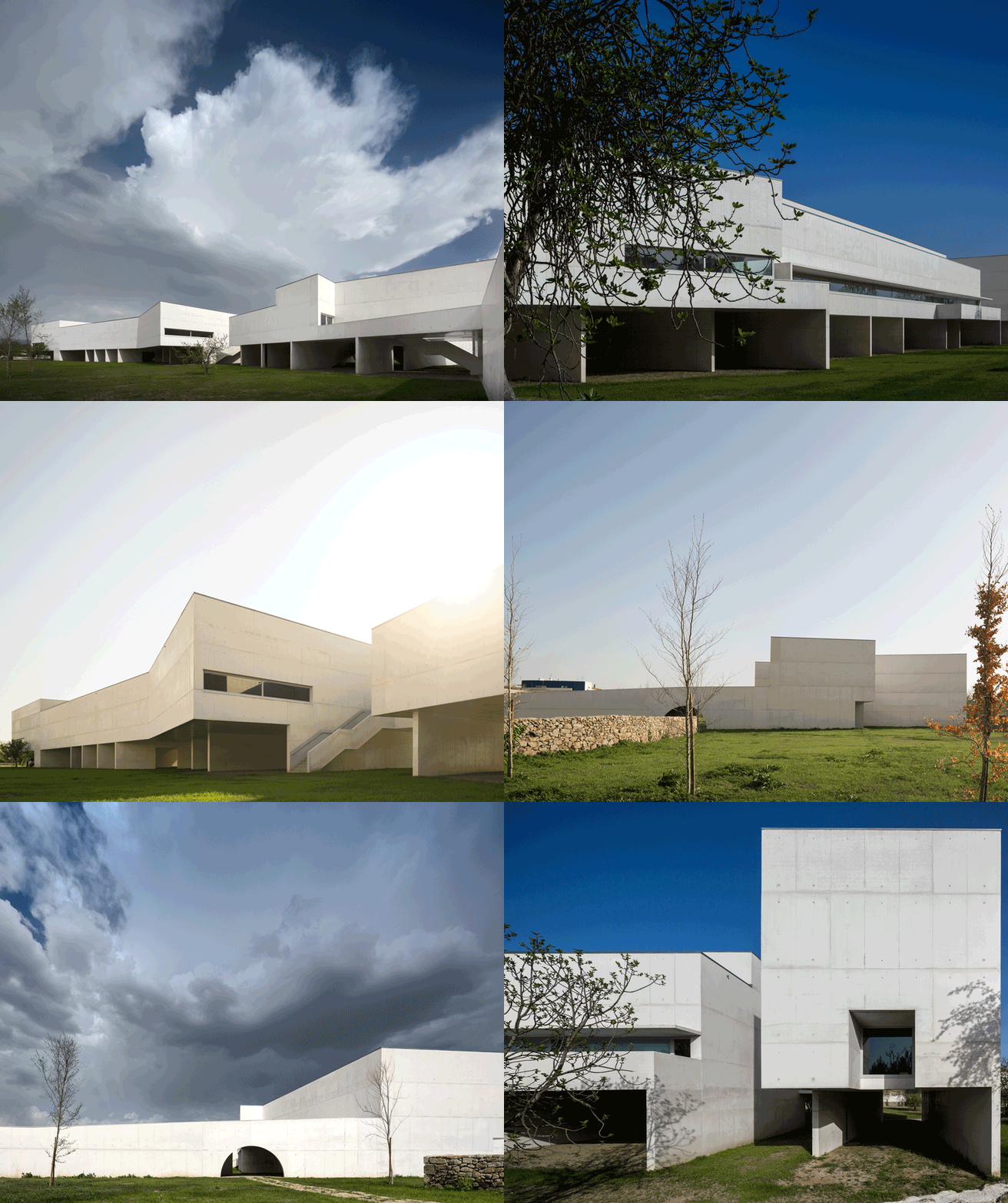
This week we present the Faculty of Architecture of the University of Porto through the lenses of Fernando Guerra. Here we share a complete series from the photographer of this iconic work, along with a brief text on the subject. The University of Porto plays a major role in the world's architectural landscape, always among the highest in rankings and boasting great architects like Eduardo Souto de Moura (Pritzker 2011), Fernando Távora and Álvaro Siza Vieira (Pritzker 1992).
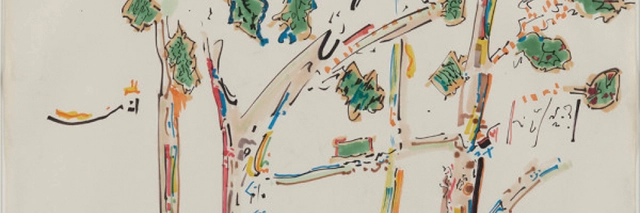
Gordon Matta-Clark (1943-1978) is one of the most influential artists of the 1970s, whose work has continued to be a noted influence of both architects and visual artists since. SPLITTING, CUTTING, WRITING, DRAWING, EATING…GORDON MATTA-CLARK surveys the constructive and destructive verbs that defined his relation to art and architecture, featuring correspondence, drawings, photographs, notebooks, and films related to the artist's key projects, drawn from the archive of the Canadian Centre for Architecture, Montréal. Along with his major building cuts from 1973 to 1978, in which laboriously cut holes into floors of abandoned or disused buildings, including A W-Hole House, Conical Intersect, Day's End, and Splitting (1974), the exhibition also explores his interest in metabolic and cooking processes, including his restaurant Food (1971); his play with language and the syntax of voids, gaps, and abandoned spaces; and the use of drawing as a mode of thinking through space.The exhibition will focus on these social and creative aspects of Matta-Clark´s conception of architecture, or as he put it, "making space without building it."
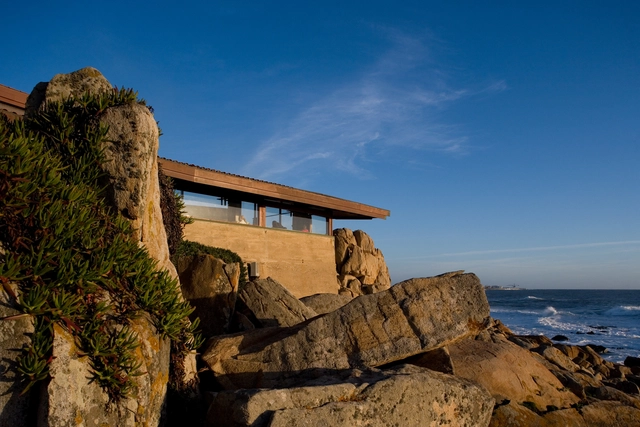
The following photo set by Fernando Guerra focuses on Boa Nova Tea House, a project by Portuguese architect Álvaro Siza Vieira. Completed in 1963, it was one of the first works done by the 1992 Pritzker Prize winner. Built on the rocks that hang over the sea in Leça da Palmeira, the tea house is in close proximity to another iconic project by the same architect, the Leça Swimming Pools, both classified as National Monuments in Portugal.
The "architectural pilgrimage" is much more than just everyday tourism. Studying and admiring a building through text and images often creates a hunger in architects, thanks to the space between the limitations of 2D representation and the true experience of the building. Seeing a building in person that one has long loved from a distance can become something of a spiritual experience, and architects often plan vacations around favorite or important spaces. But too often, architects become transfixed by a need to visit the same dozen European cities that have come to make up the traveling architect's bucket list.
The list here shares some sites that may not have made your list just yet. Although somewhat less well known than the canonical cities, the architecture of these six cities is sure to hold its ground against the world's best. The locations here make ideal long weekend trips (depending of course on where you are traveling from), although it never hurts to have more than a few days to really become immersed in a city. We have selected a few must-see buildings from each location, but each has even more to offer than what you see here—so don't be afraid to explore!
Coin dedicated to Álvaro Siza Vieira designed by Eduardo Souto Moura. Image via OASRS - Facebook
The 2017 Portuguese Commemorative Coins were unveiled this week in the Casa da Moeda, where the themes, authors and designs for the commemorative, chain and collector's coins to be issued throughout the year were shown.
Among the novelties, a new series dedicated to Portuguese Architecture stands out, which includes a coin dedicated to Álvaro Siza Vieira designed by Eduardo Souto Moura, two great names in Portuguese architecture.
Throughout the 60-year career of Álvaro Siza, his work has continuously defied categorization--having variously been described as “critical regionalism” and “poetic modernism,” with neither quite capturing the true essence of Siza's intuitive architecture. In this interview, the latest in Vladimir Belogolovsky's “City of Ideas” series, Siza discusses those attempts to categorize his work, his design approach and the role of beauty in his designs.
Vladimir Belogolovsky:Your student, Eduardo Souto de Moura said, “Siza’s houses are just like cats sleeping in the sun.”
Álvaro Siza: [Laughs.] Yes, he meant that my buildings assume the most natural postures on the site. There is also a reference in that to the human body.
The Regional Government of Andalucía (Spain) has decided not to move forward with plans to build "Puerta Nueva," the project for the new gate of Alhambra. Designed by Álvaro Siza and Juan Domingo Santos, the proposal won an international competition held in 2010. According to the newspaper El País, the decision follows the latest Icomos report, which rejects its construction and suggests it would have a "negative impact on the exceptional universal value of this monument World Heritage."
The 1992 Pritzker Prize winner's project sparked a long-running dispute between the Monument Patronage, the Mayor's Office of Granada and cultural institutions of Andalusia for the high concentration of commercial services that would be included in the project. "How is it possible to argue that the project is not integrated and is invasive in the landscape when the jury noted that one of its main virtues was its integration in a place so sensitive and intervened since the twentieth century?" remarked Siza and Santos on the decision of Andalucía, according to El País.
A new collection of five minute-long On Design stories—developed by the team behind Section D, Monocle 24's 24's weekly review of design, architecture and craft—profile a person, survey a place, or unpack an idea that’s changing or shaping design and architecture today. We've selected fourteen of our favorites from the ongoing series, examining issues as wide as Postmodernism and the architectural competition, to five-minute profiles of Alvaro Siza, Josef Hoffman, Kengo Kuma and Superstudio.
https://www.archdaily.com/802384/round-up-14-short-stories-architects-attitudes-odd-anecdotesAD Editorial Team
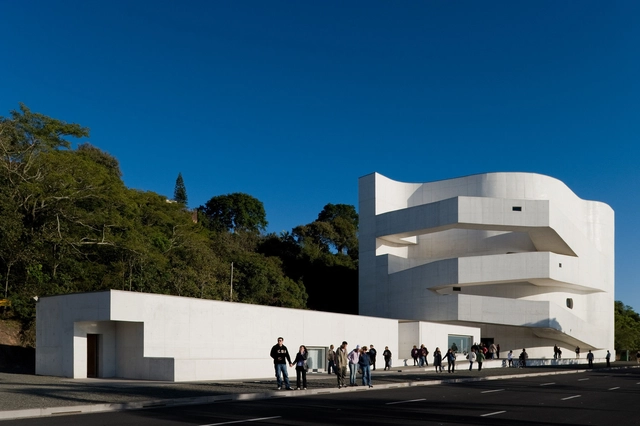
Through 181 images, Guerra shows us Siza's masterful play of light and shadow. The photos allow us to experience a full day at the museum: the morning sun, followed by sunset and finally, the museum illuminated at night.
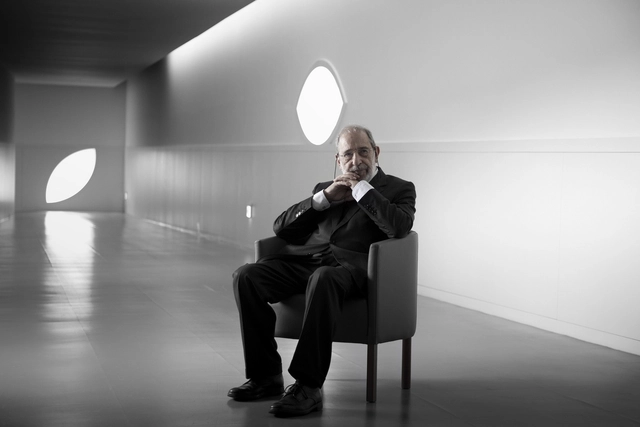
Today, one of the most recognized and respected architects in the world turns 83: Álvaro Siza Vieira. Awarded the Pritzker Prize in 1992, the Portuguese architect charmed the jury at the time, who explained their choice by saying: “his forms, shaped by light, appear deceptively simple, they are honest.”
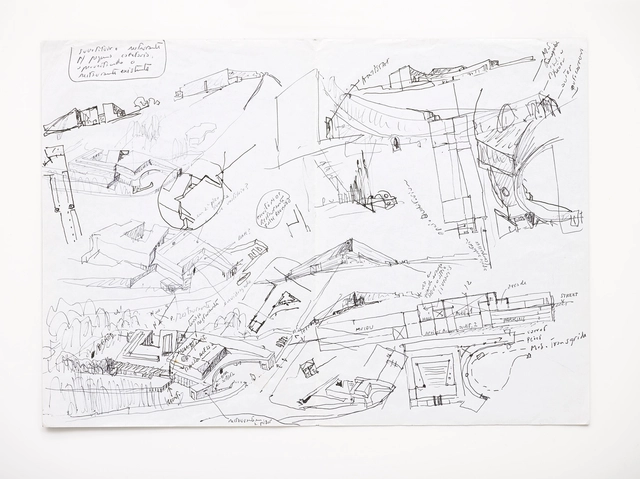
Álvaro Siza, Serralves Museum, Porto, 1991-1999. First sketches for the projetc, [1991] 29,7 x 42,0 cm. [ASV/FS 25]
Description from The Serralves Museum of Contemporary Art: The first of a developing programme at the Serralves Museum of Contemporary Art of exhibitions talks and events dedicated to contemporary architecture, ‘Raw Material’ presents plans, sketches, correspondence and photographs that offer a fuller understanding of the process of architectural design, beyond the self-sufficiency of the realized project. This will be the first exhibition to draw upon the recent gift to the Fundação de Serralves of 40 projects from the archive of Álvaro Siza as part of a collaboration between Fundação de Serralves, the Canadian Centre for Architecture in Montreal and Fundação Calouste Gulbenkian in Lisbon.
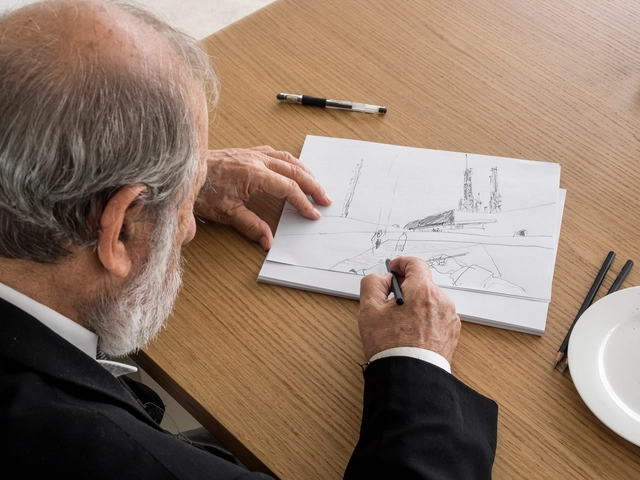
Álvaro Siza’s practice is distinguished by his use of drawing as a working instrument in the prefiguration of forms and spaces within the process that brings him successively closer to the desired result. But an archive is more than just a set of drawings. The architect’s correspondence with his clients, the photographic record of the places where the works are to be built, relations with regulatory authorities and the opinions of the multiple actors involved in the construction processes, the models that support the perception of the proposals, the minutes of meetings and reports of the tensions arising at the building sites are documents that record an infinite number of episodes that remain invisible in the finished work. Offering insight into their contingent processes, the exhibition also offers invaluable understanding of the processes associated with the inventory, classification, and conservation of Siza’s archive, which will serve as a focus for future research and discussion about the role of architecture in contemporary society.
As part of ArchDaily's coverage of the 2016 Venice Biennale, we are presenting a series of articles written by the curators of the exhibitions and installations on show.
As a response to the 15th International Architecture Exhibition’s challenging theme, Portugal presents a “site-specific” pavilion, occupying an urban front in physical and social regeneration on the island of Giudecca: Campo di Marte. In actual fact, the installation of the pavilion on-site triggered the completion of Campo di Marte’s urban project designed by the Portuguese architect Álvaro Siza thirty years ago.
There is an enormous intensity of information, knowledge and ideas on display at this year's Venice Architecture Biennale, Reporting From the Front. With all the Executive Editors and Editors-in-Chief of ArchDaily's platforms in English, Spanish and (Brazilian) Portuguese in Venice for the opening of the 2016 Venice Architecture Biennale—plus co-founder David Basulto and European Editor-at-Large James Taylor-Foster, who curated this year's Nordic Pavilion—we've pooled together twelve of our initial favourite exhibitions and must-see shows.
https://www.archdaily.com/788809/12-things-you-need-to-see-at-the-2016-venice-biennale-reporting-from-the-front-selection-oneAD Editorial Team
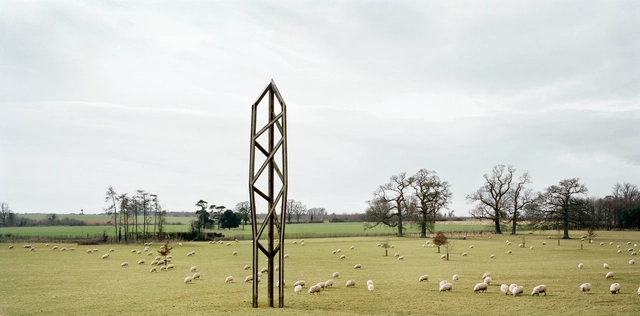
Two sculptures—Obelisk by Alison and Peter Smithson and Columns by Álvaro Siza Vieira—have been re-erected in Shatwell, a "semi-derelict agricultural complex" located in rural England. The instatement of the monuments form a part of an evolving programme of installations which Drawing Matter, an organisation founded by Niall Hobhouse "that champions the process of architecture through collecting, archiving and commissioning," will use to explore the relationship between architecture, sculpture and landscape.
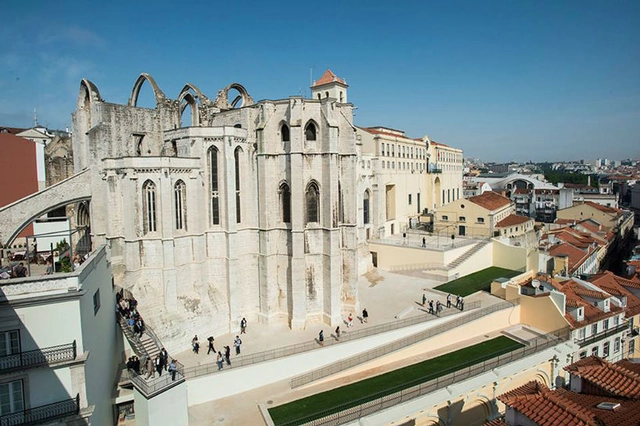
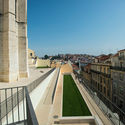
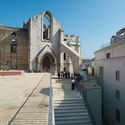
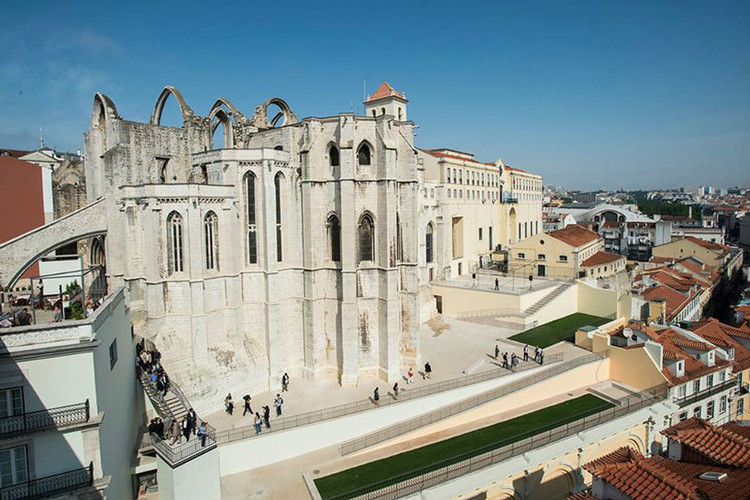
Due to a fire in 1988, the Chiado district of Lisbon had many of its buildings damaged or partially destroyed by the flames, and an intense restoration and recovery project led by Álvaro Siza has been going on for over a decade.
Among the strategies employed by the Portuguese architect (and winner of the 1989 Pritzker Prize) is the reorganization of routes and walkways, creating elevated walkways to facilitate access to the area and the flow of locals and visitors. According to the Municipal Council of Lisbon, Siza has recently completed the connection between one of the courtyards of the Carmo Convent (Patio B) to the Largo do Carmo square and the Carmo Terraces with a pedestrian path.
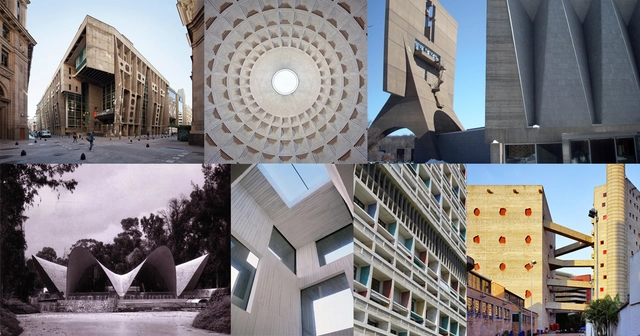
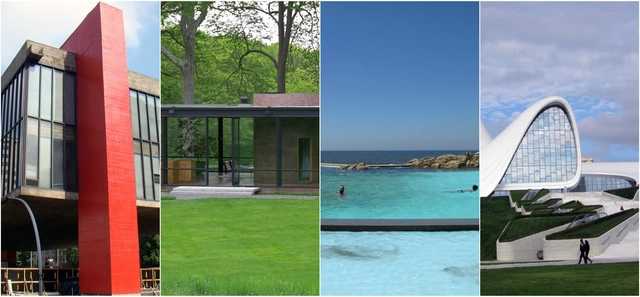
“Concrete has the ability to be primitive and technological, massive and levitating, to combine the properties of steel with those of mud,” says Rowan Moore in his list of The 10 best concrete buildings created for The Guardian. Through examples spanning three continents, Moore unites old standbys with unexpected wonders, all of which show the varied possibilities inherent in mixing water, aggregate, and cement. In a list that incorporates examples from Classical times to the present, Moore establishes concrete’s unique ability to adapt to different times, styles, applications, and treatments.
Examples by Le Corbusier, Álvaro Siza, Lina Bo Bardi, and Marcel Breuer demonstrate that concrete is anything but workaday or utilitarian. Moore’s list affirms that a material simultaneously strong and light, durable, sustainable, and fire-resistant, can scarcely be considered anything short of miraculous. Of course, ten buildings can only provide an abridged version of concrete’s possibilities, and Moore cheekily apologizes for some of the obvious omissions. Check out the full list here.
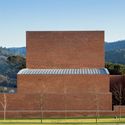
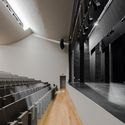
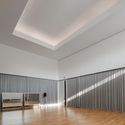
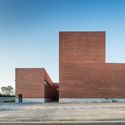
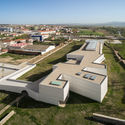
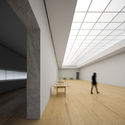
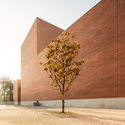
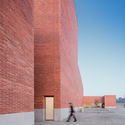
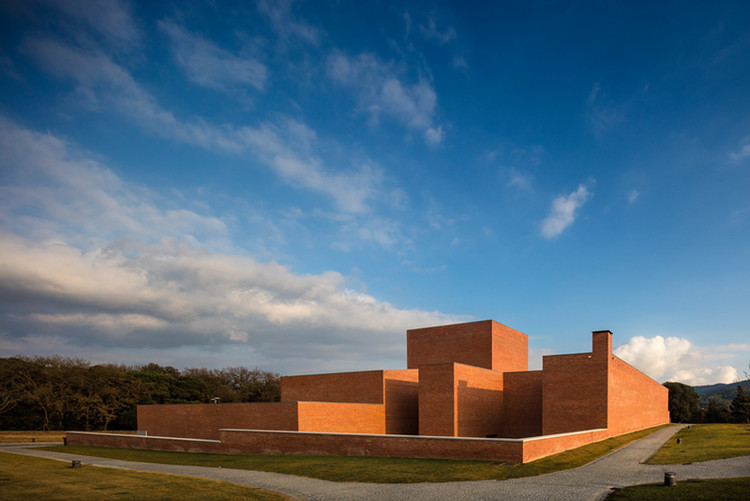
Architecture photographer Joao Morgado just shared with us images of Alvaro Siza's newest project in Barcelona -designed in collaboration with local office Aresta Arquitectura- the Public Auditorium in Llinars del Vallès.
The project is conformed by two red brick buildings, one which houses an auditorium with capacity for 300 seats and a second building with all the offices and technical spaces associated to the theater.










.jpg?1464585711&format=webp&width=640&height=580)
.jpg?1464585654 "NEIGHBOURHOOD: Where Alvaro meets Aldo / Curators Nuno Grande and Roberto Cremascoli. Portuguese Pavilion at the 2016 Venice Biennale. Images © Laurian Ghinitoiu.")
.jpg?1464585766 "NEIGHBOURHOOD: Where Alvaro meets Aldo / Curators Nuno Grande and Roberto Cremascoli. Portuguese Pavilion at the 2016 Venice Biennale. Images © Laurian Ghinitoiu.")
.jpg?1464585726 "NEIGHBOURHOOD: Where Alvaro meets Aldo / Curators Nuno Grande and Roberto Cremascoli. Portuguese Pavilion at the 2016 Venice Biennale. Images © Laurian Ghinitoiu.")
.jpg?1464585648 "NEIGHBOURHOOD: Where Alvaro meets Aldo / Curators Nuno Grande and Roberto Cremascoli. Portuguese Pavilion at the 2016 Venice Biennale. Images © Laurian Ghinitoiu.")
.jpg?1464585711)