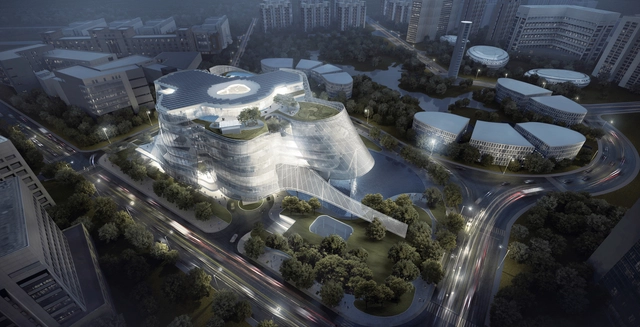
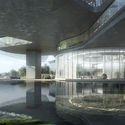
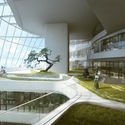
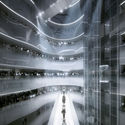
MAD Architects has conceived a new design center for international fashion group Xinhee in the coastal Chinese city of Xiamen. Designed as six petals growing from a central atrium, the 61,000 square meter building will sit on a 15,000 square meter site, and will serve as the home of Xinhee and its six subsidiary brands.
“We envision it as a building with skin-and-bones,” reveals MAD founding principal Ma Yansong, “the correspondence of clothing and architecture is they both explore the relationship between the interior and the exterior.”
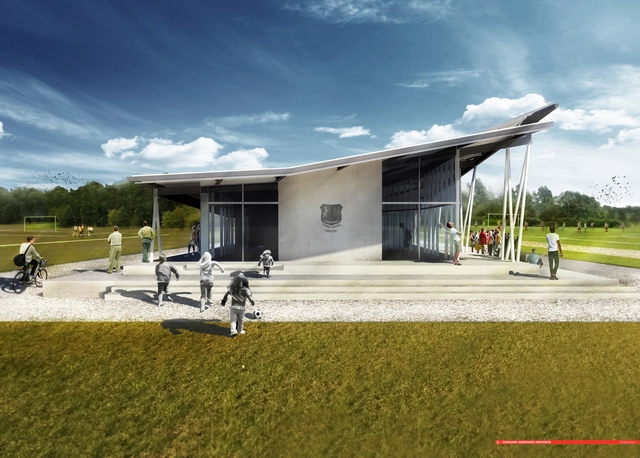
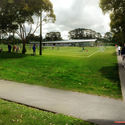
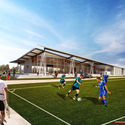
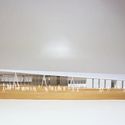
The largest football club in New Zealand, the Three Kings United Football Club, is set to receive a new headquarter and community center at Keith Hay Park in Auckland. Designed by Copeland Associates Architects (CAA), the single storey pavilion sits on a raised plinth to elevate it from the flood plain and gives spectators a greater vantage point over the surrounding sports fields. Comprised of predominantly lightweight, prefabricated elements, the building has a sense of lightness which increases in accordance with its greater transparency at the northern end.
Videos
Courtesy of Avoid Other Architects + TETRA Architects and Planners
Highways have been operating in largely the same way since the early twentieth century. In the Bao'an District in Shenzhen, China, rapid urbanization and industrialization within the built environment is not mirrored in its infrastructural spine, the G107 highway. In order to investigate the possibilities for this strip and its adjacent areas, a visionary open competition was organized earlier this year. A team lead by Avoid Obvious Architects (AOA) and TETRA Architects and Planners presented a redefinition of the highway typology, with a system complex enough to properly service the rich productivity it is connecting.
AOA and TETRA's new G107 is a multi-modal transport system, focused on allowing futuristic modes of transport as it is on implementing cutting edge levels of sustainability. Also referred to by the consortium as an "organic highway," the proposition aims to foster and connect a network of "green manufacturing," with the strategic vision of making Bao'an a carbon neutral city by 2045.




_cropped.jpg?1470272808&format=webp&width=640&height=580)















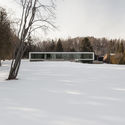
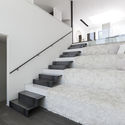
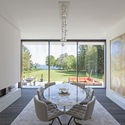


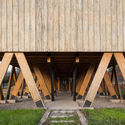






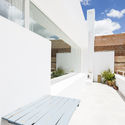
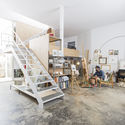
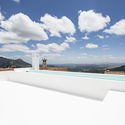


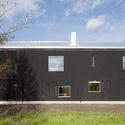









.jpg?1470624910 "© Marcelo Donadussi")
.jpg?1470624491 "© Marcelo Donadussi")
.jpg?1470624873 "© Marcelo Donadussi")
.jpg?1470624435 "© Marcelo Donadussi")




_cropped.jpg?1470272808)