More than 5000 new projects published throughout 2021 make ArchDaily the largest online architecture library in the world. ArchDaily Curatorial Team researches, contacts offices, prepares, and delivers the built projects in the world on a daily basis, with the objective of providing inspiration, knowledge, and tools to our users who take part in the creation of better built environments.
https://www.archdaily.com/974013/best-architectural-projects-of-2021Clara Ott
Over the past couple of years, many designers have voiced their commitment to ethical and ecological sourcing, resorting to frugal designs through local materials, traditional techniques, and equitable architecture. Having this approach in mind, many found inspiration in their cultural heritage, reimagining ancient designs in contemporary contexts.
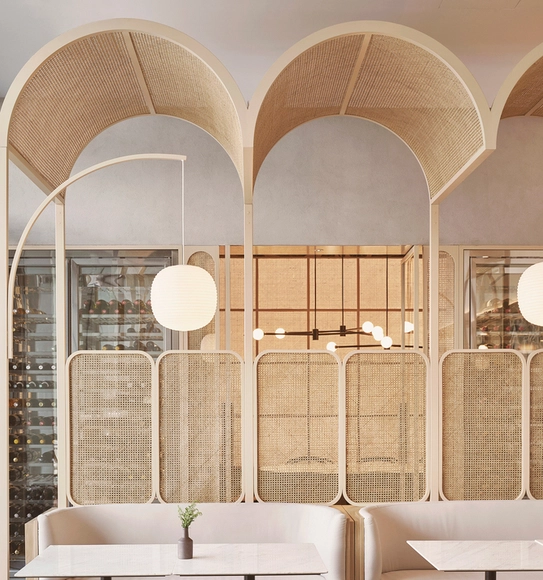
When thinking of recycled design trends, we can't overlook one of the most well-known and popular materials that was shared by nations all around the globe over the span of 100 years; on balconies, outdoor patios, gardens, and indoor living spaces: rattan. It is estimated that almost seven hundred million people worldwide use rattan, with many countries presenting it as an integral part of their cultures. In this article, we look at how architects and designers integrated rattan in their designs and found numerous ways to make the best out of Southeast Asia's popular local material.
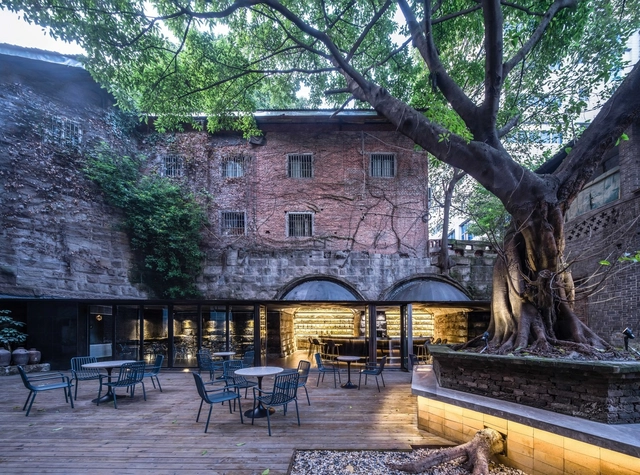
Both tea and alcohol in traditional China were similarly aestheticized, and both influenced the language of literature and art. People used to exchange alcohol as a gift in a way that they later would with tea. Today, more and more cities in China have embraced this drinking culture that passed down from generation to generation, and reinterpreted with a new contemporary fashion, which is constantly evolving in the urban cafes and bars.
The American architect, designer, and futurist Buckminster Fuller once defined the Dymaxion principle as “constructing ever more with ever less weight, time, and ergs per each given level of functional performance.”
How many U.S. architecture professors know that there is a Chinese treatise equivalent to Vitruvius’ Ten Books of Architecture? Very few, I suspect. I taught architectural history for more than 20 years before I discovered the marvelous Yingsao Fashi, a Song Dynasty book by a prominent court official who, as far as we know, was not an architect or builder. In fact, prior to the Ming Dynasty no prominent temple, palace, or shrine in China was designed by an architect because the concept of a single mastermind in charge of a building project was foreign to the East Asian way of designing environments of any kind.
https://www.archdaily.com/948425/why-dont-we-teach-chinese-architecture-in-the-united-statesMark Alan Hewitt
Another year, another successful ArchDaily China Building of the Year Awards! With more than 20,000 votes gathered over the past 20 days, the results of the 2020 edition are in! Once more, the award has proved to be the largest architecture prize centered around people’s opinion. Crowdsourced, the most relevant projects of the year were nominated and selected by our readers.
This year we celebrate three projects -- highlighting a wide range of interventions, typologies, scale, material and locations, the winners are a mere reflection of the vast outreach of the profession. With new names surfacing every year, this edition, as the previous ones did, honors well-established practices and the newcomers. High-profile figures include Atelier FCJZ with its bridge museum in the Chinese countryside, Neri&Hu Design and Research Office and its sculpture art center, and Atelier Lai's Bamboo Bridge.
True to its status, ArchDaily China, the most far-reaching Chinese architectural website, is and will always be a platform for all architecture enthusiasts. Curating the best in the world, thanks to the trust of architectural firms and the devotion of our readers, ArchDaily’s realm keeps expanding exponentially. For that, we are grateful!
Following an exciting week of nominations, ArchDaily’s readers have evaluated over 800 projects and selected 10 finalists of the Building of the Year Award. Over 20,000 architects and enthusiasts participated in the nomination process, choosing projects that exemplify what it means to push architecture forward. These finalists are the buildings that have inspired ArchDaily readers the most.








.jpg?1626793420&format=webp&width=640&height=580)
.jpg?1626793733&format=webp&width=230&height=230&crop=true)
._JPG.jpg?1626793315&format=webp&width=230&height=230&crop=true)
.jpg?1626793767&format=webp&width=230&height=230&crop=true)
.jpg.jpg?1626793734&format=webp&width=230&height=230&crop=true)
.jpg?1626793420)


.jpg?1619993383&format=webp&width=640&height=580)
.jpg?1619993297&format=webp&width=230&height=230&crop=true)
.jpg?1619993439&format=webp&width=230&height=230&crop=true)
.jpg?1619993678&format=webp&width=230&height=230&crop=true)
.jpg?1619993656&format=webp&width=230&height=230&crop=true)
.jpg?1619993383)