Xu Tiantian is the founding principal of DnA_Design and Architecture, an interdisciplinary practice that addresses both the physical and social dimensions of the contemporary living environment, across scales. Born in 1975 in Fujian, China, she received a Master of Architecture in Urban Design from the Harvard Graduate School of Design and a bachelor's degree in architecture from Tsinghua University in Beijing. Her recent work focuses on rural revitalization through a strategy she describes as "architectural acupuncture," understood as small-scale, site-specific interventions designed to activate local culture, agriculture, and tourism. These interventions, primarily concentrated in China's rural regions, have been recognized by UN-Habitat as a global model for urban–rural integration. In this interview with Louisiana Channel, she reflects on the role of the architect, questions architecture itself and the concept of beauty, explains her working methodology, and emphasizes the spatial dimension of nature.
Wang Ziling
"Beauty in Itself Is Dangerous:" Xu Tiantian on Moving Beyond Starchitecture in Louisiana Channel Interview


Louisiana Museum of Modern Art Opens Memoryscapes Exhibition Exploring the Design Methodologies of ATTA and DnA

The Louisiana Museum of Modern Art will inaugurate, on January 22, 2026, the second exhibition in its Architecture Connecting series, focusing on the discipline's relationship with science and research across a wide range of fields, including biology, neuroscience, and anthropology. The first exhibition in the series, Living Structures (2024–2025), featured ecoLogicStudio, Atelier LUMA, and Jenny Sabin Studio, highlighting their work at the intersection of algorithms and nature and their development of methods that re-evaluate sustainable architecture and climate considerations. This second exhibition, titled Memoryscapes, explores the memories, stories, and traditions informing the working methodologies of Xu Tiantian's DnA_Design and Architecture (Beijing) and ATTA – Atelier Tsuyoshi Tane Architects (Paris).


Expo Gold for Bahrain and Dubai's Gateway Metro: This Week's Review
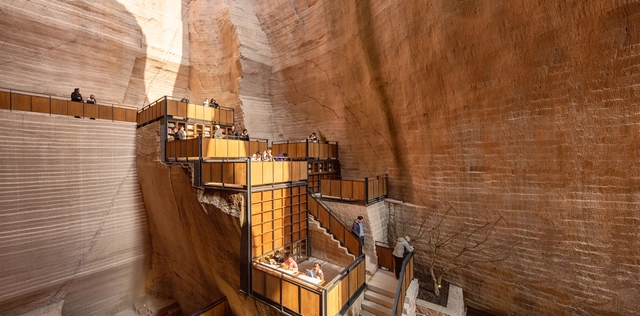
This week in architecture, global recognitions and new unveilings underscored the field's growing commitment to climate awareness, cultural continuity, and adaptive reuse. From Expo 2025 Osaka's closing ceremonies to international award announcements, the focus turned to architects and designers redefining the relationship between place, material, and community. Alongside these recognitions, major new projects, from Dubai to California, illustrated how design continues to evolve across scales: shaping cities, preserving heritage, and addressing urgent global challenges through context-driven architecture.


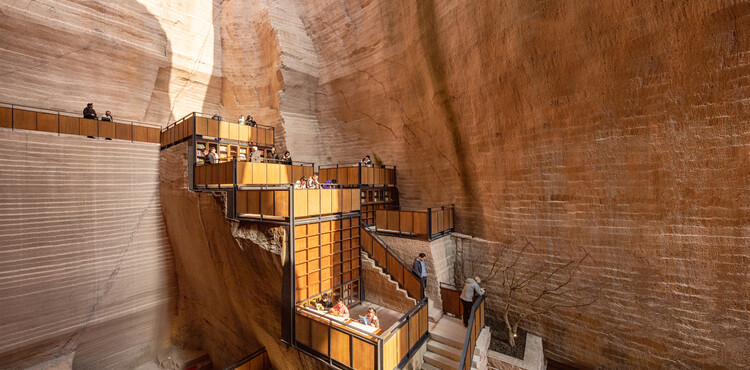
Xu Tiantian Receives the 2026 Charlotte Perriand Award
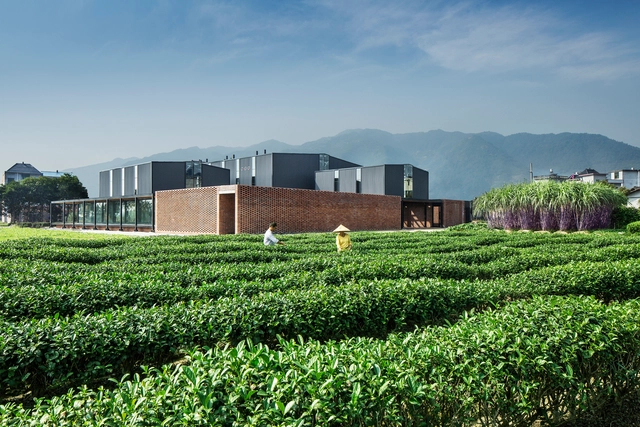
The Créateurs Design Awards (CDA) announced Xu Tiantian, Founder and Principal Architect of DnA_Design and Architecture, as the recipient of the 2026 edition of Le Prix Charlotte Perriand. The award celebrates architects whose work embodies innovation, social responsibility, and a deep engagement with community and place. The architect was recognized for her transformative work bridging urban and rural communities through innovative design interventions. Her approach to architecture was acknowledged as a tool for cultural preservation and rural revitalization, making her an exemplary recipient of this honor, previously awarded to prominent architects such as Frida Escobedo, Jeanne Gang, Kazuyo Sejima, and Ryue Nishizawa.


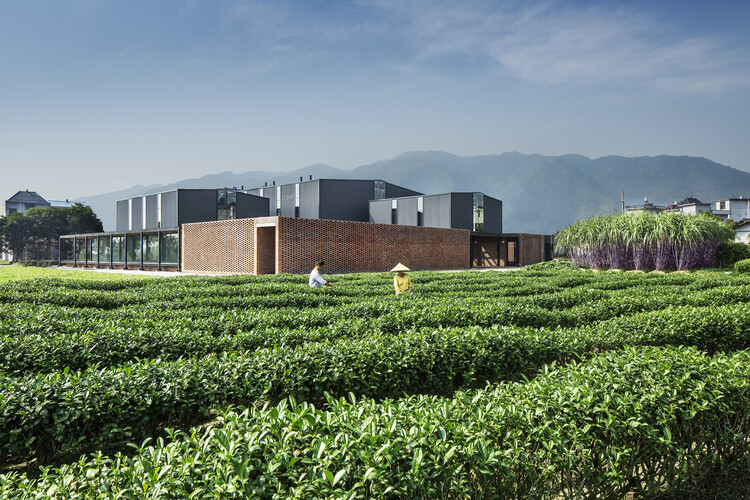
The Future of Chinese Contemporary Architecture: How is China Creating a Civic Culture For a New Society?
.jpg?1650549341&format=webp&width=640&height=580)
A new kind of architecture distinguished by unique regional characteristics emerged in the mid-1990s when in China, architects started practicing independently from government-run design institutes. The leading Chinese architects of this time succeeded collectively in producing a unique architectural body of work when so many buildings built around the world were no longer rooted in their place and culture.
In China Dialogues, Vladimir Belogolovsky charts a panorama of Chinese architecture through the words of its main participants, lifting the veil on a prolific new generation of designers, each sharing a highly intellectualized and conceptual understanding of architecture. Following the course of 21 interviews accompanied by over 120 photographs and drawings of beautifully executed projects uprooted throughout the country since the early 2000s, China Dialogues opens up the thinking process of the country's top architects, providing an insight into their ideas, intentions, and visions in unusually revealing and candid ways.
Adam_Mork.jpg?1650549635&format=webp&width=230&height=230&crop=true)


_schranimage.jpg?1650549533&format=webp&width=230&height=230&crop=true)
.jpg?1650549341)
“Architecture Should be Able to Connect the Past and the Future”: In Conversation with Xu Tiantian
It is the end of May 2016, Alejandro Aravena’s “Reporting from the Front” Biennale is about to kick off the next day and I just landed at Venice airport. Vaporetto waterbuses are no longer running at this late hour, so I am heading for a water taxi, thinking that it will cost me a bundle to get to the city. But maybe not! I see a lonely figure, “Are you going to Venice? Would you like to share a taxi?” A young Chinese woman agrees without hesitation. As soon as the boat leaves I keep pressing my luck, “Are you an architect, by any chance?” Yes! The next hour flew unnoticed, as we discussed our discipline and common friends. Two years passed, and I am back to Venice Biennale. At the opening of the Chinese Pavilion, I am hopping from conversation to conversation until I am introduced to Xu Tiantian, “China’s most promising female architect.” We looked at each other and said in unison, “The taxi girl/guy!” We finally exchanged contacts and on my next trip to Beijing we met at Xu’s DnA Design and Architecture studio. What follows, after a brief introduction, is an excerpt from that conversation.


.jpg?1553867198&format=webp&width=230&height=230&crop=true)

Can Architecture Save China’s Rural Villages? DnA’s Xu Tiantian Thinks So
.jpg?1524158077)
Travel seven hours by car in a Southwest direction from Shanghai and you will arrive in Songyang County. The name is unfamiliar to many Chinese people, and even more foreign to those living abroad. The county consists of about 400 villages, from Shicang to Damushan.
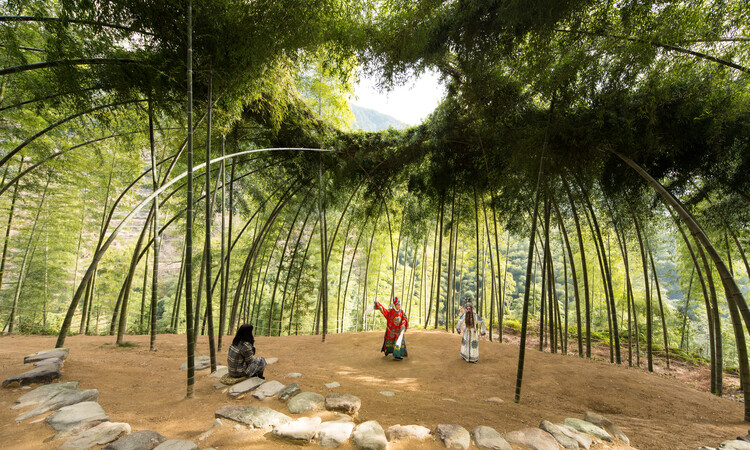
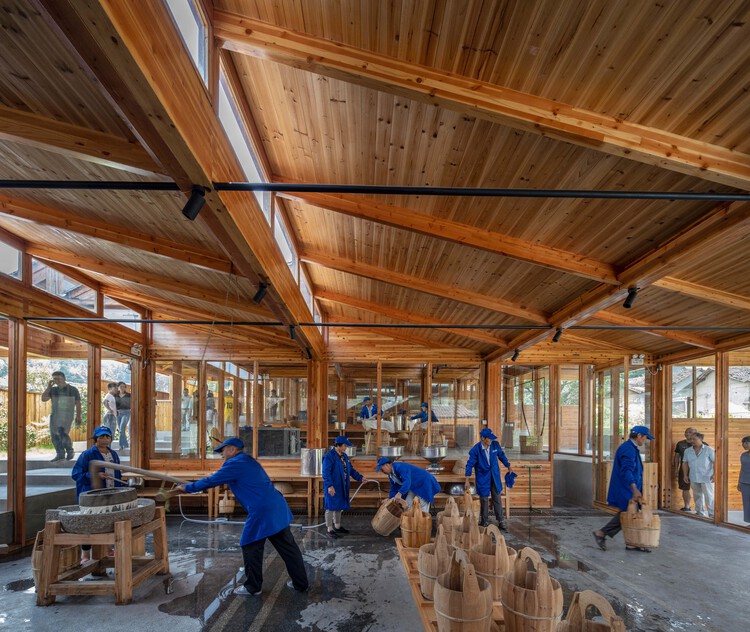
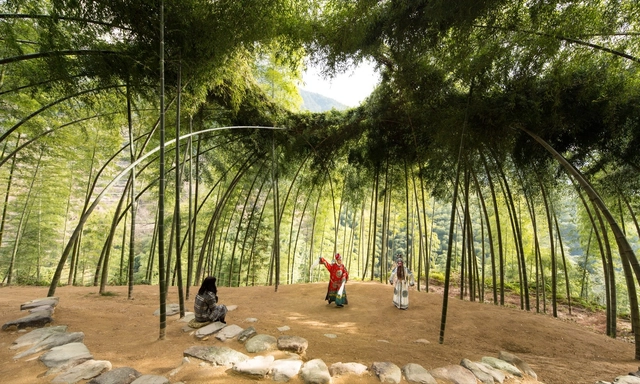
Here, undulating lush green terraces hug the sides of Songyin river valley, itself the one serpentine movement uniting the lands. Follow the river and you will see: here, a Brown Sugar Factory; there, a Bamboo Theatre; and on the other side, a stone Hakka Museum built recently but laid by methods so old, even the town masons had to learn these ways for the first time, as if they were modern methods, as if they were revolutionary.
.jpg?1524158077&format=webp&width=640&height=580)
And maybe they are. Songyang County, otherwise known as the “Last Hidden Land in Jiangnan,” may look like a traditional Chinese painting with craggy rock faces, rice fields and tea plantations, but it has also become a model example of rural renaissance. Beijing architect Xu Tiantian, of the firm DnA_Design and Architecture, has spent years surveying the villages of Songyang, talking to local County officials and residents, and coming up with what she calls “architectural acupunctures.”
.jpg?1524158612 "Brown Sugar Factory. Image © Wang Ziling")
.jpg?1524163466 "Teahouse, Damushan Tea Valley. Image © Hao Chen")
.jpg?1524164629 "Teahouse, Damushan Tea Valley. Image © Jiang Xiaodong")
.jpg?1524158127 "Bamboo Pavilion. Image © Zhou Ruogo")
.jpg?1524158212 "Bamboo Pavilion. Image © Zhou Ruogo")
.jpg?1524163398 "Bridge at Shimen Village. Image © Han Dan")
.jpg?1524163448 "Bridge at Shimen Village. Image © Wang Ziling")
.jpg?1524163483 "Bridge at Shimen Village. Image © Wang Ziling")
.jpg?1524163637 "Wang Jing Memorial Hall. Image © Wang Ziling")
.jpg?1524158077)
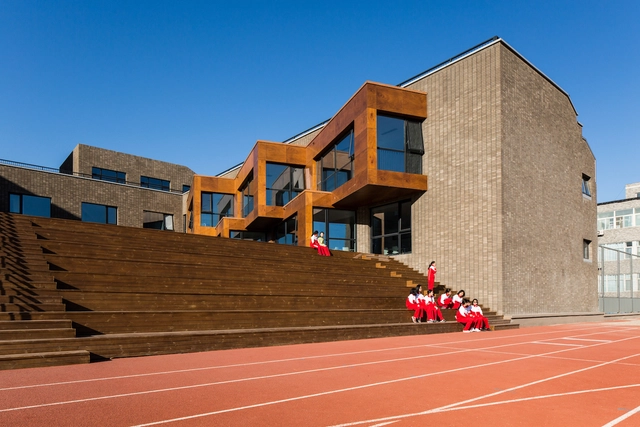
Peking University Affiliated High School / Crossboundaries


-
Architects: Crossboundaries
- Area: 26000 m²
-
Professionals: BIAD Beijing Institute of Architecture & Design