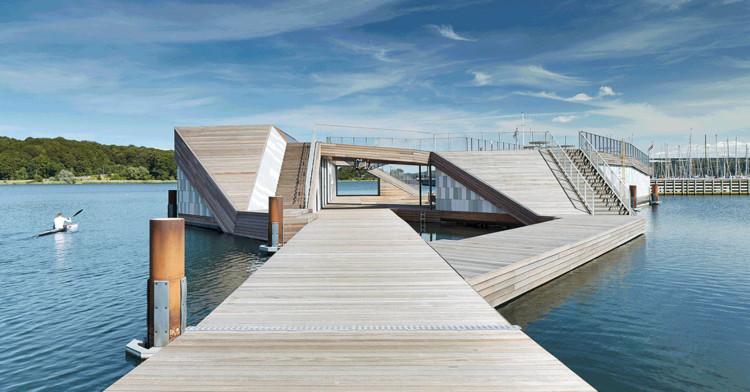
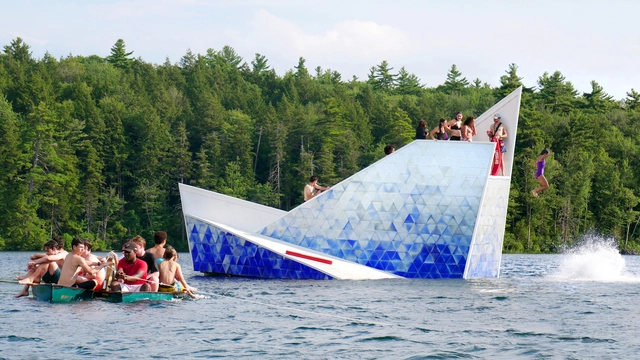
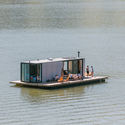
Plataforma de Mergulho ICEBERG / Bulot+Collins. Image Cortesia de Bulot+Collins
The aquatic environment has always fascinated dreamers and researchers. Around 1960, in the midst of the fierce space race of the Cold War, French explorer Jacques Cousteau developed equipment such as the Aqualung to unravel the depths of the sea, which remained as unexplored as outer space itself. He even stated that in 10 years we could occupy the seabed as “aquanauts” or “oceanautas,” where it would be possible to spend long periods extracting mineral resources and even growing food. Sixty years later, the seabed is still reserved for few, and mankind has been more concerned with plastic in the oceans and rising sea levels than colonizing the ocean floor. But being close to a body of water continues to attract most people. Whether out of interest or in response to risks of flooding and over-population, some have turned to utopian proposals and floating architecture, examples of which have been featured in the ArchDaily project archive. But what are the fundamental differences between building houses on land versus on water, and how do these buildings remain on the surface rather than sinking?
Next year’s Tallinn Architecture Biennale (TAB) has been postponed until 2022. Announced by the Estonian Centre for Architecture, the 6th edition has been adjourned “due to the postponement of the Venice Architecture Biennale as well as the uncertain times that international cultural events are facing because of the coronavirus outbreak”.
Opened in the middle of September, Tallinn Architecture Biennale 2019 (TAB 2019) explores its theme "Beauty Matters" through all possible architectural means. Wood and textiles, 3D-printed structures and VR are only a few components of the main exhibition of the biennial, curated by Tel Aviv-born, London-based architect Yael Reisner.
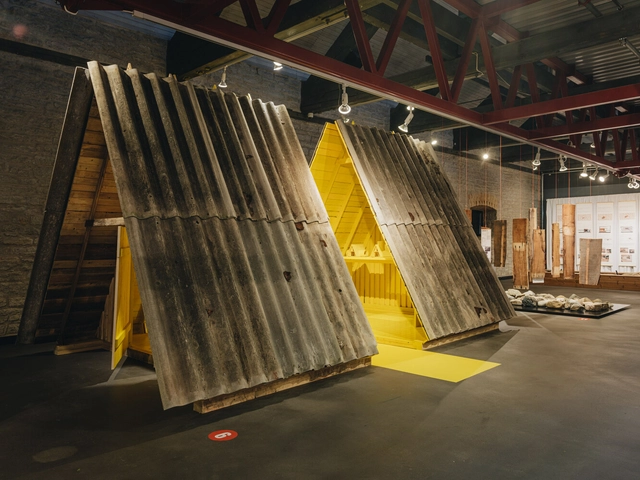
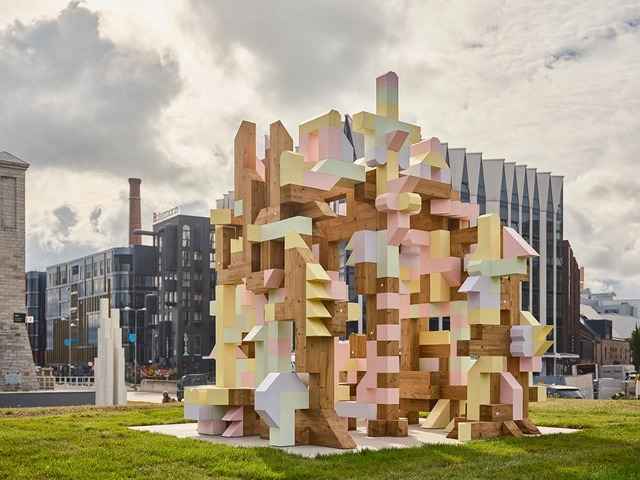
The winner of the Installation Program “Huts and Habitats”: Steampunk, designed by Soomeen Hahm Design, Igor Pantic, and Fologram. Image Courtesy of Tallinn Architecture Biennale
TAB 2019, Tallinn’s 5th Architecture Biennale, will commence with its Opening Week from September 5-11, 2019. Earlier this week, the Biennale announced its programme of events for this year’s festival, which bears the theme “Beauty Matters: The Resurgence of Beauty”. TAB is an international celebration of architecture, organized by the Estonian Centre for Architecture and curated this year by Head Curator Dr. Yael Reisner. The Biennale consists of five main events, to take place in various venues in the heart of Tallinn, as well as a Satellite Programme hosting other events around the city.
The functional distribution plays a fundamental role in the contemporary design of offices and places for work. The study of the architecture plan shows an interesting form of approach; not only allows for proper logistics and circulation but find efficient variations and innovations that will enable better workspaces that adapt to the current needs.
We have selected more than 50 plans of projects that will inspire you, recognizing the different ways in which architects have faced the challenge to design offices, in all different scale ranges.