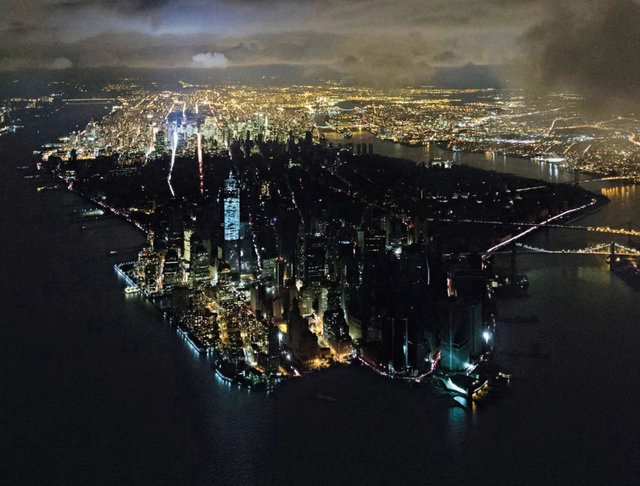
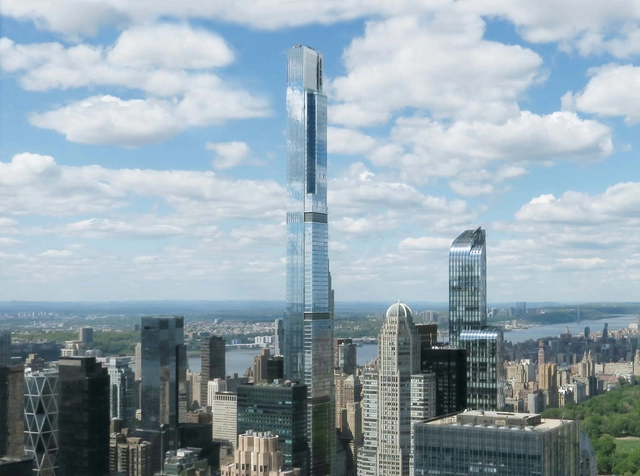
Paul Clemence has released a new series of images, showcasing the on-going construction works on Manhattan's Central Park Tower. The project is designed by Adrian Smith + Gordon Gill architecture and is set to be the tallest residential building in the world once completed. The building, as seen in the photographs, has neared completion and is set to open later this year.
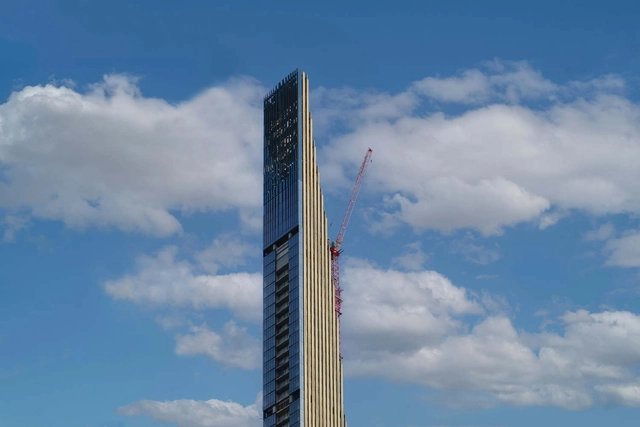
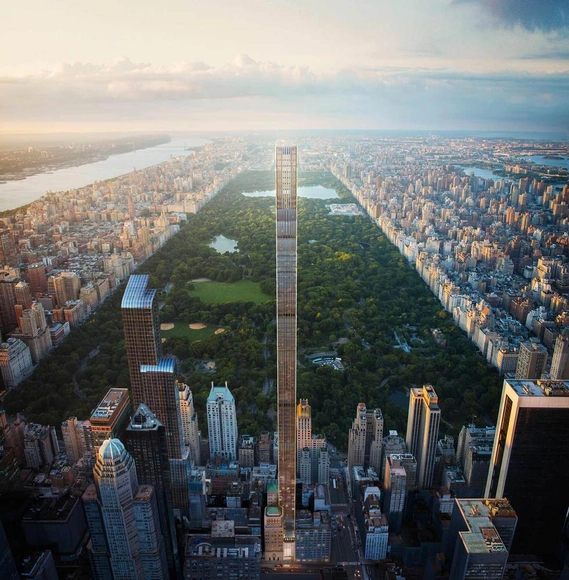
Paul Clemence has released a new series of images, showcasing the on-going construction works on 111 West 57th, designed by SHoP. Located in New York, the residential tower is set to become the second-tallest building in the city by roof height, and the most slender tall building in the world, once completed.
American-Brazilian photo-artist Paul Clemence has just released the first images of the completed renovation and expansion works of Martin Luther King’s Memorial Library, originally designed by Mies van der Rohe in Washington D.C. Hoping to create a modern library that focuses on people while celebrating the exchange of knowledge, ideas and culture, Dutch design practice Mecanoo was commissioned the modernization of the structure back in 2014.
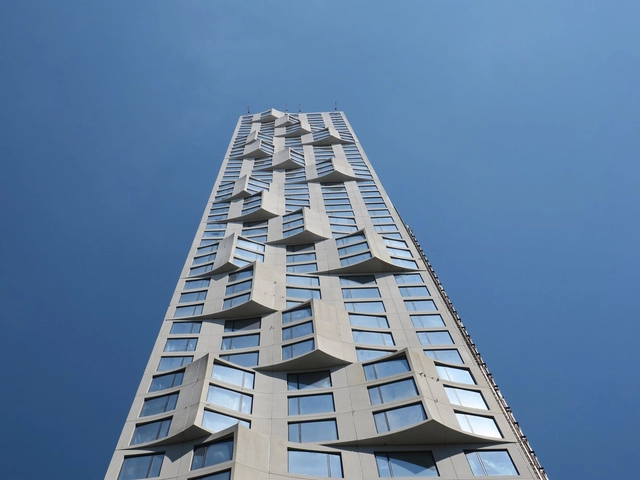
Paul Clemence has just released his latest photographs of the Studio Gang-designed 11 Hoyt tower in Downtown Brooklyn, New York. Almost completed, the residential development is characterized by an eye-catching crafted precast concrete and glass façade.
After surpassing many hurdles, the long-awaited public park and performance venue is on a set course to completion. The construction of the Little Island is underway, and new images by photographer Paul Clemence of Archi-Photo show the undulating artificial landscape coming together above the Hudson River.
Photographer Paul Clemence has shared with us a series of new photographs of a nearly completed 130 William development by Adjaye Associates. The firm’s first residential tower in the USA, topping out in the spring of last year at 800 feet, is located in the Financial District of Lower Manhattan, New York.
All space must be attached to a value, to a public dimension. There is no private space. The only private space that you can imagine is the human mind. – Paulo Mendes da Rocha, May 26, 2004
Paulo Mendes da Rocha is one of Brazil's greatest architects and urbanists. Born in Vitória, Espírito Santo in 1928, Mendes da Rocha won the 2006 Pritzker Prize, and is one of the most representative architects of the Brazilian Paulista School, also known as "Paulista Brutalism" that utilizes more geometric lines, rougher finishes and bulkier massing than other Brazilian Modernists such as Oscar Niemeyer.
The winner of the Wolf Prize in 2005 and the Pritzker of 2008, French architect Jean Nouvel has attempted to design each of his projects without any preconceived notions. The result is a variety of projects that, while strikingly different, always demonstrate a delicate play with light and shadow as well as a harmonious balance with their surroundings. It was this diverse approach that led the Pritzker Prize Jury in their citation to characterize Nouvel as primarily "courageous" in his "pursuit of new ideas and his challenge of accepted norms in order to stretch the boundaries of the field."
The Centre Le Corbusier, the final project of renowned architect Le Corbusier, has reopened to the public in Zurich following an extensive renovation. Completed in 1967, the scheme is only of the only Le Corbusier buildings to be constructed almost entirely from glass and steel: realizing his concept of the synthesis of architecture, life, and art in real life.
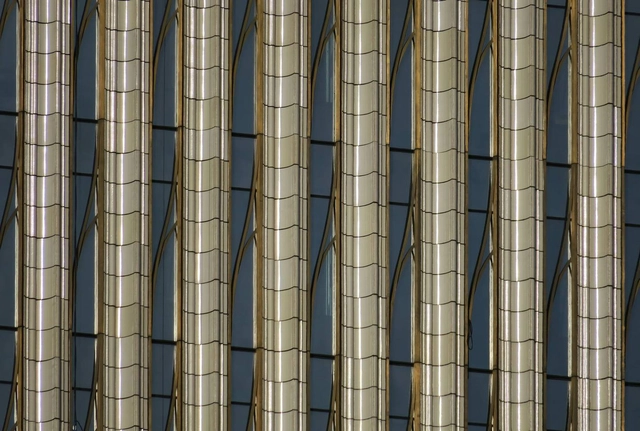
The ‘Super Tall and Skinny’ NYC Tower 111 W 57 by SHoP Architects is forging ahead as seen in this photographic construction update by Paul Clemence from Archi-Photo. In the photos, the glass and terracotta facade seems largely complete, casting beams of light into New York's notoriously valley-like streets. SHoP's ultra-thin residential tower, which is set for completion this year, will rise above the Empire State Building and even One World Trade Center, taking a bird's eye view over the entirety of the city skyline.
The development’s larger 35-story, 400-foot-tall structure will twist alongside a second 300-foot-tall sister tower, both clad with bronze and travertine, sharing a connected podium and skybridge.
Chandigarh, India’s modern planned city, is most commonly associated with the pioneering modernist master Le Corbusier, who conceived the radical urban plan and most of its important civic buildings. But credit is also due to the architect’s younger cousin and long-time collaborator, Pierre Jeanneret, who turned Le Corbusier’s sweeping vision into a reality. The cousins had worked extensively together, sharing a common, forward-thinking design sensibility. Appointed to senior architect, the Swiss-born Jeanneret oversaw the ambitious project on the ground and proved himself particularly skilled at connecting with the professionals and local community alike. “Effectively, he is respected like a father, liked as a brother by the fifty or so young men who have applied to work in the Architect’s Office,” wrote Corbusier in praise of his cousin.
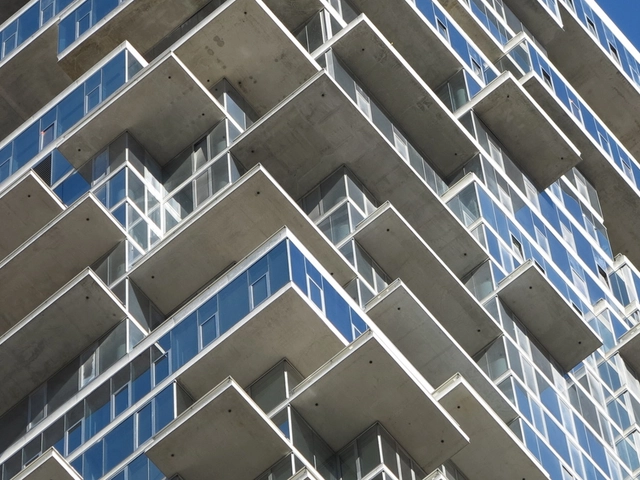
Photographer Paul Clemence of ARCHI-PHOTO has shared images of 56 Leonard Street by Herzog & de Meuron. Nearing completion, the 60-story residential tower will be the tallest structure in Tribeca when it opens later this year. The concept of 56 Leonard Street is to disrupt the monotony of typical high-rise city buildings with a more varied articulation achieved by stacking recognizable individual houses. Shifted floor slabs create differentiated corners, cantilever, and balcony conditions that provide apartments with their own unique characters. Developed from the inside out, the pixelated rooms are arranged such that the base of the tower reacts to the street conditions and ripples upward to merge with the sky.
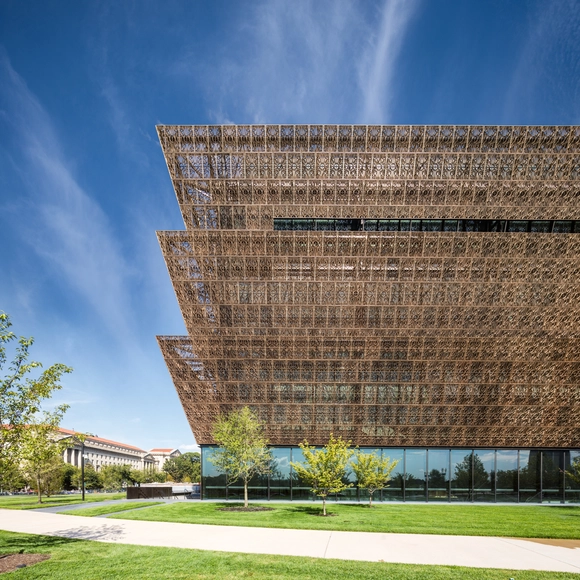
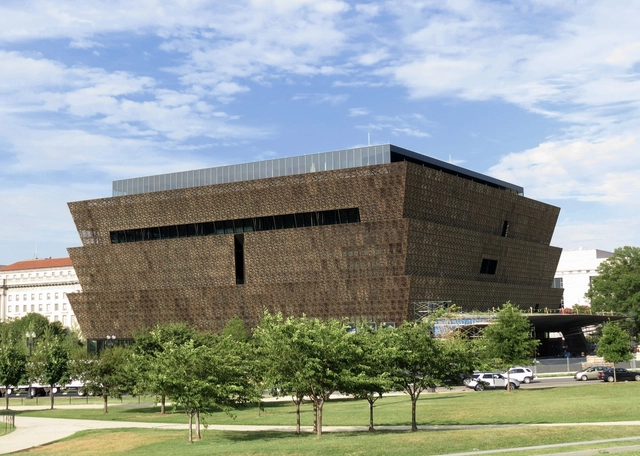
A century since the founding of the National Memorial Association and the start of a campaign by African-American war veterans for a monument of African American culture, the National Museum of African American History and Culture will finally be opened on September 24th. The Museum took $540 million and four years to build, resulting in a striking, and refreshingly unorthodox, architectural construction on Washington DC’s National Mall. The Freelon Adjaye Bond/SmithGroup JJR team, led by Ghanaian-British architect David Adjaye, defiantly broke the white-marble-Corinthian-column convention, opting instead for a bronze-coated aluminum façade bound to provoke a reaction from the critics.
Andy Klemmer has had a front-seat view of the making of some of the most important pieces of architecture of our time. The president and founder of the consulting firm Paratus Group, Klemmer was an essential part of the team that helped develop the iconic Guggenheim Bilbao. Since then, he’s gone on to consult on the California Academy of Science, the Perez Art Museum Miami, the Kimbell Art Museum expansion, working with architects like Renzo Piano, Herzog & de Meuron, and SANAA (to name a few). By liaising between institutions and their chosen architects, he has unique insight into architecture, its practice, and that essential part of the architecture puzzle: the client.
Photographer Paul Clemence of ARCHI-PHOTO has shared with us images of Adjaye Associates' nearly-completed Smithsonian National Museum of African American History and Culture. The building draws inspiration from the nearby Washington Monument, mirroring the 17-degree angle of its capstone in the museum’s tiered corona. Adjaye has described the building’s ornamental bronze lattice as “a historical reference to African American craftsmanship.” The skin can also be modulated to control the transparency and amount of sunlight reaching the interior spaces. The building will open to the public on September 24, 2016.
In a culture dominated by smartphones and Instagram, with estimates that over one trillion photographs will be taken this year alone, it might seem impossible for photographs to make and shape issues in the ways they once did. Despite this, images still steer debates with shocking resiliency and, with luck, become iconic in their own right. As architecture is synonymous with placemaking and cultural memory, it is only logical that images of the built environment can have lasting effects on the issues of architecture and urbanism. It's never been easier for photographs to gain exposure than they can today, and with social media and civilian journalism, debates have never started more quickly.




.jpg?1612774363&format=webp&width=640&height=580)
--.jpg?1612774451&format=webp&width=230&height=230&crop=true)
.jpg?1612774430&format=webp&width=230&height=230&crop=true)
.jpg?1612774307&format=webp&width=230&height=230&crop=true)
.jpg?1612774284&format=webp&width=230&height=230&crop=true)
.jpg?1612774363)


.jpg?1585888341&format=webp&width=640&height=580)
.jpg?1585857060&format=webp&width=230&height=230&crop=true)
.jpg?1585857994&format=webp&width=230&height=230&crop=true)
.jpg?1585888713&format=webp&width=230&height=230&crop=true)
.jpg?1585888938&format=webp&width=230&height=230&crop=true)
.jpg?1585888341)
.jpg?1580392782&format=webp&width=640&height=580)
.jpg?1580389246&format=webp&width=230&height=230&crop=true)
.jpg?1580389418&format=webp&width=230&height=230&crop=true)
.jpg?1580389494&format=webp&width=230&height=230&crop=true)
.jpg?1580391840&format=webp&width=230&height=230&crop=true)
.jpg?1580392782)



CopyrightsMurrayFredericks.jpg?1439374362 "One Central Park. Image © Murray Fredericks")

.jpg?1559132289&format=webp&width=640&height=580)
-2.jpg?1559132060&format=webp&width=230&height=230&crop=true)
-2.jpg?1559132035&format=webp&width=230&height=230&crop=true)
.jpg?1559132098&format=webp&width=230&height=230&crop=true)
-3.jpg?1559132228&format=webp&width=230&height=230&crop=true)
.jpg?1559132289)


.jpg?1531851210&format=webp&width=640&height=580)