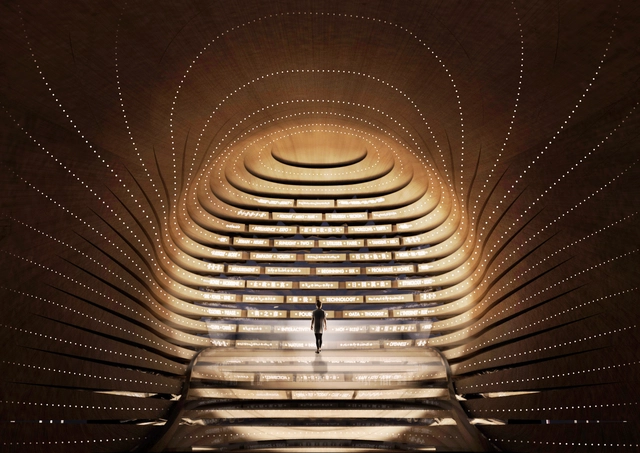
With the extensive list of acclaimed alumni of his firm, OMA, it is not a stretch to call Rem Koolhaas (born 17 November 1944) the godfather of contemporary architecture. Equal parts theorist and designer, over his 40-year career Koolhaas has revolutionized the way architects look at program and interaction of space, and today continues to design buildings that push the capabilities of architecture to new places.
The challenges associated with the provision of adequate and affordable housing around the world demand that architects respond with original solutions that challenge traditional building forms, typologies and methods of delivery.
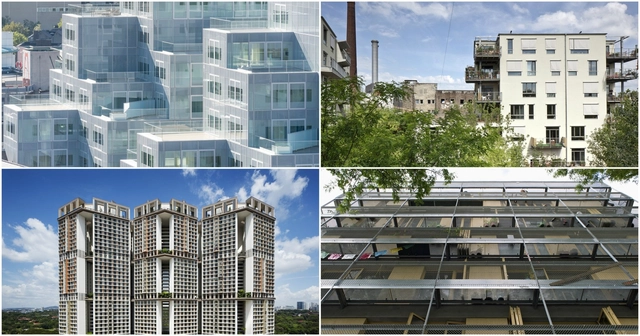
PLANE–SITE brought together the architects of four inventive housing projects. These projects represent a diversity of approaches to similar housing challenges across radically different global contexts. From the redensification of European urban centers to the rapid urbanization of the tropical Asian megacity, these radical housing models challenged existing paradigms in order to advance resident well-being as their principle design concern. In contrast to Schumacher’s divisive speech, the panel illustrated projects that were deliberately designed to promote community life and social interaction between residents – and in some cases also with other citizens in spaces that blur the line between public and private.
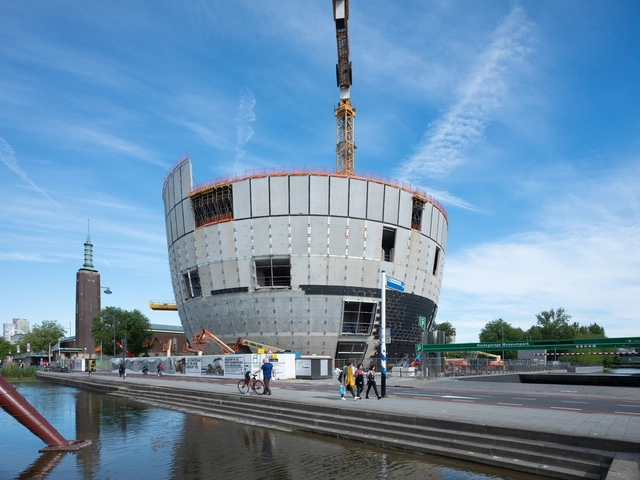
The world's first publicly accessible art depot by MVRDV has topped out in Rotterdam. Called Depot Boijmans Van Beuningen, the new archive building was celebrated with a ceremony by the Stichting Collectiegebouw consortium, which comprises the museum, the municipality of Rotterdam, and Stichting De Verre Bergen. The depot will host the museum’s archive of 151,000 artworks and will be fully accessible to the public.
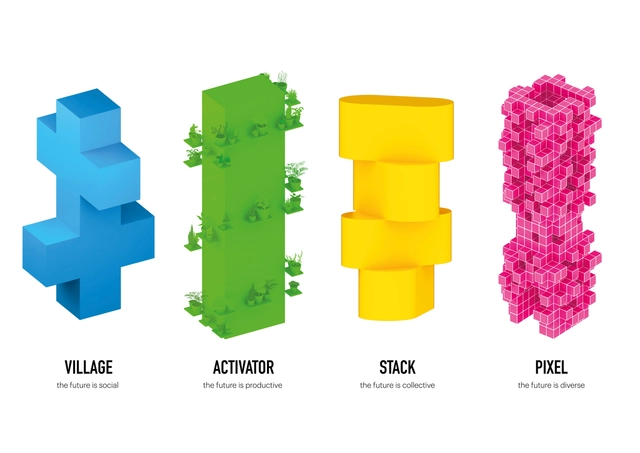
Opening on July 5th, “Architecture Speaks: The Language of MVRDV” will provide an immersive, diverse, multimedia experience for visitors to the Tyrolean Architecture Center (aut) in Innsbruck, Austria. The exhibition centers around a spatial intervention of 4 towers constructed inside the aut’s Adambräu Building, a former brewhouse. Each tower embodies a word that represents key concepts in MVRDV’s designs: stack, pixel, village, and activator. “Architecture Speaks” aims to present the concepts in an approachable, engaging manner, with the colorful towers enhanced by images, text, models, drawings, videos, audio, and interactive elements to present MVRDV’s projects.
For those in the northern hemisphere, the last full week in January last week kicks off with Blue Monday - the day claimed to be the most depressing of the year. Weather is bleak, sunsets are early, resolutions are broken, and there’s only the vaguest glimpse of a holiday on the horizon. It’s perhaps this miserable context that is making the field seem extra productive, with a spate of new projects, toppings out and, completions announced this week.
The week of 21 January 2019 in review, after the break:
Sustainability awards and standards touted by professional architecture organizations often stop at opening day, failing to take into account the day-to-day energy use of a building. With the current format unlikely to change, how can we rethink the way what sustainability means in architecture today? The first step might be to stop rewarding purpose-built architecture, and look instead to the buildings we already have. This article was originally published on CommonEdge as"Why Reusing Buildings Should be the Next Big Thing."
At the inaugural Rio Conference on the Global Environment in 1992, three facts became abundantly clear: the earth was indeed warming; fossil fuels were no longer a viable source of energy; the built environment would have to adapt to this new reality. That year I published an essay in the Journal of Architectural Education called “Architecture for a Contingent Environment” suggesting that architects join with both naturalists and preservationists to confront this situation.
https://www.archdaily.com/909863/why-reusing-buildings-should-and-must-be-the-next-big-thingMark Alan Hewitt
As 2018 draws to a close, accommodation website Airbnb has dived into their data to reveal the most creative cities and countries from the year. Based on the percentage of hosts who are in the creative industries, the list builds on a previous survey by Airbnb which found that one in 10 Airbnb hosts and one in three Experience hosts identify as members of the creative community.
It’s well understood that a sense of place is an essential value for people, architecture, and cities. Everyone from designers to planners to city governments speak breathlessly of the power of places to transform cities for the better - but it’s not clear what placemaking really means.
https://www.archdaily.com/902961/this-week-in-architecture-what-makes-a-placeKatherine Allen






.jpg?1570801605&format=webp&width=640&height=580)
.jpg?1570802154&format=webp&width=230&height=230&crop=true)
.jpg?1570801650&format=webp&width=230&height=230&crop=true)
.jpg?1570801685&format=webp&width=230&height=230&crop=true)
.jpg?1570802450&format=webp&width=230&height=230&crop=true)
.jpg?1570801605)






.jpg?1550843355&format=webp&width=640&height=580)


.jpg?1550842990&format=webp&width=230&height=230&crop=true)
.jpg?1550843355&format=webp&width=230&height=230&crop=true)
.jpg?1550843355)