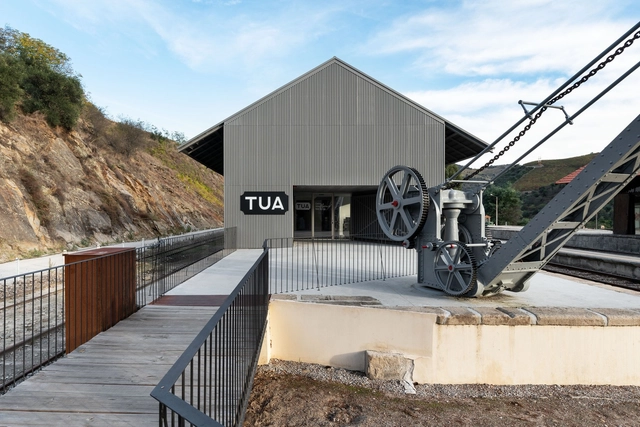
The 4th call for entries for the AADIPA European Award for Architectural Heritage Intervention, aimed at professionals involved in architectural heritage, opened for online registration on Monday, December 17, 2018, and will remain open until April 5, 2019.
Following nearly 50 years of rapid urbanization, urban renewal has transitioned from an era of incremental growth to one of existing stock. Urban planning has shifted from expansion toward the high-quality renovation of existing assets to reactivate spaces. Looking back at recent adaptive reuse projects by Pritzker Prize laureates, we examine how these masters respond to today's challenges of urban stock renewal.
This year's jury is composed of Spanish architect Ángela García de Paredes of Paredes Pedrosa (1999 AR Emerging Architecture Award winner), Indian architect Gurjit Singh Matharoo (2010 AR House Award winner), and Ronald Rietveld of RAAAF (2013 AR Emerging Architecture Award winner).
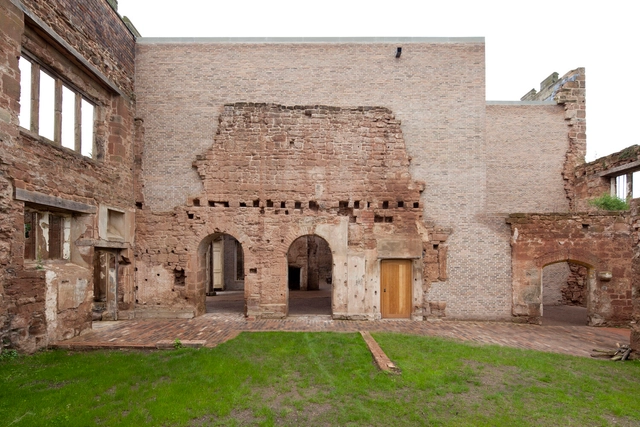
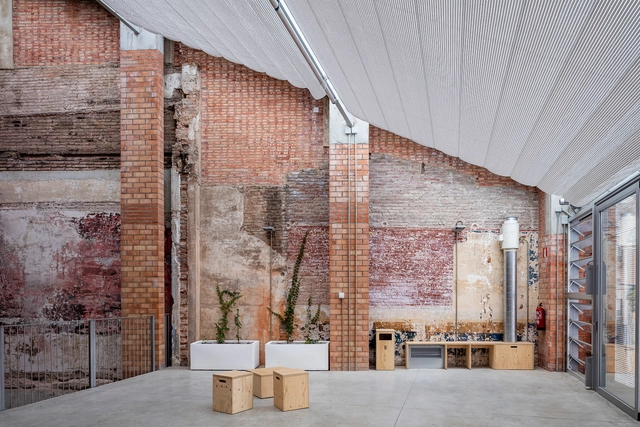
There is a particular kind of architecture that does not begin with a blank page. It begins in silence, in ruins, in walls shaped by time. It begins by listening. Rather than imposing itself, it draws near, slowly, choosing to touch rather than overwrite. This is an architecture that engages with the past through the lens of the present, not to erase it or mimic it, but to offer it continuity.
Contemporary architecture increasingly recognizes that to build with the past is not to be held back by it. Heritage is no longer seen as a constraint but as an active ground for design. Within this shift, pre-existence becomes more than a physical condition — it becomes a narrative thread, a structural and symbolic presence that invites care. Rather than asserting dominance, many architects today choose to respond with gestures that are deliberate, quiet, and precise. These interventions frame rather than replace, protect rather than obscure. In doing so, they allow history to remain visible, not as a backdrop, but as a living layer of the architectural experience.
The call for entries for the European Award for Architectural Heritage Intervention (AHI), aimed at professionals and associations linked to architectural heritage, is open until March 17, 2023. Its primary objective is to recognize high-quality interventions in built heritage across all its dimensions. In doing so, the award aims to contribute to their dissemination and establish itself as a catalyst and observatory for the new challenges that contemporary architectural globalization poses to the conservation and intervention of built heritage.
No País dos Arquitectos is a podcast created by Sara Nunes, who is also responsible for the architectural film production company Building Pictures. The podcast aims to profile the professionals, projects, and stories behind leading contemporary Portuguese architecture. With just over 10 million inhabitants, Portugal is a highly fascinating country in this professional field, and its architectural output far exceeds what its small population or territorial scale would suggest.
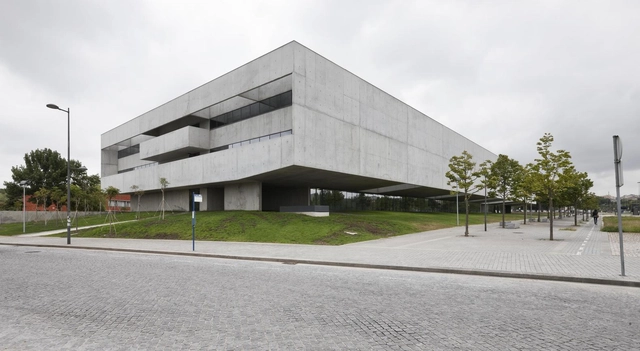
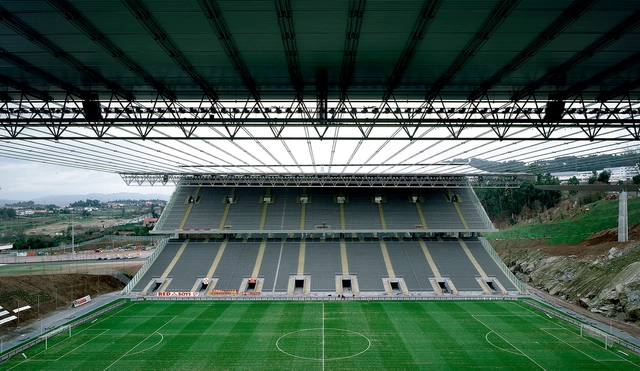
In this episode, Sara talks with architect Eduardo Souto de Moura about the Braga Municipal Stadium. Listen to the full interview and read a partial transcript of the conversation below:
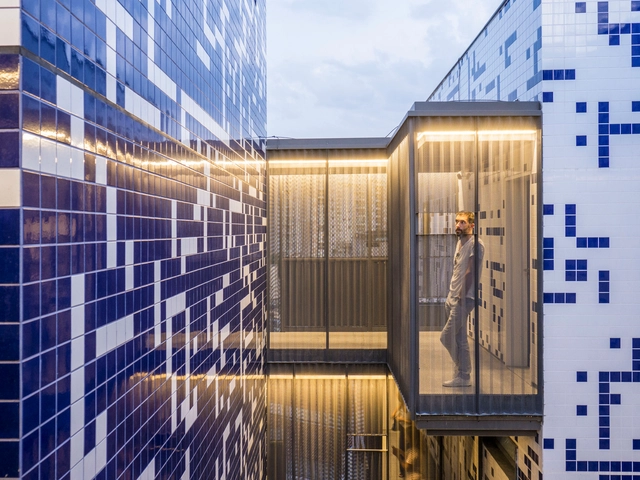
Ceramic tiles are usually used in the interior wet zones of residential and commercial projects—such as kitchens, bathrooms, and laundry rooms. However, an increasing number of architects have proven that this material has great graphic, aesthetic, and, above all, technical potential when applied to facades.
Due to its weather resistance, the material requires little to no maintenance; moreover, the variety of colors, sizes, textures, and patterns available on the market allows for countless uses and combinations.
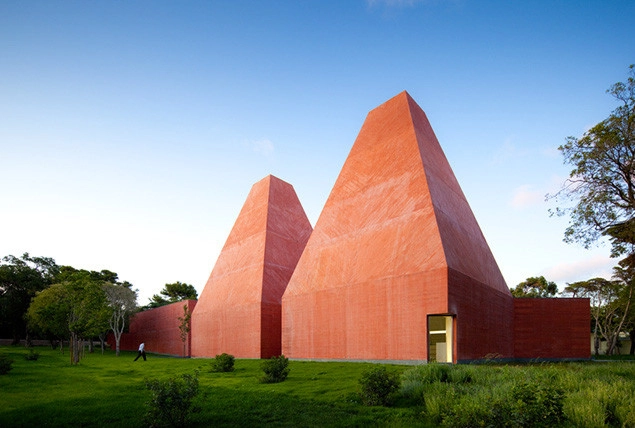
Signs all over the city, on trains and subways. The words "Souto Moura" require no further explanation in a city with two world-renowned architects. It is the opening night of his exhibition "Souto de Moura: Memory, Projects, Works" at Casa da Arquitectura on October 18, 2019, and the two greatest leading figures of the so-called Porto School are there, side by side. Álvaro Siza, alongside other guests of honor, walks through all forty projects in the exhibition, listening to Eduardo Souto de Moura's concise, humble, and almost simple explanations of each one. They are Portugal's two Pritzker laureates, who also happen to live and work in the same buildings, in addition to having collaborated on several projects. Eduardo does not hide his pride in Siza's presence at his solo exhibition. Nor does he hesitate to acknowledge the master's influence on his career. Yet Souto de Moura's architecture is unique; it has a life of its own. And everyone there knows it.
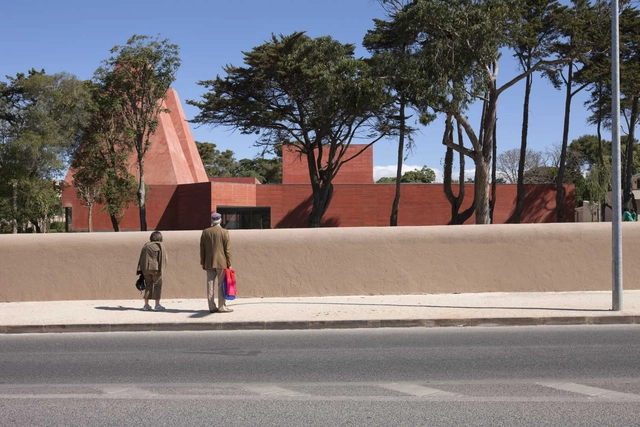
Today, October 18, the Casa da Arquitectura – Portuguese Center for Architecture opens the exhibition “Souto de Moura – Memory, Projects, Works,” which will remain on display until September 6, 2020. Curated by Francesco Dal Co and Nuno Graça Moura, the exhibition offers a unique monographic reading of the work of Eduardo Souto de Moura, 2011 Pritzker Prize laureate and one of the most prestigious Portuguese architects.
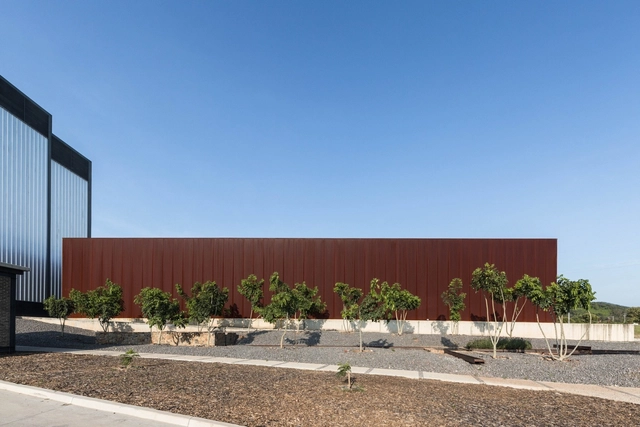
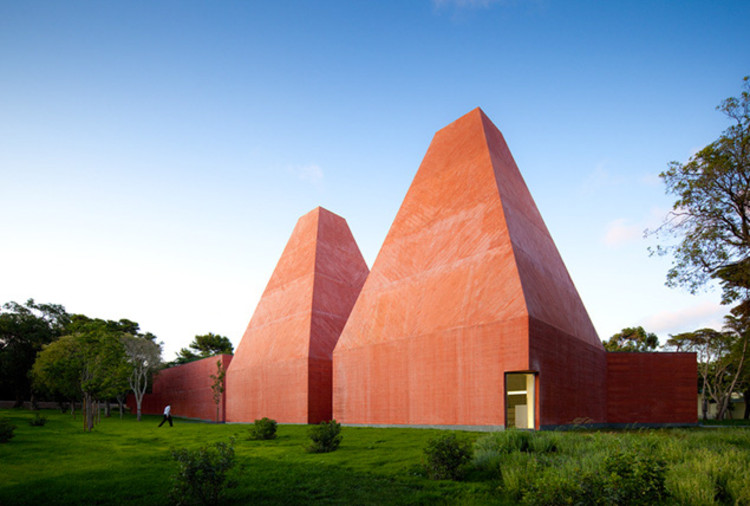
Eduardo Souto de Moura (born 25 July 1952), the Portuguese architect that won the 2011 Pritzker Prize, is known for designs that are formally simple yet serious and at times, dramatic, created through his thoughtful use of colors and materials. His architecture is both versatile and consistent, contextual yet universal, and rarely affected by current trends or styles.
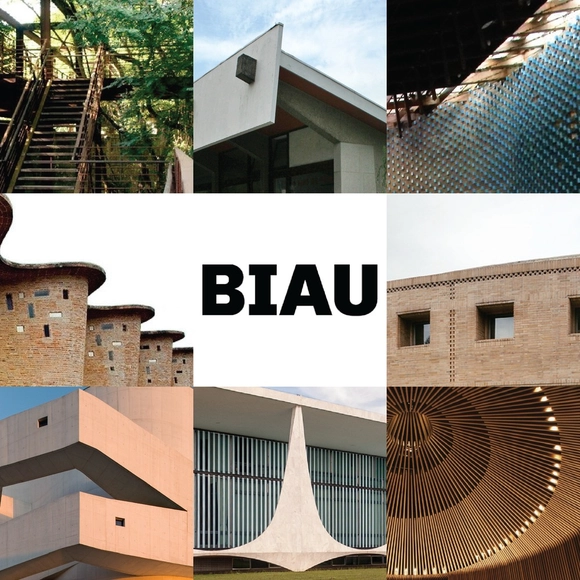
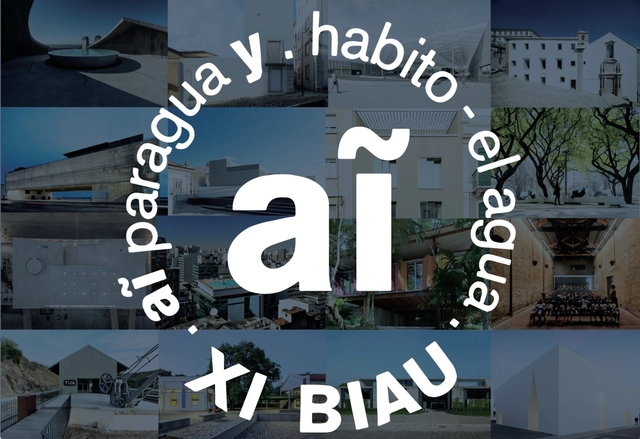
The XI Ibero-American Biennial of Architecture and Urbanism, which will take place in Paraguay, has just released the list of projects selected to participate in the exhibition. The selection was made by committees appointed by each country. In Brazil, those responsible are: UNA Arquitetos (curators), Carlos Eduardo Comas, Fernando Luiz Lara, Guilah Naslavsky, Guilherme Wisnik, Luciano Margotto, Naia Alban, Otávio Leonídio, and Paulo Henrique Paranhos. In Portugal, the selection was overseen by: Paulo David (curator), Ana Pedro Ferreira, and Pedro Maria Ribeiro. See the complete list of selected projects below.
https://www.archdaily.com/1122056/find-out-which-brazilian-and-portuguese-projects-were-selected-for-the-xi-biauPedro Vada
The architectural approach of 2011 Pritzker Prize-winner Eduardo Souto de Moura can be difficult to summarize. His convictions on matters of aesthetics and design are strongly held, but also highly individual and at times even unusual. In his work, this translates to buildings that are enigmatic, yet not flashy—in the words of the 2011 Pritzker Prize jury, “His buildings have a unique ability to convey seemingly conflicting characteristics—power and modesty, bravado and subtlety, bold public authority and sense of intimacy—at the same time.” In the latest interview from his “City of Ideas” series, Vladimir Belogolovsky speaks to Souto de Moura to probe his architectural mind and understand the thinking behind these powerful yet modest works.
In each edition of the Ibero-American Biennial of Architecture and Urbanism (BIAU), the event honors masters of Ibero-American architecture with the Ibero-American Architecture and Urbanism Prize.
The Ibero-American Architecture and Urbanism Prize recognizes work "directly related to architecture and/or urbanism, highlighting its aesthetic, functional, technical, social, economic, and environmental aspects. This may include built work, planning, heritage conservation and restoration, knowledge production, or social commitment," as outlined in the competition guidelines.
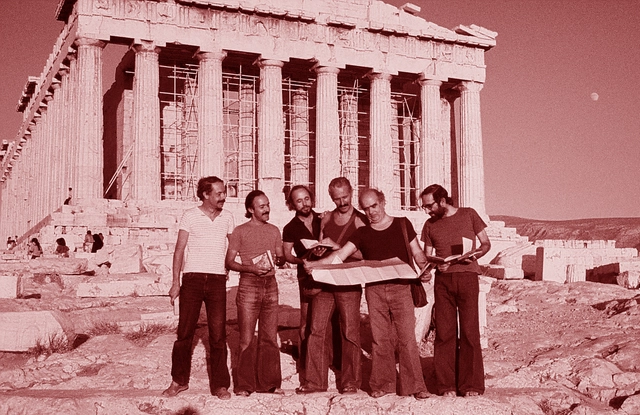
This text was written for the French edition of the exhibition catalog The Universalists: 50 Years of Portuguese Architecture, an event organized in Paris by the Delegation of the Calouste Gulbenkian Foundation to mark its 50th anniversary, in co-production with the Cité de l’architecture et du patrimoine. The exhibition is now being presented in Portugal, in 2018, at the Casa da Arquitectura in Matosinhos.








.jpg?1571338642&format=webp&width=640&height=580)




.jpg?1513004532&format=webp&width=230&height=230&crop=true)