Kurt Hoerbst

BROWSE ALL FROM THIS PHOTOGRAPHER HERE

Workmanship and Imperfection: 10 Projects Between Hand and Machine

Audio available

In 1968, the furniture designer and RCA professor David Pye published The Nature and Art of Workmanship, a book built around a distinction between "workmanship of risk" and the "workmanship of certainty." Pye was not writing about architecture, and despite how the phrase gets used today, he was not really writing about hands versus machines either. He pointed out that a printing press, entirely mechanical, still depends on someone judging the ink and the register, while a woodturner working a lathe by hand can follow a template closely enough that almost nothing is left to chance.

Workmanship of risk, in Pye's definition, is any process where the outcome is not fixed in advance but depends on the judgment, dexterity, and attention the maker exercises while the work is still underway. Workmanship of certainty is the opposite condition, as the result is settled before production begins, locked into a jig, a mold, or a program, so that everything downstream is execution. Pye was careful to note that neither mode is inherently superior and that a numerically controlled machine, calibrated to leave room for drift, can sit closer to risk than a hand tool run to a fixed template.

Workmanship and Imperfection: 10 Projects Between Hand and Machine - More Images+ 6

The Museo ICO presents the sustainable architecture of Anna Heringer

The Museo ICO in Madrid presents “Anna Heringer. Essential Beauty.” From February 9 to May 8, it will host the first monographic exhibition dedicated to the German architect in Spain. Curated by Luis Fernández-Galiano, the show is organized by the Fundación ICO.

Discover the 9 winning projects of the CSCAE Architecture Awards: Recognizing social, cultural, and environmental commitment in Spain

The nine winning projects of the second edition of the ARQUITECTURA Awards, organized by the Superior Council of Colleges of Architects of Spain (CSCAE), have been announced. Showcasing fundamental values of architecture and urbanism—such as social responsibility, cultural preservation, and environmental sustainability—the awards received a total of 429 submissions. In the first stage, the Official Colleges of Architects and Regional Councils selected 177 proposals, which were narrowed down to just 21 finalists.

Bamboo and mud community center built by women is awarded in Bangladesh

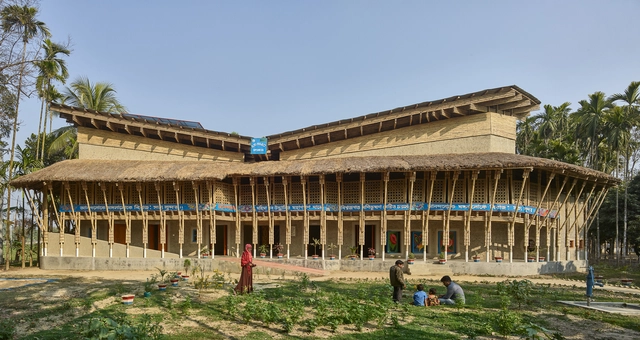
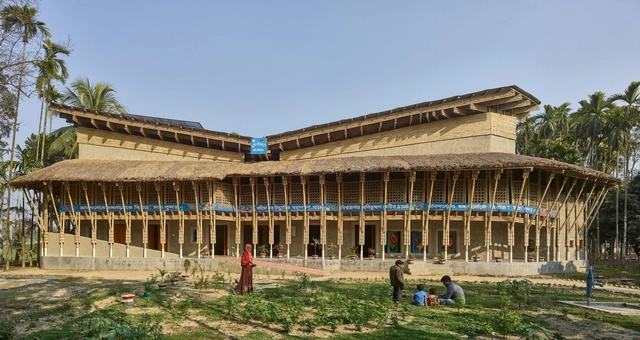
An impressive building has risen in Rudrapur, a village in northern Bangladesh. Local techniques and materials were used to shape a space designed to meet a critical need. Named the Anandaloy Center, its first floor functions as a care center for people with disabilities.

The project won the 2020 OBEL Award, an international prize that honors outstanding architectural contributions to human development worldwide.

Bamboo and mud community center built by women is awarded in Bangladesh - More Images+ 5

Understanding Soft Architecture: The Shift from Monument to Moment

Audio available

In recent years, architecture has increasingly embraced adaptability, flexibility, and responsiveness as core design principles. This evolution reflects a shift from traditional notions of static, permanent structures to dynamic environments that can adjust to changing needs and conditions. Central to this transformation is the concept of "soft architecture", which leverages pliable materials and innovative systems to create spaces that are functional, sustainable, and user-centric. Soft architecture takes shape through membranes that breathe, façades that move, structures that inflate or fold, and surfaces that bend rather than break. It involves designing for transformation — not only in how a building performs environmentally, but also in how it can accommodate shifting functions, user interactions, or temporary occupations. This approach to building challenges traditional notions of durability and control, proposing instead a more responsive and open-ended architecture. It reflects a growing awareness that buildings, like the societies they serve, must be able to evolve.
Understanding Soft Architecture: The Shift from Monument to Moment - More Images+ 53

Towards an Architecture of Many Intelligences: How Collective Knowledge Shapes the Built Environment

Audio available

As architecture navigates a rapidly changing world shaped by ecological urgency, social transformation, and technological acceleration, the notion of intelligence is shifting. No longer confined to individual cognition or artificial computation, intelligence can emerge from cultural memory, collective practices, and adaptive systems. In this broader sense, architecture becomes a field of convergence, where natural, artificial, and social intelligences intersect to offer new ways of designing and building.

Vernacular traditions embed generations of environmental knowledge, often transmitted through materials, construction techniques, and spatial logics finely tuned to local conditions; participatory platforms expand decision-making to wider communities to take part in shaping their environments, redistributing agency in the design process; and computational processes simulate and respond to complex data in real time bringing the capacity to analyse, simulate, and respond to complex variables — whether environmental, social, or behavioural — offering new forms of adaptability.

Towards an Architecture of Many Intelligences: How Collective Knowledge Shapes the Built Environment - More Images+ 25

Pioneering Change: The Obel Award Recognizes Transformative Innovations Since 2019

The Obel Award is an international prize seeking to highlight unconventional and original initiatives within the architectural profession. Supported by the Henrik Frode Obel Foundation, each annual award is centered around a specific theme. By exploring a different challenge of the built environment each year, the award remains open to a wide range of solutions and architectural innovations, honoring those contributions that have a positive impact on both people and the planet.

"Architectures WITH," the recently announced theme of the 2024 edition, explores participatory design, co-creation, and interdisciplinary collaboration, challenging traditional roles in architecture to foster inclusive, adaptable environments. It aims to empower all stakeholders and enhance collective intelligence in architecture.

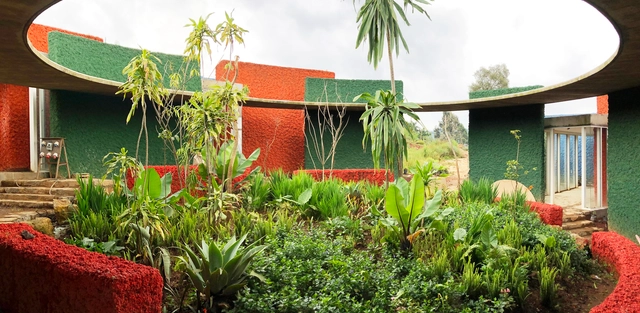
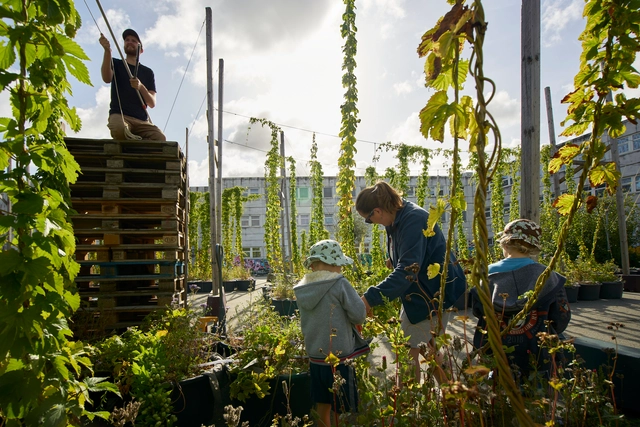
Pioneering Change: The Obel Award Recognizes Transformative Innovations Since 2019 - Image 1 of 4Pioneering Change: The Obel Award Recognizes Transformative Innovations Since 2019 - Image 2 of 4Pioneering Change: The Obel Award Recognizes Transformative Innovations Since 2019 - Image 3 of 4Pioneering Change: The Obel Award Recognizes Transformative Innovations Since 2019 - Image 4 of 4Pioneering Change: The Obel Award Recognizes Transformative Innovations Since 2019 - More Images+ 2

4 Social Housing Developments That Wrap Around Central Courtyards

There’s a lot of undeserved stigma surrounding social housing. Although many projects start off well enough with shiny ribbon-cutting photoshoots, the cameras move on and investment tends to dry up, and maintenance cut. A lack of suitable green spaces follows – due to low-maintenance, and eventually results in forgotten, isolated communities, eventually spiraling down the plughole of ghettoisation.

Although easily blamed, the architecture of high-rise social housing blocks is not the cause of the problem, but can instead be part of the solution. Building up instead of out still offers a sensible route through both the current housing and social crises – sharing space and resources.

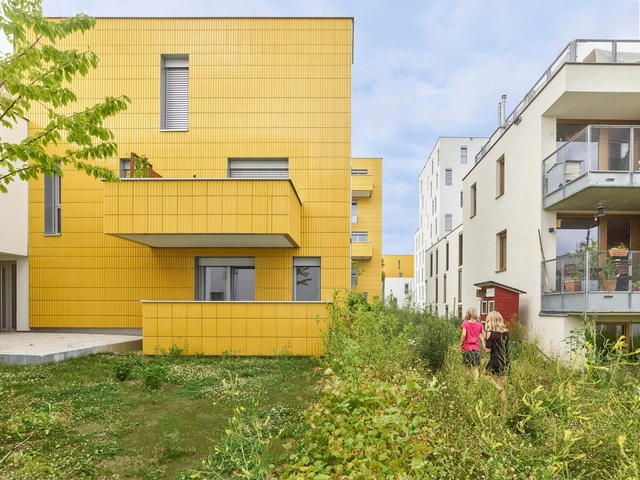
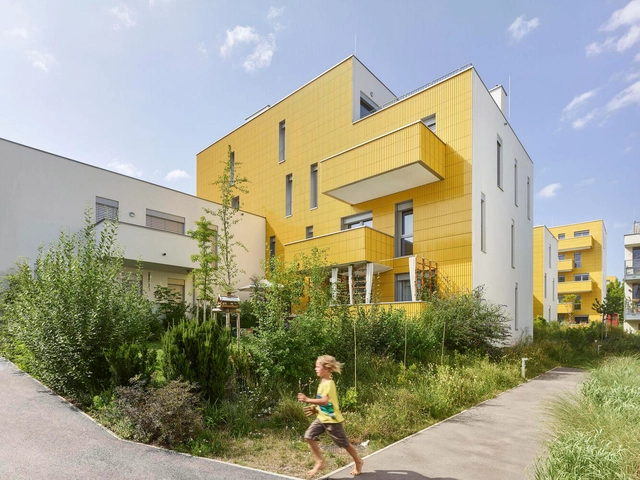
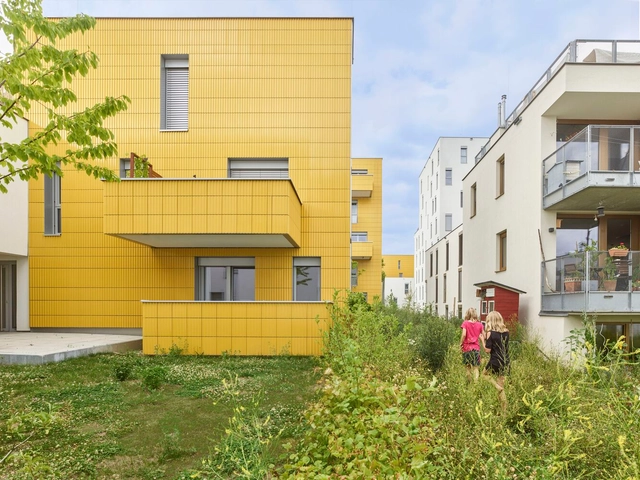
Moreover, these four projects from across Europe show, integrating social housing developments around accessible courtyards of sustainable green space helps bring and keep communities together. 

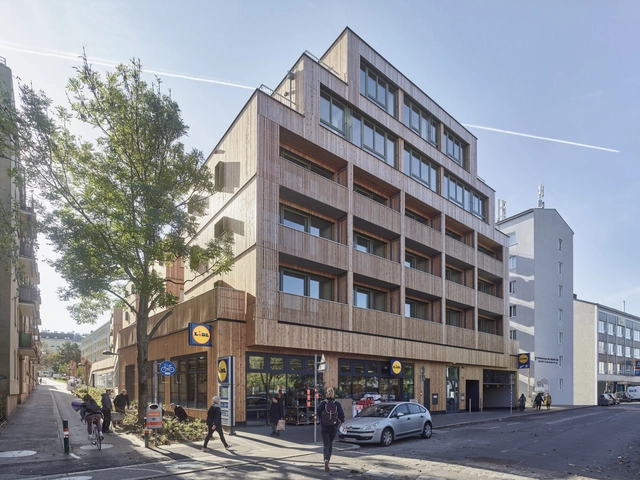
Woody M Buildings Tivoligasse / Freimüller Söllinger Architektur

Woody M Buildings Tivoligasse / Freimüller Söllinger Architektur - More Images+ 20

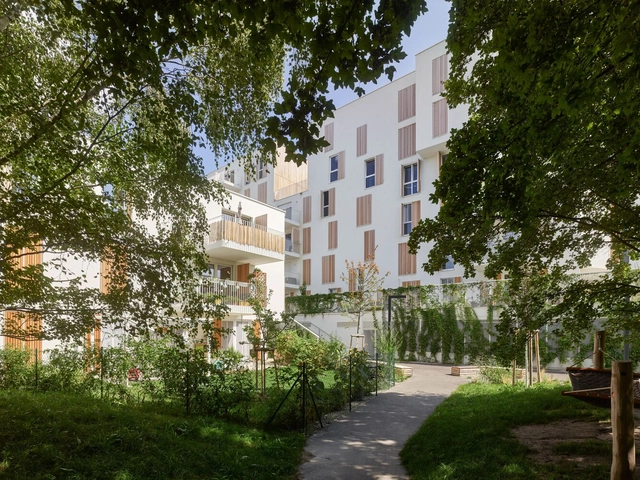
Selma Am Park Housing / Arenas Basabe Palacios + Soyka/Silber/Soyka Architekten

Selma Am Park Housing / Arenas Basabe Palacios + Soyka/Silber/Soyka Architekten - More Images+ 12

  • Architects: Arenas Basabe Palacios, Soyka-Silber-Soyka Architekten
  • Area Area of this architecture project Area:  54896 ft²
  • Year Completion year of this architecture project Year:  2022
  • Manufacturers Brands with products used in this architecture project
    Manufacturers:  Ehret

The Sunflower Houses / Arenas Basabe Palacios + Buschina & Partner

The Sunflower Houses / Arenas Basabe Palacios + Buschina & Partner - More Images+ 20

Room for Prayer: Designing for Spirituality and Sanctuary

Subscriber Access | 

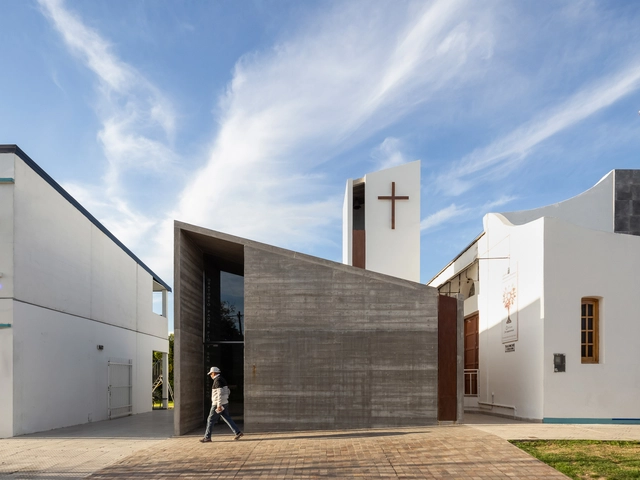
Few spaces are as intimate and contemplative as prayer rooms. Designed as both stand-alone structures and part of larger projects, prayer rooms are made as an architecture of introspection. Located within a house of worship or funerary space, or for their own dedicated purpose, these quiet rooms offer tranquil areas to consider life and the passage of time. Reflecting larger ideas on specific faiths and spirituality, they are designed as spaces of symbolism and sanctuary. 

Room for Prayer: Designing for Spirituality and Sanctuary - More Images+ 6

An Architectural Language Shaped by Sustainability

An Architectural Language Shaped by Sustainability - Featured Image
Taisugar Circular Village / Bio-architecture Formosana. Image © Studio Millspace

With its quantifiable objectives and measurable performance, sustainability often passes as a technological challenge. Its primary language is that of data, equipment, and engineered systems, most often translated into a hyper-technologized layer hidden within a design upholding pre-existing aesthetic norms. As architecture is the image of society at one moment in time, how does the focus on sustainability translate into architectural language, further legitimatizing the efforts to establish an equitable relationship with the environment? Architecture serves as an expression of attitudes, and since sustainability has become a fundamental value, it is worth looking at whether or not it has produced an aesthetic transformation.

An Architectural Language Shaped by Sustainability - More Images+ 1

Anandaloy Center / Studio Anna Heringer

Anandaloy Center / Studio Anna Heringer - More Images+ 12

Building Bangladesh: A New Wave of Cultural Projects

Subscriber Access | 

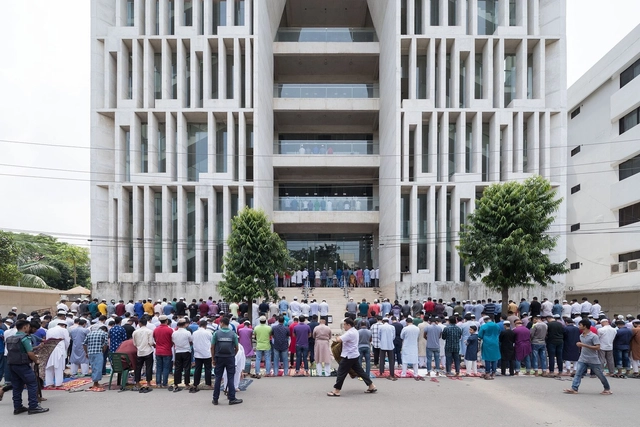
Bangladesh has built a new wave of cultural architecture over the last decade. Tied to design influences from across the Bengal region and the broader Indian subcontinent, the country's modern buildings stand alongside monuments dating back thousands of years. With an architecture rooted in religion, history and culture, contemporary projects build upon the past to imagine a new future for Bangladesh and its cities.

Building Bangladesh: A New Wave of Cultural Projects - More Images+ 18

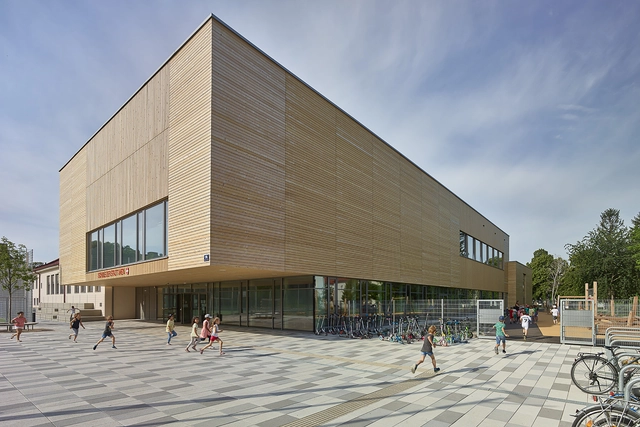
Christian-Bucher-Gasse Elementary School / Dietrich | Untertrifaller Architekten

Christian-Bucher-Gasse Elementary School / Dietrich | Untertrifaller Architekten - More Images+ 15

"Sustainability Is A Synonym Of Beauty": In Conversation With Anna Heringer

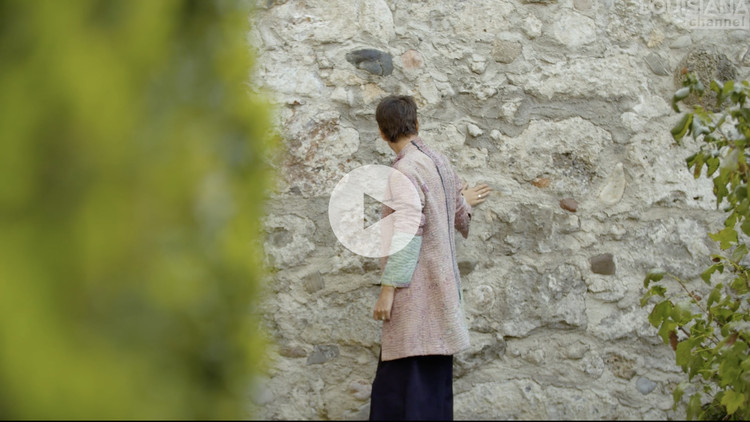
Talking to the Louisiana Channel, German architect Anna Heringer outlines the way she works and her multi-disciplinary approach to architectural practice. Growing up in a small town at the Austrian-Bavarian border close to Salzburg - Heringer spent a year living and working in Bangladesh at the age of 19, a place that is now home to a majority of her office's projects. Heringer describes herself as a mix of things in addition to being an architect, describing herself as an activist and a development worker - using her creativity to explore ideas in a variety of forms and media.

Sustainability Is A Synonym Of Beauty: In Conversation With Anna Heringer - More Images+ 3

“Good Looking Architecture is Not Enough”: In conversation with Anna Heringer

Subscriber Access | 

In a recent interview by Louisiana Channel, German architect Anna Heringer talks about the recently inaugurated Anandaloy centre in Bangladesh, a social space which became a catalyst for local development. The architect shares her commitment to sustainability and touches on the importance of the transfer of know-how to local communities through participatory building processes.