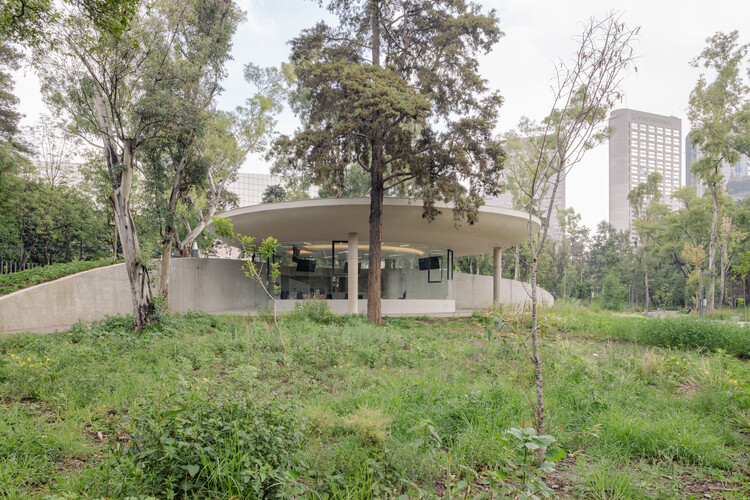
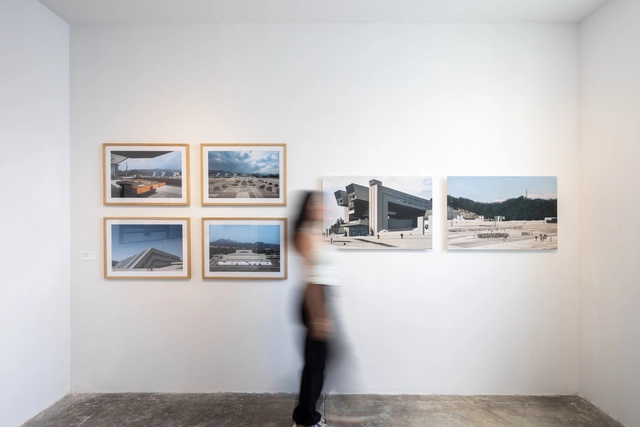
As part of an initiative by LIGA, an independent space founded in Mexico City in 2011 to promote contemporary Latin American architecture through exhibitions, publications, events, lectures, and workshops, the exhibition “Registro: Museo Tamayo” opened on April 21 as part of the LIGA-ARCHIVOS initiative. This iteration presents a reinterpretation of the building designed by architect Teodoro González de León and built in 1981 in the First Section of Chapultepec Forest.
As part of the cultural agenda of LIGA, Espacio para arquitectura in Mexico City, the work of a Cuban architecture office is presented for the first time: Infraestudio. The studio, composed of Anadis González and Fernando Martirena, addresses various conflicts and challenges in their daily practice, including job precarity in a context where private architectural practice is illegal. Despite this obstacle, they have managed to develop a provocative body of built work, intertwining it with proposals linked to artistic practices.
Trained in the United States (Princeton and Cornell), young Mexican architect Isidoro Michan-Guindi established his studio in Mexico City just four years ago, in 2019. While Michan-Guindi is relatively unknown within the Mexican architectural scene, his studio is a complex laboratory home to a multitude of projects materialized through cardboard prototypes, pigmented concrete models, electro-robotic pieces, and aluminum molds; these all transform into intelligent architectural proposals ranging from everyday objects, such as doorknobs, to residential towers.
As part of the cultural programming of LIGA, Espacio para arquitectura in Mexico City, the exhibition "Architecture for Gods" ("Arquitectura para dioses") opened in late June. It offers a contemporary record of the Heroico Colegio Militar building, designed by Agustín Hernández Navarro and Manuel González Rul in 1976—an iconic work of Mexican architecture of its era.
The awards ceremony took place at the Palacio de Minería Museum in Mexico City to announce the 11 winning projects of the 2023 Interceramic Architecture and Interior Design Award across their respective categories, as well as the Lifetime Achievement Award in Architecture, presented to architect Gonzalo Gómez Palacio.
Each year, the National Fund for Culture and the Arts (FONCA), through the National System of Art Creators (SNCA), recognizes outstanding figures in national culture through the Young Creators Program. By providing grants, the program supports the creative and educational development of Mexico's young artists, fostering favorable conditions for the realization of original, significant, and positive creative projects.
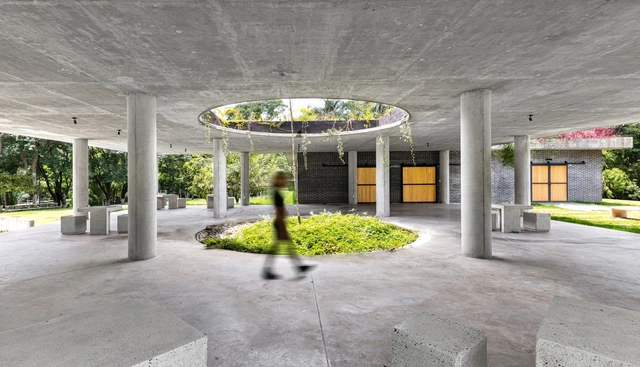
The XI Ibero-American Biennial of Architecture and Urbanism (XI BIAU) recently announced the 210 selected projects for its upcoming edition, which will take place for the first time in Asunción this October.
The winners of the Panorama of Works Award will be chosen from this shortlist, which includes the following 18 Mexican projects:
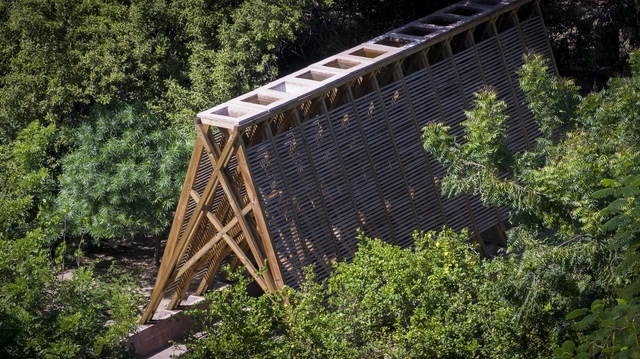
As part of the activities taking place at LIGA, Espacio para Arquitectura in Mexico City, the Mexican-Bolivian duo Escobedo Soliz has created an installation titled Tórax. Built from wooden posts, the piece forms a rhythmic oval structure whose construction evokes the ribcage of a great whale, trapped inside LIGA's gallery space.
Tezontle Ludens is the name of the winning project of the Arquine Competition No. 21 | Mextrópoli Pavilion 2019, which opened on Friday, March 8, in Mexico City's Alameda Central alongside a series of pavilions designed to activate public space. The pavilion, built by Factor Eficiencia and designed by Suma Estudio (Roberto Aguilar, Diego García, Fernando Franco, Diego Aguilar, and Jalil Miguel), was described by the jury as "a simple, well-narrated playful experience, materialized in a lightweight space and a commitment to subtlety. The project communicates with that same clarity, without discursive excess or unnecessary justification."
While the work of Mexican architect Luis Barragán is globally recognized and studied for its invaluable commitment to the architecture of his time and context—and, above all, built upon deeply harmonious and poetic foundations that connect with a deeply personal quest in "cosmic solitude, with Mexico as the temporary home he lovingly accepts," as the Pritzker Prize Jury described it when honoring him in 1980—until recently (and even before the launch of the Barragan Foundation website), understanding the full spectrum of Barragán's place in architectural history was somewhat difficult, as several of his works have remained private (or difficult to access) for years.
March 9 marks the birth anniversary of one of the most globally significant Mexican architects, a pioneer of the Modern Movement in Mexico whose work has transcended geographical boundaries to be studied by generations of architects who have rewritten his teachings to make them their own. Luis Barragán, the Guadalajara-born architect and 1980 Pritzker Prize laureate, left a timeless legacy that continues to pave the way for new research and discoveries today.
Climate change is an issue that has gained increasing traction in public and professional discourse over recent years, driven by a clear urgency to research, document, and mitigate environmental damage through multidisciplinary strategies that raise awareness of our current reality. Organizations such as the UN have issued a global call to action to adopt measures that end poverty, protect the planet, and ensure that all people enjoy peace and prosperity.
As part of the cultural program of LIGA, Space for Architecture in Mexico City, the Brazilian quartet Terra e Tuma—comprising Danilo Terra, Fernanda Sakano, Pedro Tuma, and Juliana Terra—presents a project that reflects their architectural practice: a process of copying and repetition. As announced on LIGA's official website, the opening scheduled for Wednesday, March 18, was canceled due to recent developments surrounding COVID-19 in Mexico City. Nevertheless, digital publications like this one aim to share the project to foster dialogue and reflection on the world of architecture.