-
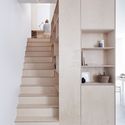
Architects: Jan Couwenberg Architectuur
- Area: 192 m²
- Year: 2015
-
Manufacturers: western red cedar



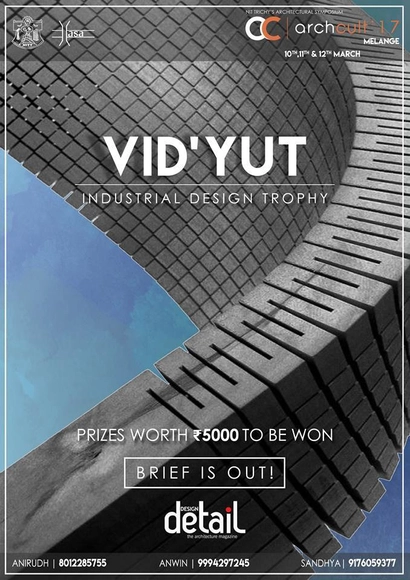
Are you an innovator? Do you see the beauty of design in everyday things, from a toothbrush to an automobile? Then Vid'yut's the one for you. Sketch, Design and Build to Win!
Download the information related to this competition here.
.jpg?1487368487&format=webp&width=640&height=580)
Tod Williams and Billie Tsien have been selected of the recipients of the 2017 LongHouse Award for their “for their outstanding body of work in architecture.”
At Wednesday evening’s ceremony, the husband-wife team opened up about the conceptual ideas driving their yet-to-be-revealed design for the Obama Presidential Library. In a lively discussion with Vanity Fair architecture critic Paul Goldberger, the architects revealed the nature of their working relationship with the President and First Lady, and how their upcoming library may draw from what TWBT learned in designing the Barnes Foundation in Philadelphia.

.jpg?1485163869&format=webp&width=640&height=580)

Contrary to some beliefs, climate change is not simply some unidentifiable threat perpetually on the horizon, but a phenomenon that has already had real impact on real world places. To illustrate the effects of our changing environment, the New York Times has launched a new multi-media series called “Changing Climate, Changing Cities,” written by architecture critic Michael Kimmelman, that aims to expose how climate change is “challenging the world’s urban centers.
The first installment takes a look Mexico City, where environmental issues that have already wreaked havoc for centuries, such as water shortage and ground subsidence, are beginning to see their effects multiplied by the city’s changing climate. The piece explains the root of these problems, and their effect of an already fragile infrastructure and social fabric.
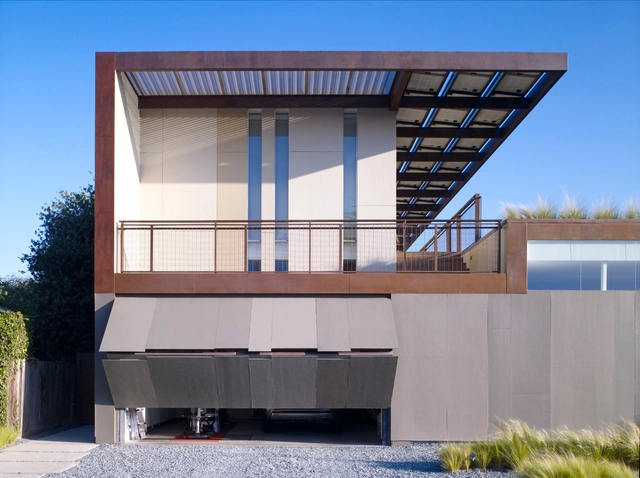

The Bartlett School of Architecture, UCL, is celebrating the opening of its new building at 22 Gordon Street with an exhibition of work by visionary architect Sir Peter Cook. Running from 23 February to 10 March 2017, the exhibition marks Sir Peter’s 80th year with a celebration of 80 of his inspired and pioneering projects.
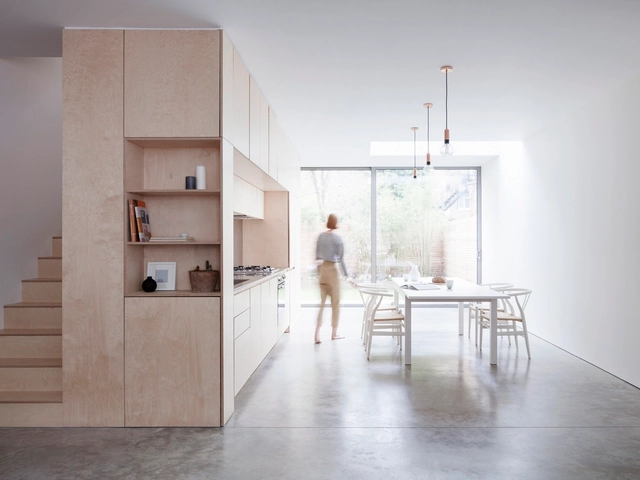
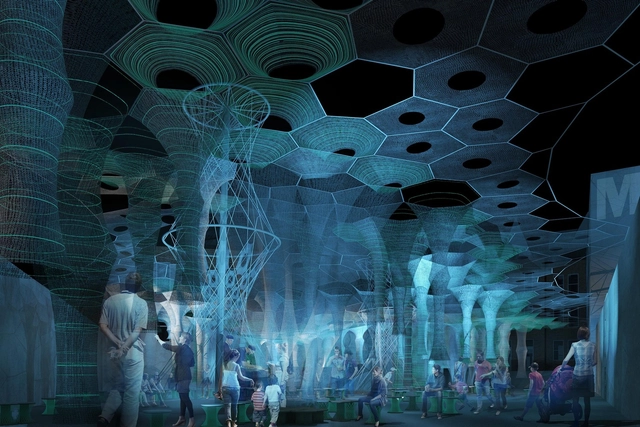
Lumen by Jenny Sabin Studio has been named the winner of The Museum of Modern Art and MoMA PS1’s annual Young Architects Program. Opening on June 27 in the MoMA PS1 courtyard, this year’s construction is an immersive design that evolves over the course of a day, providing a cooling respite from the midday sun and a responsive glowing light after sundown. Drawn from among five finalists, Jenny Sabin Studio’s Lumen will serve as a temporary urban landscape for the 20th season of Warm Up, MoMA PS1’s pioneering outdoor music series. Lumen will remain on view through the summer.
Now in its 18th edition, the Young Architects Program at The Museum of Modern Art and MoMA PS1 has offered emerging architectural talent the opportunity to design and present innovative projects, challenging each year’s winners to develop creative designs for a temporary, outdoor installation that provides shade, seating, and water. The architects must also work within guidelines that address environmental issues, including sustainability and recycling.
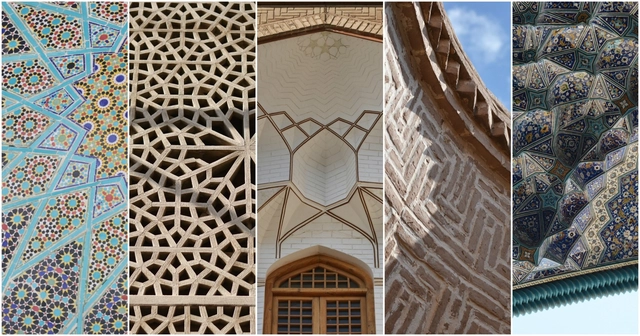
Iran’s geography consists largely of a central desert plateau, surrounded by mountain ranges. Due to the country being mostly covered by earth, sand, and rock, Iranian architecture makes fantastic use of brick or adobe elements. Most of the buildings seen in larger cities such as Tehran and Isfahan are constructed using similar brick-laying methods as can been seen in other parts of the world, but certain constructions, usually ones that date further back, contain incredible geometrical treasures. And it doesn’t stop there - old Iranian architecture often contains a layer of tiles over the brick constructions that can create just as mesmerizing geometrical wonders. The art of creating complexity by using many incredibly simple elements is one that has been mastered in Iran. In an architectural world where construction has become hidden by layers of plaster and plywood, we could learn a lot from the beauty of Iran’s structural geometry, where skin and structure are (almost always) one and the same.

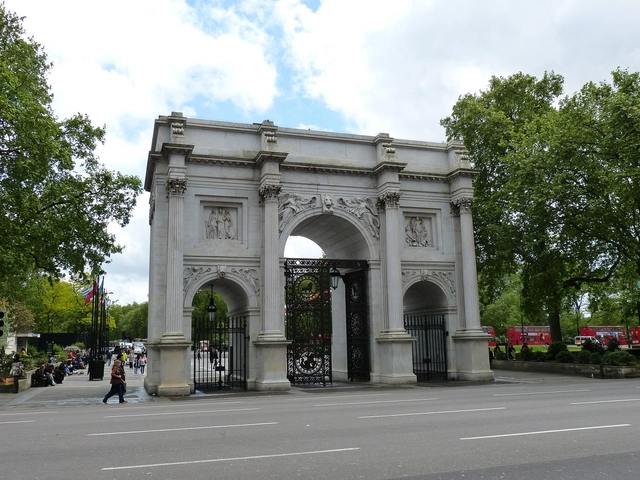
Researchers at Princeton University’s Department of Civil and Environmental Engineering have discovered that hydroxyapatite, the primary compound found in human teeth and bones, can be used to help preserve the condition of marble, which is prone to cracking and deteriorating as a result of the effects of pollution and the weather.

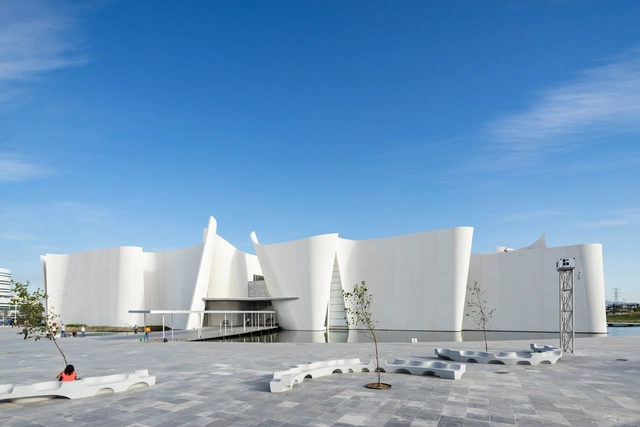
This article is part of our 'Innovative Materials' series where we ask architects about the creative process behind choosing the materials they use in their work.
The Museo Internacional del Barroco (International Baroque Museum) by Toyo Ito is located 7km from Puebla, Mexico. The place is noted for its easy access, not only for cars, but also for being connected to a network of bike paths and public transport. In this interview we spoke with Alejandro Bribiesca Ortega and Miriam Carrada.
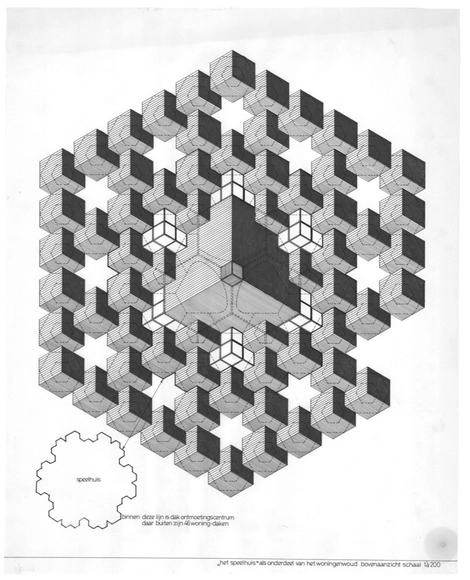
In this article, Dirk van den Heuvel links (Dutch) Structuralism to current day developments – more specifically in the digital realm. The following essay was first published by Volume in their 50th issue, Beyond Beyond, the editorial of which is available to read here.
Throughout his life the Dutch architect Jaap Bakema (1914-1981) sought to convey to his students and colleagues the notion of what he called 'total space', 'total life', and 'total urbanization'. In his view, architectural design had to help in making people aware of the larger environment to which they belong and in which they operate. Architecture could not be uncoupled from urbanism, it was related to the deeper structure of society. His conceptualization of architecture was programme and process based and it put social and visual relationships at the centre, which betrays his adherence to Structuralism as voiced in the Dutch journal Forum of which he was an editor together with Van Eyck and Hertzberger, and to the Team 10 discourse, of which he himself was one of the leading voices. At the same time, Bakema would expand on the legacy of the Dutch De Stijl movement and Dutch Functionalism. In particular his concept of space and spatial continuity is derived from De Stijl. His diagrammatic approach to architectural design and programmatic organization, as well as the elementary architectural language of his projects were elaborations of the Dutch Functionalist tradition.


.jpg?1485163905 "© Marcelo Donadussi")
.jpg?1485163164 "© Marcelo Donadussi")
.jpg?1485163288 "© Marcelo Donadussi")
.jpg?1485163483 "© Marcelo Donadussi")
.jpg?1485163869)