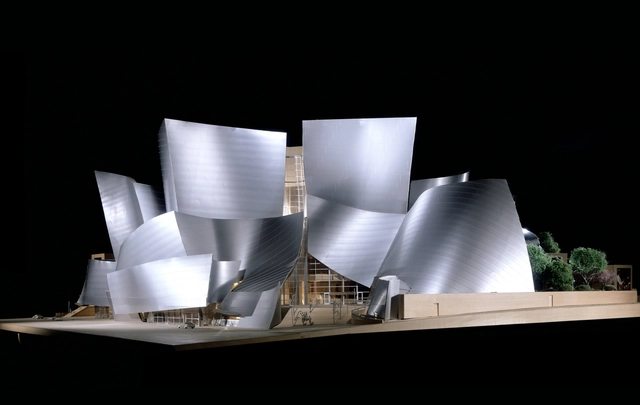
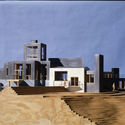
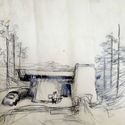
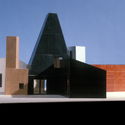
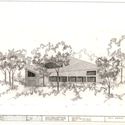
The Getty Research Institute has announced their acquisition of the Frank Gehry Papers, a major archive covering work from the architect’s career, including drawings, partial and complete models, project documentation, correspondence, photographs, slides and related materials pertaining to 283 projects from Gehry’s early to mid career.
“Frank Gehry is undoubtedly the world’s most famous living architect. This extensive archive, covering the first three decades of his illustrious career, offers an in-depth look at the genesis of Gehry’s distinctive style and includes many of the projects for which he is internationally known,” said Thomas W. Gaehtgens, director of the Getty Research Institute.
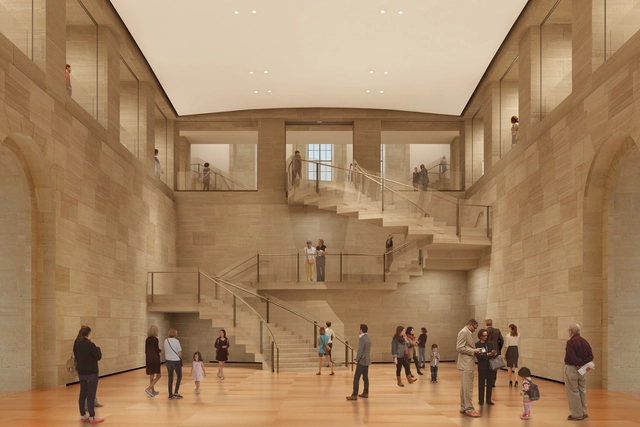
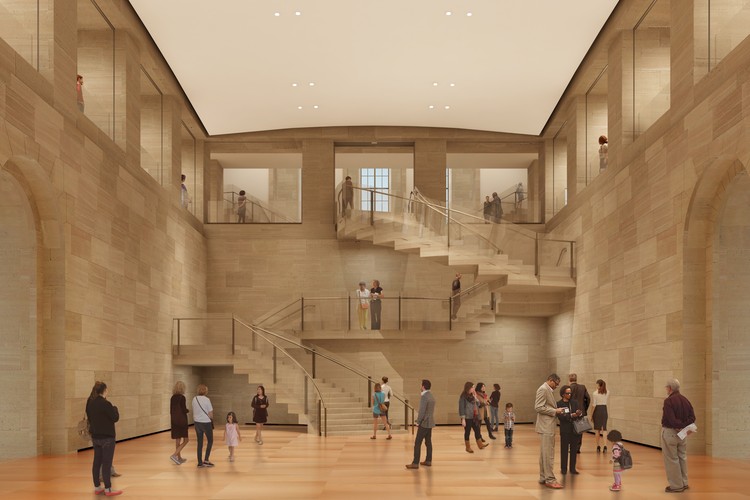
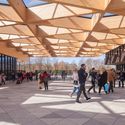
AFTER: The Forum, looking west and up to Lenfest Hall. The Forum extends from Level A to Level C and will be one of the most highly trafficked and recognizable areas created during the Core Project. This stunning space will serve as a venue for performances and events, as well as a welcoming spot for visitors to socialize or orient themselves. Architectural rendering by Gehry Partners, LLP and KX-L. Photo courtesy Philadelphia Museum of Art.
The Philadelphia Museum of Art has broken ground on the Core Project, a $196 million transformation of its main building led by Frank Gehry. In total, the renovation will add a total of 90,000 square feet to the museum, including 67,000 square feet of new public space, 11,500 square feet of gallery space for the museum’s American Art collection, and another 11,500 square feet of contemporary art display space.
As suggested by its name, The Core Project will focus on the heart of the museum; the main circulation of the building will be completely reorganized and museum infrastructure will receive much-needed upgrades, improving access to the community and enhancing the visitor experience.
Gensler has "more than 2,700 active clients, work[ing] across the global economy," as their profile attests. In this interview with Fortune, Arthur Gensler—founder of the firm in question and now 81 years of age—offers insight into his own beginnings, as well as to his company's wild success. With a $1.3 billion revenue bracket last year alone, the largest architecture firm in the world have become "best known for designing interiors – everything from the original Apple Stores to headquarters for Facebook and Airbnb." Read the interview in full, here.
https://www.archdaily.com/868250/insights-from-the-man-behind-gensler-the-worlds-biggest-architecture-firmAD Editorial Team
Described by Richard Meier as an architect whose "groundbreaking ideas" have "had a major impact on the thinking of designers and architects," Austrian artist, architect, designer, theoretician and Pritzker Prize laureate Hans Hollein worked in all aspects of design, from architecture to furniture, jewelry, glasses, lamps—even door handles. Known in particular for his museum designs, from the Abteiberg Museum in Mönchengladbach to the Museum of Modern Art in Frankfurt to Vienna's Modernism.
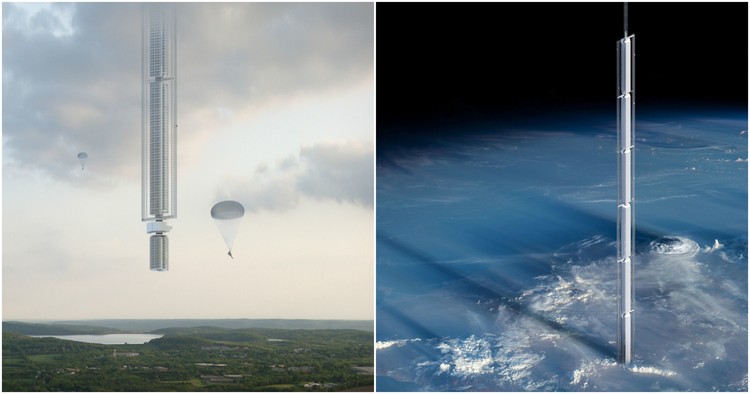
There’s a decent chance that in the last few days, you’ve seen images of Analemma, the futuristic proposal from Clouds AO to hang a skyscraper (or should that be “earthscraper”?) from an asteroid in orbit of the earth. The project has been difficult to avoid, having been picked up not only by much of the architectural media but also by NBC, CNN, Forbes, The Telegraph, The Daily Mail, Mashable, IFLScience—the list goes on almost as long as the building itself.
Is the design realistic? Obviously not, and it’s obviously not intended to be. It’s intended as a utopian thought experiment. Clouds AO has something of a pedigree in this field, as winners of a NASA-backed competition to design a Mars base with their idea for a building made of ice. As a result, it would be facile to join the internet’s collective bottom-of-the-page comment mob to point out that it would be prohibitively expensive, or that it might be more enjoyable to live on the ground anyway.
But is the design a usefulutopian thought experiment? There are some design failures that better technology, or a lot of money, or the changed mindset of a futuristic society just won’t fix. So without further ado, here are a list of the problems that this out-of-this-world design would face, in chronological order, with the issues that make it impractical in our current world marked as “minor” and the ones that would undermine the proposal in any universe marked as “major.”
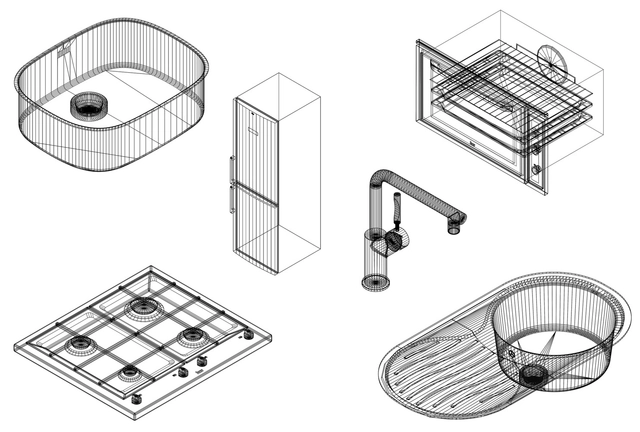
In order to support the design work of our readers, the company Teka has shared with us a series of .DWG files of its various kitchen products. The files include both 2D and 3D drawings and can be downloaded directly from this article.
Download the objects below, which have been separated into the following categories: drop-in sinks, built-in sinks, undermount sinks, built-in ovens, faucets, stoves, extractor hoods, and refrigerators.
https://www.archdaily.com/868231/stoves-sinks-and-refrigerators-downloadable-cad-blocks-for-kitchen-designsArchDaily Team
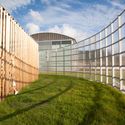
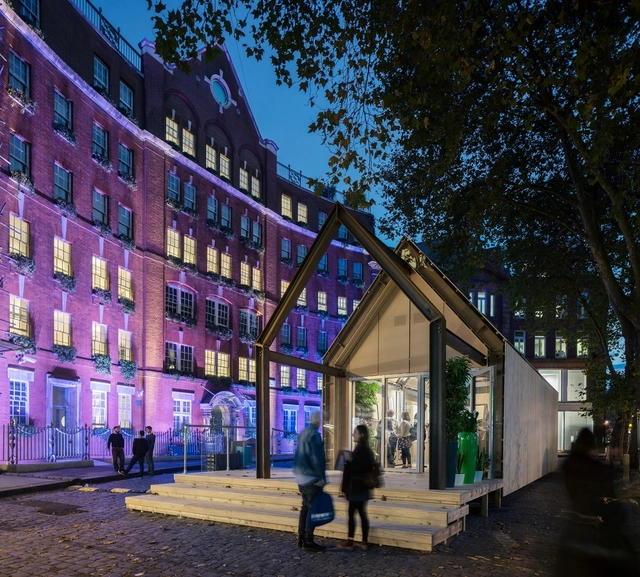
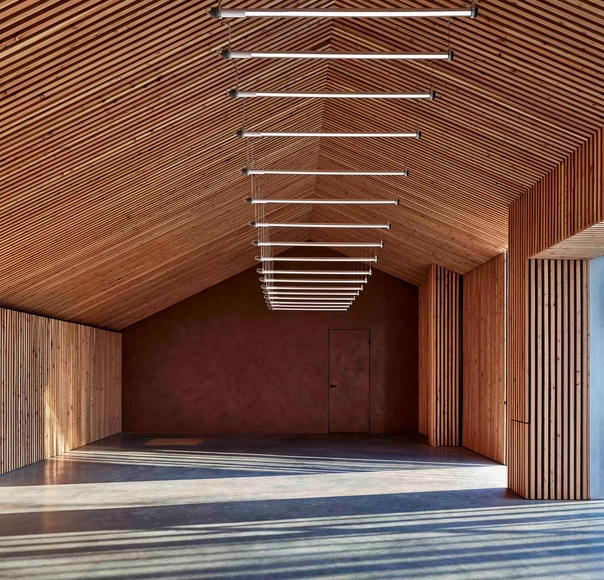
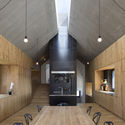
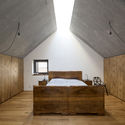
In a prototype developed for the 2016 London Design Festival, Arup Associates designed The Circular Building, one of the first buildings in the UK built to satisfy Circular Economy principles, in which “all components need to be implemented and utilized to their full potential and to the duration of their life cycle, while creating a comfortable and aesthetic environment for the user.”
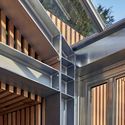
In order to achieve these goals, designers and engineers worked together to refine the application of prefabricated construction techniques, producing details that utilize finely tuned engineering rather than mechanical fixings. Through this methodology, the team was able to create a low-waste, self-supporting, and demountable structurally integrated panel (SIPs) wall system (which used cladding provided by Accoya) with reusable clamp connections between the wall and recycled steel frame elements, as well as sustainably sourced, heat treated timber for the cladding and decking.





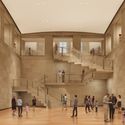
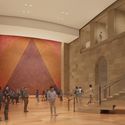
.jpg?1490895765 "BEFORE: The Van Pelt Auditorium, shown here in 2016, is being demolished to create the Forum. The auditorium was not part of the original design for the building, which opened in 1928; it was added in 1959. Photograph by Elizabeth Leitzell. Photo courtesy Philadelphia Museum of Art.")
.jpg?1490895731 "BEFORE: The Van Pelt Auditorium, shown here in 2016, is being demolished to create the Forum. The auditorium was not part of the original design for the building, which opened in 1928; it was added in 1959. Photograph by Elizabeth Leitzell. Photo courtesy Philadelphia Museum of Art.")



















.jpg?1490750384 "© Peter Blundy")