
-
Architects: EFFEKT
- Area: 2000 m²
- Year: 2016
-
Manufacturers: Randers Tegl, Terreal




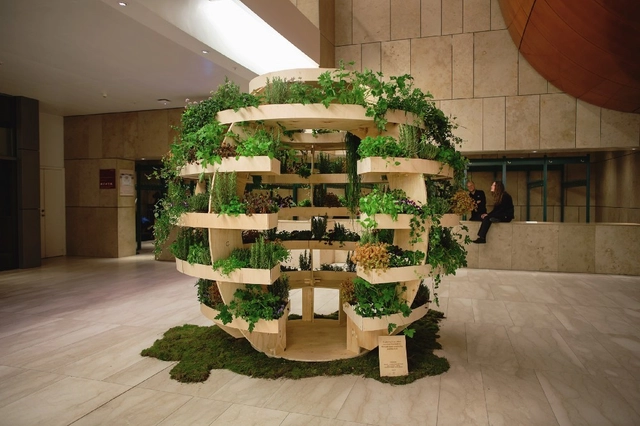
Fresh off winning the “Design of the Year” for their refugee housing solution, the “Better Shelter,” IKEA is again making waves for a pioneering, flat pack solution to societal needs. Developed by the IKEA innovation lab Space10 alongside architects sine lindholm and mads-ulrik husum, the spherical “Growroom” is a DIY garden structure intended to help people “grow their own food much more locally in a beautiful and sustainable way.” And now, plans for the structure have been made available online for free via Space10’s open source platform, giving anyone the opportunity to build their own 3-dimensional garden.



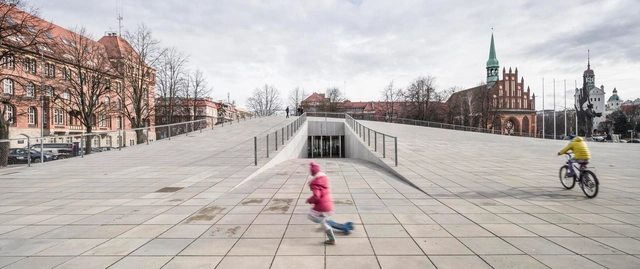
The World Architecture Festival has announced the launch of the 10th edition of the event referred to as the “Oscars of architecture” by launching the “WAF Manifesto,” which identifies key challenges the profession will face over the next ten years. Aimed at generated funding for architectural research, the manifesto outlines a range of topics where architects can use their influence to affect society as a whole.


Feilden Clegg Bradley Studios has been selected as the winners of the Royal Institute of British Architects (RIBA) competition to design the new Faculty of Arts Building at the University of Warwick, in Coventry, England. Lauded for its flexibility and collaboration-fostering design, the winning proposal was selected over finalist entries from Foster + Partners, Grimshaw, White Arkitekter and Wilkinson Eyre.


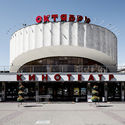
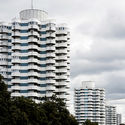
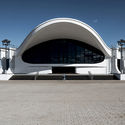
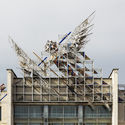
The history of what is now the Republic of Belarus is a turbulent one. It has been part of the Russian Empire, occupied by the Germans during both World Wars, divided between Poland and the Soviet Union, and finally declared its independence in 1991. Although Belarus is now an independent nation, it is also an isolated dictatorship that has in some ways remained unchanged since the 1990s, and is largely seen both culturally and architecturally as a sort of time warp, Europe's most vivid window into life in the Soviet Union.
Photographer Stefano Perego recently documented the postwar Soviet legacy of Belarus' architecture from the 1960s-80s, and has shared the photos from his 2016 cross-country drive with ArchDaily.
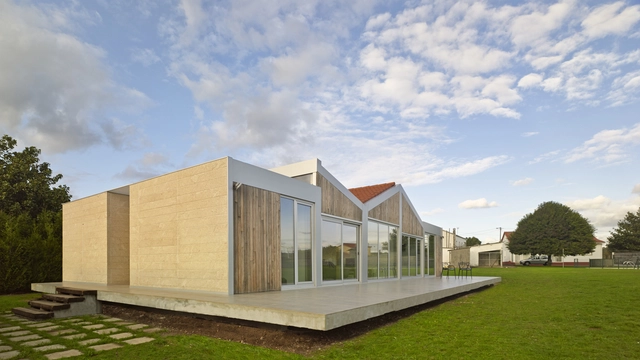

The legendary John Lennon once said, “Time you enjoy wasting, was not wasted.” And had a group of disgruntled, bespectacled, darkly clad architects been present when he spoke these words, their response probably would’ve been: “Time? What time, Johnny boy?” But as a matter of fact, there was no group of architects listening to these wise words, because they were probably furiously puffing on their last cigarette, tearing up another piece of trace, or lying collapsed somewhere.
It’s common knowledge that time is not exactly an architect’s best friend. Sleepless nights, endless hours of painstaking work and coffee expenses are but a few of the side effects that are all too familiar within the profession. But if the watch on your wrist looks something like this, don’t worry, because ours do too.

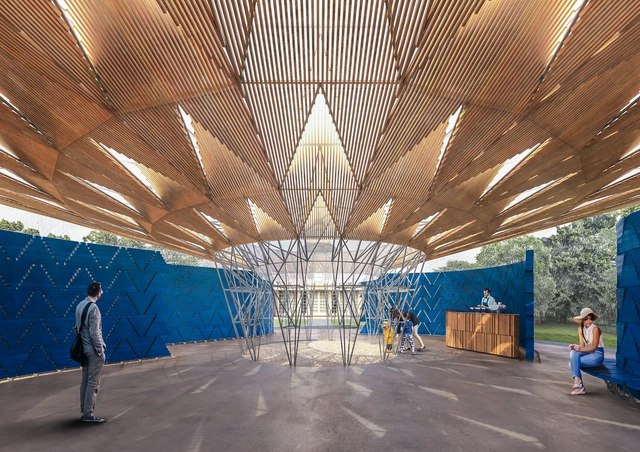
The Serpentine Galleries have announced that the 2017 Serpentine Pavilion will be designed by Diébédo Francis Kéré (Kéré Architecture), an African architect based between Berlin, Germany, and his home town of Gando in Burkino Faso. The design for the proposal, which will be built this summer in London's Kensington Gardens, comprises an expansive roof supported by a steel frame, mimicking the canopy of a tree. According to Kéré, the design for the roof stems from a tree that serves as the central meeting point for life in Gando. In line with the criteria for the selection of the Serpentine Pavilion architect Kéré has yet to have realised a permanent building in England.
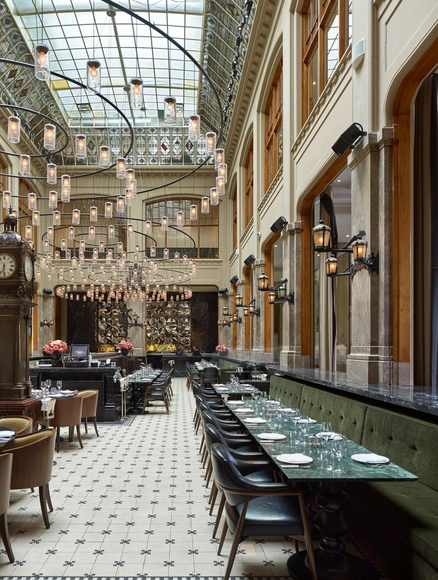

With Are We Human—the exhibition of the 3rd Istanbul Design Biennial, which ran for one month at the end of 2016—curators Beatriz Colomina and Mark Wigley were researching the fundamental notion of ‘design’. Their historic, cultural and conceptual exploration attempted to unravel the various programs and ambitions behind a (mainly) market driven inventiveness, which is presented as progress. This pushed the notion of design and the biennale as a format beyond their established definitions.