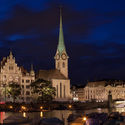
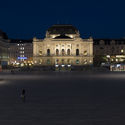
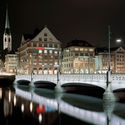
While many cities strive for a spectacular appearance at night, Zurich follows a modest strategy for nocturnal illumination. Numerous urban centers in the world are oversaturated in the evening, with individual buildings calling for attention through bright light, harsh contrasts, or colorful façade lighting. In contrast, the Zurich master plan for lighting has focused on an overall image of sensitive light levels with white light. But this nocturnal presence far from simple design, and is instead based on detailed urban studies and precise, customized projections, where technology is discretely hidden in favor of authentic culture.
Modern technology; when it works, it's brilliant. Even the cell phone, primarily a communication device, can now transform our face into a dog or let us throw angry birds at pigs. Computers really do separate us from the animals.
But it's not all fun and games, particularly for architects. Whilst the new kids on the block such as BIM and virtual reality are hurtling the profession into the 21st century, AutoCAD will always be the dear old friend we could never let go of. And that presents a problem - because AutoCAD is more than capable of letting go of us. It's never through a heartfelt letter, or an endearing text, but through a cold, abrupt, soul-destroying message. AutoCAD knows it can leave us unexpectedly, it knows we will come crawling back, but at least now, you know what it really means when it says goodbye.
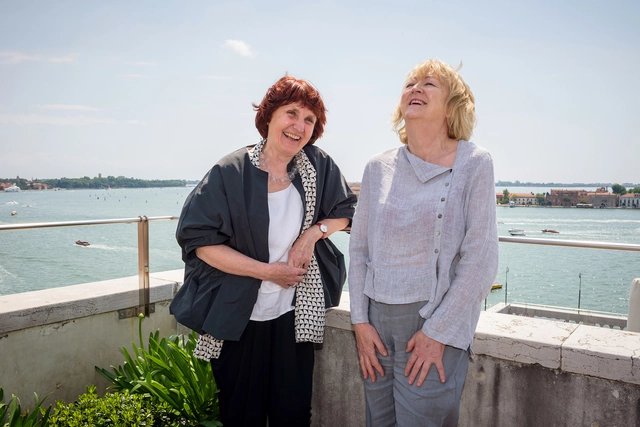
At a meeting convened today at the Biennale's headquarters at Ca’ Giustinian in Venice, Italy, Grafton Architects—Yvonne Farrell and Shelley McNamara—revealed the theme and outline for the 2018 Venice Architecture Biennale, which they have titled Freespace. According to the Directors, the forthcoming Biennale will celebrate "generosity and thoughtfulness," and "a desire to engage."
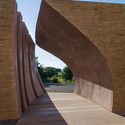
We believe that everyone has the right to benefit from architecture. The role of architecture is to give shelter to our bodies, but also to lift our spirits. A beautiful wall forming a street edge gives pleasure to the passer-by, even if they never go inside.
Freespace will "reveal diversity, specificity, and continuity in architecture. Together," they proposed, "we can reveal the capacity of architecture to connect with history, time, place, and people. These qualities sustain the fundamental capacity of architecture to nurture and support a meaningful impact between people and place." In their closing statement, Farrell and McNamara chose to quote an Ancient Greek proverb: a society grows great when old men plant trees whose shade they know they will never sit in.
Under the theme "Healthy & Climate Friendly Architecture - From Knowledge to Practice", the 7th VELUX Daylight Symposium, held in Berlin on 3-4 May 2017, was attended by 39 speakers from research and architectural practice.
Participants were able to contrast the information presented by researchers with the 'built experience' of architects from Europe, Canada and USA, generating interesting discussions about the need to go deeper in the understanding of this natural resource, and then design more effectively.
Last month the Norman Foster Foundation, created to promote "interdisciplinary thinking and research to help up-and-coming architects, designers and urbanists to anticipate the future," coincided the opening of its new Madrid-based headquarters with an international conference. Future is Now pulled together a broad collection of professionals—including Sir Jonathan Ive, Marc Newson, Olafur Eliasson, Maya Lin, Alejandro Aravena, and Luis Fernández-Galian—who addressed an audience of 1,800 (including 1,100 students) in the Spanish capital's Royal Theater.
Watch the conference in its entirety, or read a summary, after the break.
https://www.archdaily.com/873070/norman-foster-foundation-includes-aravena-ive-2017-future-is-now-conference-madrid-spainAD Editorial Team
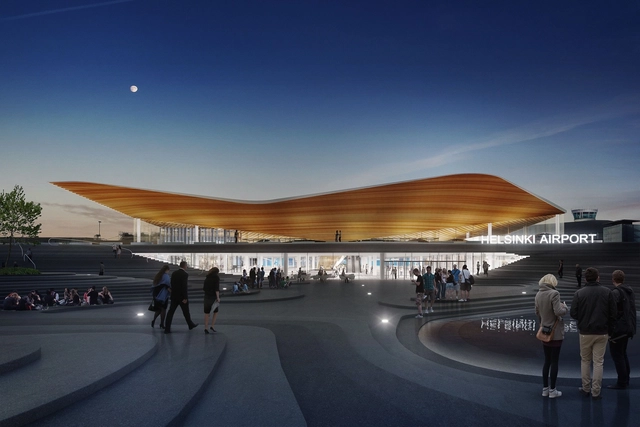
The team consisting of ALA Architects, HKP Architects and Ramboll Finland has won an invited competition for the renovation and expansion of Helsinki Airport’s Terminal 2 with their entry titled “City Hall.” Organized by Finnish airport operator Finavia, the competition asked four international firms to create a new airport plan centered around a reenvisioned terminal that will allow the airport to efficiently serve up to 20 million passengers per year.
Clear floor space. Image Courtesy of United States Department of Justice
Only a special few architects can truly say they enjoy reading building codes. There’s no doubt that it’s daunting and it can certainly pose challenges to your design. Over time you’ll likely become familiar with the types of things you need to look out for on a project, but even the most experienced architects may still need to double-check a code question or two during the design process (or have an intern check it for them.) Unfortunately, many code documents are unwieldy to say the least, and there are few cases in which this is more true than the 279-page ADA Standards for Accessible Design. However, once you understand the layout and how to use a code book or the ADA guidelines, they become more manageable.
This guide aims to describe each chapter in the ADA 2010 guidelines to give a foundation for navigating them. Luckily for designers in United States, the documentation for the ADA Standards for Accessible Design is available online. Keep reading for a quick summary (all information and diagrams are directly from the guidelines). Check out the whole document here if you need it—or for convenience, each subheading in this article links directly to the relevant section in the PDF!


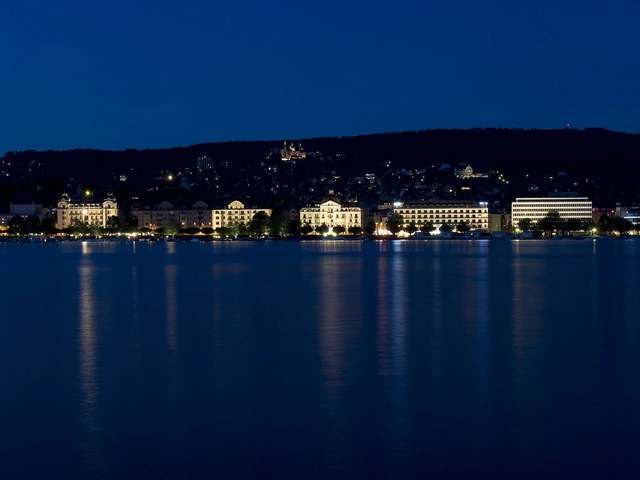
.jpg?1496789104 "Waterfront illumination of Stadthausquai with Fraumünster Church and St. Peter Church, Zürich. Photo by Benno Tobler. Image © Stadt Zürich")