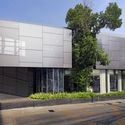
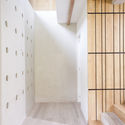
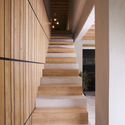
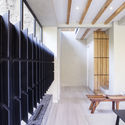
-
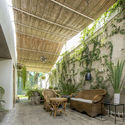
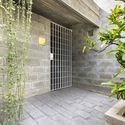
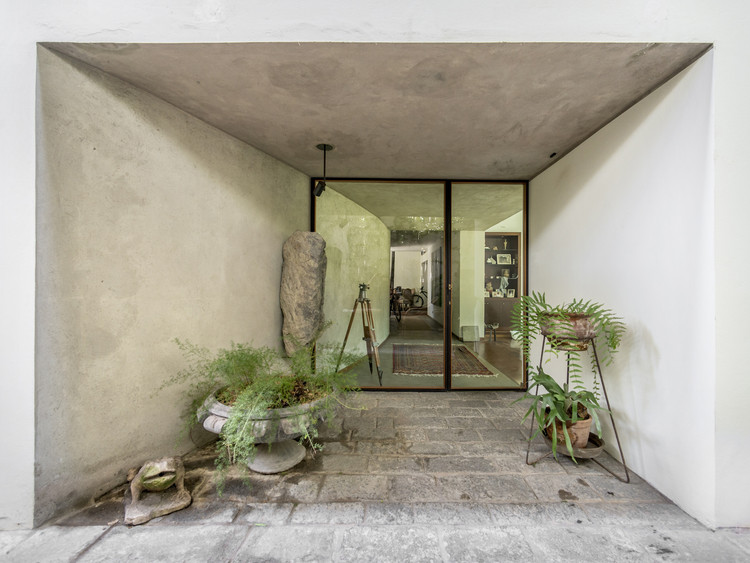
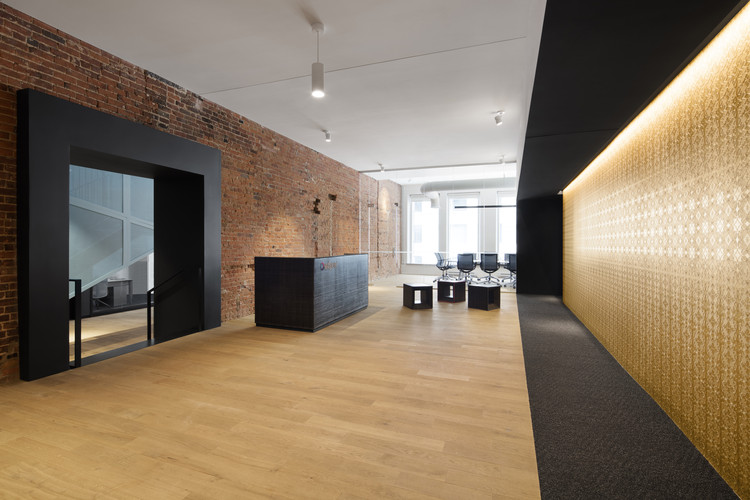
Architects: RP Arquitectos
- Area: 811 m²
- Year: 2014
-
Manufacturers: Cemex, Interceramic, Tecnolite


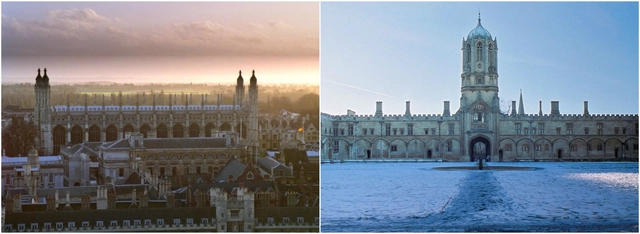
The National Infrastructure Commission and Malcolm Reading Consultants have announced the shortlist for The Cambridge to Oxford Connection: Ideas Competition. The free-to-enter competition focuses on integrating placemaking with infrastructure in one of the UK’s leading growth regions: 130-mile Cambridge-Milton Keynes-Oxford corridor. The region is home to 3.3 million people and hosts some of the country’s most successful cities, as well as the world-leading Oxbridge universities. Launched in June 2017, the first stage encouraged entries from teams with a range of backgrounds - made up of urban designers; architects; landscape designers, planners and community specialists (to name a few).

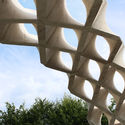
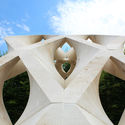
Italy-based New Fundamentals Research Group recently designed and built a full-scale prototype of an experimental barrel-vaulted stone structure for SNBR, a French company that specializes in cutting-edge stone construction. The structure is named Hypar Vault in a reference to the geometry of its constituent blocks; it uses two types of prefabricated stone modules—one type is the mirror image of the other—whose designs are based on the hypar (hyperbolic paraboloid), one of the only "doubly-ruled" surfaces in geometry. The use of these configurations allowed the vault to be constructed with almost zero wasted stone.

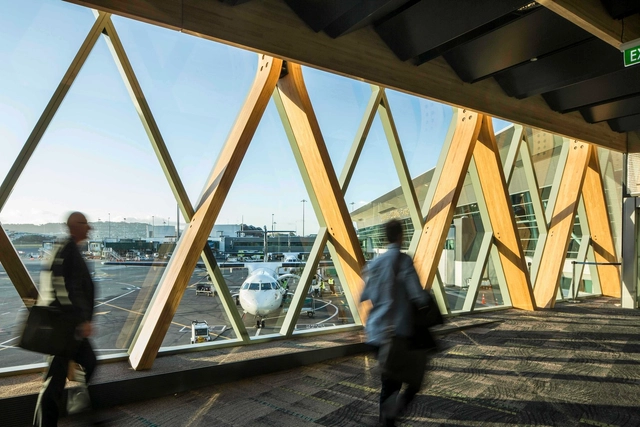
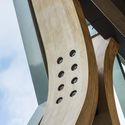
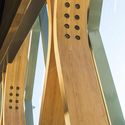
Warren and Mahoney Architects' design for the extension of Wellington Airport in New Zealand highlights the potential of using laminated wood in large-scale architectural projects.
The structure of the facade is the result of recognizing the great versatility of laminated wood when designing large structures and complex shapes, allowing, in this case, to propose the construction of a straight piece that is curved to join the next piece.


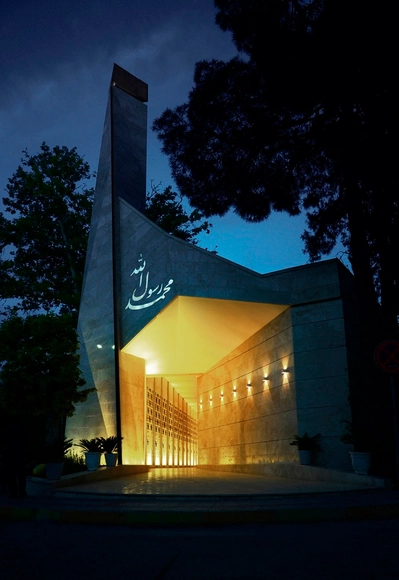

How long-term should urban planning be? Munich’s Oktoberfest, the Kumbh Mela pilgrimage in India (or the largest gathering of humans on the planet), the Burning Man Festival in Nevada, and other major events demonstrate that flexible architectural configurations are temporarily deployed around the globe to provide medium-term shelter, often to enormous crowds. Such structures fulfill a range of functional tasks and are used in religious and cultural festivals or can take the form of military camps, refugee camps, or even temporary mining towns. This show traces a global phenomenon that has become increasingly topical given today’s current state of mass migration triggered by climate change, political strife, and natural disasters.


The long-awaited Louvre Abu Dhabi, designed by Ateliers Jean Nouvel, is getting ready for a grand opening, with images showing the metal-domed building in the final stages of construction. Officially started in 2009, work on the museum is nearly complete, with a rumored opening date scheduled for this November.


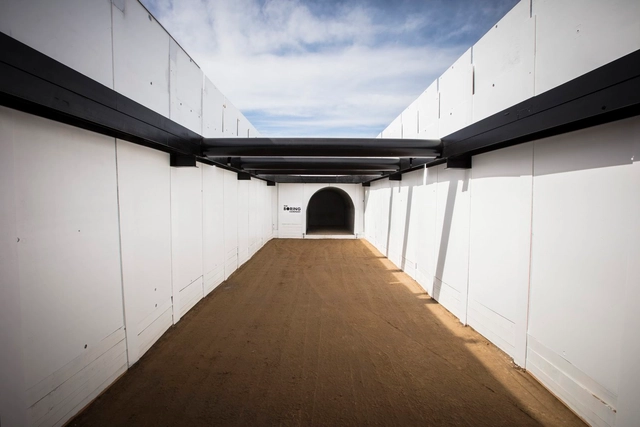
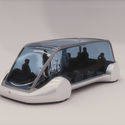
Already having tackled electric vehicles, space flight, and high-speed vacuum tubes, benevolent mad scientist Elon Musk’s latest foray into transportation infrastructure is ready to get off the ground, or rather, under it.
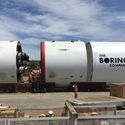
The tech mogul’s newest startup, the Boring Company, focuses on designing a subterranean network of tunnels beneath the streets of Los Angeles that could shuttle pedestrians and vehicles on electric sleds connected to a system of rails at speeds of up to 125 mph.
Now, the company has announced approval by the LA County city of Hawthorne to construct a 1.6-mile-long tunnel that will allow the technology to be tested in-full for the first time.


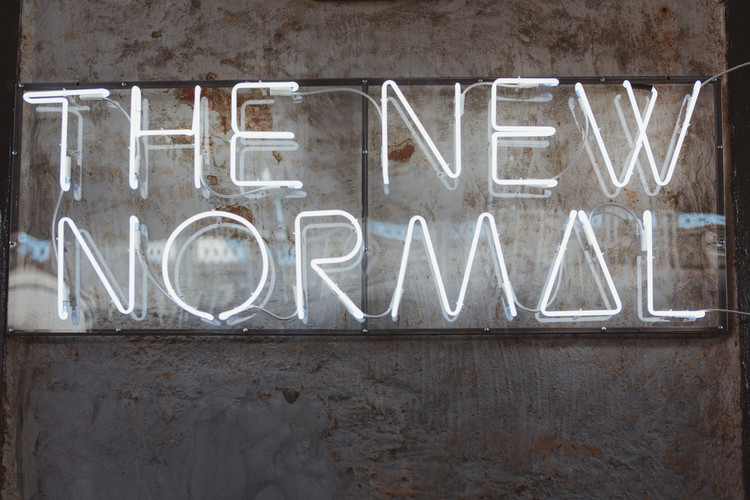
The New Normal, a three year-long educational programme at Moscow's Strelka Institute of Architecture, Media and Design, is focused on "the opportunities posed by emerging technologies for interdisciplinary design practices." In this short essay, taken from a new book of the same name, course director Benjamin Bratton lays out the thesis behind the project.
Something has shifted, it seems. We are making new worlds faster than we can keep track of them, and the pace is unlikely to slow. If our technologies have advanced beyond our ability to conceptualize their implications, such gaps can be perilous. In response, one impulse is to pull the emergency brake and to try put all the genies back in all the bottles. This is ill-advised (and hopeless).
Better instead to invest in emergence, in contingency: to map the new normal for what it is, and to shape it toward what it should be.














.jpg?1503577035 "© Samaneh Motaghipishe")