
-
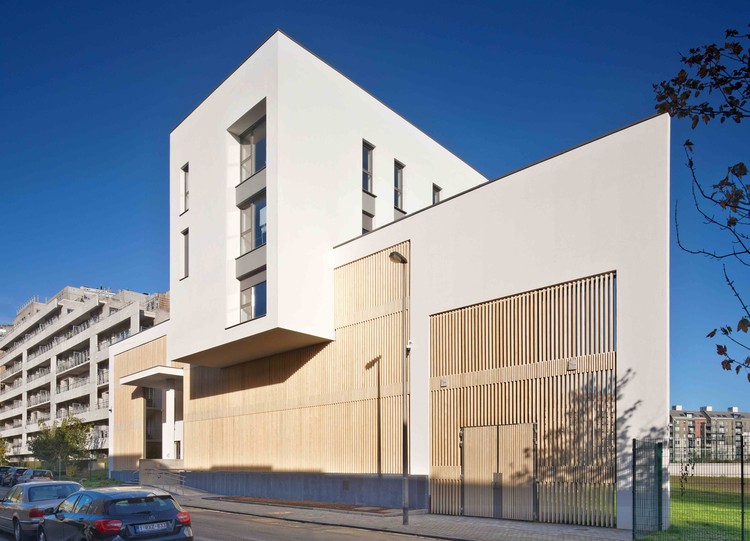
Architects: João Vieira de Campos
- Area: 280 m²
- Year: 2017
-
Manufacturers: Cozinha, Peças sanitárias, Sosoares




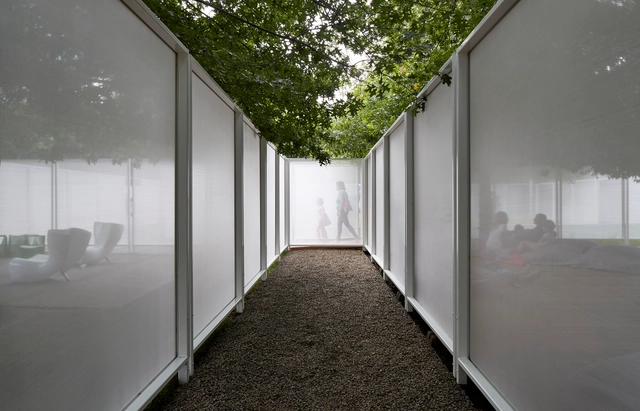
Other Architects and Retallack Thompson designed a site-specific installation in the sculpture garden at the National Gallery of Victoria in Melbourne for their inaugural NGV Triennial; an exhibition of international, contemporary art and design. Their concept? An "anti-pavilion."
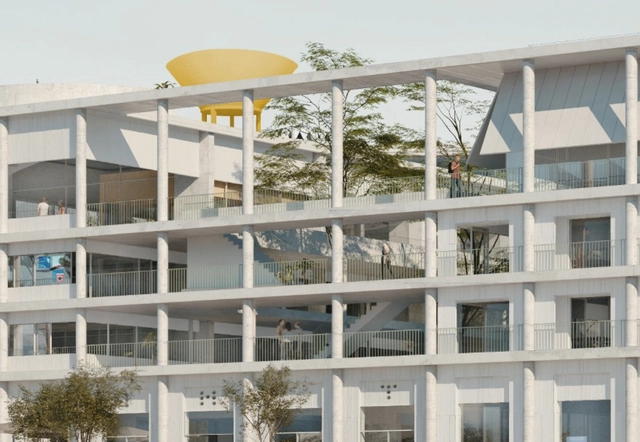
NP2F, in collaboration with Marion Bernard, Point Supreme and Jacques Lucan, has won the competition for a new institute on Porte d’Aix Plaza in Marseille, France. A combination of research and education at a Mediterranean scale, the Mediterranean Institute of Cities and Territories will link three programmatic volumes: the Atelier Building, the Forum Building and the Experimentation and Research Building. The three forms compound a "progressive system and precise composition" oriented around a Y-shaped courtyard.
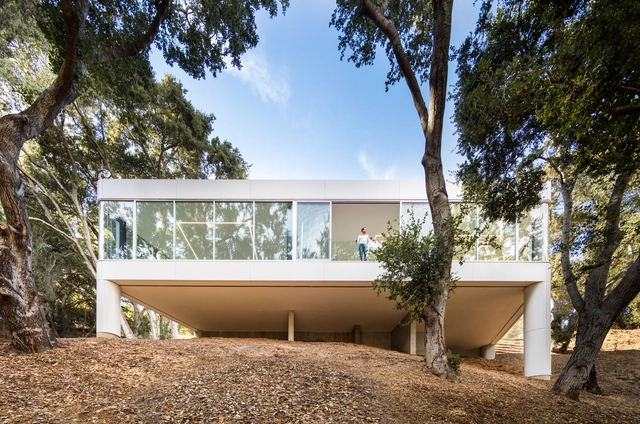

Architect, urban planner, and educator for the past 70 years, Doshi has been instrumental in shaping the discourse of architecture throughout India and internationally. Influenced by masters of 20th century architecture, Charles-Édouard Jeanneret, known as Le Corbusier, and Louis Kahn, Doshi has been able to interpret architecture and transform it into built works that respect eastern culture while enhancing the quality of living in India. His ethical and personal approach to architecture has touched lives of every socio-economic class across a broad spectrum of genres since the 1950s.
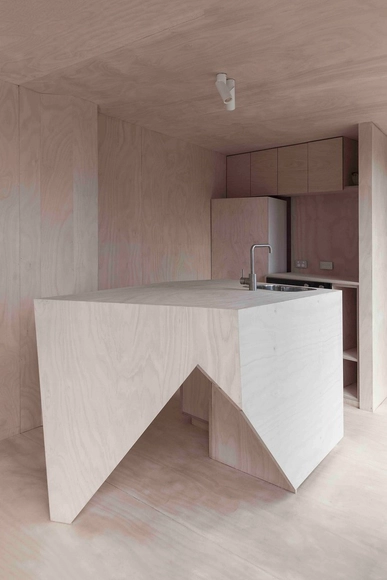
Small spaces often need to accommodate essential functions. How can you incorporate a kitchen into your design in the best possible way when floor space is limited? We've carefully reviewed our published projects to select seven houses where architects have effectively addressed this challenge through intelligent and innovative configurations.
These kitchens manage to appear larger than they actually are by being connected to adjacent spaces such as living rooms or dining rooms. They occupy very small areas themselves, taking a different approach from the traditional kitchen, which usually occupies a separate and exclusive room.

In the 1920s, Dutch-born artist Piet Mondrian began painting his iconic black grids populated with shifting planes of primary colors. By moving beyond references to the world around him, his simplified language of lines and rectangles known as Neo Plasticism explored the dynamics of movement through color and form alone. Though his red, yellow and blue color-blocked canvases were important elements of the De Stijl movement in the early 1900s, almost a century later Mondrian’s abstractions still inspire architects across the globe.
But, what is it about these spatial explorations that have captivated artists and designers for so long?
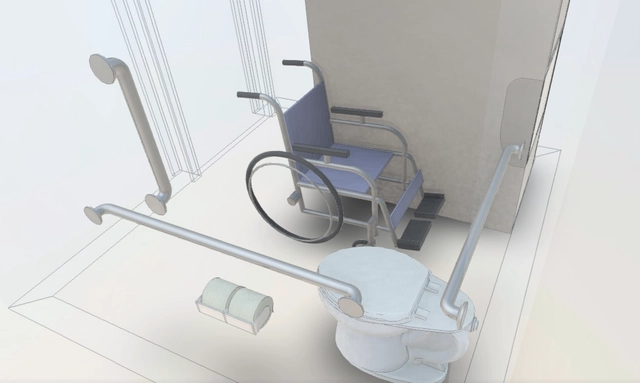
As the profession becomes more aware of the variety of users who will use their architectural creations it is necessary to consider certain basic rules. In the end, the idea is that a building or space can be used comfortably, effectively and (if necessary) quickly by all users. Today the use of BIM technology encourages the incorporation of pre-modeled products in projects, which facilitates the processes. However, if pre-modeled products are not inclusively designed, there is an increased possibility of overlooking these accessible considerations–especially when their architects have no experience or are unaware of accessible design guidelines.
Bradley Corporation USA, a manufacturer of plumbing fixtures and bathroom accessories, has developed standard models of bathrooms for people with disabilities, delivering the basic requirements that must be incorporated according to the guidelines specified by organizations such as the ADA and the ANSI. Below we present an example of an accessible bathroom for a single person, incorporating, among other things, a touchless handwashing sink (all-in-one: soap, water, and hand dryer) and a series of safety bars. Before including it in your project, don't forget to check the local regulations of your country/region.

.jpg?1521824916&format=webp&width=640&height=580)
The development company Fisher Brothers' "Beyond the Centerline" competition was launched in October 2017 as an open call to "enliven and activate the medians for a new generation of New Yorkers." The competition addresses the Park Avenue commercial district, which sits between 46th and 57th Streets.
Out of nearly 150 submissions, an eight-person jury narrowed the field down to 17 finalists, details of which can be found here. Two designs have since been selected as winners, with "Park Park" by Maison winning the jury selection, and "Park River" by Local Architects winning the popular vote.

Spanish architect Anna Puigjaner has revealed how she is applying her “Kitchenless” housing typology within her own projects in a recent interview with Metropolis Magazine as one of their 2018 Game Changers. After receiving funding from the Harvard GSD Wheelwright Prize for her controversial proposition in 2016 (after which ArchDaily published an interview with her), Puigjaner talks about the time she spent traveling the world and visiting the many different cultures that share her idea of communal cooking, adding that millennials are more inclined to co-habit or share resources.
The kitchen is the most provocative part of the house. It has been used as a political tool for a long time, to the point that nowadays we can’t accept living without a kitchen.
























.jpg?1521824976 "Park Park. Image © Maison")
.jpg?1521824927 "Park Park. Image © Maison")
.jpg?1521824988 "Park River. Image © Local Architects")
.jpg?1521825000 "Park River. Image © Local Architects")
.jpg?1521824916)