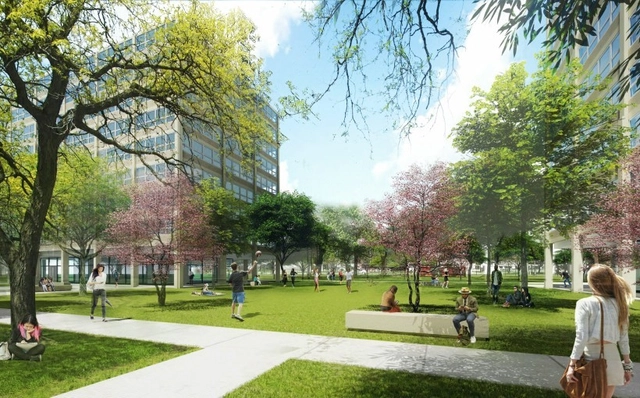
The Mies van der Rohe residential building, the Bailey Hall built in 1955, at Illinois Institute of Technology will be subject to renovation works by Dirk Denison Architects. The Chicago-based firm will modernize the mechanical, structural, and interior works, modifying its original function, and introducing a new configuration to host up to 330 first- and second-year students, while the exterior will remain faithful to the original design and the ground floor lobby will still hold on to the Mies’ iconic recessed glass lobby.
On the latest episode of Time Sensitive podcast, produced by the New York-based “conscious entertainment” media company The Slowdown, co-host Spencer Bailey speaks with New York Times architecture critic Michael Kimmelman. The two discuss Kimmelman’s lesser-known talents as a pianist; his 30-plus years writing at The New York Times(he started working at the paper as its chief art critic in 1990, a post he held until 2007, when he relocated to Berlin as the “Abroad” columnist for four years); and his goal as architecture critic to build a greater discourse around designing cities that are better, healthier, and simply fairer for all.
In partnership with ASPECT Studio, LAVA won the international competition to design Central Park in HCMC, Vietnam. Commissioned by the committee of the Ho Chi Minh City, the contest’s winning entry will be built in 2020. LAVA’s proposal for the 16 hectares Park, commemorates the old infrastructural value of the plot, once home to the 19th-century French railway tracks, and celebrates the implementation of a future mobility system.
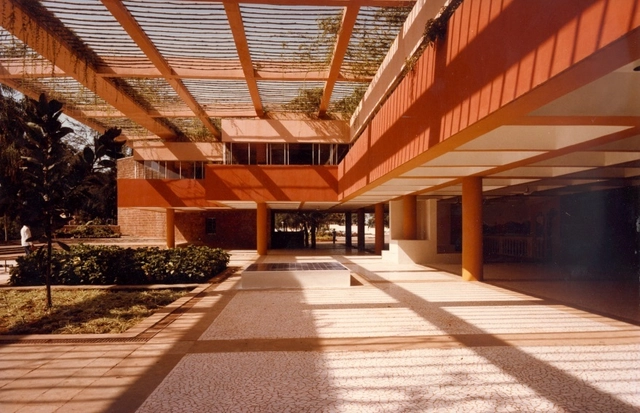
Kala Academy. Image Courtesy of Charles Correa Foundation
A new petition has been started to save Charles Correa's Kala Academy from demolition by the State Government in India. The project has become one of the only government-run arts institution with a diverse set of cultural offerings across Western and Indian programming. As Goa’s cultural center, the late 1970's structure is a rare example of an equitable public building in India.
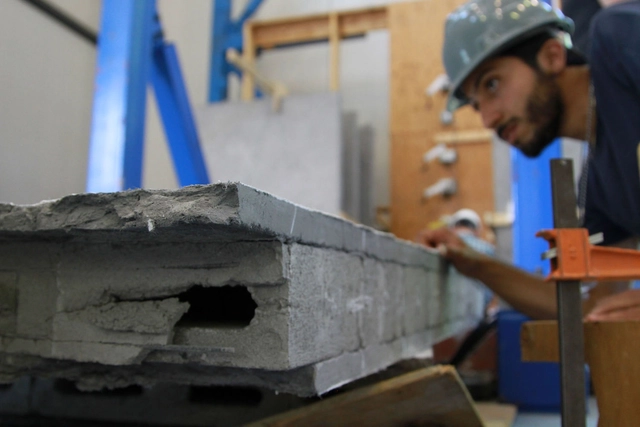
The history of concrete dates back to ancient Rome, approximately 2,000 years ago. The so-called “Roman Concrete” is composed of limestone, volcanic ash, and seawater and it permitted the construction of aqueducts, highways, and temples; many of them still stand to this day. Some time ago, this original mix was discovered to form a mineral called aluminum tobermorite, which gets stronger as time goes by.




















































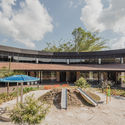
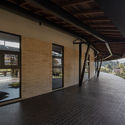


-3068.jpg?1565014205&format=webp&width=640&height=580)
-2928.jpg?1565013556 "© Daniel Malhão")
-2954.jpg?1565013633 "© Daniel Malhão")
-3099.jpg?1565014343 "© Daniel Malhão")
-2984.jpg?1565013788 "© Daniel Malhão")
-3068.jpg?1565014205)