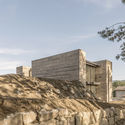
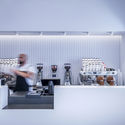
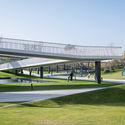
Courtesy of the German Design Council. Image Wuhan Panlong Plaza Yinxing Cinema
Design, branding and innovation are the most important factors in the success of entrepreneurial strategy, especially in times of change and crisis like the present. Receiving a renowned award is an efficient opportunity to draw attention to the recipient’s work with precise, positive messages. The German Design Awards – the international premium prize of the German Design Council – are entering the call-for-entries stage and offering winners the best-possible opportunity for publicity. They are proof of innovation capability and design expertise and demonstrate that the winners are well positioned and able to differentiate themselves through outstanding design.
Father of Iraqi architecture Rifat Chadirji has passed away at 93, on April 10 in London, after contracting the novel coronavirus. Born in 1926 in Baghdad, he is responsible for more than 100 buildings across Iraq.
Some of his most iconic works include the Tahrir Square's Freedom Monument, the Tobacco Monopoly Headquarters in 1965, the Central Post Office in Baghdad in 1975 and the Unknown Soldier Monument, one of his most culturally significant intervention designed in 1959, demolished in 1982 and then replaced by a statue of Saddam Hussein in 2003.
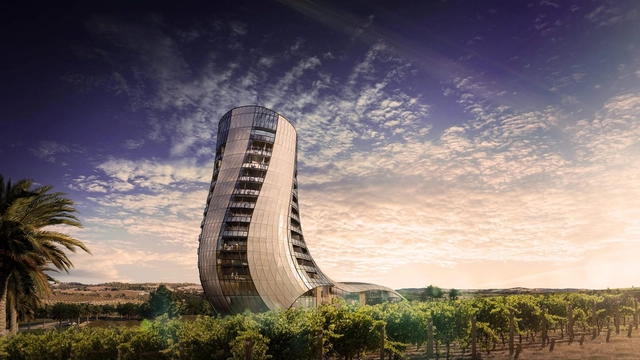
Adelaide-based practice Intro Architecture has designed a sweeping tower for the Oscar Seppeltsfield hotel in the Barossa Valley of Australia. Rising twelve stories with around 70 rooms, the hotel's shape was derived from the art of barrel-making, particularly the process of the curvature and manipulation of the stave. The tower was formed to seemingly grow from the vineyard, with its "staves" emerging then twisting to create the curving form.
As the world's healthcare systems struggle to meet the exponential surge in demands from COVID-19, architects and designers are generating a variety of responses and proposals, from large field hospitals to 3D printed clinical masks. In Italy, where the coronavirus outbreak has been among the world's most damaging, a collaborative team led by architect and MIT professor Carlo Rattihas unveiled CURA, a modular intensive care unit made from repurposed shipping containers. CURA, whose name stands for Connected Units for Respiratory Ailments (and also “cure” in Latin), can be quickly deployed in cities around the world and replicated through an open-source design, promptly responding to the shortage of ICU space in hospitals and the spread of the disease.
https://www.archdaily.com/936911/interview-carlo-ratti-on-architecture-that-fights-covid-19Niall Patrick Walsh




























.jpg?1586367348&format=webp&width=640&height=580)
.jpg?1586367546 "© Si Ray Chen")
.jpg?1586367496 "© Si Ray Chen")
.jpg?1586367438 "© Si Ray Chen")
.jpg?1586367463 "© Si Ray Chen")
.jpg?1586367348)


.jpg?1586306433)
.jpg?1586306489)