

-
Architects: Etsi Architects
- Area: 250 m²
- Year: 2021
-
Manufacturers: Geberit, Secco Sistemi, Fisher & Paykel, Menu, Bosch, +17


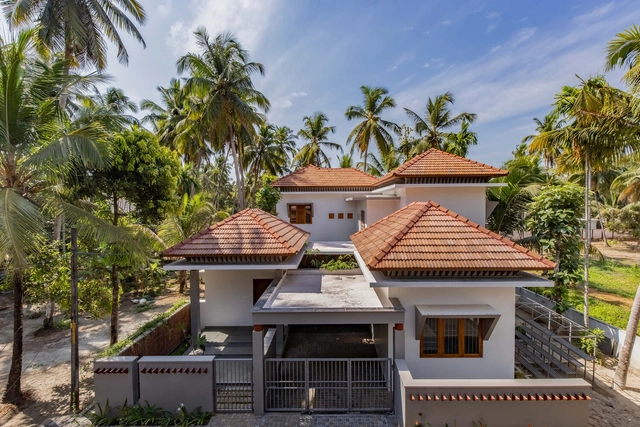

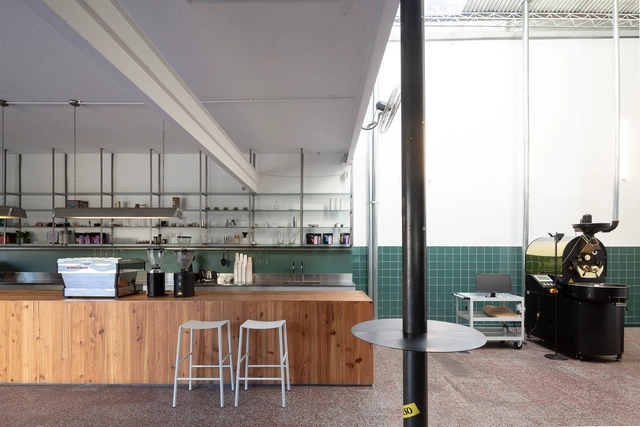


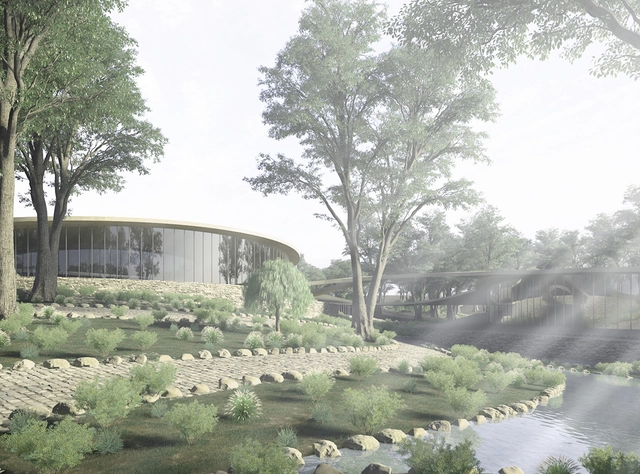
This week’s curated selection of Best Unbuilt Architecture highlights educational facilities submitted by the ArchDaily community. From a contextual Earth school in Senegal, to a borderless, collaborative school in Vietnam, this round up of unbuilt projects showcases how architects infused nature with architecture, offering students the chance to engage with the landscape and learn more about their surroundings from their academic institutes. The article also features projects from Lebanon, Switzerland, Armenia, Ukraine, and Greece.
.jpg?1656608047&format=webp&width=640&height=580)
The EPFL Innovation Park (EIP) has selected 3XN | GXN and IB (Itten+Brechbühl SA) to design and build a new "ecotope", expanding the university's Science Park and Innovation Square to a new site, west of the main EPFL campus in Ecublens, Switzerland. The Ecotope is set to be a vibrant and innovative marketplace for ideas, serving as an "ecosystem in which policymakers, researchers, investors, executives, students, and citizens can come together for open dialogue or debate.” The concept of the project not only brings together leaders in business, science, and technology, but also puts a high priority on access to green spaces and biophilic principles.

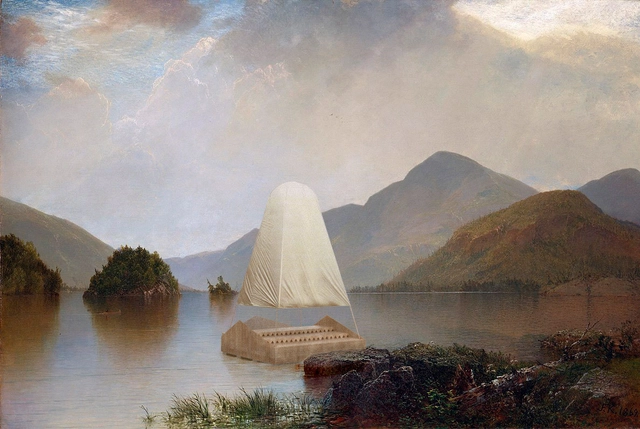
The Outsider magazine and the City Municipality of Maribor have announced the winners of the international competition “Floating Pavilion on the Drava River.” The purpose of the competition was to obtain an innovative design for a floating pavilion that would have two main functions: a space for smaller events during the Lent Festival and a space for contemplation by the river. The City Municipality of Maribor will invite the winning candidate to participate in the implementation of the project.
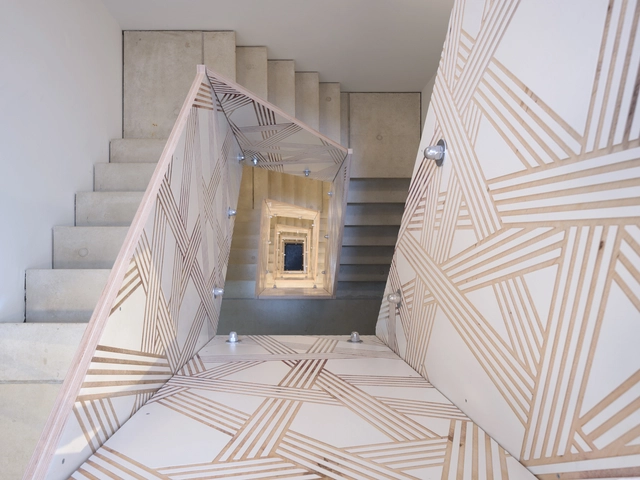
Clearly, graphic designers are not architects, but collaborative projects between these two fields of knowledge, which intersect in their details, can work well.
Creative industry as a sector has evolved, and many people are now in new fields. If you're collaborating, you can move quickly and we've covered that here. The trend is to be collaborative, and very different from 25 years ago, when you should be a graphic designer alone doing layout and paper weights or an architect isolated in an office running autocad.


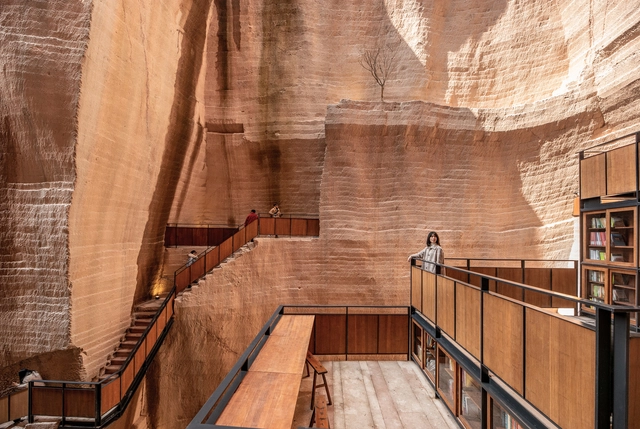
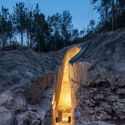
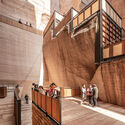
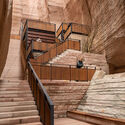
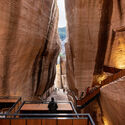
Today, reusing and adapting existing spatial resources is regarded around the world as an important contribution to sustainable development, and new challenges are thus also emerging at the margins of classic building tasks due to the changing assessments regarding whether to preserve or demolish. Xu Tiantian’s projects in the quarries of Jinyun combine aspects of landscape planning, interior design, artistic installations, and social planning with an economic revitalization of the rural area. In this way, a ruined and exploited landscape becomes a sign of departure with which a new sustainable coexistence can be linked to a narrative about the history of the location.
This article was originally published on Common Edge.
There are extraordinary connections between the natural world and the capacity for creativity in human beings. In his book Last Child in the Woods, journalist and author Richard Louv observes: “Nature inspires creativity in a child by demanding visualization and the full use of the senses. Given a chance, a child will bring the confusion of the world to the woods, wash it in a creek, turn it over to see what lives on the unseen side of that confusion.” He concludes that in nature, “a child finds freedom, fantasy, and privacy: a place distant from the adult world, a separate peace.” The architect Frank Harmon likewise wrote touchingly about the outdoors, woods, and water as perfect settings for cultivating a thirst for learning and discovery: “Children raised by creeks are never bored. Creek children don’t know about learning by rote, neither are they conditioned to working nine to five. Berries are their first discoveries, and birds’ nests, and watching the stars come out. Later they discover books. To creek children, learning is discovery, not instruction.”






.jpg?1656583509 "The Creeper – COAF Smart Campus Armavir by TarberAK Architectural Studio; TL Bureau. Image Courtesy of TarberAK Architectural Studio; TL Bureau")




.jpg?1656609084 "© 3XN")
.jpg?1656609092 "© 3XN")
.jpg?1656608128 "© 3XN")
.jpg?1656608414 "© 3XN")
.jpg?1656608047)