AI in the architecture industry has provoked much debate in recent years - yet it seems like very few of us know exactly what it is or why it has created this storm of emotions. There are professionals researching AI who know more about the field than I do, but I have hands-on experience using AI and algorithms in my design over the past 10 years through various projects. This is one of the challenges that our field faces. How can we make practical use of these new tools?
News
Artificial Intelligence Can Only Help Architecture if We Ask the Right Questions
https://www.archdaily.com/938655/artificial-intelligence-can-only-help-architecture-if-we-ask-the-right-questionsJesper Wallgren
Urban Utopias and Dystopias in a Time of Pandemic: Guilherme Wisnik in Conversation with Raquel Rolnik
What is the historical arc that traces the path from Brasília's social-democratic (and urban) utopia to today's neo-slaveholding dismantling of the democratic pact? What is this city we see today, stripped of all utopias, and with distinct regimes of vulnerability to the coronavirus pandemic?
Guilherme Wisnik talks with Raquel Rolnik, architect and urbanist, and full professor at the University of São Paulo's School of Architecture and Urbanism (FAU-USP). She was the director of planning for the São Paulo Municipal Planning Department (1989–92) and National Secretary of Urban Programs at the Ministry of Cities (2003–07), among other public sector roles. The Seminar on Culture and Contemporary Reality is organized by Escola da Cidade with support from IABsp.
https://www.archdaily.com/1124114/urban-utopias-and-dystopias-in-a-time-of-pandemic-guilherme-wisnik-in-conversation-with-raquel-rolnikRomullo Baratto
The role of architecture in: self-construction, self-production, and assisted social housing production
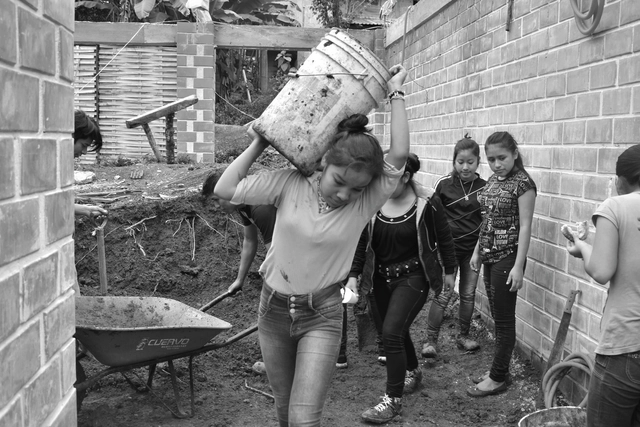



In light of recent statements by the Federal Government and the new programs announced by institutions involved in housing production in Mexico, we believe it is essential to open a dialogue and exchange ideas to better understand the concepts of self-construction, self-production, and the “Social Production and Management of Habitat” [SPMH], as well as the role of architecture in these social processes.
https://www.archdaily.com/1123823/the-role-of-architecture-in-self-construction-self-production-and-assisted-social-housing-productionMariana Ordoñez y Jesica Amescua
Florida's Residential Architecture: Understanding the Landscapes of American South




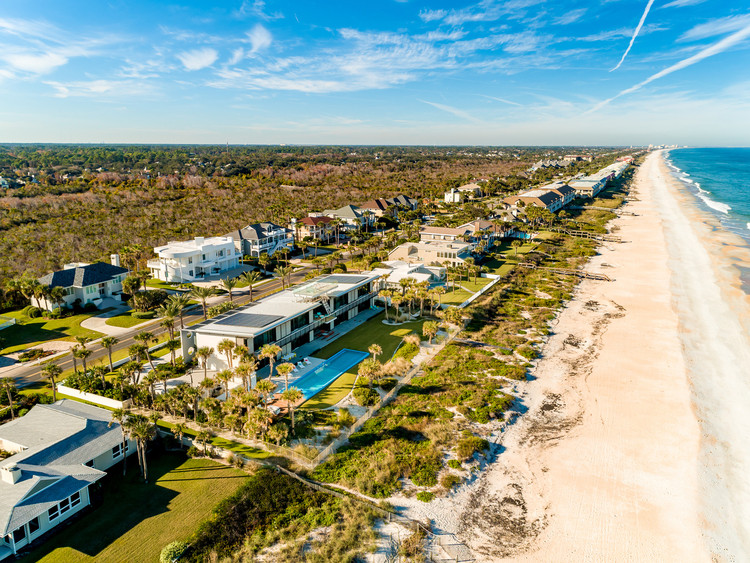
Located in the southern region of the United States, the state of Florida is one of the most populous states and the 22nd largest. The state hosts some of the most populated areas in the country, such as Jacksonville and the Miami Metropolitan Area.
https://www.archdaily.com/938527/arquitectura-y-paisaje-casas-para-entender-el-territorio-floridaMónica Arellano
Lockdown: Airlines Grounded as COVID-19 Transforms Aviation

The COVID-19 pandemic has transformed how we travel and come together. As streets and buildings became empty and people practice social distancing, so too have airports experienced a tremendous decline in passengers and flights. As the aviation industry shaped globalization, it has also contributed to how quickly the disease spread. In a new aerial series, photographer Tom Hegen explores the pandemic's impact on aviation from above.





https://www.archdaily.com/939369/lockdown-airlines-grounded-as-covid-19-transforms-aviationEric Baldwin
MASS Releases Spatial Strategies for Restaurants in Response to COVID-19
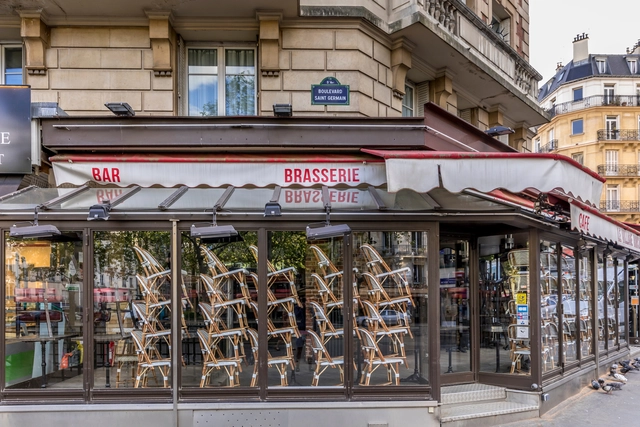
MASS Design Group has released a guideline for restaurants in response to the coronavirus pandemic, to help these business reopen safely, viably, and vibrantly. Based on world health recommendations, the drafted protocols aim to keep both staff and customers safe, as well as facilitate operations.
https://www.archdaily.com/939519/mass-releases-spatial-strategies-for-restaurants-in-response-to-covid-19Christele Harrouk
Which cities build the most housing?
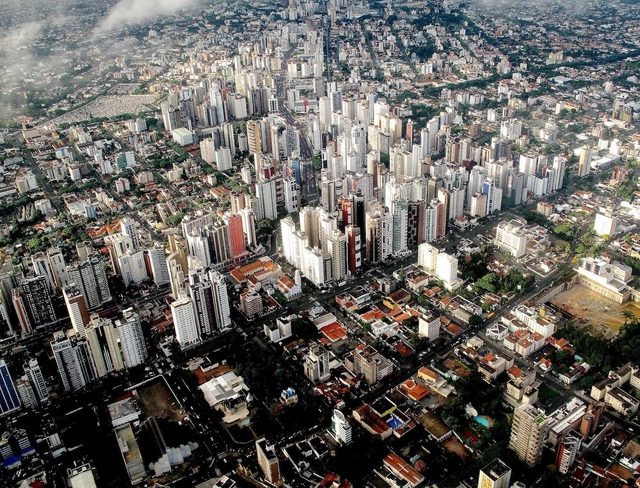
One of the main objectives of this website is to disseminate ideas that enable cities to have more affordable housing. There are several indicators that can be useful in observing and analyzing a city's housing market, such as the price-to-income ratio, which we covered in a previous article. While no single indicator is perfect, they can provide guidance regarding the scale or direction of a given real estate market.
https://www.archdaily.com/1124086/which-cities-build-the-most-housingAnthony Ling
Caret Studio Reactivates Italian Plaza While Respecting Social Distancing Measures
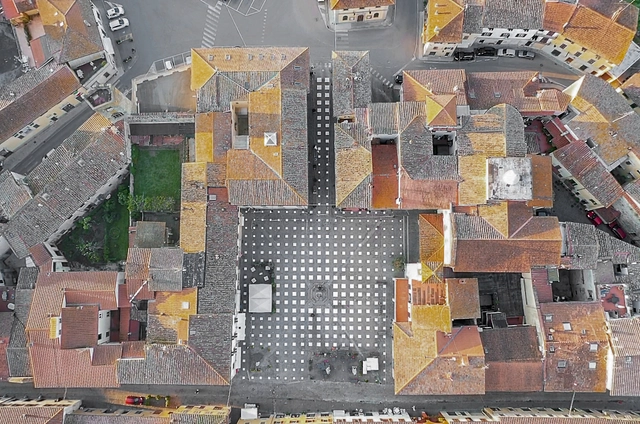
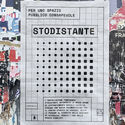
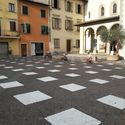
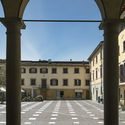
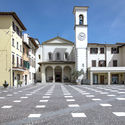
As architects around the world reimagine public spaces in the midst of the coronavirus, Italian architecture firm Caret Studio has envisioned the “StoDistante” installation. Searching to reconcile people with the outdoors, and allowing theses spaces to reopen safely while respecting the social distancing measures, Caret Studio created a temporary installation that reflects our current situation.

https://www.archdaily.com/939426/caret-studio-reactivates-italian-plaza-while-respecting-social-distancing-measuresChristele Harrouk
Diller Scofidio + Renfro's Hungarian Museum of Transport to Move Forward
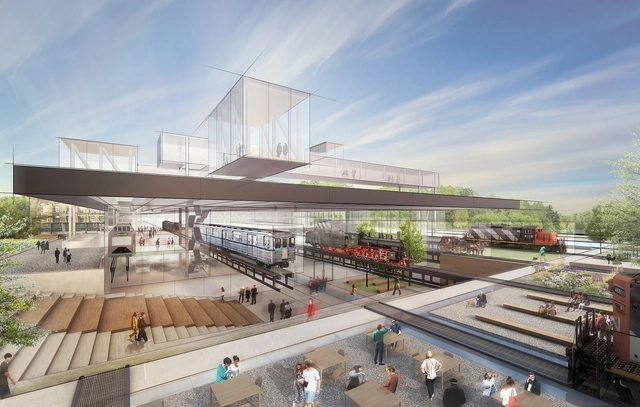
The Hungarian Government has decided to continue the design process for Diller Scofidio + Renfro's new Museum of Transport in Budapest. During the past few months, the COVID-19 pandemic cast doubt on the continuation of the project, and this latest news is a sign of support for the team's planning, design and preparatory work necessary for starting construction.


https://www.archdaily.com/939453/diller-scofidio-plus-renfros-hungarian-museum-of-transport-to-move-forwardEric Baldwin
Architects, not Architecture: Tatiana Bilbao
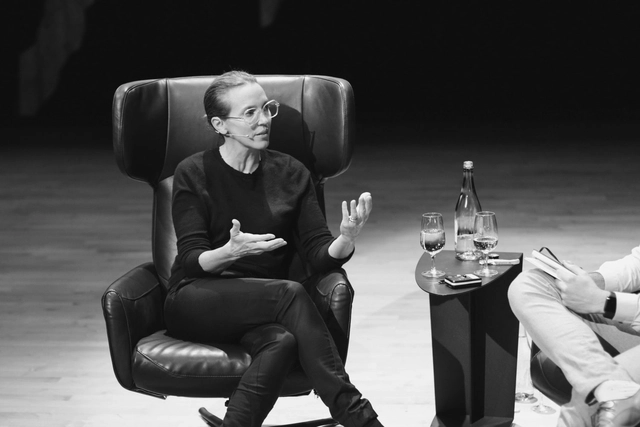
Architects, not Architecture decided to open their archive to help us cope with the current situation of not being able to go out as usual and create a source of inspiration and entertainment through sharing one of the unique talks from their previous 35 events, which have never been published before – including those of architects like Daniel Libeskind, Peter Cook, Richard Rogers, Massimiliano Fuksas, Kim Herforth Nielsen, Ben van Berkel, Benedetta Tagliabue, Mario Botta, Anupama Kundoo, and Sadie Morgan.
Every week, Archdaily will be sharing one of the Architects, not Architecture. talks which they are currently publishing online in the form of daily full-length video uploads as part of their “new event”: Home Edition 2020
https://www.archdaily.com/939469/architects-not-architecture-tatiana-bilbaoDiego Hernández
Earthen Walls in Contemporary Houses in Ecuador
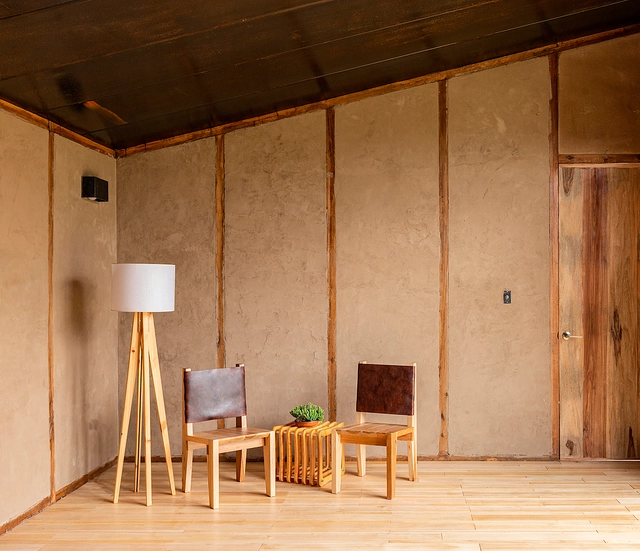
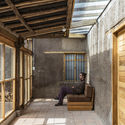
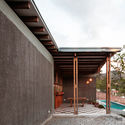
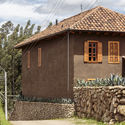

Earth is a material that has been used to construct buildings since time immemorial. Its low environmental impact and the variety of techniques available for working with this material have allowed its use to endure in architectural projects worldwide. Whether using rammed earth, wattle-and-daub (bahareque) systems, or adobe structures, numerous contemporary projects rework and reinterpret these traditional methods to shape their spaces.
https://www.archdaily.com/1123948/earthen-walls-in-contemporary-houses-in-ecuadorBelén Maiztegui
"Mapa Corona nas Periferias": mapping project tracks initiatives to combat COVID-19
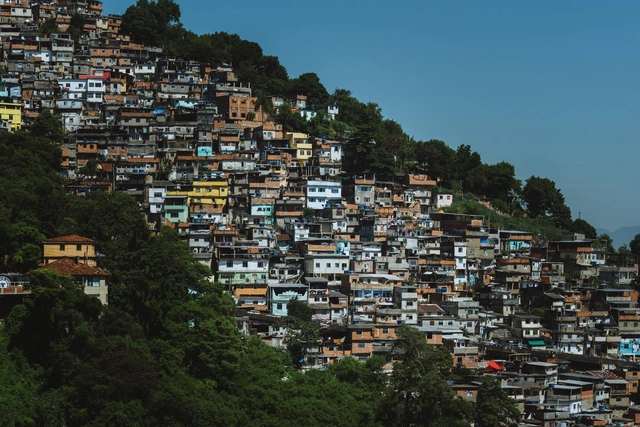
The Mapa Corona nas Periferias, a digital initiative by the Marielle Franco Institute and the Favela em Pauta channel, is now live. The digital map highlights solidarity initiatives combating COVID-19 in socially vulnerable areas such as favelas, communities, quilombos, or rural hinterlands.
https://www.archdaily.com/1124297/mapa-corona-nas-periferias-mapping-project-tracks-initiatives-to-combat-covid-19Romullo Baratto
Aedas Creates an Immersive Cultural Experience in Xiangyang, China
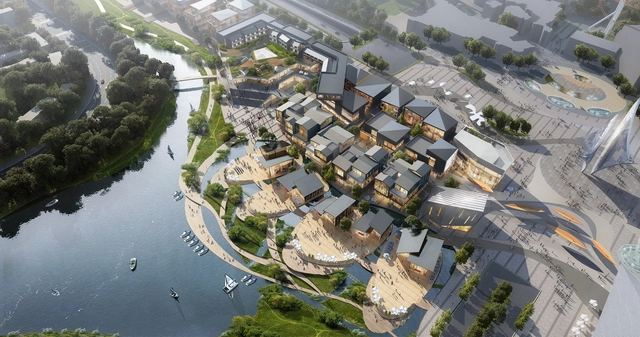
Aedas has released images of the new Xiangyang Overseas Chinese Town Cultural & Tourism Development Area Joy Town. Expected to be completed in 2022, the project, located in the Ecological and Cultural Tourism Department in western Hubei, “will provide citizens and visitors with a unique and culturally immersive Xiangyang experience”.


https://www.archdaily.com/939424/aedas-creates-an-immersive-cultural-experience-in-xiangyang-chinaChristele Harrouk
Ingrid Moye: "Social housing in Mexico is built while ignoring its most valuable purpose: a refuge for human beings"
.jpg?1589245986 "Kaspé House / Zeller & Moye. Image © Dane Alonso")



The National Social Distancing Campaign (Jornada de Sana Distancia) in Mexico began on March 23, 2020. However, a couple of weeks earlier, despite the federal government's recommendation to continue normal activities, people on social media were already choosing to replicate the European model of self-isolation. Some architecture firms immediately decided to close their physical spaces and transition to remote work, while others took a few more weeks. Still, this period of social and physical (spatial) distancing is experienced differently in every household. The months of this pandemic have exposed not only inequality regarding basic needs in dense urban areas, but also the fragility of our social order. Whether at a macro or micro scale, all these experiences are shaped and influenced by the built environment, making architecture both a judge and a party to the equation.
https://www.archdaily.com/1124274/ingrid-moye-social-housing-in-mexico-is-built-while-ignoring-its-most-valuable-purpose-a-refuge-for-human-beingsMónica Arellano
How COVID-19 Will Shape Architectural Education
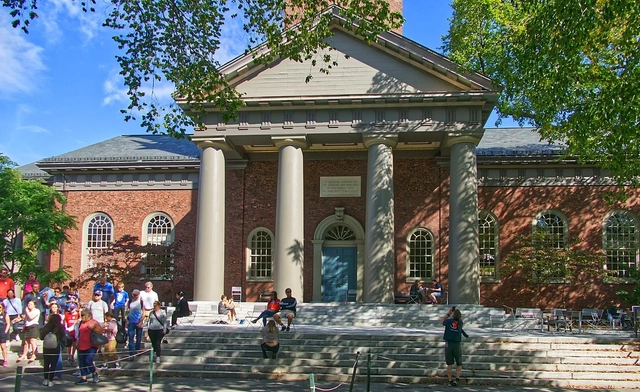
Courtesy of the coronavirus, universities are closed around the world, and classrooms are now entertained over video conferencing. This is not overly dramatic as this temporary arrangement will eclipse after cases are contained, and classes will resume soon after. However, the impacts on the university ecosystem and on the urban fabric will require immediate renovations in higher education that will shape the architectural syllabus for years to come.
https://www.archdaily.com/939423/how-covid-19-will-shape-architectural-educationZaheer Allam, Gaetan Siew and Felix Fokoua
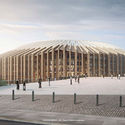
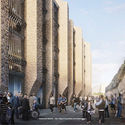
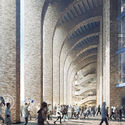
Herzog & de Meuron's Design for Chelsea FC Stadium Will Not Move Forward

Originally, set to be completed by 2020, the Herzog & de Meuron £500million stadium for Chelsea Football Club, will not move forward as planning permissions expired. The redevelopment plans, subject to numerous legal challenges throughout the years, are interrupted for now.


https://www.archdaily.com/939425/the-herzog-and-de-meuron-designed-chelsea-fc-stadium-will-not-move-forwardChristele Harrouk
Architecture's Vernacular In A Post-COVID-19 World
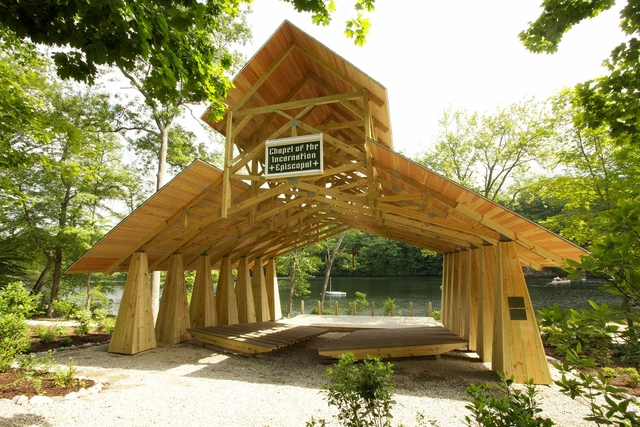
As the Great Philosopher, Mike Tyson said, “Everybody has a plan until they get punched in the mouth”.
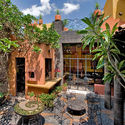
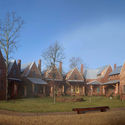
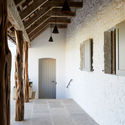
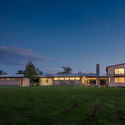
The COVID-19 pandemic will deeply impact the world of aesthetics. For the first time since League of Nations was founded, a future of universal aesthetics may cease to be the academically sanctioned Architectural Canon. As Markus Breitschmid defines it, in his article “In Defense of the Validity of the 'Canon' in Architecture,” the Canon in Architecture is a way to divorce architecture from the rest of the world:

https://www.archdaily.com/938930/architectures-vernacular-in-a-post-covid-19-worldDuo Dickinson
The Humanitarian Works of Shigeru Ban

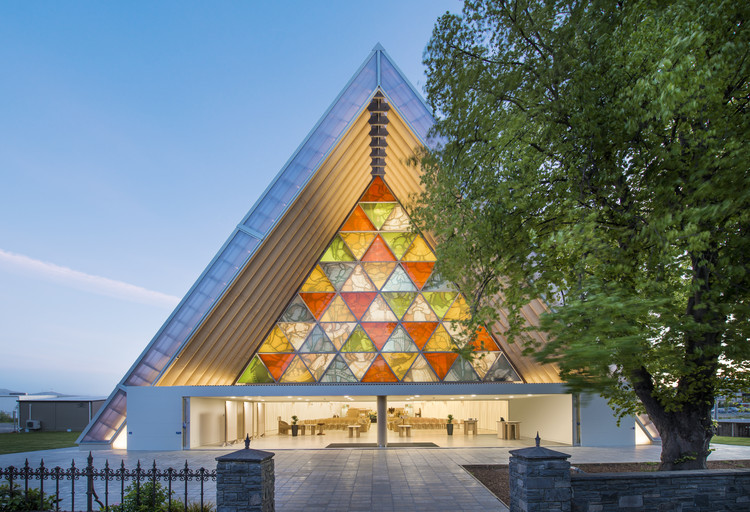
2014 Pritzker Laureate Shigeru Ban may be as well known for his innovative use of materials as for his compassionate approach to design. For a little over three decades, Ban, the founder of the Voluntary Architects Network, has applied his extensive knowledge of recyclable materials, particularly paper and cardboard, to constructing high-quality, low-cost shelters for victims of disaster across the world —from Rwanda to Haiti, to Turkey, Japan, and more. We've rounded up 10 projects of his humanitarian work, explained by Shigeru Ban Architects themselves.



https://www.archdaily.com/489255/the-humanitarian-works-of-shigeru-banArchDaily Team
Architect and Urbanist Jaquelin Taylor Robertson Passes Away at 87
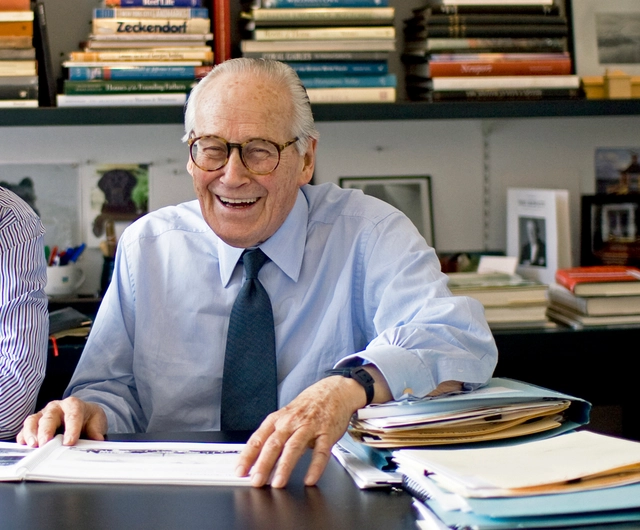
Architect and urban designer Jaquelin “Jaque" Taylor Robertson, FAIA, has passed away at the age of 87. Known for his large-scale planning projects and private residences, his projects included the iconic town of Celebration, Florida. Often linked to New Urbanism and New Classical Architecture, Jaque also designed many award-winning houses in the Hamptons on the East End of Long Island.

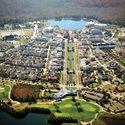


https://www.archdaily.com/939392/architect-and-urbanist-jaquelin-taylor-robertson-passes-away-at-87Eric Baldwin
A' Design Awards Announces Winners for 2019-2020
| Sponsored Content
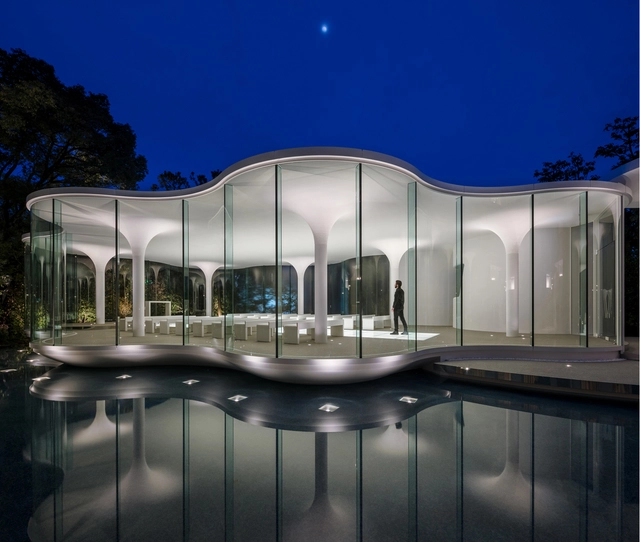
Everyone likes to win. And if design is your passion, what could be better than winning a design award? Out of the multitude of design competitions in the world, the international A' Design Award is the largest, and now they've announced their winners of the 2019-2020 competition. Winners of this prestigious award must impress a jury panel of experts - 170+ press members, academics, and design professionals - in order to receive the A' Design Prize. In addition to the prestige, recognition, and international publicity, laureates are presented with a trophy, annual yearbook, certificate, invitation to the gala night, inclusion in the winners' exhibit, and more.





https://www.archdaily.com/938864/a-design-awards-announces-winners-for-2019-2020Megan Schires
Kuma, Bilbao, Shigeru Ban: Discover the Internships and Lectures of Architecture for Humanity 2020
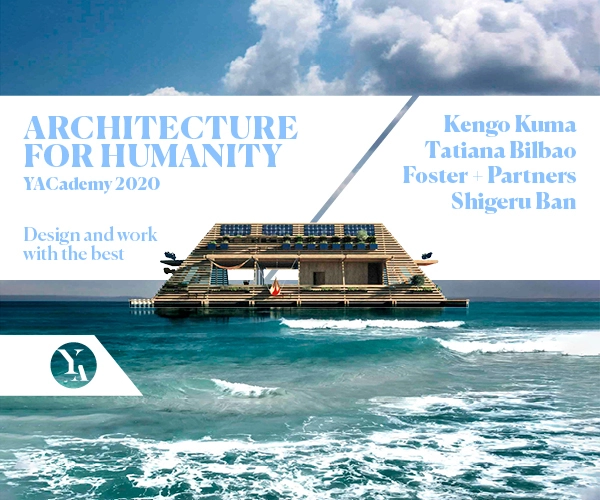
The course in Architecture for Humanities was born to train designers who know how to compose meaningful architectures even in the most complex contexts to bring quality and beauty where you are not used to seeing it. Today, pandemic, economic crisis, migration and climate change have turned every area -from the periphery of our metropolis to the most remote tropical village- into what can be defined as “emergency context”.
https://www.archdaily.com/939307/kuma-bilbao-shigeru-ban-discover-the-internships-and-lectures-of-architecture-for-humanity-2020Rene Submissions
Ten Thoughts on the Future of Practice

This article was originally published on The Architect's Newspaper.
In February of this year, I gave a short talk to our Yale students about the economy and their employment prospects, suggesting that while all indicators remained strong and jobs were plentiful, it had been quite some time since our last downturn. Having seen several during my career I suggested that they would likely see a recession sometime in theirs, but cast doubt on whether we’d ever see anything as serious as 2008. If only…
It’s too early to be making nuanced arguments about the future, as we face down what is undoubtedly going to be a much more serious situation in the second half of 2020. So, here are ten first thoughts about how our profession may be impacted, and potentially transformed, as a result. Choose two or three as prompts to consider the future once the crisis has passed.
https://www.archdaily.com/939012/ten-thoughts-on-the-future-of-practicePhil Bernstein
The Other National Library of Argentina
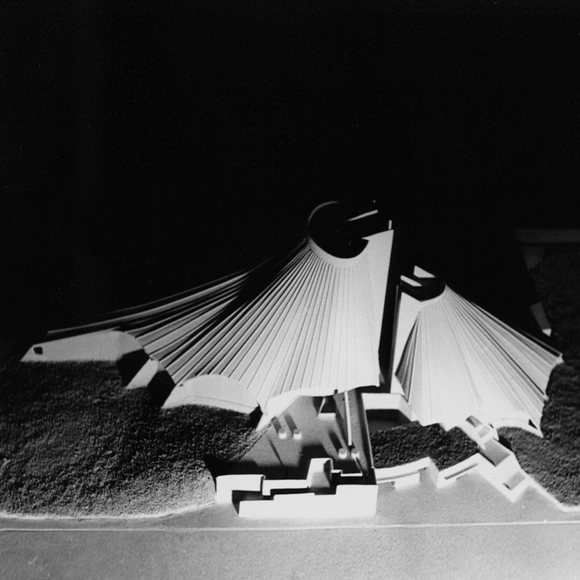
Nearly sixty years ago, Flora Manteola, Javier Sánchez Gómez, Justo Solsona, Carlos Libedinsky, and Antonio Diaz envisioned a building with a capacity of 3,000,000 books and 500,000 magazines and newspapers for the National Library of Argentina preliminary design competition. Their proposal for a "large metal tent" would ultimately take second place to the concrete glyptodont by Clorindo Testa, Bullrich, and Cazzaniga that stands today.
From its inception, the proposal "prompted sensitivity toward new formal and structural directions," as noted in the jury's critique. In 2015, this design was featured in the exhibition Latin America in Construction, and today its original model and blueprints are in the official collection of the Museum of Modern Art (MoMA) in New York.
Below, we revisit the project through the words of Justo Solsona:
https://www.archdaily.com/1123890/the-other-national-library-of-argentinaFabian Dejtiar
BIM in Landscape Architecture: Scenarios, Possibilities and Breakthroughs
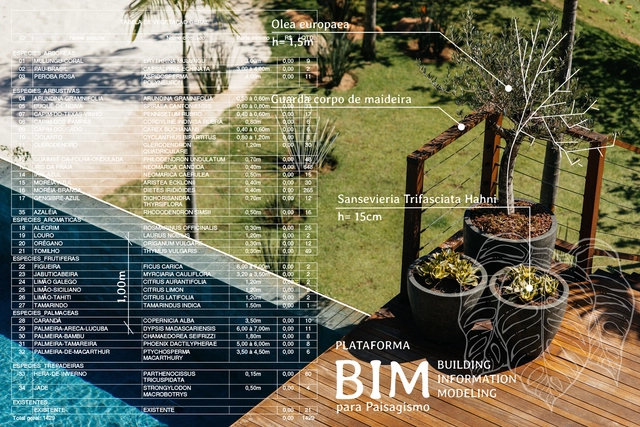
We are heading for a scenario in which BIM technology will greatly help us to maximize the roles and skills of civil construction professionals, making room for us to plan, design, build and manage buildings and infrastructures much more efficiently, integrating all systems, structural, mechanical, electrical and plumbing in a responsible, economical and sustainable way.
https://www.archdaily.com/938961/bim-in-landscape-architecture-scenarios-possibilities-and-breakthroughsPaula Pereira (Alexandre Furcolin Paisagismo)
Oops! We don't have this page.
But you can browse the last one: 417