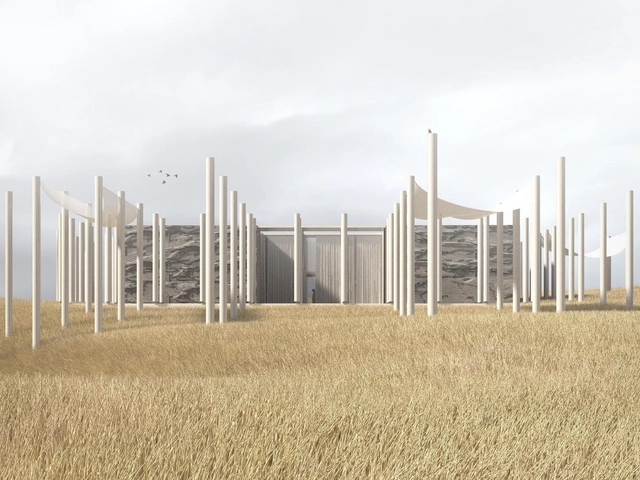
In January 2022, the world of architecture lost one of its greatest influences of modern times, the Catalan architect Ricardo Bofill. However, just two months before his departure, Bofill left us with a new vision: an independent villa inspired by a classical temple that sits on a single plot within the Palmares Ocean Living & Golf complex. Today, a new opportunity presents itself to bring one of his final designs to life.
Still from 'Spirited Away' (2001). Image Courtesy of Studio Ghibli
Writers in film and animation, specifically pertaining to the genre of anime, endeavor to incorporate varied architectural backdrops to assist them in telling their stories, with influences ranging from medieval villages to futuristic metropolises. Architecture as a subject includes a wide array of elements to study, with each architectural era further inferring its context and history through its design alone. However, in film and anime, all of the contexts behind a building’s design can be condensed into a single frame, powerful enough to tell a thousand stories.
As the world spins deeper into the third year of a global pandemic with no sign of abating, a new space race is forming over our heads. Entry is open to all, and the tickets are literal. The Architect's Newspaper's Jonathan Hilburg explores how the world's richest men are charting new paths for the human species, and how the public are reacting to the future of private space tourism.
The event featured two main award categories for built works and projects—national and international—with a selection jury composed of Ivo Renato Giroto (Brazil), Martin Padrón (Venezuela), Fabián Dejtiar (Argentina/Chile), Roberto Ameneiro (Spain), and Carlos Álvarez (Costa Rica). On the final day of the event, the winners were announced; you can view them below.
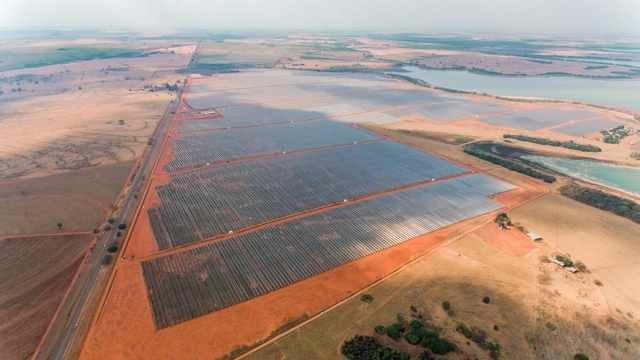
Pereira Barreto solar photovoltaic complex in the state of São Paulo. Image courtesy of EDP Renováveis
Brazil has just surpassed the historic milestone of 14 gigawatts (GW) of operational solar photovoltaic capacity, combining utility-scale plants and distributed self-generation systems on rooftops, facades, and small plots of land. Consequently, solar power now surpasses the installed capacity of the Itaipu hydroelectric plant, according to data from the Brazilian Association of Photovoltaic Solar Energy (ABSOLAR).
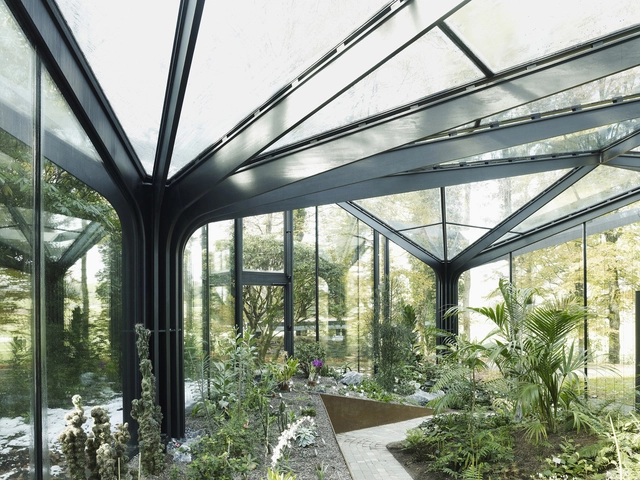
Few structures are as elegant and ingenious as greenhouses. Largely built with simple and straightforward designs, these minimalist shelters create airy and light-filled spaces that shape indoor climate. Dedicated to the cultivation of plants and crops, they are diverse projects combining programs and systems to emphasize sustainability, education and conservation. At their heart, greenhouses are about experience and discovery.
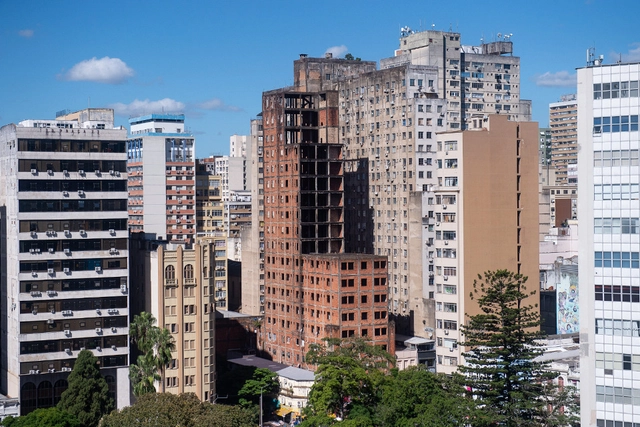
In the film Aquarius, directed by Kleber Mendonça Filho, the character Clara, played by Sônia Braga, refuses to sell her apartment—located in a condominium building—to a real estate developer. Her neighbors, on the other hand, accept the deal. In an article for Estadão, economist Pedro Fernando Nery views the case through a lens opposite to the cinematic narrative: instead of a hero resisting unscrupulous real estate capital with no respect for Recife's coastal landscape, Clara is actually the villain.
The Second Studio (formerly The Midnight Charette) is an explicit podcast about design, architecture, and the everyday. Hosted by Architects David Lee and Marina Bourderonnet, it features different creative professionals in unscripted conversations that allow for thoughtful takes and personal discussions.
A variety of subjects are covered with honesty and humor: some episodes are interviews, while others are tips for fellow designers, reviews of buildings and other projects, or casual explorations of everyday life and design. The Second Studio is also available on iTunes, Spotify, and YouTube.
This week David and Marina answer the question, “Should I go to architecture school?” The two cover the relevancy of college/university, the architecture school experience, if studying architecture is needed to practice architecture, if having a degree helps with getting a job, preparing for architecture school, choosing the right degree, the cost of architecture school, and more.
https://www.archdaily.com/979573/the-second-studio-podcast-should-i-go-to-architecture-schoolThe Second Studio Podcast
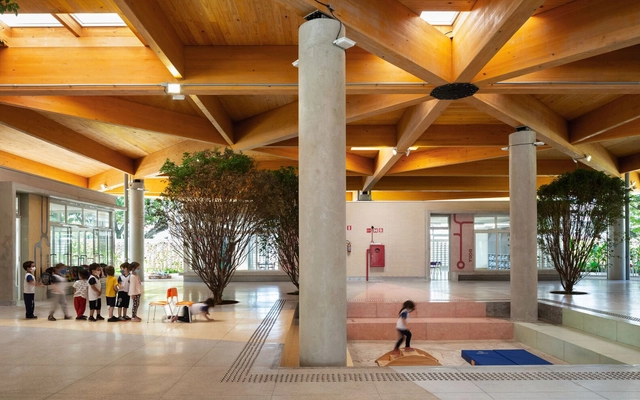
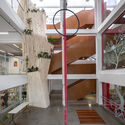
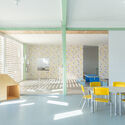
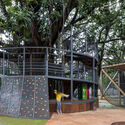
National School Day was celebrated yesterday, March 15, an important date to remember and value the role of educational institutions. Spaces that foster new perspectives, knowledge, exchanges, interaction, and play must be designed to rise to the challenge. While we have previously highlighted fifteen projects designed by Brazilian architects, today we take the opportunity to showcase some of the solutions and techniques adopted in recent years when approaching this program.
The new report from the Intergovernmental Panel on Climate Change (IPCC) paints a troubling picture: climate change is already affecting every corner of the world, and far more severe impacts lie ahead if we fail to halve greenhouse gas emissions this decade and immediately scale up adaptation measures.
https://www.archdaily.com/1131911/impact-of-climate-change-6-findings-from-the-2022-ipcc-report-on-adaptationKelly Levin, Sophie Boehm e Rebecca Carter
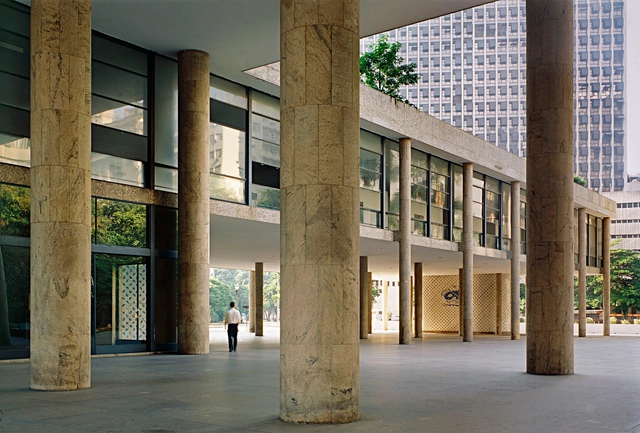
Capanema Palace, also known as the Ministry of Education and Health, in Rio de Janeiro. Photo: Nelson Kon
Thought you had already seen, read, and heard everything about the Week of '22? The Betoneira Podcast, however, approached the topic through a different lens: architecture. Guest Guilherme Wisnik explained how Oswald de Andrade's *antropofagia* underpinned Lúcio Costa and Oscar Niemeyer’s relationship with Le Corbusier in the design of the Capanema Palace, Brazil’s first public modernist building.
The Glass House, located on Ponus Ridge Road in New Canaan, Connecticut, was designed and built in the late 1940s as the home of its architect, Philip Johnson. Considered an icon of modern architecture, the house explores the boundaries between interior and exterior. One year after its completion, its mimesis, the Brick House, was built 25 meters in front of it, sharing the same length but only half the depth of the glass house.
https://www.archdaily.com/1132105/exhibitionism-and-seclusion-the-glass-house-complex-of-philip-johnson-and-david-whitneyHelena Ramos e Rafael Baumer
Peru, a country of rich heritage and ancestral wisdom, won two awards at Expo 2020 Dubai for the Peru Pavilion, which captivated visitors through the concept of "Timeless Peru." First, the trade publication Exhibitor presented the pavilion with the World Expo Award in the People’s Choice Awards category, following an online vote where people from around the world selected their best overall experience from the expo.
Additionally, on March 30 of this year, the Peru Pavilion won the Gold Award at the BIE Day Awards in the Self-built pavilions – Category B (between 1,750m2 and 2,500m2) category. The award recognized three key aspects: architecture and landscape, exhibition design, and theme interpretation.
This week's curated selection of Best Unbuilt Architecture highlights designs submitted by established architecture practices, featuring conceptual works, competition entries and projects in different stages of development. From the transformation of a former mall into a healthcare facility in the United States, a masterplan for the redevelopment of a zoo in Canada to a brewery regeneration in China, the following explores a variety of designs by global architecture offices.
Featuring firms like Perkins +Will, Henning Larsen Architects, URBANUS or Mandaworks, this week's selection of unbuilt projects highlights worldwide interventions that illustrate a variety of ideas, from adaptive-reuse strategies, interventions in heritage sites and new models for public buildings.
Pricing architectural project work is a complex issue that is not usually addressed during one's formative school years, and it usually takes time for professionals to develop a good system that works for them and their clients. Issues such as scope of work, hours worked, project area and project complexity will influence the final cost of a job. In addition, another thing that can keep project professionals awake at night is how to charge clients in a way that is sustainable for the business and comfortable for future users of the designed space.
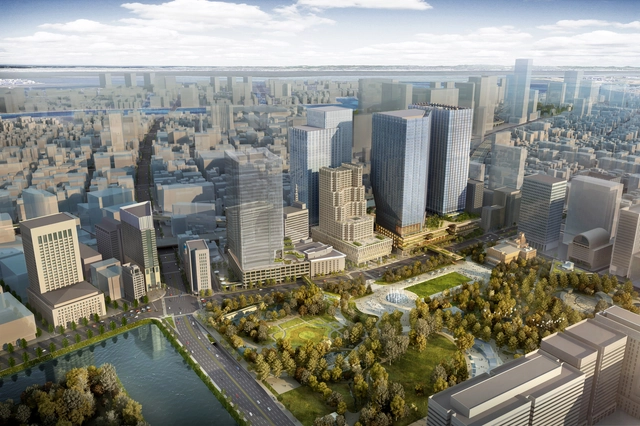
PLP Architecture has unveiled plans for Tokyo Cross Park, an upcoming redevelopment of an entire district set to become the largest development site in the metropolitan area of Tokyo. The new 230-hectare "green heart of the city" will include four towers, two of which to be designed by PLP, a 31-metre-tall podium with an elevated green public realm, and a 2-hectare public plaza.
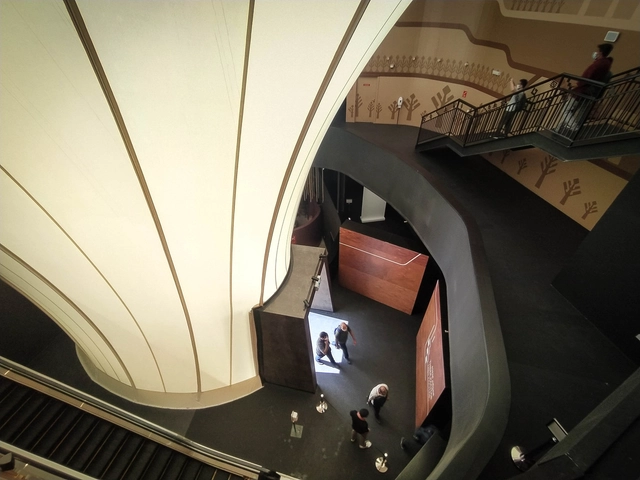
New images have been released by Studio Gang showcasing the construction progress of the firm's American Museum of Natural History Expansion in New York. Dubbed as the Richard Gilder Center for Science, Education, and Innovation, the project will link together 10 museum buildings, improving circulation and creating one monumental campus of exhibition galleries, state-of-the-art classrooms, an immersive digital theater, and a redesigned library.
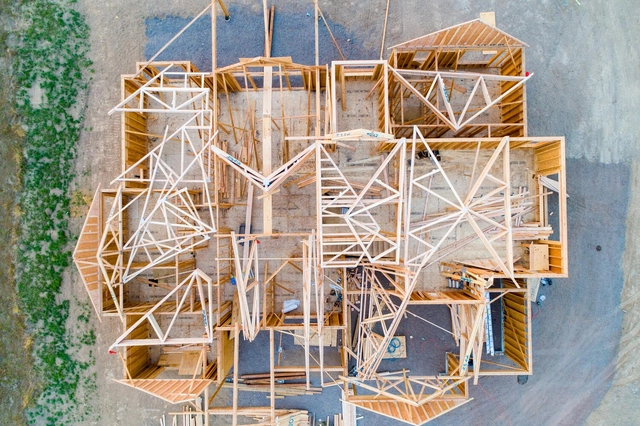
One of the first elements used by humans to build shelters, wood is a versatile material that, along with technological advances, remains a protagonist in the construction industry, being used in different ways and moments in a work.
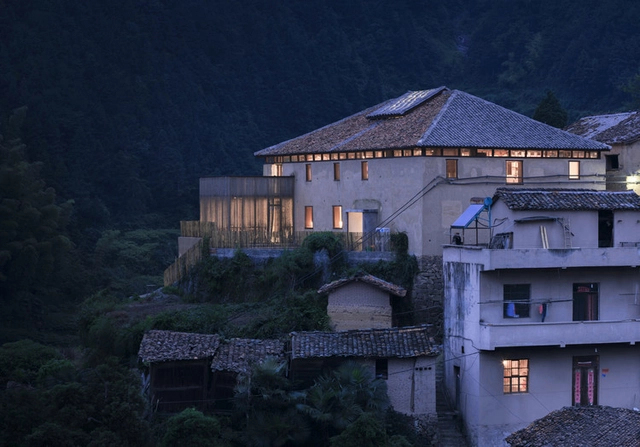
The immensity of China leads to the diversity of customs and climatic conditions. Each area has its own unique materials, construction methods, and climate adaptation measures. The regional characteristics of Chinese architecture are generally preserved in rural buildings. But we cannot overlook how contemporary technology may considerably improve the living and use conditions of rural buildings. What is the best way to create a balance between classic or inherent technology and new ones? How would the construction of rural architecture provide inspiration for the development of Chinese architectural cultural symbols?
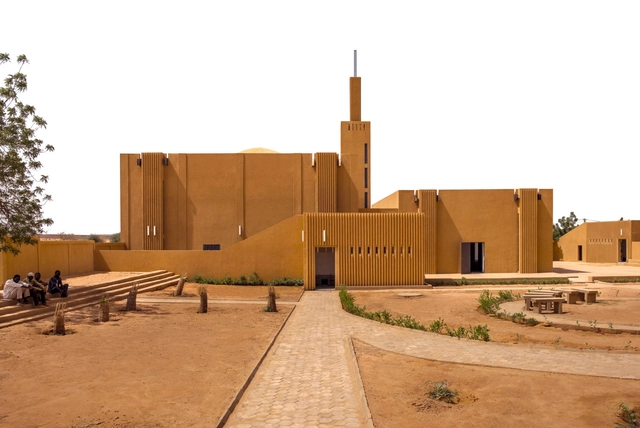
2022 Pritzker Architecture Prize winner Diébédo Francis Kéré reported the great solutions of Burkina Faso. Kéré insists to build comfortable buildings at a reasonable price; to make users happy and inspire them to dream of a better life. The pride of the local culture is reinforced by the use of local materials and traditional techniques. And then Kéré‘s works in other countries show cultural emblems of Burkina Faso, which are the consequence of his own cultural accumulation.
Compared to that of the West and East, awareness and knowledge of the architecture of sub-Saharan Africa—Africa south of the Sahara Desert—is scant. A new book intends to mitigate this oversight, and it’s a significant accomplishment. Architectural Guide Sub-Saharan Africa (DOM publishers, 2021), edited by Philipp Meuser, Adil Dalbai, and Livingstone Mukasa, was more than six years in the making. The seven-volume guide presents architecture in the continent’s 49 sub-Saharan nation-states, includes contributions by nearly 340 authors, 5,000 photos, more than 850 buildings, and 49 articles expressly devoted to theorizing African architecture in its social, economic, historical, and cultural context. I interviewed two of the editors—Adil Dalbai, an architectural researcher and practitioner specializing in sub-Saharan Africa, and Livingstone Mukasa, a native Ugandan architect interested in the intersections of architectural history and cultural anthropology—about the challenges of creating the guide, some of its revelations about the architecture of Africa, and its potential impact.
https://www.archdaily.com/979526/a-remarkably-comprehensive-new-guide-to-the-architecture-of-sub-saharan-africaMichael J. Crosbie
Grounded by the COVID-19 pandemic, the hospitality sector is re-grouping and looking for fresh ideas and stories. Image Courtesy of HD Expo + Conference
As the hospitality sector begins to reemerge after the global pandemic, fresh thinking, new strategies and innovation will be key – and all on show at HD Expo + Conference in Las Vegas, 26 to 28 April.
Sistema EKol® en Westin Los Cabos Resort. Image Cortesía de Westin Hotels & Resorts
The earliest mosaics date back to the 8th century BCE. Indeed, they were already used as decorative elements and paving in Ancient Greece and the Roman Empire. Yet, despite this long history, they remain as relevant as ever, continuing to set trends in contemporary design. Furthermore, in recent years, mosaic techniques have evolved alongside new technologies and advanced manufacturing methods, giving rise to various types of coverings with diverse formats, styles, colors, and properties adapted to a wide range of functions. Among these, glass systems stand out particularly for their beauty, versatility, and physical properties.
A week ago, we announced the 15 finalist projects of the 2022 Building of the Year award —the prize for the best architecture in Spanish. Our jury of experts—you, our readers—made an initial selection of 15 from nearly 1,000 architectural works built in Latin America and Spain to proceed with the final vote for 3 projects that represent the best of the architecture that inspires, defines, and shapes us.
Today is the day to announce the winners of ODA2022!
We are pleased to present three projects located in Colombia, Cuba, and Chile that demonstrate the relevance of thinking of architecture as a solution to specific and local needs in order to improve the quality of life, at any scale or program.
The 2022 Building of the Year Award is presented to you by Dornbracht, renowned for its leading designs in architecture, which can be found internationally in bathrooms and kitchens. See the selected projects below.
Last week, we announced the 15 finalists for the 2022 Obra do Ano, an award celebrating the best of Portuguese-speaking architecture by inviting our readers to vote for their favorite projects built in Portuguese-speaking countries. The day has come to announce the winners of ODA 2022.

















.jpg?1647615056&format=webp&width=640&height=580)


_StudioGang_AMNHl_032522.jpg?1648801718&format=webp&width=640&height=580)
_Studiogang_AMNH_Exterior_032522.jpg?1648801573 "© Neoscape, Inc./© AMNH")
_StudioGang_AMNH_Vivarium_20220323.jpg?1648801887 "© Neoscape, Inc./© AMNH")
_StudioGang_AMNH_Central_Exhibition_032522_61_.jpg?1648801779 "© Neoscape, Inc./© AMNH")
_Studiogang_AMNH_Exterior_Entrance_032522.jpg?1648801585 "© Neoscape, Inc./© AMNH")
_StudioGang_AMNHl_032522.jpg?1648801718)