This article was originally published on May 25, 2015. To read the stories behind other celebrated architecture projects, visit our AD Classics section.
Before the impossibly “super-thin” tower became ubiquitous on the Midtown Manhattan skyline, Raimund Abraham’s Austrian Cultural Forum challenged the limits of what could be built on the slenderest of urban lots. Working with a footprint no bigger than a townhouse (indeed, one occupied the site before the present tower), Abraham erected a daring twenty-four story high-rise only twenty-five feet across. Instantly recognizable by its profile, a symmetrical, blade-like curtain wall cascading violently toward the sidewalk, ACFNY was heralded by Kenneth Frampton as “the most significant modern piece of architecture to be realized in Manhattan since the Seagram Building and the Guggenheim Museum of 1959.” [1]
Courtesy of Matthew Field, licensed under GFDL 1.2 via Commons
This article was originally published on November 2, 2015. To read the stories behind other celebrated architecture projects, visit our AD Classics section.
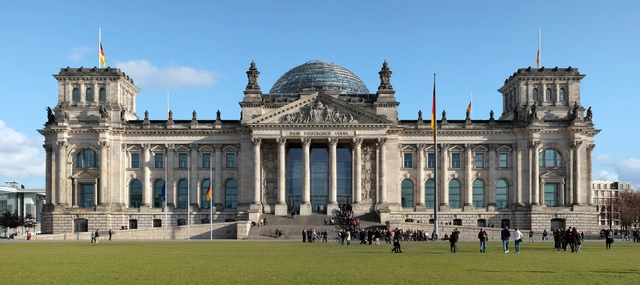
As Norman Foster describes in his firm’s monograph, Foster 40, “Our transformation of the Reichstag is rooted in four related issues: the Bundestag’s significance as a democratic forum, an understanding of history, a commitment to public accessibility and a vigorous environmental agenda.”[1] Foster’s description sounds straightforward enough, but the process of creating the New German Parliament at the Reichstag was only the latest entry in the long, complex, and contentious history of the building.


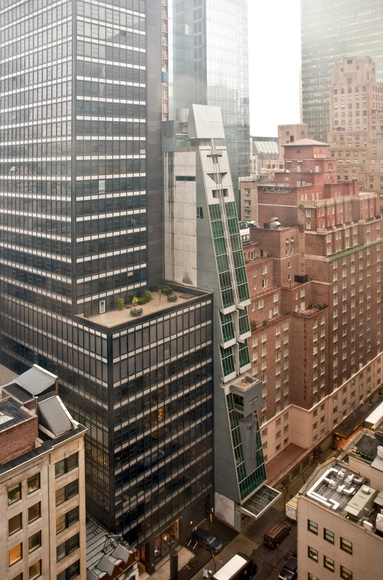


.jpg?1431981450 "The director's office that occupies the box-like protrusion on the southern facade. Image © Photo by David Plakke, davidplakke.com; Courtesy of Austrian Cultural Forum New York")





.jpg?1540402581&format=webp&width=640&height=580)

.jpg?1540402713 "© Jim Stephenson")
.jpg?1540402581)
.jpg?1539785955&format=webp&width=640&height=580)
.jpg?1539785884 "© Mika Huisman")
.jpg?1539785986 "© Mika Huisman")
.jpg?1539786050 "© Mika Huisman")
.jpg?1539785973 "© Mika Huisman")
.jpg?1539785955)