

-
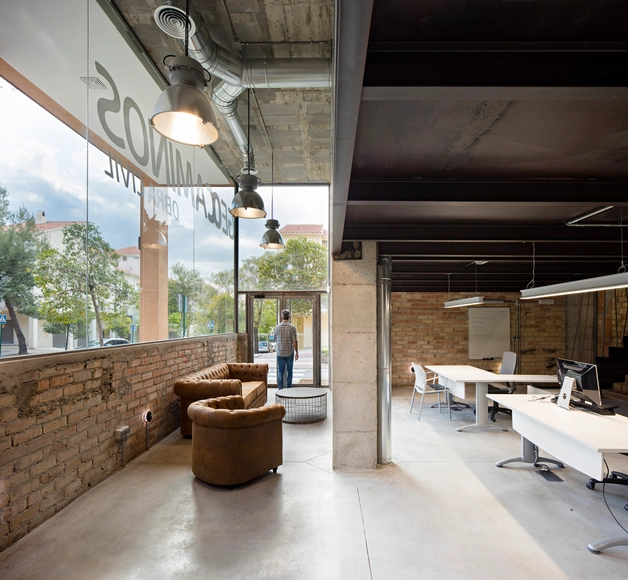
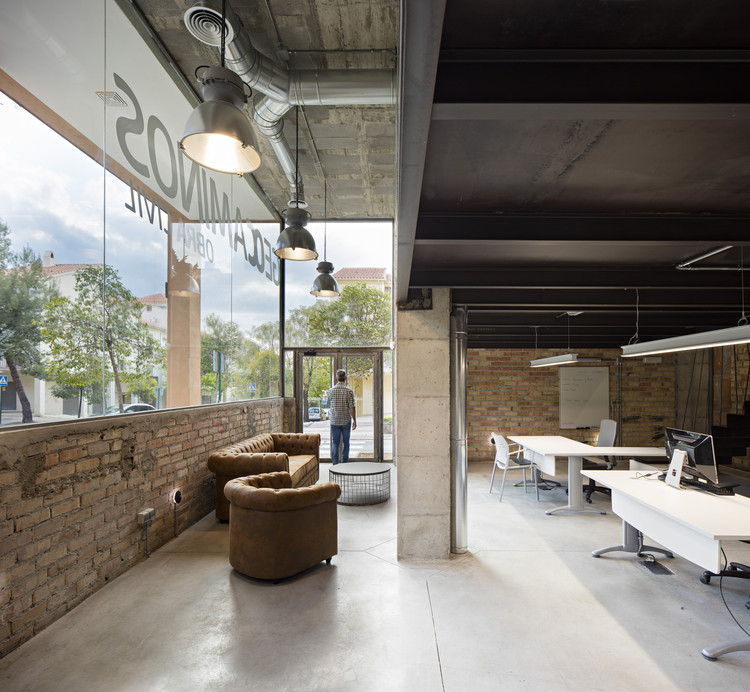
Architects: A2OFFICE
- Area: 200 m²
- Year: 2016
-
Professionals: José Sousa Construções Lda

Ernst Zinsser - Hidden Master of the 1950s
There is no doubt that Ernst Zinsser belongs to the significant representatives of the so called “Nachkriegsmoderne” (post-war-modernism) in Germany and yet due to a lack of medial presence he hides in shadow of his rather famous colleagues such as Friedrich Wilhelm Kraemer or Dieter Oesterlen.
.jpg?1468466283&format=webp&width=640&height=580)

i2a istituto internazionale di architettura, Lugano, in collaboration with the Hochschule Luzern - master Technik & Architektur and the CCU – Chinese Culture University, Taipei, with the patronage of Comune di Agno (Cantone Ticino, Switzerland), is glad to present the international summer school islands, atolls and archipelagos of Lake Lugano, which will take place in Agno form September 5th to September 11th. Participants will receive 3 ETCS credits form the Hochschule Luzern.
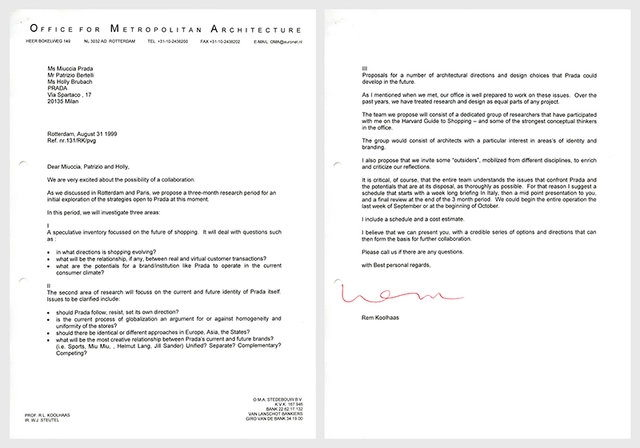
“Conflicts of interest” are said to compromise the impartiality of research, but what would it mean to be disinterested? Ethical codes warn us that researchers’ objectivity can be corrupted by a clashing set of interests—those of funding agencies, clients and publics, as well as researchers’ self-interest in professional advancement or personal gain. If the resolution of such conflicts might typically call for avoidance, recusal or disclosure, what would such strategies mean for the design disciplines and research on the built environment? What varied interests, expressed in the form of money or other manifestations of influence, do designers contend with? Who does impartiality protect, and when are conflicts of interest productive?

Update: the deadline has been extended to November 3rd.
The Planning and Visual Education Partnership(PAVE) is now welcoming submissions to its 22nd annual student design competition. Open to college-level students involved in retail design and related fields, the PAVE 2016 Student Design Competition challenges participants to create a new health and wellness design concept for future Kroger Marketplace stores. Proposals can, and are encouraged, to deviate from the brand’s current aesthetic. Designs can either be submitted to the Store Design and Planning Category or the Visual Merchandising Category. Over $15,000 in cash prizes will be distributed to winners in both categories. There is no registration fee. The submission deadline is October 24, 2016.
.jpg?1468375025&format=webp&width=640&height=580)

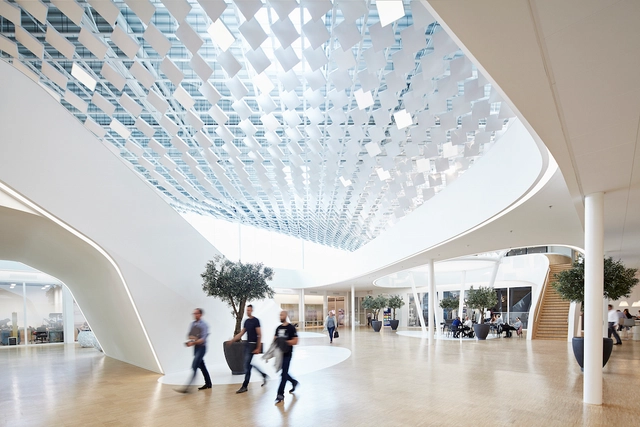
Park Associati has revealed their plans for a new landmark business center in central Milan. A series of differentiated volumes make up the complex, one of which rises far higher and has been articulated as a "lantern," illuminating the skyline. The plan for the Pharo Business Center focuses on visibility and accessibility, taking advantage of the site's prominent position.
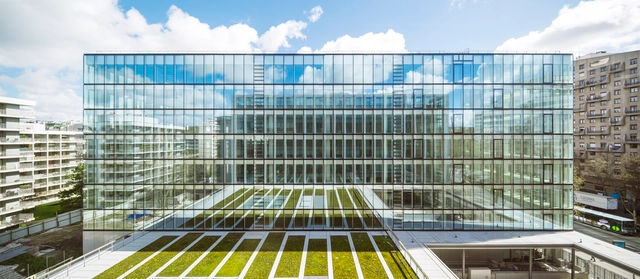
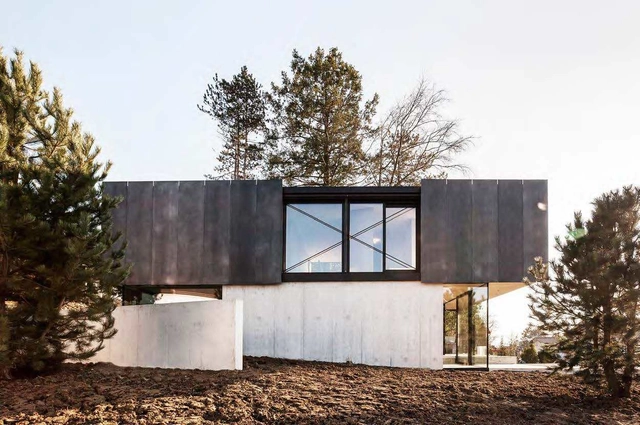

Update 7/5/17: Zaha Hadid Architects has announced the signing of Mandarin Oriental Hotel Group as manager of the new signature hotel and branded residences located within the Collins Street Tower. Mandarin Oriental, Melbourne will manage 196 guestrooms and suites and 148 of the tower’s upper floor residences, as well as an all-day dining restaurant, a spa and fitness center, and a bar with roof terrace access. Owners will have access to hotel amenities, as well as shared spaces including a private residents’ lounge. The project is expected to open in 2023.
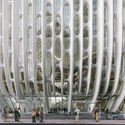
Zaha Hadid Architects has released new images and an animation of the firm’s “Stacked Vase” tower in Melbourne’s Central Business District to coincide with the building receiving approval from the Department of Environment, Land, Water and Planning, the City of Melbourne and the Office of Victorian Government Architect. The 54-story (178m) mixed-use skyscraper will be Zaha Hadid’s only tower in Melbourne, and upon completion will become an new emblem of “the most livable city in the world.”
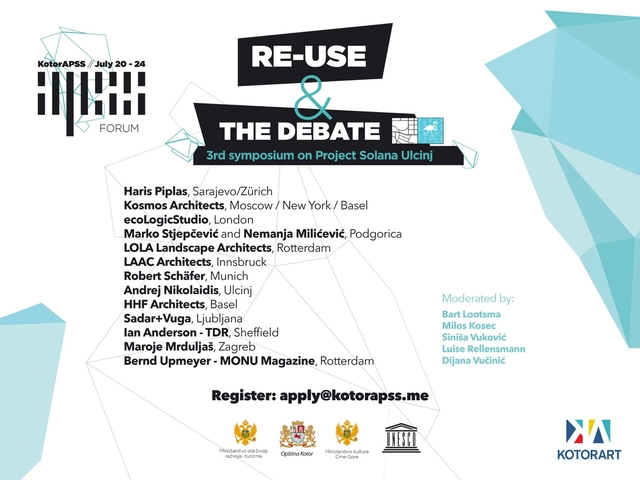
With its upcoming double symposium KotorAPSS further establishes a small Montenegrin town as an international hot spot for architectural thinking and advances the debate on decaying places of the recent past and their possible futures.
Boka Kotorska Bay cuts the Adriatic Montenegrin coast like a Norwegian Fjord. Once a hideout for pirates and smugglers it also was an important commercial trade hub and naval base.
The region once belonged to the Illyrian Kingdom, the Roman Empire and later to the Byzantine Empire. The Venetians ruled until the late 18th century, followed by the Austrians, and troops of Napoleon. From here Mediterranean cultures spread into the Balkan. Especially since UNESCO declared the natural and culture-historical region Kotor a world heritage site in 1979 the city and the bay have become an increasingly popular daytrip location for cruise ship tourism along the Adriatic coast.

.jpg?1468466315 "Courtesy of FCB Studios")

.jpg?1468466232 "Courtesy of FCB Studios")
.jpg?1468466283)
.jpg?1468371213&format=webp&width=640&height=580)
.jpg?1468371540 "© Ramiro Sosa")
.jpg?1468371602 "© Ramiro Sosa")
.jpg?1468371571 "© Ramiro Sosa")
.jpg?1468371196 "© Ramiro Sosa")
.jpg?1468371213)









.jpg?1468375253 "© Fernando Guerra | FG+SG")
.jpg?1468375110 "© Fernando Guerra | FG+SG")
.jpg?1468375229 "© Fernando Guerra | FG+SG")
.jpg?1468375025)